The place for all your outdoor living space!

Article Overview
- Trex Decking Overview
- Eva-Last Decking Overview
- Trex vs Eva-Last: Material Comparison
- Trex vs Eva-Last: Durability
- Trex vs Eva-Last: Maintenance
- Trex vs Eva-Last: Heat Performance
- Trex vs Eva-Last: Sustainability
- Trex vs Eva-Last: Colors and Design Options
- Trex vs Eva-Last: Cost Comparison
- Trex vs Eva-Last: Warranty Comparison
- Which Decking Brand Is Better?
- Final Thoughts
- Frequently Asked Questions
Trex vs Eva-Last is a comparison many homeowners make when choosing the right decking material for their outdoor space. Selecting the right decking plays a major role in how a deck looks, feels, and performs over time, especially for homeowners who want durability, low maintenance, and long-term value.
Trex has built a strong reputation as one of the most recognized names in composite decking. The brand offers a wide range of decking collections designed for durability, style, and long-term performance. Eva-Last takes a different approach with bamboo-based composite decking that focuses on sustainability, lightweight boards, and reinforced structural technology.
Both brands aim to provide an alternative to traditional wood decking. Their boards resist rot, moisture, and insects while requiring far less maintenance than natural wood. However, the materials, construction methods, and product lines used by Trex and Eva-Last differ in several important ways.
This comprehensive comparison explores the key differences between Trex and Eva-Last decking. We will look at materials, durability, maintenance requirements, sustainability, warranty coverage, and overall value to help you decide which option fits your deck project best.
Trex Decking Overview
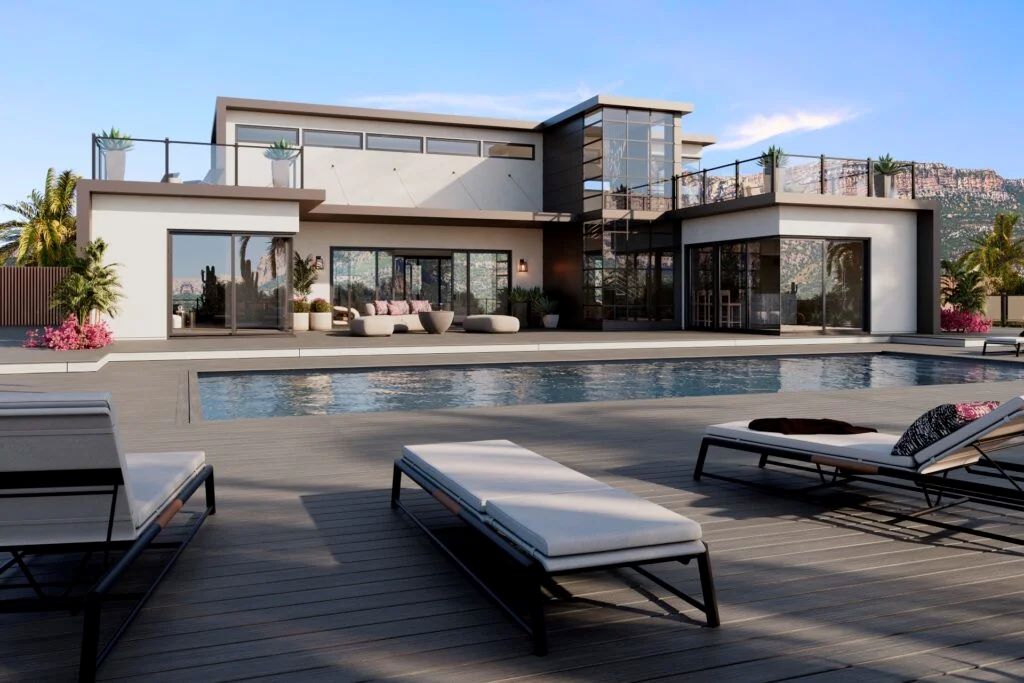
Trex stands as one of the most recognized names in composite decking. Many homeowners choose Trex because the brand has spent decades developing durable deck boards that require far less maintenance than traditional wood. Trex decking focuses on long-term performance, strong warranties, and a wide range of colors and styles that fit many outdoor design preferences.
What Trex Decking Is Made Of
Trex decking uses a composite material made from recycled plastic and reclaimed wood fibers. Manufacturers combine these materials and form them into durable boards designed to resist common problems associated with wood decking. Trex boards resist rot, splintering, and insect damage while maintaining a consistent appearance over time.
Most Trex decking products also include a protective outer shell that helps protect the boards from stains, fading, and everyday wear. This capped construction improves durability and reduces the amount of maintenance homeowners must perform throughout the life of the deck. Instead of sanding, sealing, or staining the boards each year, most Trex decks only require occasional cleaning with soap and water.
Trex Decking Product Lines
Trex offers several decking collections designed to fit different budgets, performance needs, and design preferences. Each collection provides its own balance of durability, aesthetics, and warranty coverage.
| Trex Collection | Position in Lineup | Key Features |
|---|---|---|
| Trex Signature | Premium | High-end appearance, strong durability, designed for luxury outdoor spaces |
| Trex Transcend Lineage | Premium | Advanced durability with SunComfortable heat-mitigating technology |
| Trex Transcend | High Performance | Rich color variation and long-lasting capped composite construction |
| Trex Select | Mid-Range | Balanced durability, style, and affordability |
| Trex Enhance | Entry Level | Budget-friendly composite decking with wood-like appearance |
| Trex Refuge (PVC) | Specialty | Ignition-resistant PVC decking designed for wildfire-prone areas |
Key Benefits of Trex Decking
Trex decking provides several advantages that attract homeowners looking for long-lasting outdoor materials. The composite construction helps prevent many of the problems that often affect wood decks, such as warping, cracking, and splintering.
Trex boards also require very little ongoing maintenance. Homeowners do not need to stain or seal the boards each season, which saves time and maintenance costs over the life of the deck.
Another major benefit comes from Trex’s wide selection of colors and finishes. The brand offers multiple collections that allow homeowners to choose a style that fits their outdoor space while still maintaining the durability of composite decking.
Eva-Last Decking Overview
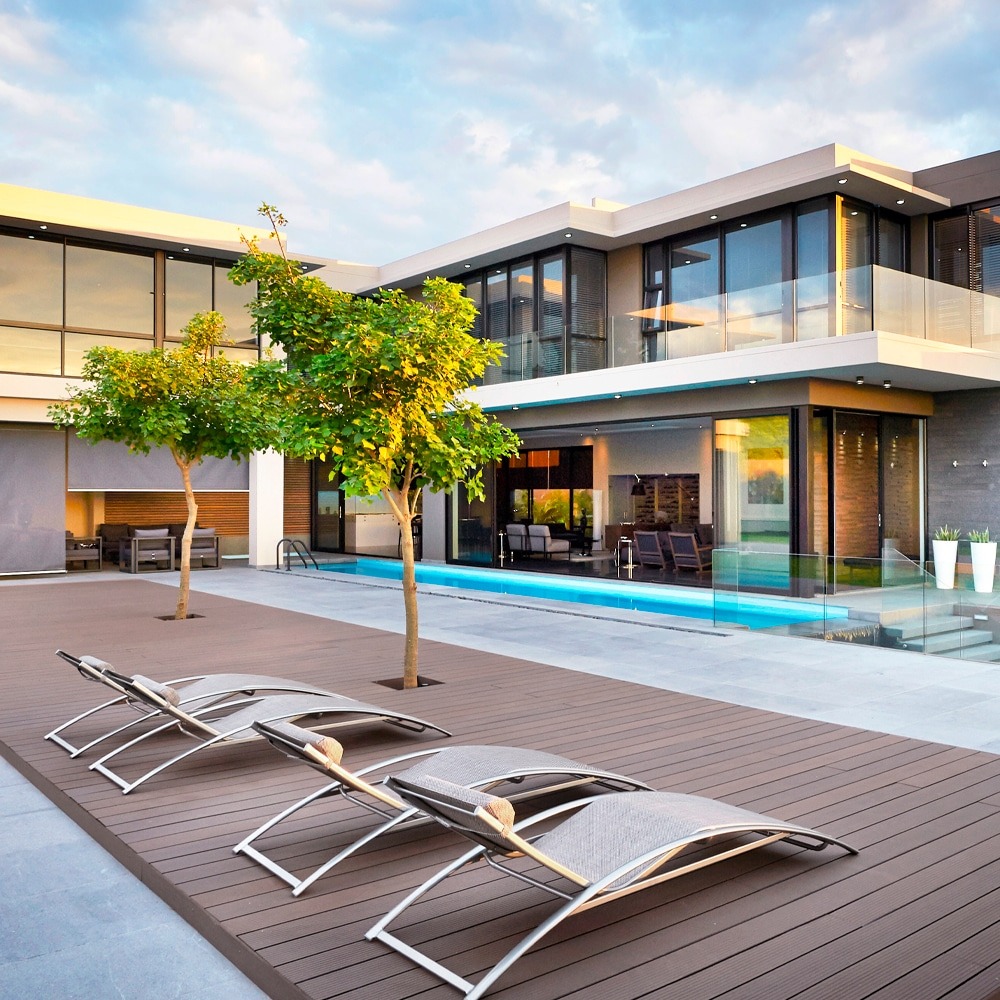
Eva-Last offers a different approach to composite decking. Instead of combining wood fibers with plastic, Eva-Last manufactures many of its boards using bamboo-based composite materials. The brand focuses on sustainability, lightweight board construction, and reinforced structural technology designed to improve stability and span capability.
Homeowners often consider Eva-Last when they want a decking material that provides the durability of composite boards while emphasizing environmentally responsible materials and modern composite engineering.
What Eva-Last Decking Is Made Of
Eva-Last decking typically uses a combination of bamboo fibers and polymer materials to create composite boards. Bamboo grows much faster than traditional hardwood trees and serves as a renewable raw material for composite production. The company also incorporates recycled plastic into its decking products, which helps reduce waste while creating durable deck boards.
Many Eva-Last boards feature a capped composite design, where a protective outer layer shields the board from fading, stains, and everyday wear. This protective cap helps the decking resist moisture, insects, and weather exposure while maintaining a consistent appearance over time. US-Eclipse-Decking-Brochure
Several Eva-Last product lines also include glass-fiber reinforced cores, which add strength and stability to the boards. This reinforcement allows some Eva-Last decking profiles to span wider joist spacing while maintaining structural integrity.
Eva-Last Decking Product Lines
Eva-Last offers multiple decking collections that vary in construction, strength, and appearance. These collections allow homeowners to choose a board that fits their budget and design goals.
| Eva-Last Collection | Position in Lineup | Key Features |
|---|---|---|
| Apex | Lightweight composite | Bamboo-PVC core, capped surface, low-maintenance design |
| Apex Plus | Reinforced composite | Glass-fiber reinforced core for improved strength and span capability |
| Eclipse | High-performance composite | Fully capped bamboo composite with increased durability |
| Infinity | Premium composite | Highly durable capped boards with strong stain and scratch resistance |
| Infinity IS | Premium reinforced bamboo composite | Engineered for increased structural strength and stability |
| Eva-Tech IS | Cost-effective composite | Lightweight I-beam board design that simplifies installation |
| Pioneer | Premium aesthetic composite | High-resolution wood grain replication for realistic timber appearance |
Key Benefits of Eva-Last Decking
Eva-Last decking provides several advantages that attract homeowners looking for modern composite decking materials.
Many boards feature lightweight construction, which can make transportation and installation easier compared with heavier composite boards. The bamboo-based material also supports sustainability goals because bamboo grows quickly and requires fewer natural resources than traditional hardwood timber.
Eva-Last decking also focuses on low-maintenance performance. Most boards only require basic cleaning to maintain their appearance over time, and the capped surface helps protect against stains, fading, and moisture exposure.
The reinforced core technology used in several product lines also improves stability and structural strength. This design helps the boards maintain their shape while supporting typical deck framing systems.
Together, these features position Eva-Last as a modern composite decking option that emphasizes sustainability, durability, and contemporary outdoor design.
Trex vs Eva-Last: Material Comparison
Trex and Eva-Last both produce low-maintenance composite decking, but they use different materials to build their boards.
Trex decking materials
- Made from recycled plastic and reclaimed wood fibers
- Uses capped composite technology for added protection
- Designed to resist rot, insects, moisture, and splintering
- Focuses on long-term durability using wood-plastic composite materials
Eva-Last decking materials
- Made from bamboo fibers combined with polymer materials
- Uses capped composite construction for stain and fade resistance
- Several collections include reinforced cores for additional strength
- Emphasizes renewable bamboo as a sustainable alternative to wood fibers
Both brands produce durable composite decking that performs better than traditional wood. The main difference comes down to the core materials: Trex uses wood-plastic composite technology, while Eva-Last focuses on bamboo-based composite boards.
Trex vs Eva-Last: Durability
Both Trex and Eva-Last decking are built to last longer than traditional wood decking. Each brand designs its boards to resist common outdoor damage like moisture, insects, and weather exposure.
Trex durability
- Resists rot, splintering, and insect damage
- Protective cap helps prevent stains and fading
- Designed to handle long-term outdoor exposure
Eva-Last durability
- Bamboo composite resists insects and moisture
- Capped boards protect against fading and stains
- Some lines include reinforced cores for added strength
Both brands offer durable composite decking that requires far less maintenance than wood.
Trex vs Eva-Last: Maintenance
One of the biggest advantages of composite decking is reduced maintenance compared to wood decks.
Trex maintenance
- No sanding, staining, or sealing required
- Simple cleaning with soap and water
- Capped boards help resist stains and fading
Eva-Last maintenance
- No sealing or staining required
- Basic cleaning keeps boards looking new
- Protective cap helps prevent stains and surface damage
Both brands offer low-maintenance decking that saves homeowners time and upkeep compared to traditional wood decks.
Trex vs Eva-Last: Heat Performance
Deck surface temperature matters, especially during hot summer days.
Trex heat performance
- Some boards include SunComfortable technology
- Designed to reduce heat absorption in direct sunlight
- Lighter colors typically stay cooler
Eva-Last heat performance
- Board color plays a major role in heat retention
- Lighter tones help reduce surface temperature
- Composite construction helps limit heat buildup compared to some traditional materials
Both brands recommend choosing lighter deck colors if heat performance is a concern.
Trex vs Eva-Last: Sustainability
Both Trex and Eva-Last promote environmentally responsible decking materials.
Trex sustainability
- Made using recycled plastic and reclaimed wood fibers
- Helps reduce landfill waste by reusing plastic materials
- Designed to last for decades, reducing replacement needs
Eva-Last sustainability
- Uses bamboo as a primary raw material
- Bamboo grows much faster than traditional hardwood trees
- Many boards include recycled plastics and renewable materials
Both brands focus on reducing environmental impact while creating durable alternatives to traditional wood decking.
Trex vs Eva-Last: Colors and Design Options
Trex and Eva-Last both offer a range of colors designed to replicate the appearance of natural wood.
Trex color options
- Wide range of colors across multiple collections
- Consistent tones designed to match modern outdoor spaces
- Several collections offer multi-tonal wood grain finishes
Eva-Last color options
- Natural wood-inspired colors
- Some collections feature strong color variation for a realistic wood look
- Digital wood grain patterns designed to replicate exotic hardwoods
Both brands offer styles that fit a variety of deck designs, from modern gray tones to warm natural wood colors.
Trex vs Eva-Last: Cost Comparison
The cost of composite decking varies depending on the product line, board construction, and overall project size.
Trex cost factors
- Multiple product tiers from entry-level to premium
- Higher-end collections offer advanced features and longer warranties
- Widely available through many decking suppliers
Eva-Last cost factors
- Pricing varies by collection and board technology
- Some lightweight boards may reduce installation costs
- Reinforced cores and premium finishes may increase price
Both brands offer options at different price points, allowing homeowners to choose a decking product that fits their budget and design goals.
Trex vs Eva-Last: Warranty Comparison
Warranty coverage helps homeowners understand how long decking materials are designed to perform. Both Trex and Eva-Last offer long-term residential warranties, but the coverage structure varies by product line.
Trex Decking Warranty Coverage
| Year of Claim | 50-Year Warranty | 35-Year Warranty | 25-Year Warranty |
|---|---|---|---|
| 11–13 | 90% | 80% | 80% |
| 14 | 90% | 80% | 60% |
| 15–16 | 90% | 60% | 60% |
| 17–18 | 70% | 60% | 40% |
| 19–20 | 70% | 40% | 40% |
| 21–22 | 70% | 40% | 20% |
| 23–25 | 50% | 20% | 10% |
| 26–28 | 50% | 20% | – |
| 29–31 | 30% | 10% | – |
| 32–35 | 30% | 10% | – |
| 36–40 | 20% | – | – |
| 41–50 | 10% | – | – |
Trex warranty highlights
- Up to 50-year limited residential warranty on select collections
- Fade and stain protection included on many boards
- Warranty coverage decreases gradually over time
Eva-Last Decking Warranty Coverage
| Eva-Last Collection | Residential Warranty Length |
|---|---|
| Pioneer | Up to 50 Years |
| Infinity | Up to 30 Years |
| Apex Plus | Up to 30 Years |
| Apex | Up to 25 Years |
| Eclipse | Up to 25 Years |
| Eva-Tech | Up to 25 Years |
Eva-Last warranty highlights
- Long-term residential warranties depending on the collection
- Coverage varies by product line such as Apex, Infinity, and Pioneer
- Designed to protect against structural defects and material failure
Which Decking Brand Is Better?
Both Trex and Eva-Last offer durable, low-maintenance decking that performs far better than traditional wood. The best option often depends on what homeowners prioritize for their outdoor space.
Trex may be the better choice if you want:
- A well-established composite decking brand
- A wide range of colors and collections
- Long warranty coverage on premium products
- Proven performance with decades of industry use
Eva-Last may be the better choice if you want:
- Bamboo-based composite decking
- Lightweight boards that are easier to handle and install
- Reinforced cores in certain product lines
- A stronger focus on renewable materials and sustainability
Both brands provide strong alternatives to wood decking. The right choice ultimately depends on your budget, design preferences, and the specific performance features you want for your deck project.
Final Thoughts
Trex and Eva-Last both offer strong alternatives to traditional wood decking. Each brand focuses on durability, low maintenance, and long-term performance, making them popular choices for modern outdoor living spaces.
Trex stands out for its long history in the composite decking industry, wide product selection, and strong warranty coverage across multiple collections.
Eva-Last offers a different approach with bamboo-based composite decking, lightweight board designs, and reinforced core technology in several product lines.
Both brands provide durable decking designed to resist moisture, insects, and weather exposure. Homeowners comparing these two options should consider factors such as material preference, sustainability goals, warranty coverage, and overall design style when choosing the right decking for their project.
Frequently Asked Questions
Both brands offer durable, low-maintenance composite decking. Trex has a longer history in the composite decking industry, while Eva-Last focuses on bamboo-based composite materials and lightweight board designs. The best choice depends on your priorities, such as sustainability, warranty coverage, or brand reputation.
Eva-Last decking uses bamboo fibers combined with polymer materials to create composite boards. Many product lines also include protective caps and reinforced cores that improve durability and stability.
Both brands design their decking to last for decades with proper installation and care. Trex offers warranty coverage of up to 50 years on certain products, while Eva-Last warranties vary depending on the specific product line.
Composite decking generally requires far less maintenance than wood. Most composite boards resist rot, insects, and moisture and do not require sanding, staining, or sealing like traditional wood decks.
Both Trex and Eva-Last focus on sustainability. Trex uses recycled plastic and reclaimed wood fibers, while Eva-Last incorporates bamboo, a rapidly renewable resource, along with recycled materials in many of its decking products.