
Choosing the right decking material shapes how an outdoor living space looks and performs over time. Many homeowners compare pvc vs composite decking when planning a new deck. Both materials offer durability and lower maintenance than wood decking. However, each option performs differently in moisture, appearance, and long-term value.
Some materials handle water exposure better. Others deliver a more natural wood look. Lifespan, maintenance needs, and overall feel also vary. Understanding these differences helps homeowners choose the right solution for their dream deck.
Manufacturers produce this decking material using polyvinyl chloride. The boards contain no wood fibers or organic components. This construction limits moisture absorption and helps the boards resist common outdoor issues.
Because the material does not absorb water, it works well in areas with frequent moisture. Pool decks, waterfront spaces, and shaded environments often benefit from this type of decking. The boards resist rot, insect damage, and mold growth, even in damp conditions.
This material also remains dimensionally stable. Seasonal temperature changes do not cause swelling, cracking, or splintering. That stability helps the deck maintain a consistent appearance year after year.
Why Polyvinyl Chloride Performs So Well Outdoors
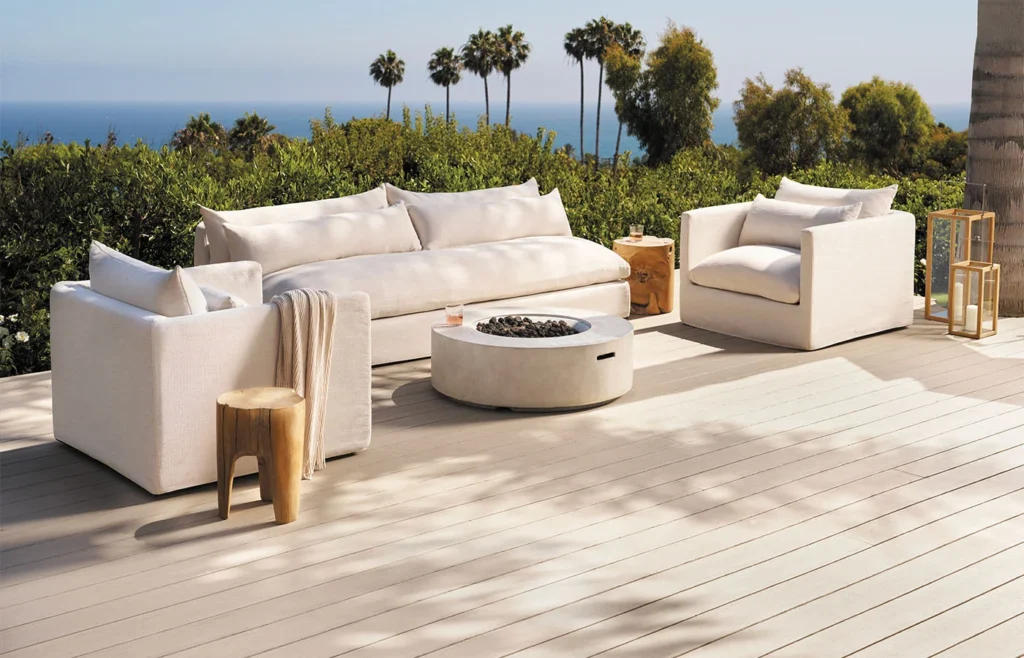
Polyvinyl chloride offers strong protection against moisture-related damage. The material does not soak up water, which reduces warping and surface breakdown. Many boards also provide reliable slip resistance, especially in wet or high-traffic areas.
Manufacturers often add a protective cap to the surface. This layer limits staining and surface wear. It also helps control color fading caused by sun exposure. Because the boards contain no wood fibers, they avoid many issues that affect traditional wood decking over time.
These qualities make this material a dependable long-term option for outdoor living spaces.
What Is Composite Decking?
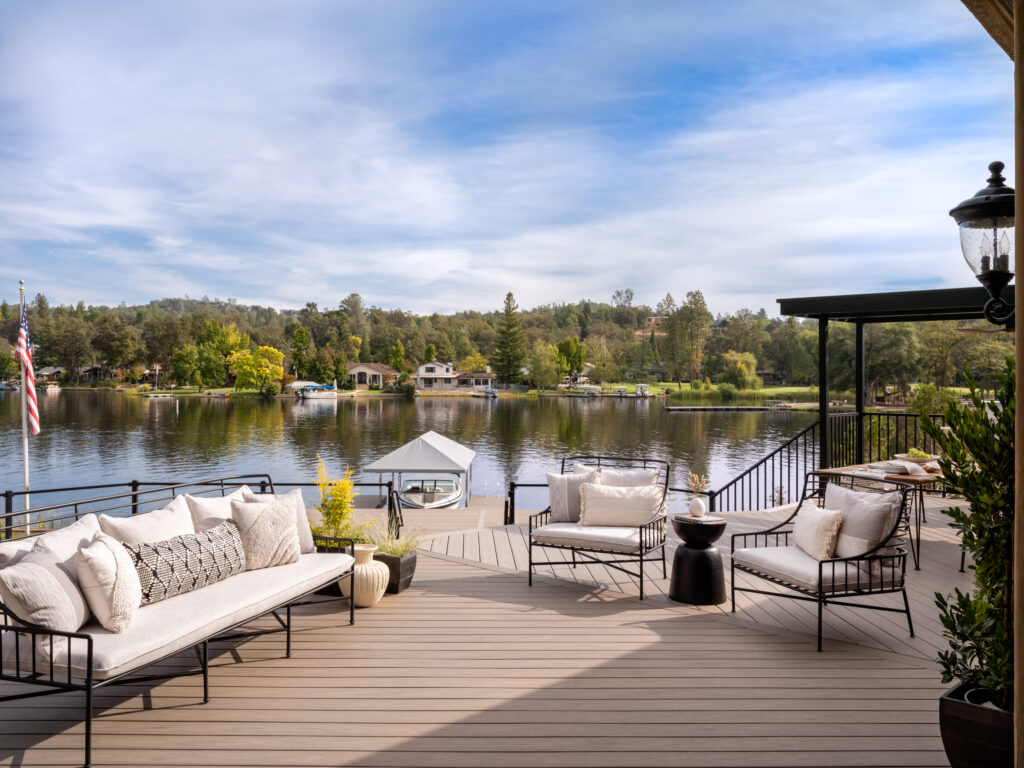
Composite decking combines recycled materials with plastic to create durable deck boards that mimic the look of natural wood. Manufacturers blend wood fibers with polymers to form a strong, low-maintenance decking material. This combination allows composite boards to deliver a wood-like appearance without the ongoing upkeep required by traditional wood decking.
Many homeowners choose this option because it balances performance, appearance, and cost. The boards resist rot and insects better than real wood while maintaining a familiar texture underfoot. Composite decking works well in a wide range of outdoor living spaces, from backyard decks to larger entertainment areas.
This material also offers flexibility in design. Manufacturers produce boards in many colors, finishes, and grain patterns. These options help homeowners match their deck to the style of their home while creating a cohesive outdoor living space.
How Wood Fibers Affect Look and Performance
Wood fibers give composite boards their natural wood appearance. The fibers add texture and depth, which helps replicate the look of real wood decking. This feature appeals to homeowners who want warmth and character without frequent maintenance.
However, wood fibers can interact with moisture over time. While composite boards resist water far better than wood decking, they do not remain completely unaffected. Some environments may require occasional cleaning to prevent buildup on the surface. Even so, composite decking continues to outperform traditional wood in durability, longevity, and ease of care.
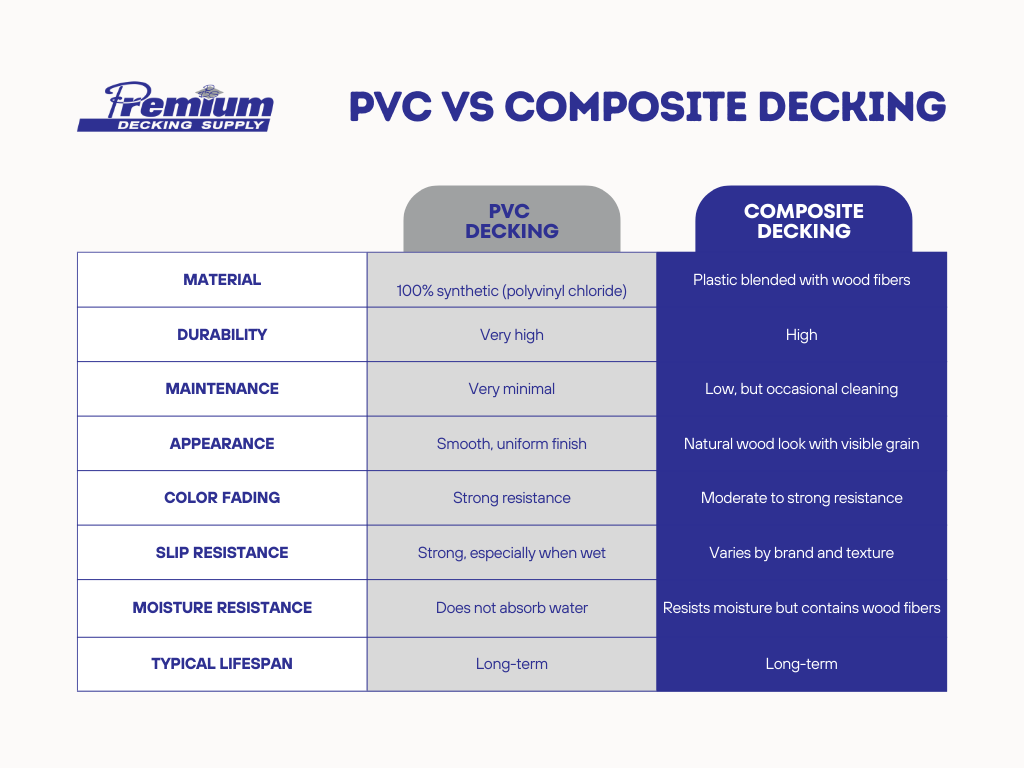
PVC Decking vs Composite Decking: Material Comparison
When comparing pvc decking vs composite decking, the biggest difference comes down to material makeup. Each option uses a different approach to durability, appearance, and long-term performance. Understanding how each material behaves helps homeowners choose the right decking material for their outdoor living space.
One option relies entirely on synthetic materials. The other blends plastics with wood fibers. This difference affects how the boards respond to moisture, heat, and daily use. While both materials outperform traditional wood decking, they solve problems in different ways.
PVC-based boards focus on moisture resistance and structural stability. Composite boards focus on delivering a natural wood look with improved durability. Neither option fits every project equally. Climate, deck location, and lifestyle all influence which material performs best.
How These Differences Affect Real-World Use
Material composition plays a major role in how deck boards perform over time. Boards made without wood fibers resist swelling and surface breakdown. Boards that include wood fibers deliver texture but may require more attention in damp or shaded environments.
Both materials offer strong performance for outdoor living spaces. The right choice depends on how the deck will handle moisture, traffic, and sun exposure. Homeowners who understand these material differences often feel more confident investing in the right option for their dream deck.
Durability, Moisture, and Slip Resistance
Outdoor decks deal with rain, snow, humidity, and daily foot traffic. These conditions test how well a decking material holds up over time. Moisture resistance and surface traction play a major role in long-term performance, especially in busy outdoor living spaces.
Some deck boards repel water completely. Others resist moisture but still contain organic components. This difference affects how boards perform in damp, shaded, or high-use areas.
How PVC and Composite Deck Boards Handle Moisture
Deck boards made from synthetic materials do not absorb water. This feature prevents warping, swelling, and rot. These boards work well around pools, in shaded yards, and in areas with frequent rain or snow.
Composite deck boards include wood fibers. These fibers add texture and a natural wood look, but they can react to moisture over time. While composite boards resist water far better than wood decking, damp conditions may require occasional cleaning to maintain the surface.
Performance in Wet and High-Traffic Areas
Slip resistance matters in spaces where water stays on the surface. Pool decks, stairs, and entry points benefit from deck boards designed to improve traction when wet. Many boards include textured surfaces to reduce slipping during rain or cleaning.
High-traffic areas place constant pressure on deck boards. Durable materials maintain their shape, color, and surface finish under frequent use. Choosing a decking material built for moisture exposure and daily wear helps protect long-term performance and safety.
Color Fading, Texture, and Appearance
Appearance matters just as much as performance when choosing a decking material. Homeowners want a deck that looks good for years with minimal effort. Color stability, surface texture, and finish all affect how a deck fits into an outdoor living space.
Sun exposure plays a major role in how deck boards age. Some materials hold color better. Others focus more on texture and visual depth. Understanding these differences helps homeowners choose the right look for their dream deck.
How PVC and Composite Deck Boards Handle Color Fading
PVC deck boards use protective surface layers designed to limit sun damage. These layers help slow color fading and keep the surface looking consistent over time. The capped finish also resists stains and surface wear, which helps the deck maintain a clean appearance.
Composite deck boards focus on rich color variation and realistic grain patterns. While these boards resist fading better than wood decking, they may show gradual color changes with long-term sun exposure. Routine cleaning helps preserve their appearance and extend visual performance.
Texture and Natural Wood Look
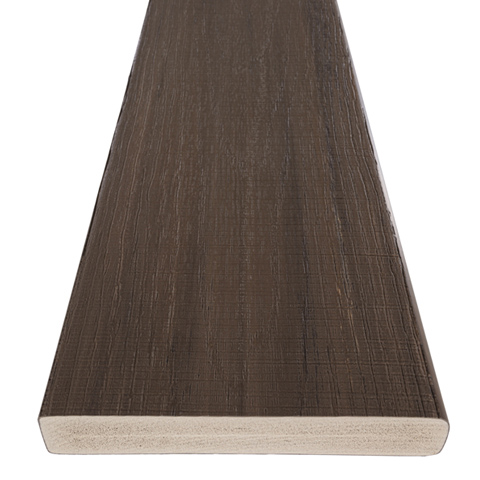
Composite deck boards appeal to homeowners who want the warmth of natural wood. The wood fibers create deeper grain patterns and a more authentic texture. This design delivers the look of real wood without the ongoing maintenance of wood decking.
PVC deck boards offer a smoother, more uniform surface. This clean finish works well for modern designs and contemporary outdoor living spaces. Both materials create attractive decks. The right choice depends on personal style, home design, and how the deck will be used.
Composite vs. PVC Decking: Maintenance and Long-Term Care
One of the main reasons homeowners compare pvc vs composite decking involves maintenance. Most people want a deck that looks good without constant work. Both materials reduce upkeep compared to wood decking, but they differ slightly in how they age and how much attention they need.
Understanding these differences helps homeowners choose a decking material that fits their lifestyle and expectations.
PVC and Composite Maintenance Compared
PVC deck boards require very little routine care. The non-porous surface resists moisture, stains, and debris buildup. Most cleaning involves occasional rinsing and light washing to remove dirt or pollen. The boards do not need sealing, staining, or sanding.
Composite deck boards also avoid sealing and staining. However, the presence of wood fibers means the surface can collect dirt or organic debris more easily. Periodic cleaning helps maintain appearance, especially in shaded or damp areas. Regular care keeps the surface looking consistent over time.
Long-Term Care Expectations
Neither material demands intensive maintenance. Both options eliminate the need for annual treatments required by wood decking. Over many years, PVC boards tend to maintain their original appearance with less effort. Composite boards may need more frequent cleaning, but they still offer a low-maintenance solution compared to traditional decking.
PVC vs Composite Decking: Cost and Long-Term Value
Cost often plays a major role when homeowners compare pvc vs composite decking. The upfront price can look very different from the long-term investment. Understanding both helps homeowners avoid surprises later.
Some decking materials cost more at the start. Others cost less but may require more attention over time. Looking beyond the initial price gives a clearer picture of overall value.
Upfront Cost Differences
PVC deck boards usually cost more upfront. The manufacturing process and fully synthetic materials contribute to the higher price. Many homeowners notice this difference immediately when comparing estimates.
Composite deck boards often come in at a lower initial cost. The use of recycled materials and wood fibers keeps pricing more accessible. This price point appeals to homeowners working within a set budget while still wanting a low-maintenance option.
Long-Term Value Over Time
Higher upfront cost does not always mean higher long-term expense. PVC boards resist moisture, staining, and surface wear more effectively. This durability can reduce the need for repairs or replacements over time.
Composite boards also deliver long-term performance, especially when properly maintained. Occasional cleaning helps preserve appearance and surface quality. Over many years, composite decking still costs less to maintain than wood decking, even if it requires more attention than PVC.
Choosing between these materials often comes down to priorities. Some homeowners prefer a lower upfront investment. Others value durability and minimal upkeep over decades. Both options support long-lasting outdoor living spaces when matched to the right project.
Environmental Impact and Sustainability
Sustainability matters to many homeowners when choosing a decking material. Environmental impact depends on how manufacturers source materials, how long the boards last, and how often they need replacement. Both pvc and composite decking approach sustainability in different ways.
Understanding these differences helps homeowners weigh performance alongside environmental considerations.
Use of Recycled Materials
Composite decking often includes recycled materials, such as reclaimed plastics and wood fibers. This approach reduces waste and gives new life to materials that might otherwise end up in landfills. Many homeowners view composite decking as an eco friendly option for this reason.
PVC decking typically does not include wood fibers. While it uses synthetic materials, the boards often last longer and require fewer replacements over time. A longer lifespan can reduce material waste over the life of the deck.
Longevity and Environmental Tradeoffs
Deck boards that last longer reduce the need for frequent replacement. Fewer replacements mean less material consumption over decades of use. PVC boards often perform well in this area due to their resistance to moisture and surface breakdown.
Composite boards also offer strong longevity, especially compared to wood decking. Proper care helps extend their usable life and maintain performance. When considering sustainability, lifespan and durability play just as large a role as material sourcing.
Both materials support responsible outdoor living when used correctly. Choosing the right decking material for the environment and intended use helps maximize performance while minimizing long-term waste.
Which Decking Material Is Right for Your Project?
Choosing between pvc and composite decking depends on how you plan to use your outdoor living space. Budget, environment, design preference, and long-term expectations all play a role. Neither option works best for every situation, but each performs well when matched to the right project.
Homeowners who prioritize moisture resistance often lean toward fully synthetic boards. These decks perform well in wet climates, shaded yards, and poolside settings. Minimal upkeep and long-term durability appeal to those who want the lowest maintenance possible.
Homeowners who value texture and a natural appearance often prefer composite boards. The wood fibers create a warmer look that blends well with traditional homes. This option works well for backyard decks, entertaining spaces, and projects where visual detail matters most.
Climate also affects the decision. Areas with heavy rain, snow, or humidity place greater demands on deck boards. High-traffic households may also benefit from materials designed to resist wear and surface damage.
The right choice comes down to priorities. Some projects favor long-term durability with minimal care. Others balance appearance, performance, and cost. Both materials support long-lasting outdoor living spaces when chosen with the environment and lifestyle in mind.
PVC vs Composite Decking FAQs
The main downside of PVC decking is the higher upfront cost. PVC boards usually cost more than composite options. Some homeowners also prefer the deeper grain texture of composite boards, since PVC often has a smoother, more uniform look. While modern PVC has improved realism, it may not appeal to homeowners who want a strong natural wood appearance.
Composite decking generally costs less per board than PVC. Composite pricing varies by brand and style, but it usually falls into a mid-range price category. PVC decking typically sits at the higher end of the price range due to its fully synthetic construction and longer lifespan. Labor costs often remain similar for both materials.
Composite decking is usually cheaper upfront. PVC costs more initially, but it can offer better long-term value due to lower maintenance needs and strong resistance to moisture-related damage. Homeowners deciding between the two often weigh upfront budget against long-term ownership costs.
The best material depends on the environment and how the deck will be used. PVC works well for decks exposed to heavy moisture, pools, or shaded areas. Composite works well for homeowners who want a natural wood look at a lower upfront cost. Both materials outperform wood decking in durability and maintenance.
Composite decking can feel warm under direct sunlight, especially in darker colors. Heat retention varies by brand, color, and board design. Lighter composite boards tend to stay cooler than darker ones. PVC decking can also warm up, but some options reflect heat more effectively depending on color and surface technology.