The place for all your outdoor living space!

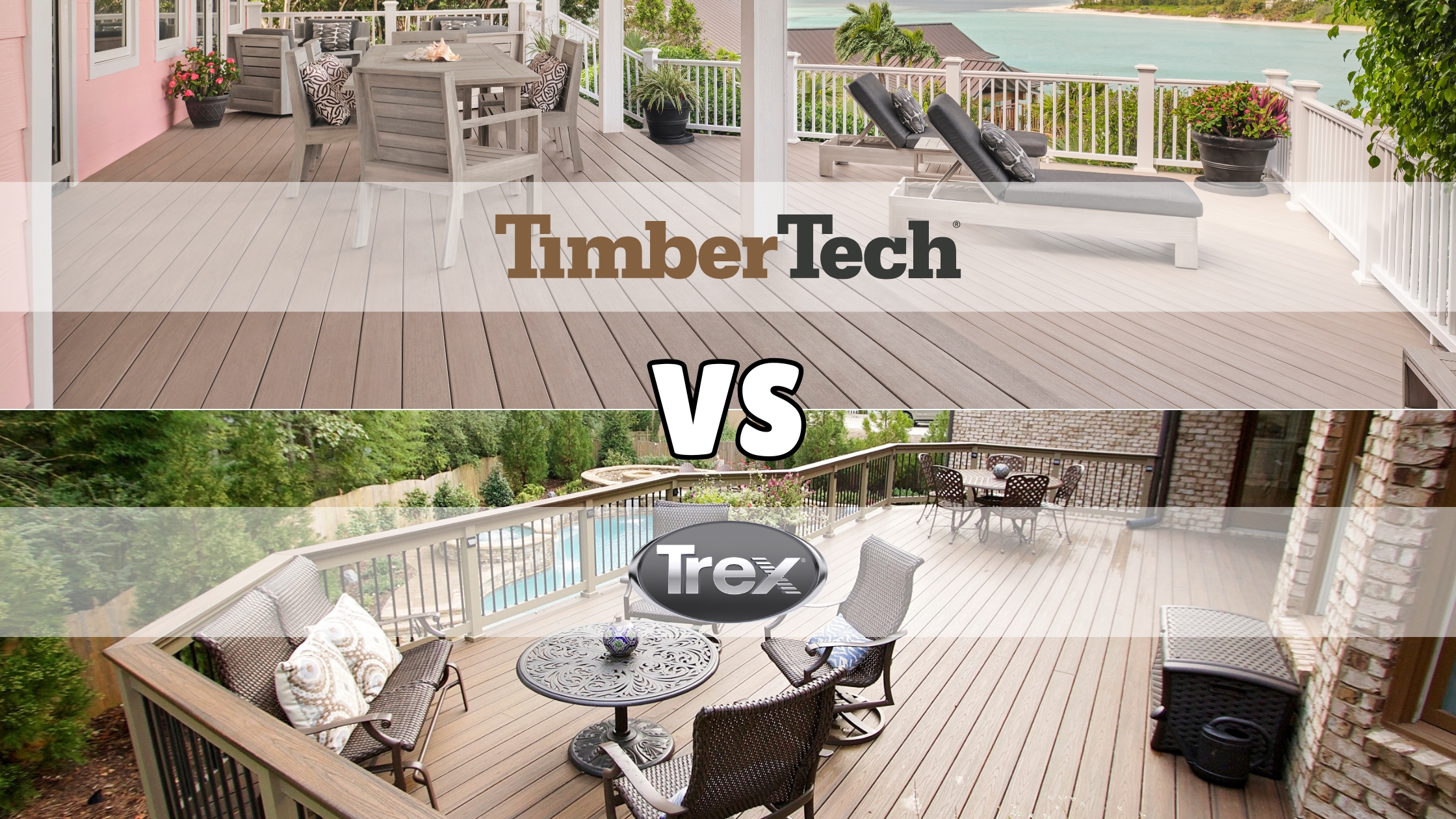
When planning an outdoor living space, choosing the right decking material is an important decision. TimberTech vs. Trex continues to be one of the most common comparisons for homeowners, contractors, and builders searching for high-quality composite and PVC decking. Both brands offer premium composite deck boards and advanced decking materials, but selecting the right option depends on performance, design, and long-term value.
This updated guide explores the latest product features, color options, warranties, and sustainability efforts from both TimberTech and Trex. Whether you are comparing composite decking boards or deciding on the best decking material for your project, this breakdown is designed to help you make an informed choice.
This comparison also accounts for recent updates from both brands, including Trex’s expanded SunComfortable™ Technology and the introduction of Trex Refuge, a cellular PVC decking option built for fire-resistant and high-performance applications, as well as TimberTech’s latest enhancements, including the Premier+ collection, added to reflect its newest composite decking developments.
Why Choose Composite or PVC Decking?
Understanding the advantages of composite and PVC decking helps explain why these materials are widely used by both homeowners and professional builders before comparing TimberTech and Trex.
- Durability: Unlike traditional wood decking, composite and PVC boards resist splitting, warping, and rot over time. Both TimberTech and Trex are engineered to handle outdoor exposure, helping decks maintain their strength and appearance for many years with minimal upkeep.
- Low Maintenance: Composite decking eliminates the need for regular staining, sealing, or sanding. Routine cleaning with soap and water is typically enough to keep the deck looking clean and well maintained.
- Aesthetics: Composite decking is designed to capture the appearance of natural wood while offering a wider range of colors and finishes. TimberTech emphasizes realistic wood-grain detail, while Trex is known for its clean lines and modern, contemporary color styles.
- Eco-Friendliness: Sustainability is a priority for both TimberTech and Trex, as each brand uses recycled materials in its decking products. Trex leads in recycled content, with approximately 95% of its decking made from reclaimed materials.
What is TimberTech?
TimberTech, a brand within The AZEK Company, is known for producing high-performance composite and PVC decking solutions. Its Advanced PVC decking is engineered for reliable performance in moisture-rich environments, while TimberTech also emphasizes sustainability by incorporating up to 85% recycled content into its decking products.
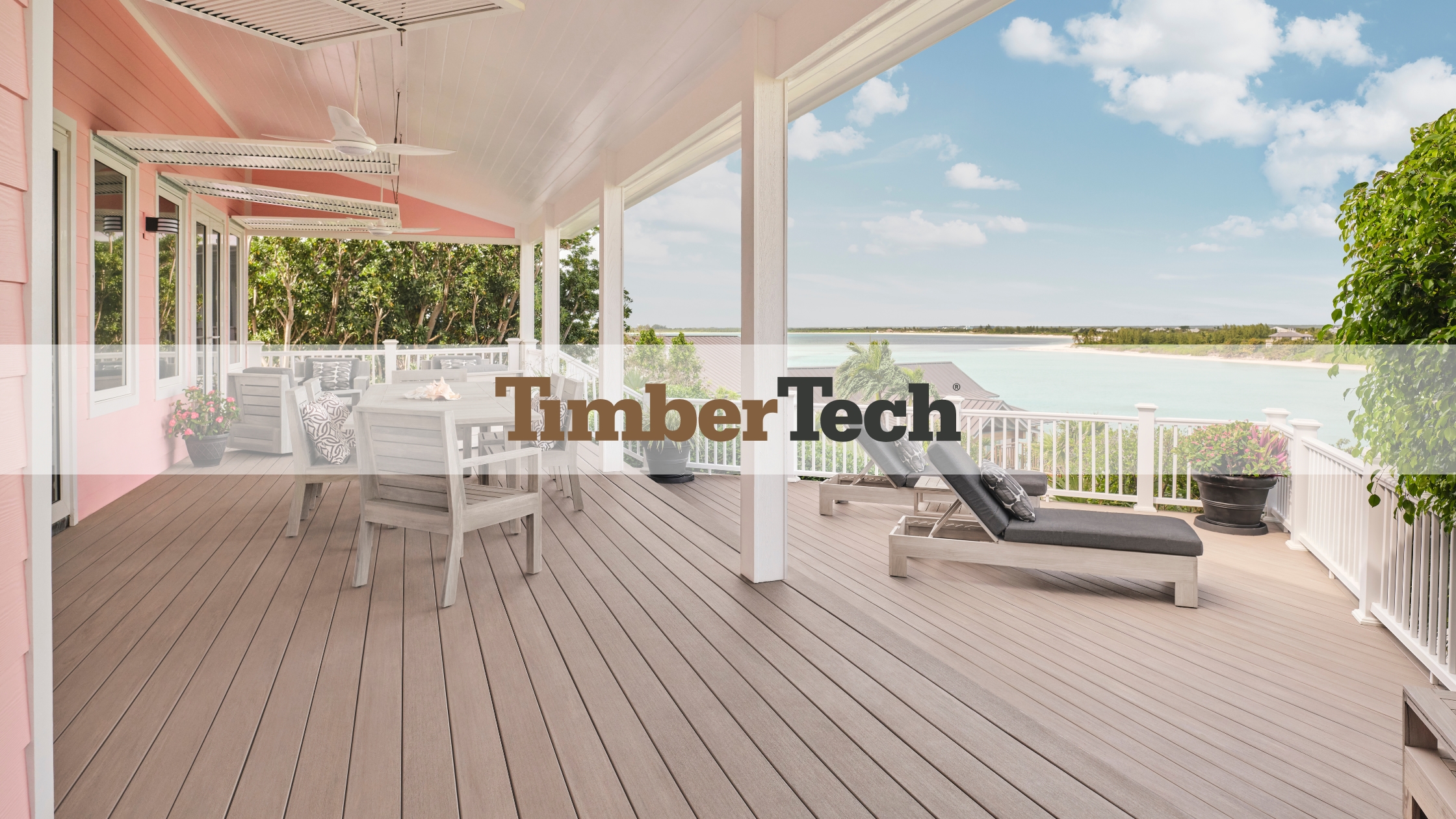
Key features of TimberTech (2026 Update):
- Durability: TimberTech decking is designed for long-term strength and moisture resistance. Its Advanced PVC decking also carries a Class A Flame Spread Rating, adding an extra layer of fire protection.
- Eco-Friendly Composition: TimberTech prioritizes sustainable manufacturing by producing decking from recycled polymers and reclaimed wood fibers.
- Warranty: The Vintage Collection is covered by a 50-year Limited Fade and Stain Warranty, while TimberTech’s other composite collections are supported by a 25 and 30-year warranty.
- Colors: TimberTech offers a broad palette with over 40 color options, including popular selections such as Weathered Teak, Sea Salt Gray, and Dark Hickory.
- Heat Resistance: TimberTech Advanced PVC decking is engineered to remain up to 30 degrees cooler than most composite decking materials, making it well suited for warmer climates.
- Top-Rated Fire Resistance: TimberTech Advanced PVC decking features an Ignition Resistant designation, a Class A Flame Spread Rating, and WUI compliance, positioning it as a strong choice for fire-prone areas and projects with strict building codes.
What is Trex?
Trex is a leading name in composite decking, known for producing long-lasting, low-maintenance decking materials. Manufactured using up to 95% recycled plastic film and reclaimed wood, Trex decking is widely recognized as one of the most environmentally responsible options available.
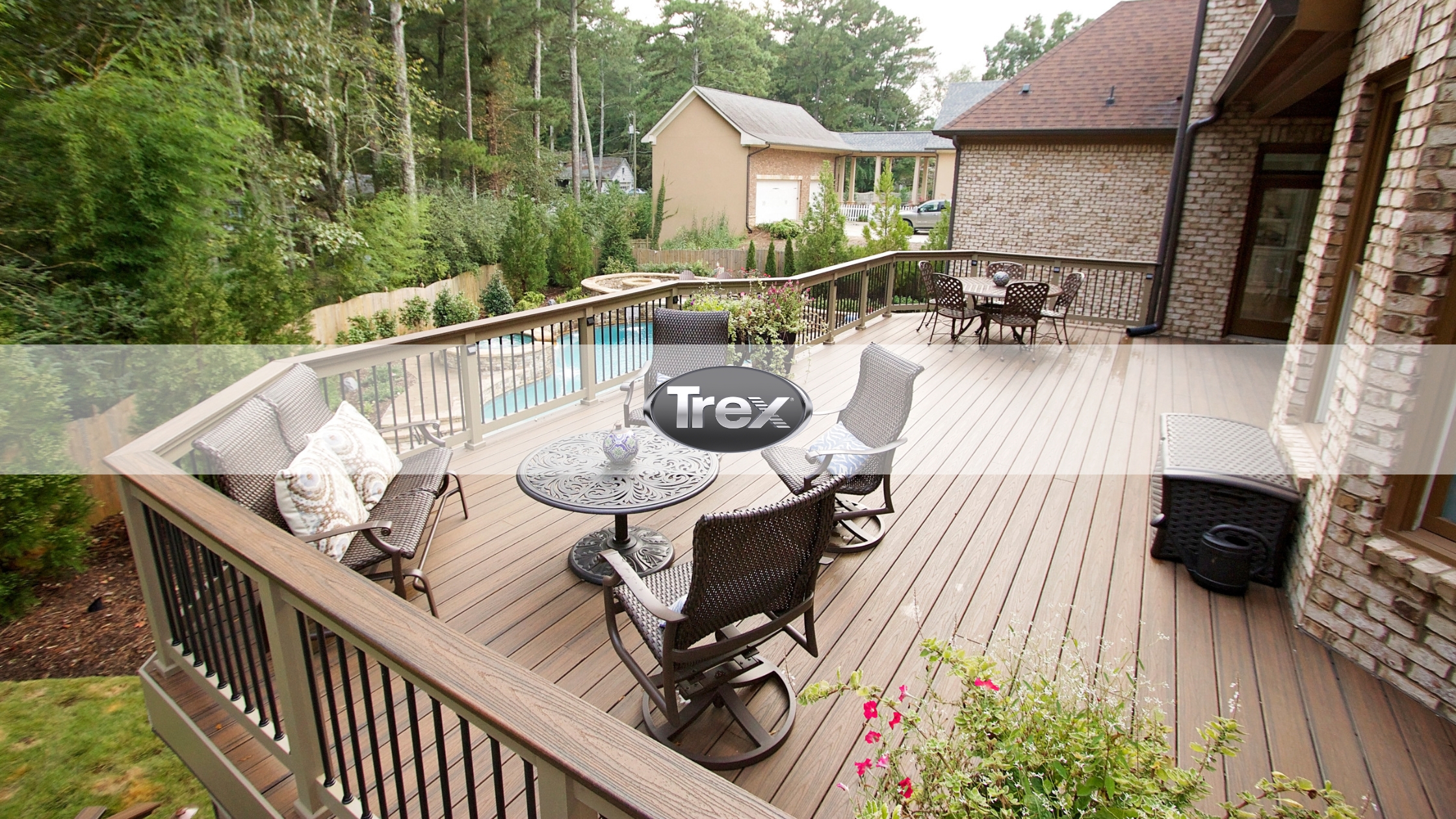
Key features of Trex (2026 Update):
- Durability: Trex decking boards are engineered to resist scratches, stains, and UV-related fading, making them suitable for long-term outdoor use.
- Eco-Friendly Composition: Trex manufactures its decking using 95% recycled materials, including plastic bags and reclaimed wood, recycling over 300 million pounds of plastic in 2023 alone.
- Warranty: Premium Trex collections, such as Trex Transcend, are backed by a 50-year Limited Fade and Stain Warranty, offering extended long-term coverage.
- Colors: Trex offers a diverse color lineup, including options like Rocky Harbor and Spiced Rum. The Trex Transcend Lineage collection introduces colors such as Biscayne, Rainier, and Carmel, engineered to help reduce surface heat.
- Pricing Tiers: With multiple product lines available, Trex provides solutions across a wide range of budgets. Collections like Trex Enhance and Trex Select deliver more affordable composite decking options while maintaining reliable performance.
- Fire-Resistant Options: Trex provides WUI-compliant decking through Trex Refuge™ Cellular PVC and select fire-resistant color options within the Select®, Transcend®, and Transcend® Lineage® collections, designed to resist fire ignition and meet IWUIC requirements in fire-prone areas.
- Heat-Mitigation Technology: SunComfortable™ Technology has been expanded into select Enhance and Select boards, helping reflect more sunlight and reduce surface temperatures compared to earlier composite decking.
- PVC Decking Expansion: The launch of Trex Refuge™ extends Trex’s offerings beyond composite decking into cellular PVC, combining refined wood-grain styling with improved moisture resistance and low-maintenance performance.
TimberTech vs. Trex: Durability and Performance
Both TimberTech and Trex decking are built for long-term durability, but differences in construction and materials can influence which option performs better for your specific project.
Scratch Resistance
- TimberTech: TimberTech composite decking offers strong overall durability, though some composite collections may show wear more quickly in high-traffic areas compared to Trex.
- Trex: Trex engineers its Transcend collection for enhanced scratch resistance, making it a solid choice for decks that see frequent foot traffic.
Moisture Resistance
- TimberTech: TimberTech’s fully capped boards provide excellent protection against moisture, making them well suited for humid climates and areas with frequent rainfall.
- Trex: Trex boards feature three-sided capping, which allows moisture to escape through the underside when proper ventilation is present.
Heat and Fade Resistance
- TimberTech: TimberTech Advanced PVC decking can remain up to 30 degrees cooler than many composite decking products, making it a strong option for hot-weather environments.
- Trex: The Transcend Lineage collection from Trex incorporates heat-mitigating technology designed to help reduce surface temperature under direct sunlight.
UV and Fade Resistance
- TimberTech: TimberTech AZEK products are known for exceptional UV resistance, helping maintain color clarity and vibrancy even after prolonged sun exposure.
- Trex: Trex’s protective shell offers reliable UV protection, though some gradual fading may occur over time.
TimberTech vs. Trex: Appearance and Style
TimberTech is often favored for its realistic wood-grain detail, while Trex is known for its clean, modern aesthetic. Both brands provide a wide range of colors and finishes to suit different design preferences.
Color and Finish Options
- TimberTech: TimberTech focuses on natural-looking wood tones, offering options such as Weathered Teak, Sea Salt Gray, and 20′ Pecan from the Legacy Collection.
- Trex: Popular Trex colors include Rocky Harbor, Island Mist, and Spiced Rum, while the Transcend Lineage series introduces contemporary shades like Biscayne and Rainier that are designed to stay cooler under the sun.
Texture and Wood Grain
- TimberTech: The Reserve and Vintage collections feature wire-brushed finishes and blended color variation for a more authentic wood appearance.
- Trex: Trex uses a consistent embossed wood-grain texture across its collections, creating a uniform and streamlined look.
TimberTech vs. Trex: Pricing and Value
While both brands fall within the premium decking category, Trex is often viewed as the more budget-friendly option for homeowners seeking composite decking.
Pricing
- TimberTech: TimberTech AZEK products generally come at a higher price point due to their premium PVC construction and advanced features such as fire resistance and heat mitigation.
- Trex: Trex decking typically costs less than TimberTech, particularly in the Enhance and Select lines, making it an attractive option for homeowners focused on value. Pricing varies depending on the collection and configuration.
Long-Term Value
While TimberTech’s initial cost is higher, its long-term durability and warranties make it a top investment for homeowners seeking the best composite decking material. Trex, on the other hand, delivers strong value at more accessible price points.
TimberTech vs. Trex: Warranty
When choosing a decking material, warranty coverage plays an important role in protecting your investment. Both TimberTech and Trex offer extensive warranty programs across their composite and PVC decking collections. The following sections outline how each brand’s warranty coverage compares to help you determine which best fits your needs.
TimberTech Composite Warranties
- TimberTech Legacy Collection: Backed by a 30-year Limited Fade and Stain Warranty, ensuring long-term durability and visual performance.
- TimberTech Reserve Collection: Includes a 30-year Limited Fade and Stain Warranty, offering extended protection against fading and staining.
- TimberTech Terrain+ Collection and TimberTech Terrain Collection: Both collections come with a 30-year Limited Fade and Stain Warranty, providing consistent, dependable coverage.
- TimberTech Premier Collection and TimberTech Premier+ Collection: Covered by a 30-year Limited Fade and Stain Warranty, making them a solid option for homeowners seeking reliable performance at a competitive price.
- TimberTech Prime+ Collection and TimberTech Prime Collection: These collections include a 25-year Limited Fade and Stain Warranty, offering durable protection for entry-level composite decking.
TimberTech PVC Warranties
- TimberTech Vintage Collection: Includes a 50-year Limited Fade and Stain Warranty, delivering top-tier durability and long-term coverage.
- TimberTech Landmark Collection: Supported by a 50-year Limited Fade and Stain Warranty, ensuring lasting performance and color retention.
- TimberTech Harvest Collection and TimberTech Harvest+ Collection: Both collections feature a 50-year Limited Fade and Stain Warranty, providing strong, long-term protection.
- TimberTech Porch Collection: Comes with a 50-year Limited Fade and Stain Warranty, designed specifically for premium porch applications.
Trex Composite Warranties
- Trex Signature Line: Covered by a 50-year Limited Fade and Stain Warranty, offering long-term protection and premium durability.
- Trex Transcend Lineage and Trex Transcend: Both collections include a 50-year Limited Fade and Stain Warranty, designed to protect against fading and staining over time.
- Trex Select Line: Supported by a 35-year Limited Fade and Stain Warranty, providing reliable mid-range coverage.
- Trex Enhance Line: Includes a 25-year Limited Fade and Stain Warranty, delivering dependable protection for more budget-focused projects.
Trex PVC Warranties
- Trex Refuge Line: Protected by a 50-Year Limited Residential Warranty specific to cellular PVC decking, reflecting its moisture resistance, fire-performance design, and low-maintenance construction.
Warranty Coverage Table
The table below shows the percentage of replacement or refund available throughout the warranty period for TimberTech and Trex decking. Coverage varies across 50-year, 35-year, 30-year, and 25-year warranties, with the replacement value gradually decreasing over time. This breakdown helps homeowners better understand how warranty protection changes at different stages of ownership.
| Year of Claim | 50-Year Warranty (Advanced PVC) | 30-Year Warranty (Legacy, Reserve, Terrain, Terrain+, Premier, Premier+) | 25-Year Warranty (Prime+, Prime) |
|---|---|---|---|
| 11-13 | 90% | 90% | 80% |
| 14 | 80% | 80% | 60% |
| 15-16 | 75% | 70% | 60% |
| 17-18 | 65% | 60% | 40% |
| 19-20 | 55% | 50% | 40% |
| 21-22 | 50% | 40% | 20% |
| 23-25 | 45% | 30% | 10% |
| 26-28 | 30% | 10% | – |
| 29-31 | 25% | 10% | – |
| 32-35 | 20% | – | – |
| 36-40 | 15% | – | – |
| 41-50 | 10% | – | – |
| Year of Claim | 50-Year Warranty | 35-Year Warranty | 25-Year Warranty |
|---|---|---|---|
| 11-13 | 90% | 80% | 80% |
| 14 | 90% | 80% | 60% |
| 15-16 | 90% | 60% | 60% |
| 17-18 | 70% | 60% | 40% |
| 19-20 | 70% | 40% | 40% |
| 21-22 | 70% | 40% | 20% |
| 23-25 | 50% | 20% | 10% |
| 26-28 | 50% | 20% | – |
| 29-31 | 30% | 10% | – |
| 32-35 | 30% | 10% | – |
| 36-40 | 20% | – | – |
| 41-50 | 10% | – | – |
Which Warranty is Best for You?
- 50-Year Warranty (TimberTech and Trex): Homeowners looking for the longest available warranty will find 50-year Limited Fade and Stain coverage from both brands. Trex offers this level of protection on its Signature, Refuge, Transcend, and Transcend Lineage collections, while TimberTech provides 50-year warranties on the Vintage, Landmark, Harvest, and Porch collections. These options are ideal for projects focused on long-term performance and durability.
- 35-Year Warranty (Trex): The Trex Select collection includes a 35-year Limited Fade and Stain Warranty, making it a strong mid-tier option for homeowners who want durability without stepping into premium pricing.
- 30-Year Warranty (TimberTech): TimberTech’s Legacy, Reserve, Terrain, Terrain+, Premier, and Premier+ collections are backed by 30-year warranties, offering dependable long-term protection for composite decking applications.
- 25-Year Warranty (TimberTech and Trex): More budget-friendly collections, such as Trex Enhance and TimberTech Prime and Prime+, include 25-year Limited Fade and Stain Warranties, delivering reliable coverage at a lower cost.
TimberTech vs. Trex: Environmental Impact
- TimberTech: TimberTech incorporates recycled materials into its decking products and continues to focus on waste reduction and responsible manufacturing, though its recycled content does not reach the same level as Trex.
- Trex: Trex leads in sustainability by manufacturing decking with 95% recycled materials, making it the preferred option for homeowners who prioritize environmentally responsible decking.
TimberTech vs. Trex: Which is Best for You?
Both TimberTech and Trex offer premium composite decking solutions. The right choice ultimately depends on your priorities, including climate conditions, budget, appearance preferences, and long-term performance expectations.
Choose TimberTech If:
- You live in a hot or humid environment and need decking that delivers strong moisture resistance along with advanced heat-mitigating performance.
- You prefer decking with highly realistic wood-grain textures and a broader selection of multi-tonal color options.
- You are comparing TimberTech Reserve vs. Trex Transcend and value TimberTech’s advanced construction features, such as four-sided board capping.
Choose Trex If:
- You want a more budget-friendly decking option that still provides reliable durability and long-term performance.
- Sustainability is a priority, and you prefer decking made primarily from recycled materials.
- Scratch resistance and overall value are key factors when selecting composite decking.
No matter which brand you choose, both TimberTech and Trex offer durable composite decking solutions designed to enhance outdoor spaces for years to come.
Frequently Asked Questions
With proper installation and basic maintenance, both TimberTech and Trex decking can last for decades. Many collections are backed by warranties ranging from 25 to 50 years, reflecting their long-term durability.
Yes, you can install it yourself, but forTimberTech Advanced PVC decking is often preferred in hot climates because it can stay significantly cooler underfoot. Trex also offers heat-mitigating options through SunComfortable™ Technology in select collections. better results and a longer-lasting deck, it’s best to hire a professional.
Both TimberTech and Trex are environmentally friendly bTimberTech’s fully capped boards, especially its PVC collections, provide excellent moisture resistance, making them well suited for humid or rainy environments. Trex performs well in properly ventilated installations.rands, and they use plenty of recycled materials in their decking.
Both brands use recycled materials, but Trex leads in sustainability, manufacturing its decking with 95% recycled content. TimberTech also incorporates recycled polymers and reclaimed wood fibers in many collections.
Yes. TimberTech Advanced PVC decking features Ignition Resistance, Class A Flame Spread Rating, and WUI compliance. Trex offers WUI-compliant options through Trex Refuge PVC and select fire-resistant colors in specific composite collections.
TimberTech is widely recognized for its natural-looking wood-grain patterns, wire-brushed finishes, and multi-tonal color variation. Trex offers a more uniform embossed texture across its decking lines.
In most cases, Trex is more budget-friendly, particularly in the Enhance and Select lines. TimberTech typically carries a higher upfront cost due to its premium PVC construction and advanced performance features.
Both TimberTech and Trex decking can be installed by experienced DIY homeowners. However, for optimal performance, warranty protection, and long-term results, professional installation is recommended.
Both brands require minimal maintenance compared to wood. Regular cleaning with soap and water is usually sufficient. Neither brand requires staining, sealing, or sanding.
There is no one-size-fits-all answer. TimberTech is often chosen for premium performance, heat resistance, and realistic aesthetics, while Trex is favored for sustainability, value, and scratch resistance. The best option depends on your climate, budget, and design goals.