The place for all your outdoor living space!

Article Overview
- Why Are People Switching to Composite and PVC Decks?
- What Is Trex?
- What Is TimberTech?
- How Capping Works (And Why You Should Care)
- Trex vs. TimberTech: Durability and Performance
- Walking Barefoot, Playing With Kids, Living With Pets
- Trex vs. TimberTech: Looks and Style
- Trex vs. TimberTech: Pricing and Cost Breakdown
- Railings, Lighting, and Everything Else
- Cleaning: What "Low Maintenance" Actually Means
- Trex vs. TimberTech: Warranties Compared
- Trex vs. TimberTech: Environmental Impact
- Which Deck Type Is Each Brand Best For?
- The Bottom Line: Trex vs. TimberTech
- Frequently Asked Questions:
- How long do Trex and TimberTech decks actually last?
- Can I install Trex or TimberTech decking myself?
- How eco-friendly are these brands?
- Is it safe to use ice melt or rock salt on composite decking?
- How much joist spacing do I need?
- Which brand has more color choices?
- Do the boards change color after you install them?
- Is composite decking slippery in the rain?
- What do people who own these decks think of them?
- Do Trex and TimberTech sell matching railings and lighting?

You’d think picking a deck board would be straightforward. It’s a board. You walk on it. How complicated can it be?
Pretty complicated, actually. The Trex vs. TimberTech debate has been going on for years among homeowners and contractors, and there’s no shortage of opinions on either side. Both brands make quality composite decking. Both will outlast a wood deck by decades. But they take different approaches to how they build their boards, what they charge, and who they’re really designed for.
We dug into the latest product lines from both companies – Trex’s expanded SunComfortable™ Technology, their new Refuge cellular PVC boards, TimberTech’s Premier+ collection, and the 2025 James Hardie acquisition – to put together a real comparison. Not a press release. An actual side-by-side that helps you figure out which one makes sense for your yard, your climate, and your wallet.
Why Are People Switching to Composite and PVC Decks?
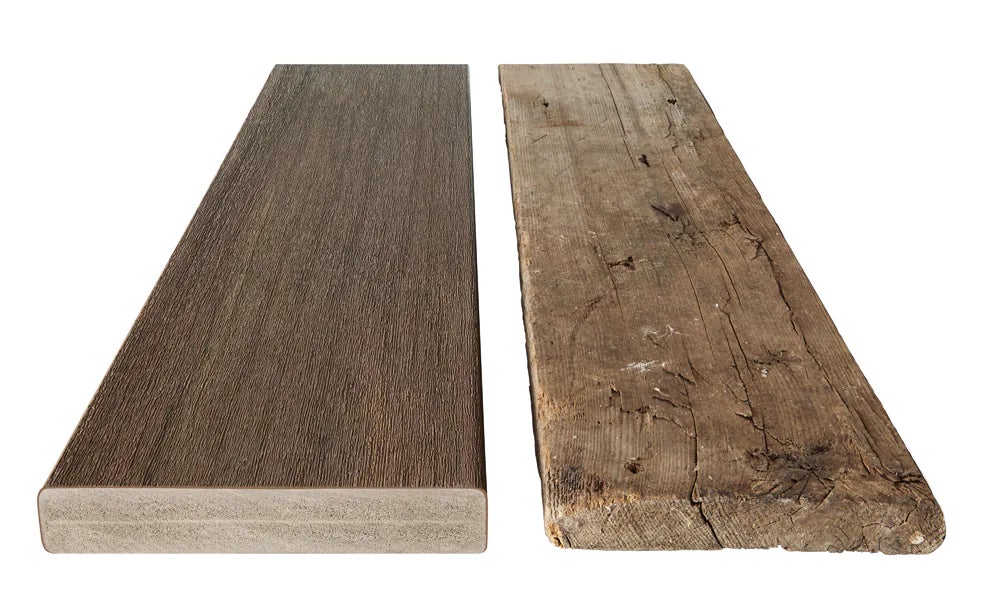
If you’ve ever spent a Saturday afternoon sanding, staining, and swearing at a wood deck, you already know the answer. Composite and PVC decking skips all of that. No annual staining. No sealing. No replacing warped boards every few years. You wash it with soap and water a couple times a year and call it done.
Beyond the maintenance thing, these materials just hold up better. They don’t split in cold weather, they don’t rot when it rains for two weeks straight, and they don’t attract termites. The color options blow wood out of the water too – you’re not stuck choosing between “pine” and “cedar” anymore.
And if you care about the environmental angle, both Trex and TimberTech use recycled materials in their boards. Trex goes especially hard on this, with 95% recycled content. They recycled over 300 million pounds of plastic in 2023. That’s a lot of grocery bags that didn’t end up in a landfill.
One more thing people forget: a well-built composite or PVC deck adds real value to your home. It’s not just a nice place to grill – it’s an investment that tends to pay for itself when you sell.
What Is Trex?
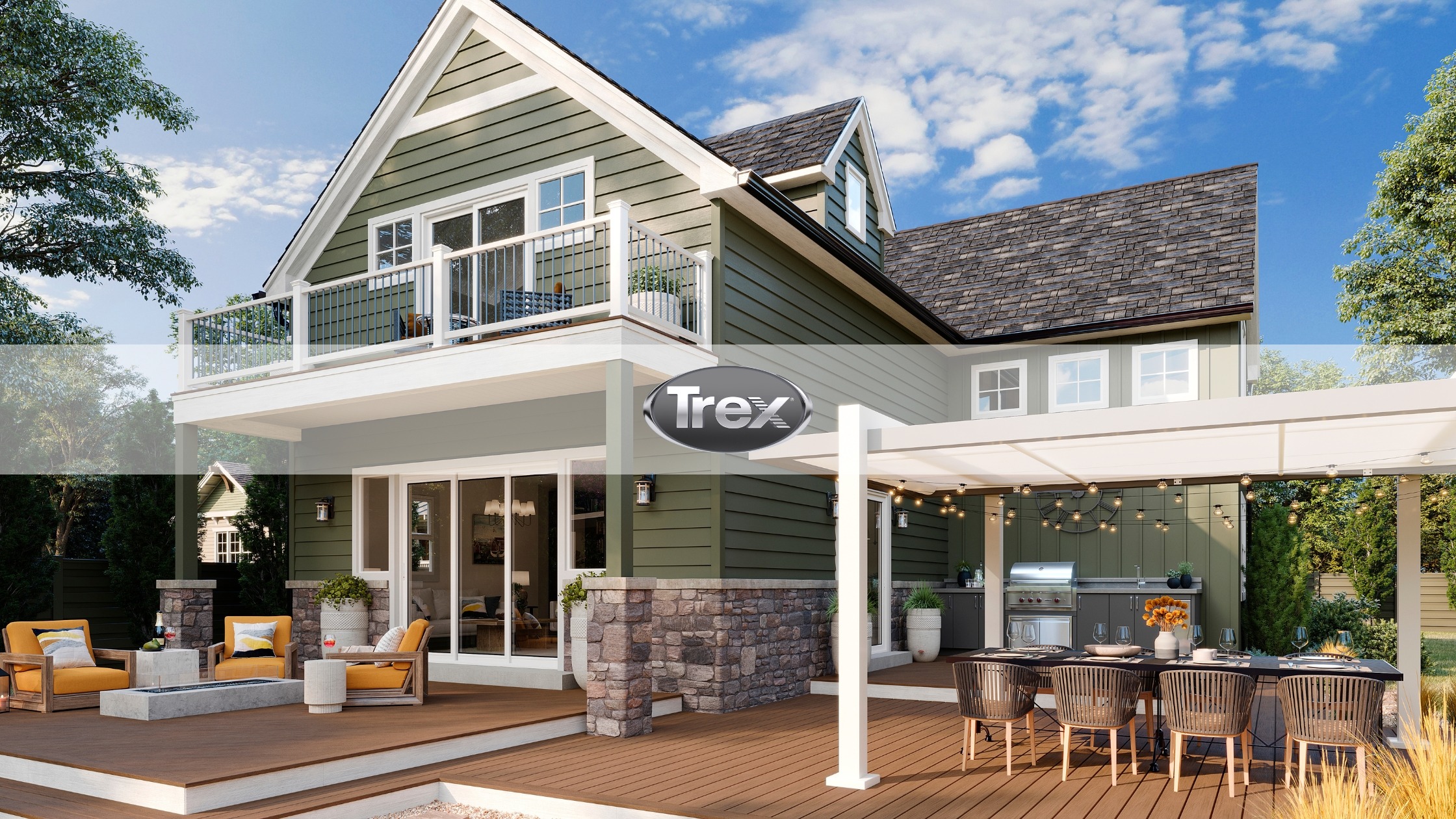
Trex basically started this whole category. They invented the composite decking board back in 1996, patented it in 1998, and have been the biggest name in the space ever since. The concept was simple but smart: take plastic bags and reclaimed wood that would’ve gone to landfills, grind them up, and press them into deck boards.
That core idea hasn’t changed much. What’s changed is everything around it – the cap technology, the color options, the heat resistance, and the product tiers. Today Trex sells everything from the budget-friendly Enhance line all the way up to the Signature collection, with the Transcend and Transcend Lineage series sitting in the middle as their most popular choices.
A few things that make Trex stand out in 2026:
The Transcend line has some of the best scratch resistance in the industry. If you have big dogs or kids who drag furniture around, that matters. Their color palette runs about 32 options – Rocky Harbor, Spiced Rum, and Island Mist are perennial favorites, while the Lineage series added cooler-toned modern colors like Biscayne and Rainier that actually stay cooler underfoot thanks to SunComfortable™ Technology (which is now rolling out to their mid-range boards too, not just the premium ones).
They also just launched Trex Refuge, a cellular PVC board designed for fire-prone areas with WUI compliance. That’s a big deal because Trex was previously composite-only. Now they’re playing in both arenas.
Trex has the longest track record of any composite brand – nearly 30 years of real-world performance data. You can also find their products at Premium Decking Supply and the big box stores, which makes price-shopping and quick replacements easier than brands that only sell through specialty dealers. For DIYers, that retail availability is a real plus.
What Is TimberTech?
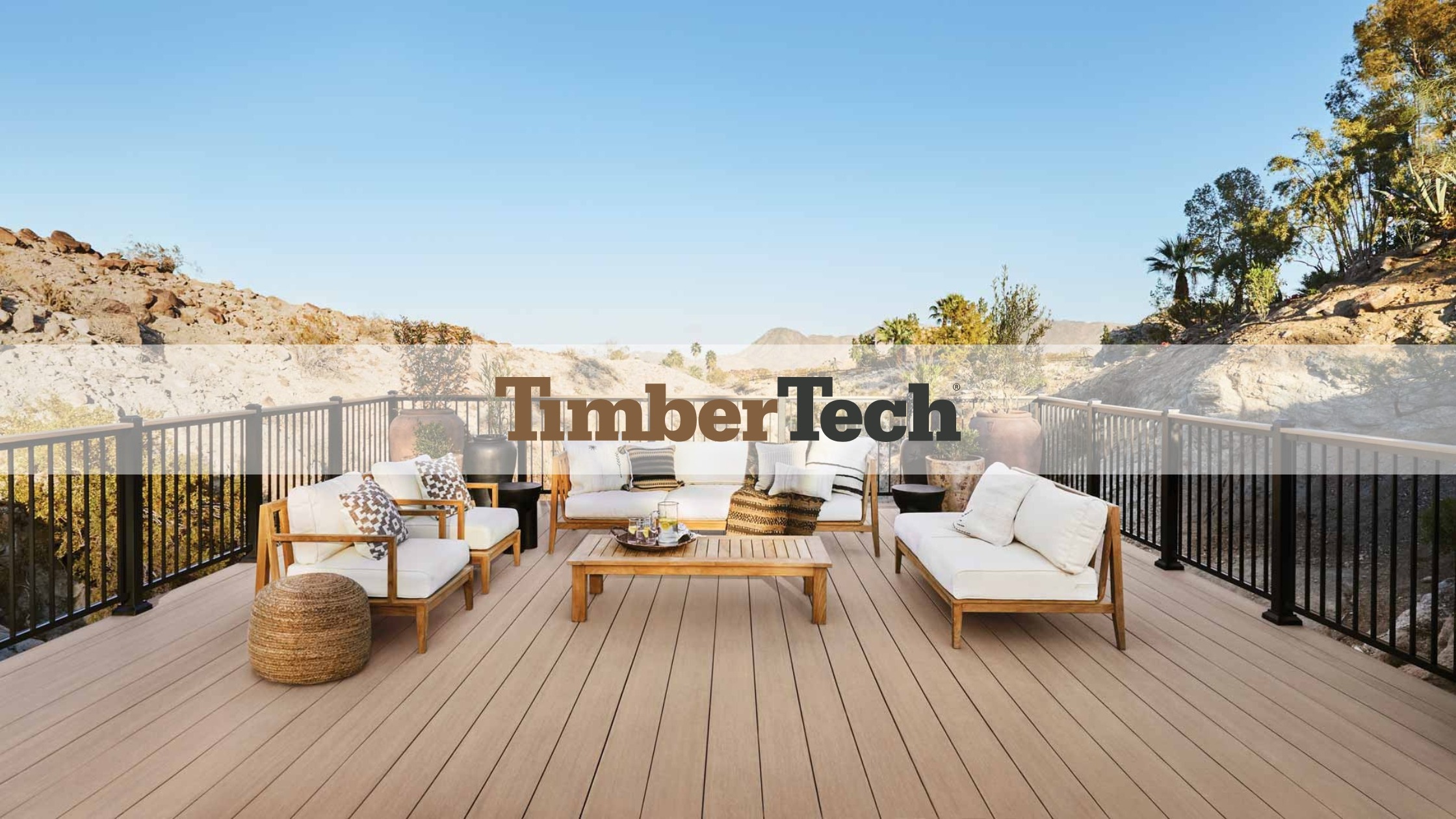
TimberTech has been around since 1997, just a year behind Trex. They’re owned by The AZEK Company, which James Hardie Industries acquired in 2025 – giving them even deeper pockets for R&D and distribution.
The biggest difference between TimberTech and everyone else? They sell both composite decking AND PVC decking. Most brands pick one lane. TimberTech gives you the full menu, from affordable composite boards (Prime, Premier) all the way up to their flagship Advanced PVC lines (Vintage, Landmark, Harvest).
Their Advanced PVC stays up to 30 degrees cooler than standard composites in direct sun. TimberTech also offers around 40 color options, which is more than any competitor. Colors like Weathered Teak, Sea Salt Gray, Coastline, and Mahogany lean into natural wood looks with multi-tonal blending. Their PVC lines carry a 50-year fade and stain warranty plus a lifetime structural warranty, and their fire ratings (Class A Flame Spread, Ignition Resistant designation) are among the best available.
On the flip side, TimberTech’s PVC boards cost significantly more than composites, and the brand isn’t as widely stocked at retail stores. You’ll generally need to work with a dealer or specialty supplier, which can make the buying process less convenient.
How Capping Works (And Why You Should Care)
This is the thing that actually separates these two brands more than color or price, and almost nobody talks about it when they’re shopping.
Every composite deck board has a “cap” – a protective polymer shell that covers the core material. The cap is what protects against stains, scratches, fading, and moisture. Here’s where the debate gets interesting.
Trex caps three sides of their boards. Top and both edges, but the bottom stays open. Their thinking goes like this: moisture is going to get in eventually, so give it a way out. It’s the same principle as putting weep holes in a window frame instead of caulking every gap shut. Let the board breathe. With proper airflow underneath – which most standard raised decks naturally provide – this design works exactly as intended and has been proven over nearly three decades of installations.
TimberTech wraps all four sides. Their philosophy is the opposite – don’t let moisture in at all, and you don’t need to worry about letting it out. The trade-off is that if moisture does somehow get trapped inside (from a cut end or a fastener hole, for example), it has nowhere to go.
Which approach is right? Both have solid engineering logic behind them. For a standard raised backyard deck with normal airflow, Trex’s breathing design has decades of proven performance. For ground-level builds, shaded areas, or coastal environments with constant humidity, TimberTech’s sealed approach adds an extra layer of protection. Your specific site conditions should drive this decision more than any brand preference.
One cosmetic note on Trex’s open bottom: the exposed underside can sometimes develop uneven coloring after a few years – contractors call it the “cheetah effect.” It doesn’t affect performance, but it can be visible from below on raised or second-story decks.
Trex vs. TimberTech: Durability and Performance
Scratches
Trex’s Transcend line is one of the most scratch-resistant composites on the market. If you’ve got a golden retriever who tears across the deck every time someone rings the doorbell, or metal patio furniture that gets dragged around, Transcend handles it well.
TimberTech’s Advanced PVC has the hardest surface overall – harder than any composite from either brand. But it also costs significantly more. Among composites at similar price points, Trex generally edges out TimberTech on scratch resistance. And across both brands, the premium lines hold up much better than the entry-level ones. You get what you pay for.
Moisture
TimberTech’s four-sided capping gives it an advantage in moisture-heavy environments. Their PVC boards contain zero organic material, so there’s nothing for mold or mildew to feed on. That’s a genuine benefit for humid climates.
But let’s keep this in perspective. Trex’s three-sided cap has been working fine on millions of decks for decades. With reasonable airflow underneath – the kind most standard deck installations naturally provide – moisture isn’t an issue. Where it can become a concern is on ground-level builds with minimal clearance, heavily shaded decks, or in consistently wet climates. In those specific situations, TimberTech’s sealed design adds useful insurance.
Heat
All synthetic decking gets hot in the sun. Anyone who tells you otherwise is selling something. But how hot varies.
TimberTech’s Advanced PVC runs about 30 degrees cooler than standard composites. That’s a real difference if you live in a hot climate. Trex’s Transcend Lineage boards have their own heat-mitigating tech (SunComfortable™) that narrows the gap, and they’ve started rolling it out to lower-tier boards too. Between the two, TimberTech PVC stays cooler, but Trex is actively closing that gap – and at a lower price point.
Either way, lighter colors stay noticeably cooler than dark ones regardless of brand. That’s probably the single biggest factor in deck surface temperature.
Fading
TimberTech AZEK has a slight edge in long-term color retention. Trex’s cap technology does a solid job with UV protection, but some gradual fading can happen over many years. The difference is subtle, not dramatic – we’re talking about shades, not a complete color change.
Both brands go through a minor color shift in the first 3-4 months after installation. That’s normal with any composite or PVC product, not a defect. After that settling period, what you see is what you’ve got for the foreseeable future.
Traction
TimberTech’s PVC boards offer roughly 40% more grip than standard composites when wet. That matters for pool-adjacent decks and rainy climates. Trex composites have acceptable traction for most situations, but if wet-surface grip is a priority for your project, TimberTech PVC has a measurable advantage here.
Walking Barefoot, Playing With Kids, Living With Pets
Neither brand will give you splinters. That’s table stakes for composite and PVC.
The real comfort question is heat. PVC (from either brand – Trex Refuge or TimberTech AZEK) cools down faster in the evening than composite boards. If your household includes small kids running around without shoes or a dog who sprawls on the deck in the afternoon, lighter-colored boards from either brand’s PVC line will be the most comfortable option. For composite-only budgets, just go with a lighter color and you’ll be fine for most of the day.
Trex vs. TimberTech: Looks and Style
Colors
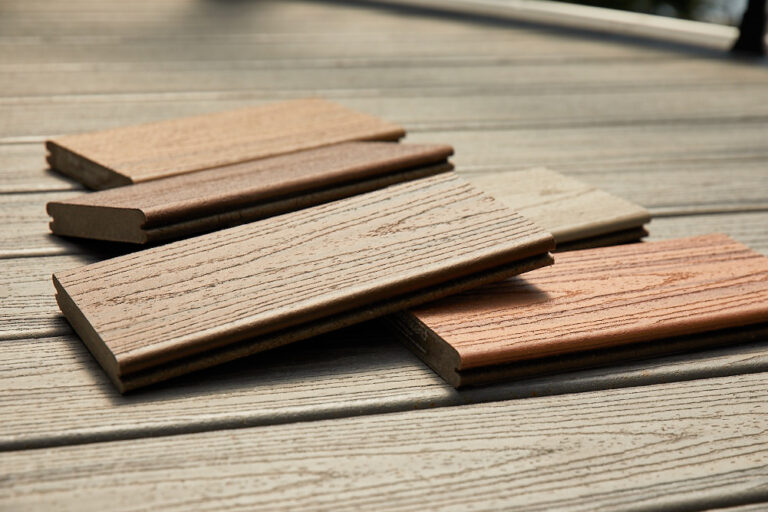
Trex skews bold and contemporary. Rocky Harbor (a warm grey-brown), Spiced Rum (classic reddish-brown), Island Mist (silvery grey). The Transcend Lineage series added Biscayne, Rainier, and Carmel – modern tones that happen to reflect more sunlight. At the very top sits the Signature collection with ultra-premium shades like Whidbey and Ocracoke. If you want a clean, modern-looking deck, Trex’s palette is built for that.
TimberTech goes after the natural wood look. Weathered Teak, Sea Salt Gray, Mahogany, French White Oak, Coastline. Their premium PVC lines (Vintage, Landmark) have matte finishes and subtle color variation between boards, so the deck doesn’t look stamped out of a factory. If your goal is a deck that people mistake for real hardwood, TimberTech’s color work is impressive.
Different aesthetics, both done well. It’s less about “better” and more about what look you’re going for.
Texture and Grain
Trex embosses a consistent wood grain pattern across all their lines. Clean, uniform, modern. The trade-off is that the pattern can repeat visibly on bigger decks – you might notice the same knot pattern showing up every few boards. Some people prefer that consistency. Others find it a little too uniform.
TimberTech’s Reserve and Vintage collections use wire-brushed textures with color streaking that varies from board to board. It looks more organic. In homeowner surveys, about 60% prefer TimberTech’s natural look and 40% go for Trex’s consistency. Neither is wrong – it’s pure personal taste.
Trex vs. TimberTech: Pricing and Cost Breakdown
Numbers. Let’s talk numbers.
Trex boards typically cost $43 to $68 per board, depending on the line. TimberTech runs $65 to $91 per board. For a standard 300-square-foot deck with professional installation, you’re looking at roughly $12,000 to $15,000 for composite from either brand. Go with TimberTech AZEK PVC and the number climbs higher.
Trex’s Enhance and Select lines are where budget-conscious homeowners land. They’re genuinely affordable for composite decking without cutting too many corners on durability. Even Trex’s Transcend line typically costs less per board than TimberTech’s comparable collections. For a lot of homeowners, that price difference is the deciding factor – and there’s nothing wrong with that. Trex at a lower price point still gives you a deck that’ll last decades with minimal maintenance.
TimberTech costs more because it includes more at the upper tiers: four-sided capping, full PVC options, advanced fire ratings, cooler surface temperatures. Whether those extras justify the premium depends on your situation. A standard backyard deck in a temperate climate probably doesn’t need them. A pool deck in south Florida probably does.
Thinking Long-Term
Both brands save you money over time compared to wood – no staining, sealing, or replacing rotted boards. Between the two, the cost difference in maintenance is minimal. Trex needs a wash a couple times a year. So does TimberTech. The real long-term value question comes down to whether the specific features you’re paying extra for (PVC moisture resistance, heat mitigation, lifetime structural warranty) actually matter for your project. If they do, the premium pays off. If they don’t, the money is better left in your pocket.
Railings, Lighting, and Everything Else
Don’t forget about the stuff around the boards. Both companies sell full accessory ecosystems: railings, fascia, lighting, even under-deck systems.
Trex’s railing options (Signature is the premium one) tend to be more affordable and easier to source at retail stores. They also make the RainEscape system, which waterproofs the area underneath a raised deck so you can use that space even when it’s raining. Contractors tend to prefer RainEscape for ease of installation.
TimberTech’s accessories lean more upscale. RadianceRail is their premium railing line, and they offer matching fascia, risers, and post lighting that all coordinate with their board colors. If you’re going for a high-end, fully cohesive look, TimberTech’s system is worth a look.
Both let you build a deck where the boards, rails, stairs, and lighting all match without mixing brands.
Cleaning: What “Low Maintenance” Actually Means
“Low maintenance” doesn’t mean “no maintenance.” Both brands need a wash with soap and water a couple times a year. If mold or mildew shows up in damp shady spots, a composite deck cleaner handles it.
A couple practical tips: don’t pressure wash above 1,500 psi or you’ll damage the cap. PVC boards (from either brand) dry faster after rain or cleaning because they don’t absorb any water – so they spend less time looking wet between cleanings. Composite boards dry a bit slower, but we’re talking hours, not days.
Neither brand ever needs staining, sealing, or sanding. That’s the real selling point over wood, and it’s not even close.
Trex vs. TimberTech: Warranties Compared
Both brands offer multi-decade warranties, but the structure is different enough that it’s worth breaking down.
Trex Warranties
- Signature: 50-year Limited Fade and Stain
- Transcend Lineage and Transcend: 50-year Limited Fade and Stain
- Select: 35-year Limited Fade and Stain
- Enhance: 25-year Limited Fade and Stain
- Refuge (PVC): 50-year Limited Residential
Trex’s warranty tiers give you more granularity. If a 50-year warranty feels like overkill for your budget, the 35-year Select line is a nice middle option that TimberTech doesn’t really have an equivalent for.
TimberTech Warranties
- Legacy, Reserve, Terrain+, Terrain, Premier+: 30-year Limited Fade and Stain
- Prime+, Premier and Prime: 25-year Limited Fade and Stain
- Vintage, Landmark, Harvest, Harvest+, Porch (PVC): 50-year Limited Fade and Stain plus lifetime structural warranty
That lifetime structural warranty on TimberTech’s PVC is a standout. Trex doesn’t offer anything equivalent. But you’re also paying PVC prices to get it.
If you hire a TimberTech-certified Platinum Pro contractor, you can get an extended labor warranty – typically 3-5 years longer than a non-certified installer. Trex have an equivalent certification program with the same warranty boost.
How Coverage Decreases Over Time
All decking warranties pay out less the older your deck gets. Here’s how both brands scale it down:
Trex:
| Year of Claim | 50-Year Warranty | 35-Year Warranty | 25-Year Warranty |
|---|---|---|---|
| 11-13 | 90% | 80% | 80% |
| 14 | 90% | 80% | 60% |
| 15-16 | 90% | 60% | 60% |
| 17-18 | 70% | 60% | 40% |
| 19-20 | 70% | 40% | 40% |
| 21-22 | 70% | 40% | 20% |
| 23-25 | 50% | 20% | 10% |
| 26-28 | 50% | 20% | – |
| 29-31 | 30% | 10% | – |
| 32-35 | 30% | 10% | – |
| 36-40 | 20% | – | – |
| 41-50 | 10% | – | – |
TimberTech:
| Year of Claim | 50-Year Warranty (Advanced PVC) | 30-Year Warranty (Legacy, Reserve, Terrain, Terrain+, Premier, Premier+) | 25-Year Warranty (Prime+, Prime) |
|---|---|---|---|
| 11-13 | 90% | 90% | 80% |
| 14 | 80% | 80% | 60% |
| 15-16 | 75% | 70% | 60% |
| 17-18 | 65% | 60% | 40% |
| 19-20 | 55% | 50% | 40% |
| 21-22 | 50% | 40% | 20% |
| 23-25 | 45% | 30% | 10% |
| 26-28 | 30% | 10% | – |
| 29-31 | 25% | 10% | – |
| 32-35 | 20% | – | – |
| 36-40 | 15% | – | – |
| 41-50 | 10% | – | – |
For maximum protection, both brands have 50-year tiers. Trex’s 35-year Select line is a solid middle ground. TimberTech’s composite collections cluster around 30 years. At the budget end, both offer 25-year coverage.
Trex vs. TimberTech: Environmental Impact
Trex is the clear green leader when it comes to what goes into the boards. Ninety-five percent recycled content – mostly plastic film and reclaimed wood – makes them one of the country’s largest recyclers of plastic bags and stretch wrap.
TimberTech uses up to 85% recycled material in their composite lines. Not as high as Trex, but still substantial. Their environmental edge is different: the PVC boards are recyclable at end of life. So while Trex wins the “recycled input” story, TimberTech has a “recyclable output” story. Different sides of the same coin.
If sustainability drives your buying decision, Trex gets the nod. But neither brand is a bad choice from an environmental standpoint – both are dramatically better than pressure-treated lumber.
Which Deck Type Is Each Brand Best For?
Pool decks. TimberTech PVC. Better slip resistance when wet, no moisture absorption, stays cooler. Trex composites work near pools too, but they need good drainage and airflow underneath.
Coastal or waterfront homes. TimberTech PVC again. No organic material means salt air, humidity, and occasional standing water won’t cause problems. Trex can handle coastal environments, but you’ll need to be more deliberate about installation and ventilation.
Ground-level decks or builds with low clearance. TimberTech wins here because four-sided capping doesn’t rely on airflow from below. Trex’s open bottom needs room to breathe – if you can’t provide that, moisture issues become more likely.
Standard backyard decks. Honestly? Either works great. This is where Trex’s price advantage matters most. You’re getting a deck that’ll look good and last for decades, and you’re keeping a few thousand dollars in your pocket.
The Bottom Line: Trex vs. TimberTech
There’s no universal winner here. These are two excellent brands that prioritize different things.
Trex brings nearly 30 years of proven performance, the best recycled content in the industry, strong scratch resistance (especially Transcend), wide retail availability, and prices that fit more budgets. For most standard residential decks, Trex gives you everything you need at a price that makes sense.
TimberTech brings the widest color palette, the most realistic wood-grain textures, PVC options for extreme environments, four-sided capping, and a lifetime structural warranty on their top lines. For projects where moisture, heat, or fire resistance are genuine concerns, TimberTech’s premium offerings are purpose-built for those challenges.
The right choice depends entirely on your project: your climate, your budget, your site conditions, and your aesthetic preferences. Both brands will give you a deck that lasts decades with minimal upkeep. You really can’t go wrong with either one.
Frequently Asked Questions:
Both brands warranty their premium lines for up to 50 years, and the boards themselves can last well beyond that with basic soap-and-water cleaning a couple times per year.
Lots of people do, especially with Trex since it’s stocked at major retailers. TimberTech is more commonly sold through dealers, which can make sourcing boards for a DIY project a little more involved. Either way, professional installation tends to produce a tighter, longer-lasting result.
Trex boards contain 95% recycled material, mostly reclaimed plastic and wood – they’re one of the largest plastic film recyclers in the country. TimberTech composites use up to 85% recycled content, and their PVC boards are recyclable when you eventually replace them. Both are far better for the environment than pressure-treated wood.
Be careful. Both brands can handle winter weather, but certain de-icing chemicals can damage the board surface. Check the specific product guidelines before you spread anything.
It varies by product line and local building codes. There’s no universal answer – always check the installation manual for the boards you’re buying.
TimberTech offers around 40 colors versus Trex’s 32. TimberTech leans heavier on natural wood tones with multi-tonal blending. Trex has more contemporary and bold options. More colors doesn’t automatically mean better – it depends on what look you’re going for.
Yes, slightly. Both brands settle into their final color during the first 3-4 months. It’s a subtle shift, not dramatic, and it stabilizes permanently after that.
Standard composites from both brands have decent traction. TimberTech’s PVC boards grip about 40% better when wet, which is worth knowing if you’re building around a pool. For a standard deck that’s not regularly wet, both brands are fine.
Both brands score well. TimberTech owners tend to rave about the colors and realistic textures. Trex owners love the low maintenance, durability, and value. About 85% of owners rate the design of both brands highly in satisfaction surveys.
Yes, both offer complete accessory lines. Trex sells Signature railings, integrated LED lighting, and the RainEscape under-deck waterproofing system. TimberTech has RadianceRail, post lights, coordinating fascia, and riser boards. Either brand lets you build a fully matched outdoor space.