The place for all your outdoor living space!


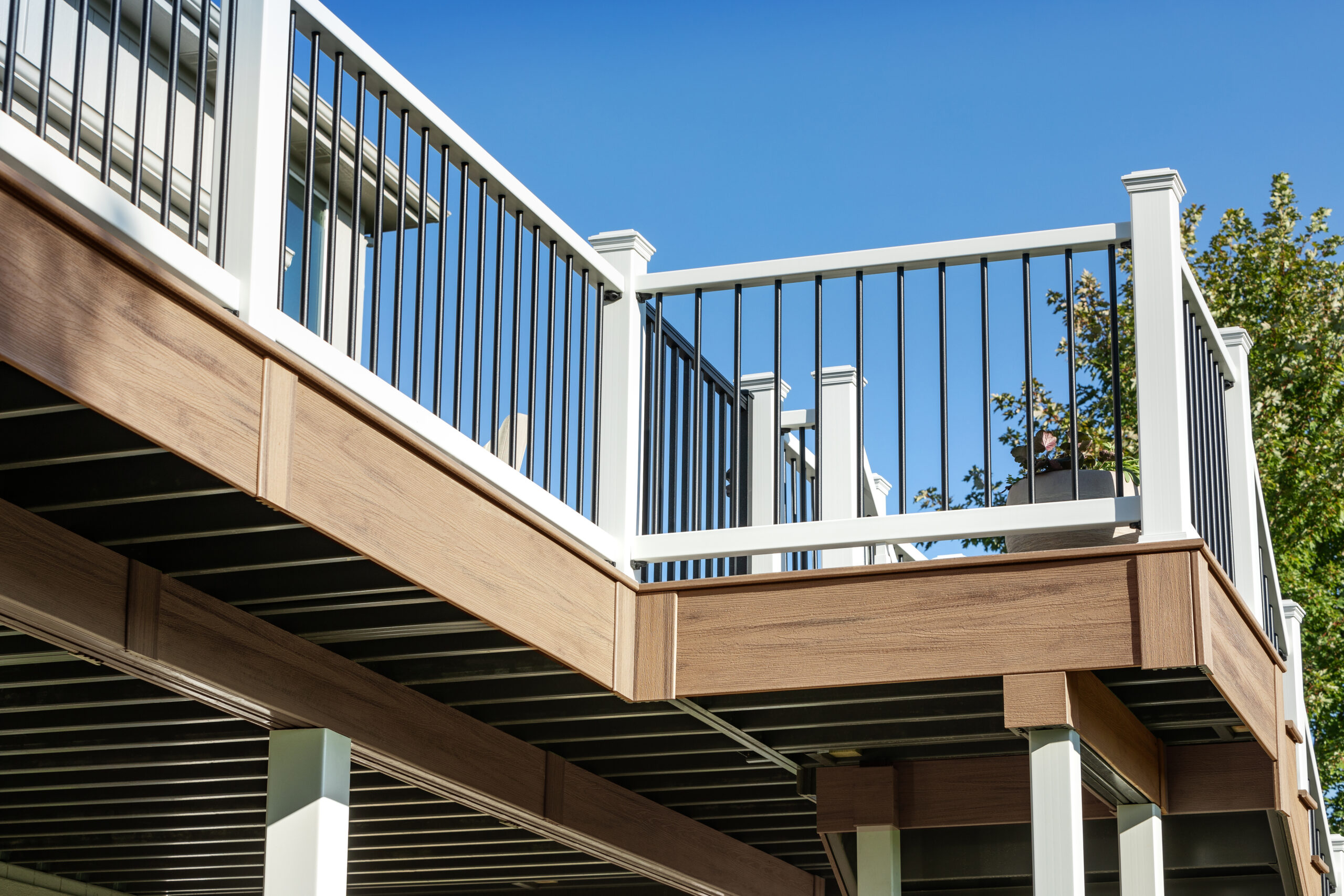
Most people notice the deck surface. The deck boards you walk on, the railing you grip, the color you chose. But the edge of the deck – the part that faces the yard and the street – is what everyone else sees first. And without a fascia board, that edge looks like the inside of a construction site: exposed joists, raw lumber ends, and gaps you can see straight through.
This guide covers everything about fascia boards specifically on decks. Not on your roof. Not on your house’s eaves. Decks. Because the two applications are genuinely different, and almost every resource out there blurs that line.
What Is a Fascia Board on a Deck, Exactly?
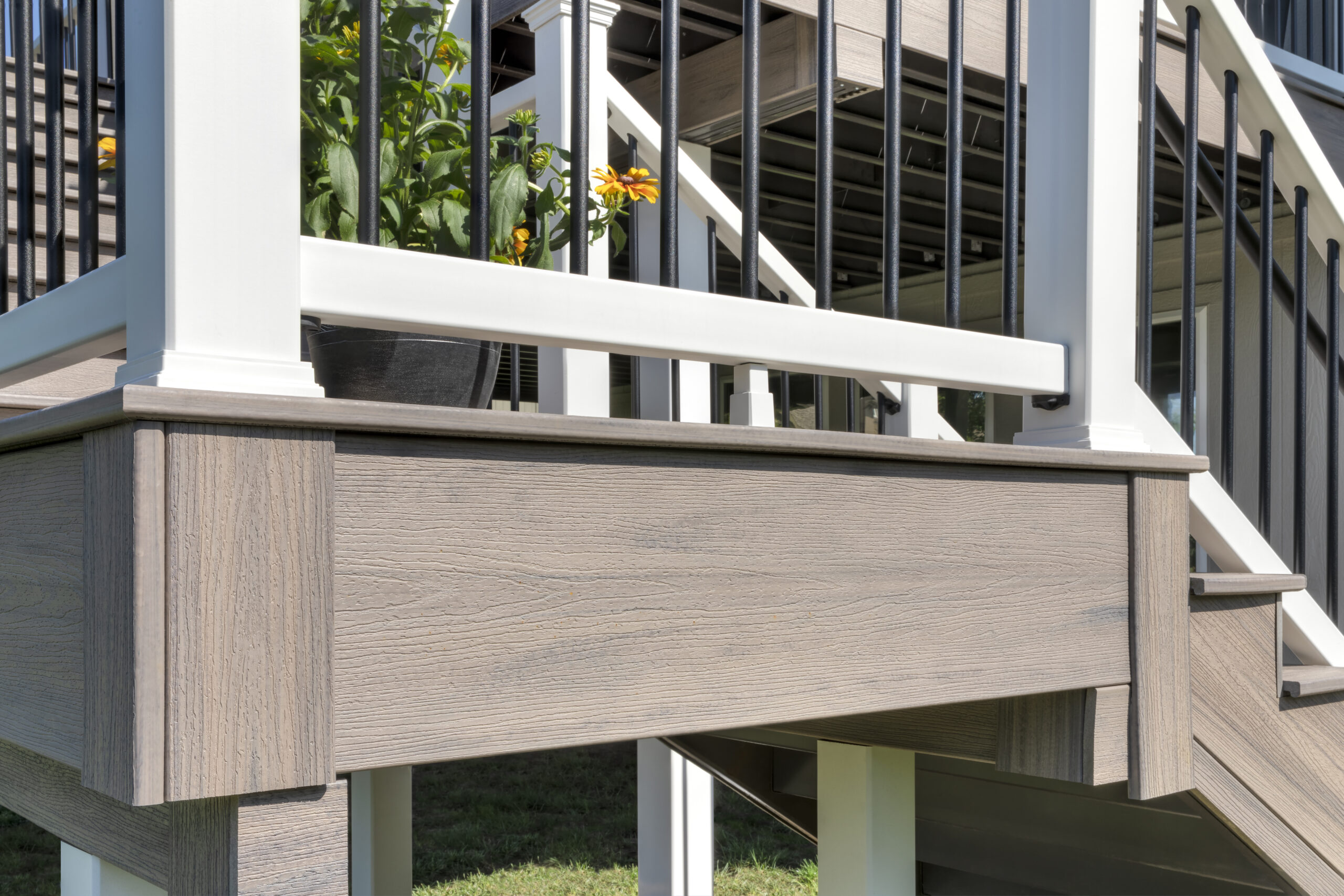
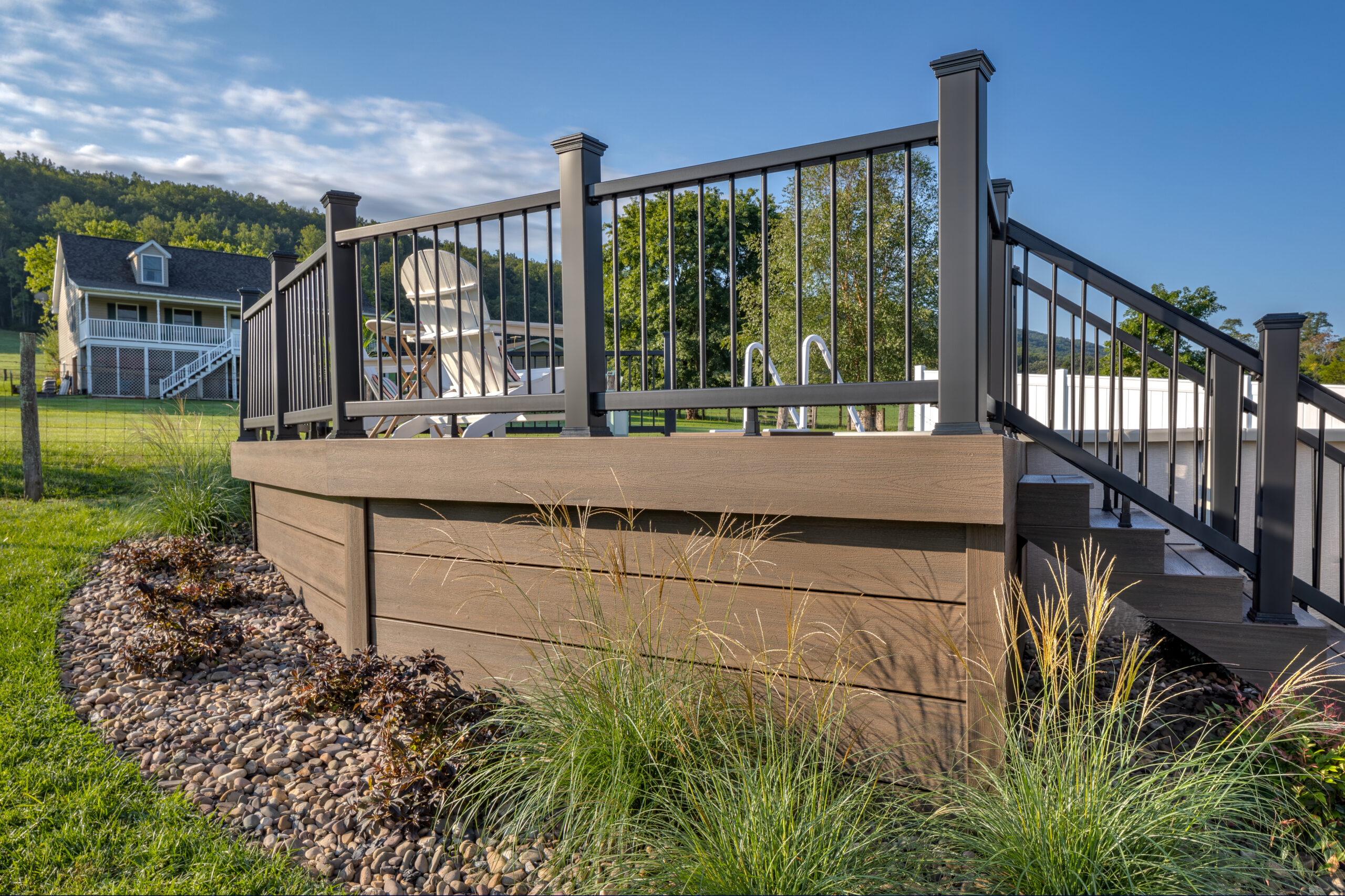
Definition: A deck fascia board is a finish board installed vertically along the outer rim joists of a deck frame. It runs the perimeter of the deck, sitting flush with – or just below – the top surface of your decking boards.
Think of the deck frame as a box. The joists are the interior supports. The rim joists (also called band joists) are the outer edges of that box. Fascia covers those outer edges so you see a clean, finished face instead of the raw framing.
It’s sometimes called a “rim joist cover” or “deck trim board,” and both names describe it accurately.
Fascia is not structural. It carries no load. You can’t use it as a deck board. Its job is to protect and finish – and it does both well when installed correctly.
In practice, this distinction matters when you’re buying materials. Fascia boards are thinner than standard decking – typically ½” to ⅞” thick, compared to the 1″ nominal thickness of most deck boards. They’re made from the same materials and usually color-matched to the deck surface, but they serve an entirely different function.
What Does a Deck Fascia Board Actually Do?
The short answer: it does more than it looks like.
1. Hides the Substructure
Raw rim joists are not pretty. Even pressure-treated lumber shows grain patterns, fastener holes, and variations in color. Fascia creates a uniform, intentional face around the entire deck perimeter. That’s the visible benefit people think about.
2. Protects the Framing from Moisture
Water getting into the rim joist is one of the most common causes of deck rot. Fascia creates a physical barrier. It doesn’t waterproof the framing completely – you still need proper ventilation and drainage under the deck – but it significantly reduces direct exposure to rain and moisture.
3. Keeps Out Pests
Wasps, carpenter bees, and other insects love nesting in exposed deck framing. Fascia boards close off those entry points. It’s not a pest-proof seal, but it removes the obvious open invitation.
4. Finishes the Aesthetic
A deck without fascia looks unfinished. Full stop. The difference between a deck with and without fascia boards is the difference between “we just built this” and “this belongs here.” It’s the visual period at the end of the sentence.
Fascia also creates a cleaner line when combined with deck skirting or underdeck framing. If you plan to add any of those features, fascia should go in first – it becomes the anchor point for the rest of the trim work.
Fascia on a Deck vs. Fascia on a House: What’s the Difference?
They share a name and the general concept, but the application is different enough that they shouldn’t be confused when you’re planning or shopping.
| Feature | Deck Fascia | House Fascia (Roofline) |
|---|---|---|
| Location | Outer rim joists of the deck frame | Edge of roof rafters / eaves |
| Thickness | ½” – ⅞” (composite/PVC) | ¾” nominal (1×6, 1×8 wood) |
| Relation to gutters | None (decks don’t have gutters) | Gutters mount to it directly |
| Primary function | Aesthetic finish + moisture barrier | Gutter mount + rafter protection |
| Common materials | Composite, PVC, cedar | Wood, aluminum, vinyl, PVC |
| Structural load | None | Gutter weight only |
Most articles online conflate these two applications. When you search “what is a fascia board,” you’ll find a lot of information about rooflines and gutters. Useful, but not what you’re after if you’re building or renovating a deck.
Fascia Board Materials: Which One Is Right for Your Deck?
The material question is where most homeowners spend the most time – and make the most mistakes. Your fascia should match or complement your decking material. Mismatched materials wear differently, expand at different rates, and look wrong within a year or two.
Composite Fascia
This is the most popular choice for composite decks. Composite fascia boards are made from a mix of wood fiber and plastic, and they’re designed to coordinate with composite deck boards in color, texture, and streaking pattern. They resist rot and moisture well. They don’t need painting or staining.
Most composite decking manufacturers – Trex, TimberTech, Fiberon – sell matching fascia boards for their product lines. Composite fascia typically runs 11¾” wide and between ⅝” and ⅞” thick. It costs more than wood, but the maintenance savings over 10–15 years more than make up for it.
PVC Fascia
For PVC deck boards, the matching fascia is also PVC. Standard thickness is ½”, and it’s available in 11⅞” widths. PVC is easier to cut and install than composite, expands and contracts more predictably, and is fully moisture-proof. The tradeoff is that PVC can look a bit plastic-y in certain light, especially in warm tones.
One practical note: PVC requires temperature-sensitive gap spacing during installation. Manufacturers typically call for a 1/8″ gap in warm weather (above 40°F) and a 3/16″ gap in cold weather. Get those gaps wrong and you’ll see bowing when temperatures rise.
Cedar and Other Wood
If your deck is wood, cedar fascia is the natural match. It looks beautiful, takes stain well, and is naturally resistant to rot and insects. The downside is maintenance. Wood fascia needs to be sealed, stained, or painted every few years. Skip that, and you’ll be replacing it within a decade.
Pressure-treated lumber is sometimes used as a budget option, but it’s not a great choice for a visible fascia face. The green tint, the uneven grain, and the heavy texture don’t lend themselves to a polished finished look.
Aluminum
Aluminum fascia is common on house rooflines but rarely used on decks. It’s lightweight and durable, but the industrial look doesn’t suit most residential deck designs. You’ll see it occasionally on commercial or industrial builds.
| Material | Maintenance | Lifespan | Best For | Cost Level |
|---|---|---|---|---|
| Composite | Very low | 25–30 yrs | Composite decks | $$–$$$ |
| PVC | Virtually none | 25+ yrs | PVC decks | $$ |
| Cedar | Regular sealing | 10–20 yrs | Wood decks | $–$$ |
| Pressure-treated | High | 7–12 yrs | Budget builds only | $ |
Picture Frame Decks and Fascia: How They Work Together
If you’ve looked at deck design inspiration recently, you’ve probably seen picture frame decks. These are decks with a distinct border around the perimeter – a contrasting or complementary band of decking that “frames” the main field of boards, the way a frame surrounds a painting.
Fascia and picture framing are related but not the same thing.
A picture frame board is a decking board. It sits on top of the frame, at deck level. Fascia sits below and around it, covering the rim joists. You can have fascia without a picture frame. And you can have a picture frame without fascia – though that would leave your rim joists exposed.
When you have both, the fascia installs first, then the picture frame border goes on top at deck level. The fascia can sit flush with the picture frame board or just slightly below it, depending on your design preference and the exact board profiles you’re working with.
How Deck Fascia Is Installed: What You Need to Know
Fascia is always face-fastened, meaning the screws or hidden fasteners go through the face of the board into the rim joist behind it. This is different from decking boards, which can be installed with hidden clip systems that leave the face screw-free.
For composite and PVC fascia, manufacturers typically call for pre-drilling before fastening to prevent splitting. Fasteners should be spaced no more than 12–18″ apart, depending on the specific product and manufacturer specs. Two fasteners per stagger point – one near the top, one near the bottom – keeps the board flat against the rim joist.
For longer runs, fascia boards need to be butted at joints. Those joints should always land over a solid backing – the center of a post or a blocking piece added specifically to back the joint. A joint that floats in mid-air will open up over time.
Wood fascia has a specific problem at outside corners. When it dries, miter joints pull apart. The fix is to cut relief grooves in the backside of the board before installation – shallow cuts every inch or so, about 3/8″ deep. That breaks the tension and keeps the corner tight.
Does a Deck Need a Fascia Board?
Technically? No. A deck can be structurally complete without fascia. The framing holds itself together just fine without any finish trim.
Practically? Yes – for any deck where the edges are visible. If your deck is grade-level with no visible edge profile, fascia is less critical. But any deck raised more than a few inches off the ground, or any deck where the perimeter faces a yard, patio, or street, looks dramatically better with fascia. It’s also better protected.
Skipping fascia to save money usually costs more in the long run. Exposed rim joists absorb moisture, attract pests, and degrade faster than covered ones. You’ll spend more replacing framing than you would have spent on fascia boards in the first place.
What to Look for When Buying Deck Fascia Boards
- Color match: Buy fascia from the same manufacturer as your deck boards. Most brands offer exact-match fascia for each collection. Third-party fascia can look close in the store and obviously wrong once installed.
- Width: Standard deck fascia is approximately 11¾”–11⅞” wide. Stair risers use 7½” boards. Make sure you order the right profile for each application.
- Thickness: Composite fascia runs ⅝”–⅞” thick. PVC is typically ½”. Neither should be used as a structural deck board.
- Capping: On composite fascia, check whether both sides are capped (finished) or just one. Fully capped boards look better and hold up longer, since there’s no exposed wood fiber on the back face.
- Length: Most fascia boards come in 12-foot lengths. Plan your layout to minimize joints – and where joints are unavoidable, plan their placement before you order.
Frequently Asked Questions
Deck fascia boards are most commonly made from composite material or PVC, designed to match the deck boards themselves. Wood options like cedar are used on natural wood decks. The material should always match or coordinate with the primary decking material for the best long-term appearance and performance.
Composite deck fascia is typically ⅝” to ⅞” thick. PVC fascia is usually ½” thick. Both are thinner than standard decking boards and should never be used as walking-surface replacements. Standard widths are approximately 11¾” for field fascia and 7½” for stair risers.
Yes – these terms are used interchangeably. The rim joist (also called a band joist) is the outer framing member the fascia attaches to. Some manufacturers label their product “rim joist cover” while others call it “deck fascia.” Same board, same application.
Typically after. The deck surface goes down first, then the fascia is installed around the perimeter. This order makes it easier to get the top edge of the fascia flush with the top of the deck boards. Some builders install fascia before or during decking if the design calls for a specific picture frame sequence.
Yes, fascia installation is one of the more DIY-friendly parts of deck building. You need basic carpentry skills, the right fasteners for your material, and patience with the gap and joint requirements. The most important step is ensuring all joints back up to solid blocking – floating joints are the most common DIY mistake.
House fascia covers the edge of roof rafters at the eave line, where gutters are typically mounted. Deck fascia covers the rim joists at the outer edge of the deck frame. Both hide raw framing edges and protect against moisture, but they serve different structural contexts and are not interchangeable.