The place for all your outdoor living space!


Article Overview
- Quick Answer
- The 50% Rule: Where to Start
- Repair or Replace? The 5 Questions That Actually Matter
- Deck Repair Costs: What You'll Actually Pay
- Deck Replacement Costs: Full Picture
- The Partial Replacement Option: Often the Best Value
- 7 Warning Signs Your Deck Needs to Be Replaced (Not Repaired)
- Signs You Can Repair (And Save the Money)
- Material Lifespan: How Long Should Your Deck Last?
- The Inspection You Need Before Deciding Anything
- ROI: Does a New Deck Add Home Value?
- DIY vs. Hiring a Pro: Where the Line Is
- Frequently Asked Questions
The 50% Rule: Where to Start
Before you call a contractor, there’s one number worth knowing.
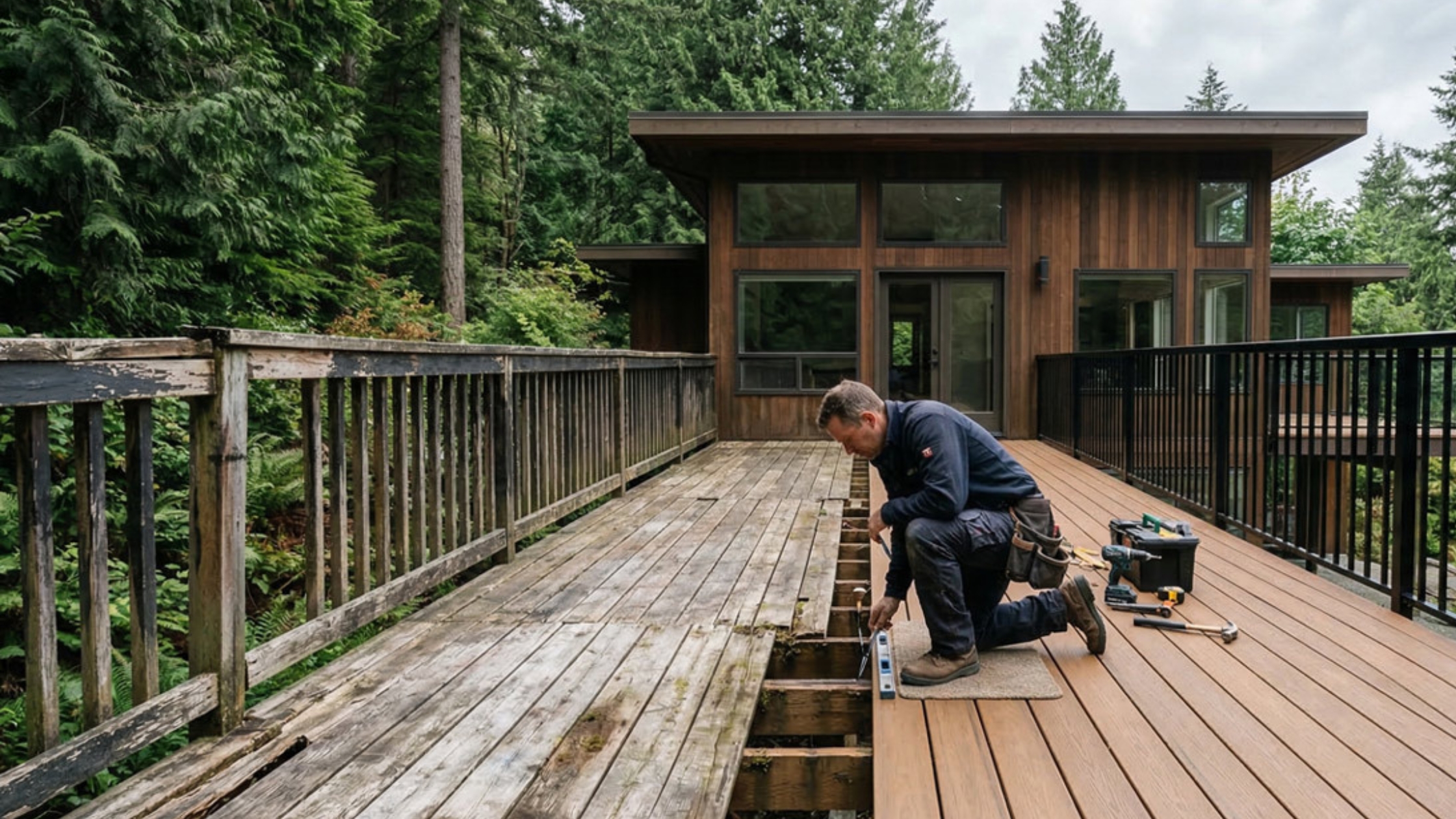
If your repair estimate is approaching half the cost of a full replacement – replace the deck. This isn’t just a rule of thumb – it’s how most experienced contractors think about it. Putting $6,000 into a structure that needs to be torn down in three years isn’t a repair. It’s a delay.
The hard part is that repair costs are rarely obvious upfront. A few soft boards often signal rot underneath. A wobbly railing might mean a post base is gone. That’s why any serious assessment has to look at what’s under the deck, not just what’s on top of it.
Repair or Replace? The 5 Questions That Actually Matter
1
How Old Is the Deck?
Pressure-treated wood decks typically last 15 to 25 years with regular maintenance. Composite decks can stretch to 25 to 30 years. If your deck is already past the 20-year mark and you’re dealing with multiple problems at once, you’re likely throwing money at a structure that’s near the end of its life either way.
A 10-year-old deck with one rotten board is a repair job. A 22-year-old deck with several rotten boards, a corroded ledger, and shaky railings is a replacement candidate – even if each individual fix sounds cheap.
2
Is the Structure Compromised?
This is the most important question on the list. The structural frame of a deck – posts, beams, joists, and the ledger board that connects to your house – is what keeps people safe.
Surface problems are cosmetic. Structural problems are not.
Here’s what to look for:
- Posts: Push a screwdriver into the base of each post. If it sinks in without much resistance, the post is rotting from the inside.
- Joists: Soft, spongy, or cracked joists under the deck surface indicate serious decay. Sistering (adding a new joist alongside the old one) can fix isolated cases, but widespread joist rot almost always means replacement.
- Ledger board: This single board carries the entire load transferred to your house. If it’s showing rot, pulling away from the house, or if the flashing around it has failed, you have a serious problem. A failed ledger is one of the most common causes of deck collapses.
- Footings: If the deck is visibly tilting or separating from the house, the footings may have shifted. This is a foundation-level issue that often makes full replacement more practical than repair.
Key finding: According to the North American Deck and Railing Association (NADRA), ledger board failure and post base rot are the two most frequently cited causes of structural deck failures. Both are hidden problems that surface inspections miss.
3
How Much of the Surface Is Damaged?
There’s a simple math exercise worth doing here. Walk the deck and mark every board that’s cracked, splintered, soft, or warped. If damaged boards cover more than 30% of the surface area, you’re looking at a re-decking project (replacing the surface while keeping the frame) at minimum. At that point, it’s worth pricing out a full replacement too.
Replacing a few boards costs $25 to $85 per board in materials alone. A full deck resurfacing runs $15 to $50 per square foot depending on material. On a 300 sq. ft. deck, that’s $4,500 to $15,000 – sometimes more than halfway to what a new deck costs.
4
Does It Meet Current Building Code?
Codes change. A deck built 15 years ago may not meet today’s requirements for railing height (now 36 to 42 inches in most jurisdictions), baluster spacing (max 4 inches), stair rise and run dimensions, or load ratings.
If you’re resurfacing or making significant repairs, many municipalities will require a permit – and an inspection that flags code violations. You may end up required to bring the entire deck up to current code anyway, which can quickly push repair costs past the replacement threshold.
A new deck built to current code means no surprises when you sell the home. That’s not a small thing.
5
What Are Your Long-Term Goals?
Are you planning to sell in the next two years? A freshly repaired deck may be enough to satisfy a home inspector and buyer. Are you staying in the house for another decade and want an outdoor space you actually enjoy? A new composite deck with low maintenance requirements might be the smarter long-term investment.
This question doesn’t change the structural math, but it does change how you weigh the borderline cases.
Deck Repair Costs: What You’ll Actually Pay
Most minor deck repairs land between $750 and $2,500. Simple fixes – replacing a few boards, securing loose railings, addressing surface mildew – run far cheaper. Complex structural work climbs quickly.
Here’s a realistic breakdown:
| Repair Type | Typical Cost Range |
|---|---|
| Replace 1-3 deck boards | $75 to $350 |
| Full board replacement (surface) | $25 to $125 per sq. ft. |
| Railing repair or replacement | $150 to $5,000 |
| Stair repair (per stair) | $150 to $300 |
| New stair installation | $1,400 to $2,600 |
| Post replacement | $300 to $800 each |
| Joist sistering | $300 to $1,200+ per section |
| Ledger board replacement | $500 to $1,500+ |
| Deck cleaning and sealing | $300 to $1,500 |
| Deck refinishing (sand + restain) | $3.00 to $6.50 per sq. ft. |
| Mildew treatment / power washing | $250 to $450 |
| Pest/termite treatment | $200 to $600 |
One thing worth knowing: structural repairs compound fast. A single joist job turns into two when the contractor discovers adjacent damage. Budget a 15% to 20% contingency on any structural repair estimate.
Deck Replacement Costs: Full Picture
Full replacement costs depend heavily on size, material, and whether you keep the existing footings and frame.
By deck size (materials + labor, national averages):
| Deck Size | Pressure-Treated Wood | Composite (mid-range) | High-End Composite / PVC |
|---|---|---|---|
| 12×12 (144 sq. ft.) | $4,000 – $7,000 | $6,000 – $10,000 | $10,000 – $15,000 |
| 16×20 (320 sq. ft.) | $7,000 – $12,000 | $12,000 – $18,000 | $18,000 – $28,000 |
| 20×20 (400 sq. ft.) | $9,000 – $16,000 | $15,000 – $22,000 | $22,000 – $35,000 |
Labor typically runs $15 to $35 per square foot on top of materials. Demolition and disposal of the old deck adds $500 to $2,500 depending on size. Permits add another $225 to $500 in most areas.
What competitors don’t tell you: Many replacement cost guides price decks without stairs, multi-level design, or integrated lighting. Add $1,400 to $2,600 for a basic stair run, $20 to $60 per linear foot for railings, and $50 to $150 per step for custom landings. These line items can push a mid-range quote up by $5,000 or more.
The Partial Replacement Option: Often the Best Value
Here’s what most homeowners miss – there’s a middle option between patch repairs and a full tear-down.
Re-decking means replacing the surface boards, stairs, and railings while keeping the existing frame, posts, and footings. If the structural frame is sound, this gives you a deck that looks and feels brand new at roughly 40 to 60% of the full replacement cost.
It’s the right call when:
- The frame passes inspection with no rot or shifting
- The existing footings are solid and properly sized
- You want to upgrade from wood to composite without a full rebuild
- The deck is 10 to 18 years old – old enough to need new boards, young enough that the frame has plenty of life left
In practice, redecking a 300 sq. ft. deck in composite runs roughly $6,000 to $12,000 compared to $15,000 to $22,000 for a full rebuild. That gap is real money.
7 Warning Signs Your Deck Needs to Be Replaced (Not Repaired)
Some problems can’t be patched. These are the signs that mean it’s time to start over:
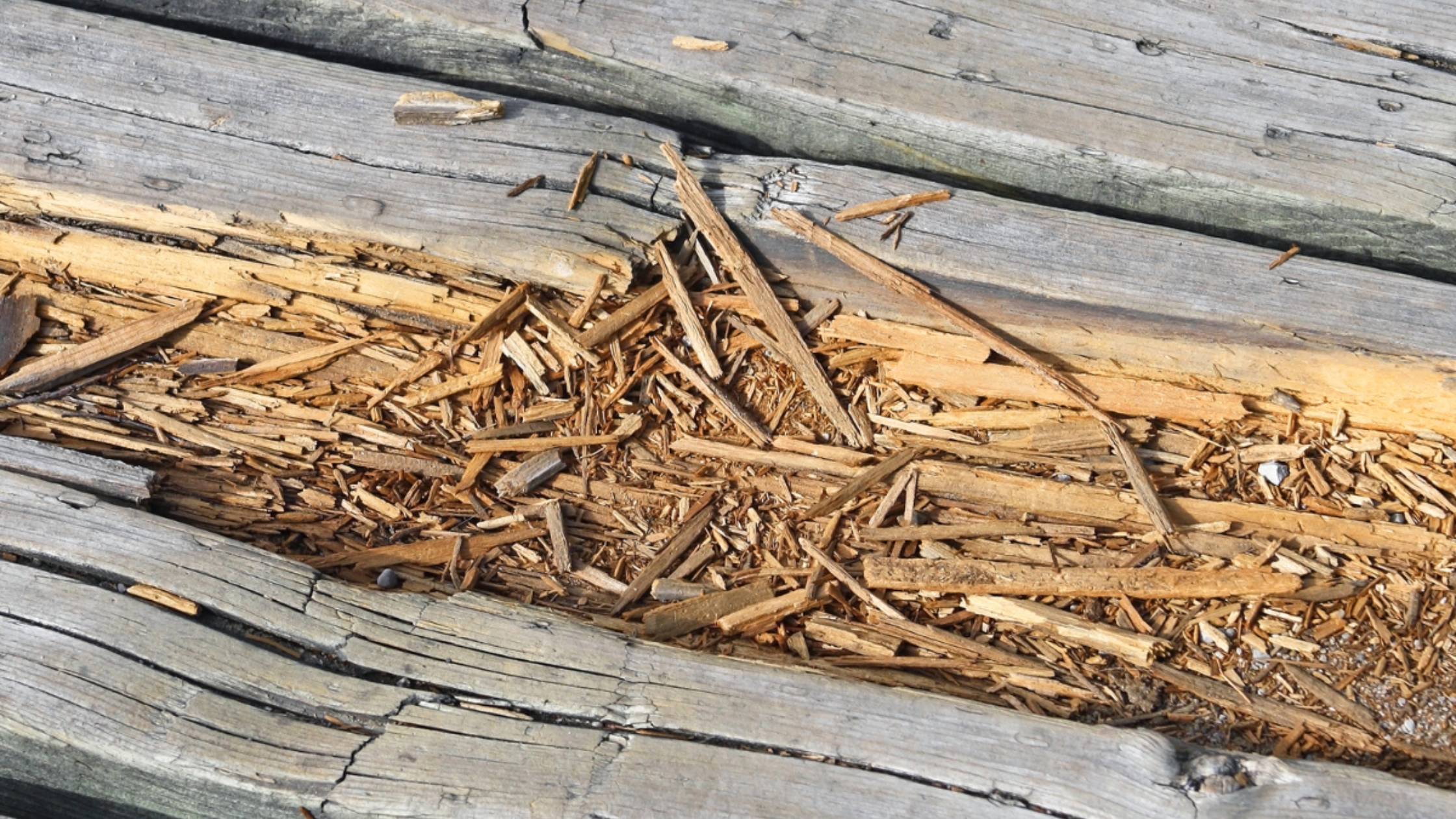
- Widespread soft spots across the surface. If you can feel the boards flex or compress underfoot in multiple places, the rot has spread beyond isolated boards.
- The ledger is pulling away from the house. Any gap between the ledger and the house wall, or visible rust staining from ledger hardware, is a serious red flag.
- Posts are rotting at the base. The ground contact point is where pressure-treated posts fail first. If multiple posts are compromised, the entire load-bearing structure is at risk.
- The deck visibly tilts or sags. This indicates footing failure or structural settling. It cannot be fixed by surface-level repairs.
- Pest damage is widespread. Termites don’t stop at one board. If an inspection finds active termite damage in the framing, the structural integrity of the whole deck is suspect.
- Significant code violations. If the deck was built without permits or was built to old code and needs to be brought up to current standards, you’re often better off rebuilding from scratch than retrofitting.
- Repairs have already been done multiple times. A deck that’s had two rounds of board replacements in the past five years is telling you something. The underlying structure is failing, and the next repair won’t be the last.
Signs You Can Repair (And Save the Money)
Not every worn deck is a lost cause. Repair is the right call when:
- The frame, posts, joists, and ledger all pass the screwdriver test with no soft spots
- Damage is isolated to specific boards or sections (under 20 to 30% of the surface)
- The deck is under 15 years old
- You’re dealing with cosmetic issues: fading, surface cracks, peeling stain, or a few loose boards
- The cost of repairs lands well below 40% of a full replacement quote
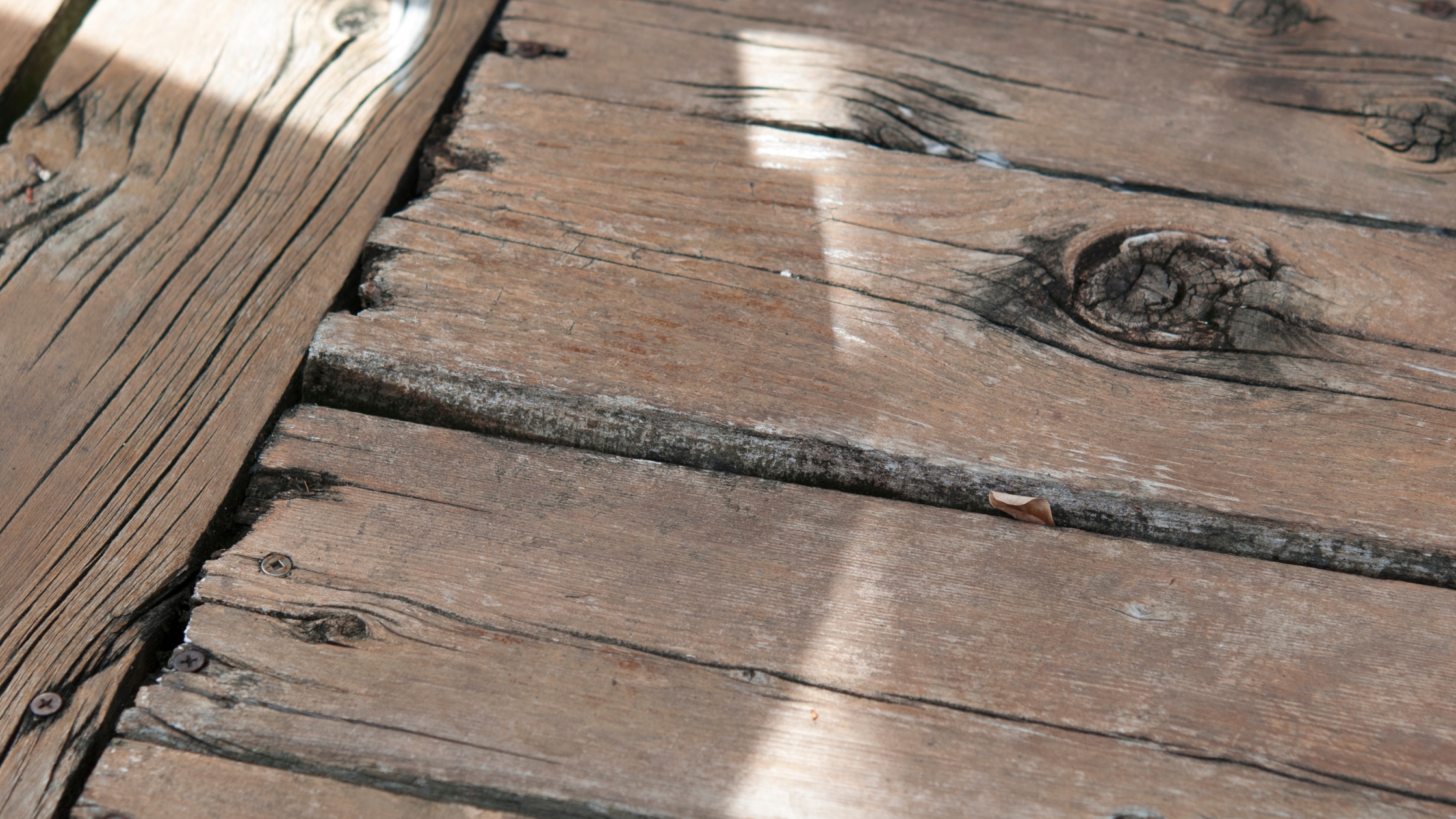
A clean, structurally sound deck with cosmetic wear is exactly what deck refinishing and targeted repairs are designed for. Cleaning, sanding, and resealing a wood deck runs $300 to $1,500 and can add years to its life.
Material Lifespan: How Long Should Your Deck Last?
Different materials have very different life expectancies – and knowing where your deck sits helps you decide whether repair buys meaningful time or just delays the inevitable.
| Material | Expected Lifespan | Maintenance Needs |
|---|---|---|
| Pressure-treated pine | 15–25 years | Seal every 2–3 years |
| Cedar / Redwood | 20–30 years | Seal every 2–3 years |
| Tropical hardwood (Ipe) | 25–40 years | Annual oiling |
| Composite (mid-range) | 20–30 years | Periodic cleaning |
| High-end composite / PVC | 25–35 years | Minimal |
A pressure-treated deck at year 22 that’s showing widespread wear has maybe 3 to 5 years left regardless of what you do to it. At that stage, repair costs are largely money spent on borrowed time.
The Inspection You Need Before Deciding Anything
The biggest mistake homeowners make is getting a repair quote before they’ve had a proper structural inspection.
A surface-level look from the top of the deck doesn’t reveal what’s happening to the joists, ledger, and posts below. A legitimate deck inspector will check from underneath, probe structural members with a screwdriver or moisture meter, and assess the footings.
What to ask for:
- Full structural assessment (not just a surface walkthrough)
- Moisture meter readings on joists and ledger
- Check of all post bases and footing connections
- Code compliance review
Some deck contractors offer free estimates – but an estimate is not an inspection. If you’re on the fence between repair and replacement, spend $200 to $500 on a certified inspector before committing to either path. It’s the cheapest decision you’ll make in this process.
ROI: Does a New Deck Add Home Value?
Yes – but the numbers vary.
According to Remodeling Magazine’s Cost vs. Value Report, a wood deck addition recoups approximately 50 to 66% of its cost at resale on average. Composite decks tend to recoup slightly less upfront but require less maintenance, which factors into buyer perception.
What actually drives ROI:
- Condition relative to the rest of the home (a beautiful deck on a tired house adds less)
- Size relative to the lot (bigger isn’t always better)
- Material quality and finish
- Code compliance (a deck without permits can complicate a sale)
A repaired deck in good condition generally adds more value than a deck in poor condition, regardless of how much was spent on repairs. And a brand-new deck typically improves both appraisal value and time-on-market.
DIY vs. Hiring a Pro: Where the Line Is
Minor repairs are genuinely DIY-able: replacing a single board, tightening railings, cleaning and resealing. These require basic tools and a few hours.
Structural work is different. Ledger replacement, post replacement, joist sistering, and anything touching the footings should be handled by a licensed contractor. Getting the ledger connection wrong doesn’t just void permits – it creates the kind of failure that makes the news.
For full replacements, always get three quotes. Prices for the same deck can vary by 30 to 40% between contractors based on their overhead, material sourcing, and workload. Ask each contractor to itemize labor, deck materials, demo, and permits separately so you’re comparing the same scope.
Frequently Asked Questions
Press a screwdriver firmly into the posts, joists, and ledger board. Solid wood resists the pressure. Rotting wood gives way easily. Also check for visible sagging, separation from the house, or any movement when you walk on it. When in doubt, hire a certified inspector.
Repair is almost always cheaper in the short term. Average deck repairs cost $750 to $2,500. Full replacement runs $8,000 to $22,000+. But if your deck needs multiple structural repairs and is more than 20 years old, replacement often costs less over a 5 to 10 year horizon.
If the total cost to repair your deck exceeds 50% of what a full replacement would cost, replacement is generally the better investment. You get a new structure, updated code compliance, and a fresh warranty rather than patching an aging deck that may need more repairs soon.
Minor repairs (replacing a board, tightening a railing) typically don’t require permits. Any structural work – replacing posts, the ledger, or more than a certain percentage of the deck – usually does. Policies vary by municipality, so check with your local building department before starting significant work.
Minor repairs take 1 to 2 days. Structural repairs can take 3 to 5 days. Full deck replacement typically takes 1 to 2 weeks, depending on size, material, and contractor availability. Permits add additional lead time before work can start.
Yes – this is called re-decking or resurfacing. It works well when the frame (posts, beams, joists, ledger) is structurally sound and has significant life left. A certified inspection beforehand is strongly recommended to confirm the frame is worth keeping.