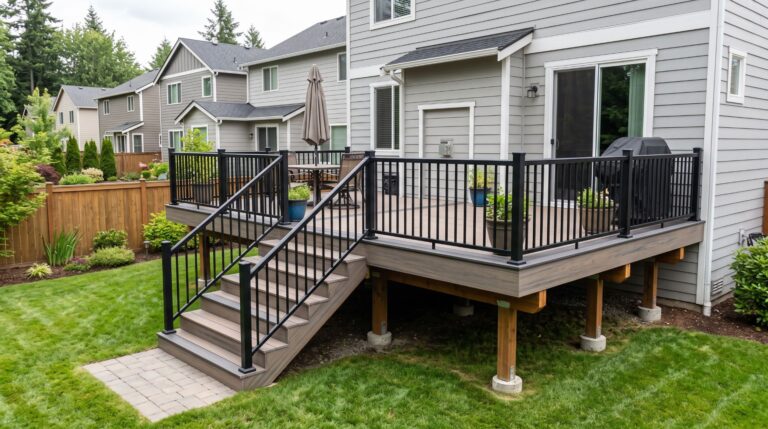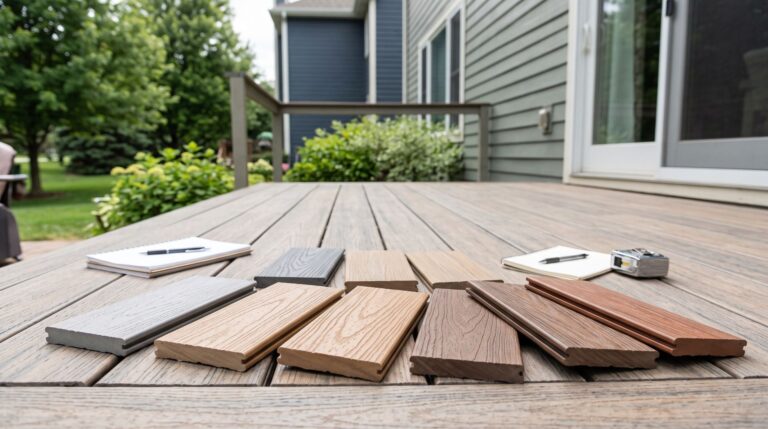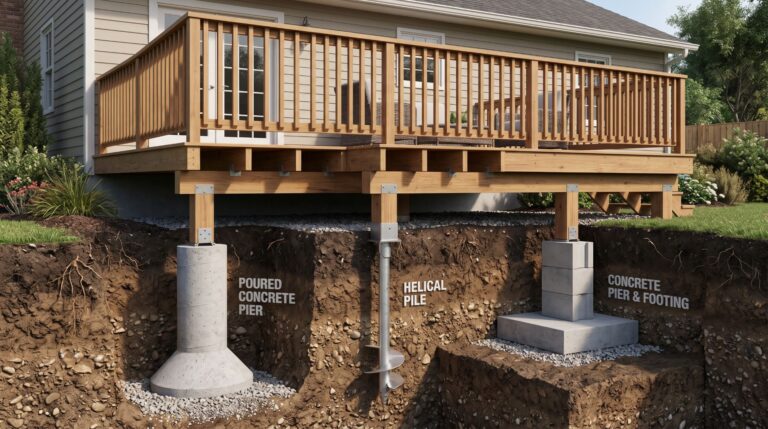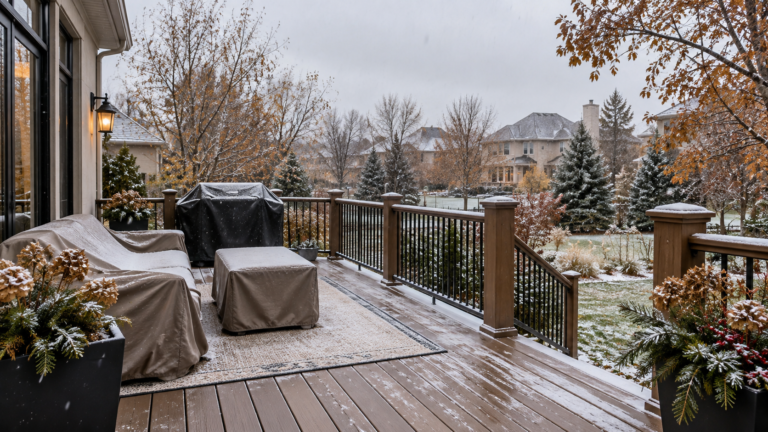
The place for all your outdoor living space!

Premium Decking Supply has been helping homeowners across Illinois, Indiana, and Wisconsin plan and price deck projects since 2013 – with two showrooms and the largest deck display in the Midwest.
What’s the Average Deck Replacement Cost in 2026?
The most-cited national benchmarks for 2026 come from the Zonda Cost vs. Value Report, which puts the average installed wood deck addition at $18,263 and the average composite deck addition at $25,096. These figures are for a professionally installed 16×20 ft deck – a common replacement size.
Most homeowners land somewhere in a wider range. Smaller decks with basic materials start around $5,000. Larger decks with premium composite or PVC boards, custom railings, and built-in features push past $35,000.
Key finding: The single biggest cost driver is not size – it’s material choice. A 300 sq ft deck in pressure-treated wood costs roughly half as much as the same deck built in capped PVC.
National Average Cost Range by Deck Size
| Deck Size | Pressure-Treated Wood | Composite | Premium PVC |
|---|---|---|---|
| 10×10 (100 sq ft) | $2,500 – $4,000 | $3,500 – $5,500 | $5,500 – $8,000 |
| 12×12 (144 sq ft) | $4,800 – $7,200 | $7,200 – $10,000 | $10,000 – $14,000 |
| 16×20 (320 sq ft) | $8,000 – $12,800 | $13,000 – $19,200 | $17,600 – $25,600 |
| 20×20 (400 sq ft) | $10,000 – $16,000 | $16,000 – $24,000 | $22,000 – $32,000 |
These figures include material and professional labor. They do not include permit fees, structural repairs to existing framing, or add-ons like railings, stairs, or lighting.
What Affects the Price Most
Four factors shape the final number more than anything else:
Material tier. Pressure-treated lumber is the budget option. Mid-grade composite adds 30-50% to material cost but drops long-term maintenance costs significantly. Capped PVC and premium brands cost the most upfront but carry the strongest warranties.
Labor rates. Expect $15 to $40 per square foot in labor alone, depending on your region and project complexity. Elevated decks, multi-level designs, and difficult site conditions push this higher.
Existing structure condition. If the frame, posts, and footings are sound, board replacement alone saves considerable money. If the structure needs work, the cost climbs fast.
Add-ons. Railings, stairs, built-in seating, deck lighting, and fascia boards all layer onto the base price. Budget $150-$400 per linear foot for railing, $1,000–$3,000 for a basic stair run.
How 2026 Material Prices Compare to Prior Years
Lumber prices stabilized through 2024 and into 2025, but 2026 has introduced new pressure. Tariffs on imported lumber and steel have pushed framing costs up 8-12% in some markets. Composite decking prices from major brands have held relatively steady, which is one reason composite is looking more competitive on a relative basis than it was two or three years ago.
What this means for your project: If you’re comparing quotes from last year, expect material estimates to run 5-10% higher on pressure-treated wood and hardware. Composite deck board pricing from brands like Trex, TimberTech, and Fiberon has seen more modest increases due to domestic manufacturing.
Deck Cost by Brand Tier
This is where a materials supplier can give you something no general cost guide can: actual brand-level pricing. Here’s how the major composite lines break down by installed cost per square foot.
| Brand & Line | Material Type | Installed Cost (per sq ft) | Warranty |
|---|---|---|---|
| Trex Enhance | Capped Composite | $35 – $45 | 25-year fade/stain |
| Trex Select | Capped Composite | $40 – $50 | 25-year fade/stain |
| Trex Transcend | Capped Composite | $50 – $65 | 25-year fade/stain |
| TimberTech Terrain | Capped Composite | $38 – $50 | 30-year fade/stain |
| TimberTech Reserve | Capped Composite | $52 – $68 | 30-year fade/stain |
| TimberTech Vintage | Capped PVC | $60 – $80 | 50-year + limited lifetime |
| TimberTech Landmark | Capped PVC | $65 – $85 | 50-year + limited lifetime |
| Fiberon Good Life | Capped Composite | $35 – $48 | 25-year |
| Fiberon Sanctuary | Capped Composite | $50 – $65 | 25-year |
| Fiberon Paramount | Capped PVC | $60 – $78 | Lifetime |
| Deckorators Venture | Capped Composite | $38 – $52 | 25-year |
| Deckorators Voyage | Mineral-Based | $55 – $72 | 50-year |
Installed cost includes decking boards and professional labor. Framing, railings, and hardware are separate.
Use our Deck Calculators to run a material estimate for your exact deck dimensions and board choice before you call a contractor.
Price for a 12×12 Deck in 2026
A 12×12 deck (144 sq ft) is the most common replacement size for small-to-mid patios. It fits a table, four chairs, and a grill – enough for everyday use without a major footprint.
12×12 Deck Cost Breakdown
| Material | Material Cost (per sq ft) | Labor Cost (per sq ft) | Total Estimate |
|---|---|---|---|
| Pressure-Treated Wood | $15 – $20 | $20 – $30 | $5,000 – $7,200 |
| Mid-Grade Composite | $22 – $32 | $25 – $35 | $6,800 – $9,600 |
| Premium PVC Decking | $35 – $45 | $30 – $40 | $9,360 – $12,240 |
These estimates cover tear-off of the old surface, material, and installation. If the existing frame is reusable, subtract roughly $800–$1,500 from labor.
What Drives Cost on a 12×12
Flat, ground-level decks on stable soil cost the least. Add stairs and the budget climbs $1,000–$2,500. Add railing around three sides and add another $1,500–$3,000. The material you choose locks in not just today’s price but your maintenance costs for the next 20–30 years – factor that into the decision.
How Much Does It Cost to Build a 20×20 Deck in 2026?
A 20×20 deck (400 sq ft) creates a true outdoor living room. At this size, most homeowners add railing on at least two sides, a stair run, and some form of lighting. Budget for those add-ons from the start.
20×20 Deck Price Table
| Decking Type | Total Price Range (materials + labor) |
|---|---|
| Pressure-Treated Wood | $10,000 – $16,000 |
| Mid-Grade Composite | $16,000 – $22,000 |
| Premium Composite / PVC | $22,000 – $32,000 |
Contractor rates at this scale typically run $45 to $60 per square foot all-in. That number increases if the site requires elevated framing, drainage modifications, or engineered footings.
Cost to Replace Deck Boards Only
Full replacement is not always necessary. If the frame, posts, and footings are structurally sound and code-compliant, replacing only the surface boards is a legitimate option – and it costs significantly less.
Board-only replacement typically runs $15-$35 per square foot, covering material and installation. On a 12×12 deck, that’s $2,160-$5,040. On a 20×20, expect $6,000-$14,000 for boards alone.
When Board Replacement Makes Sense
- Frame shows no rot, splitting, or significant fastener pull-through
- Posts and footings are stable and level
- Deck was built within the last 15 years and meets current code
- You want a material upgrade without rebuilding the entire structure
When It Doesn’t
- Joists are soft, discolored, or springy underfoot
- The deck was built with undersized framing for the span
- You want to change the deck’s shape, size, or height
- The existing structure uses materials that will corrode in contact with new composite (some older pressure-treated formulations react with certain fasteners)
If you’re unsure, a structural inspection costs $200-$500 and tells you exactly what you’re working with before you commit to a scope.
Cost to Remove and Dispose of an Old Deck
Demolition is a separate line item that many estimates bury or leave out entirely. Removing an existing deck costs $500–$2,000 depending on size and how the structure is attached to the house.
Costs vary based on:
- Deck size and height (elevated decks take more time to safely dismantle)
- Whether the ledger board needs to be removed and the house wrap repaired
- Local disposal fees – dumpster rental typically adds $200–$400
- Whether any deck components can be salvaged and recycled
Some contractors include demo in the total quote. Others itemize it separately. Always confirm which approach your quote uses.
Does Deck Replacement Add Value to Your Home?
Yes – and the numbers from the Zonda Cost vs. Value Report are better than most homeowners expect.
- Wood deck addition: $18,263 average cost, 94.9% recouped at resale
- Composite deck addition: $25,096 average cost, 88.5% recouped at resale
Both outperform most interior remodels for resale ROI. One important note: wood recoups a higher percentage because the upfront cost is lower. Composite recoups more in absolute dollars for larger, premium builds. The right choice depends on how long you plan to own the home and how much ongoing maintenance you’re willing to do.
A new deck also increases the functional square footage buyers consider when evaluating a home – that value doesn’t always show up directly in the appraisal but does affect time on market and offer competitiveness.
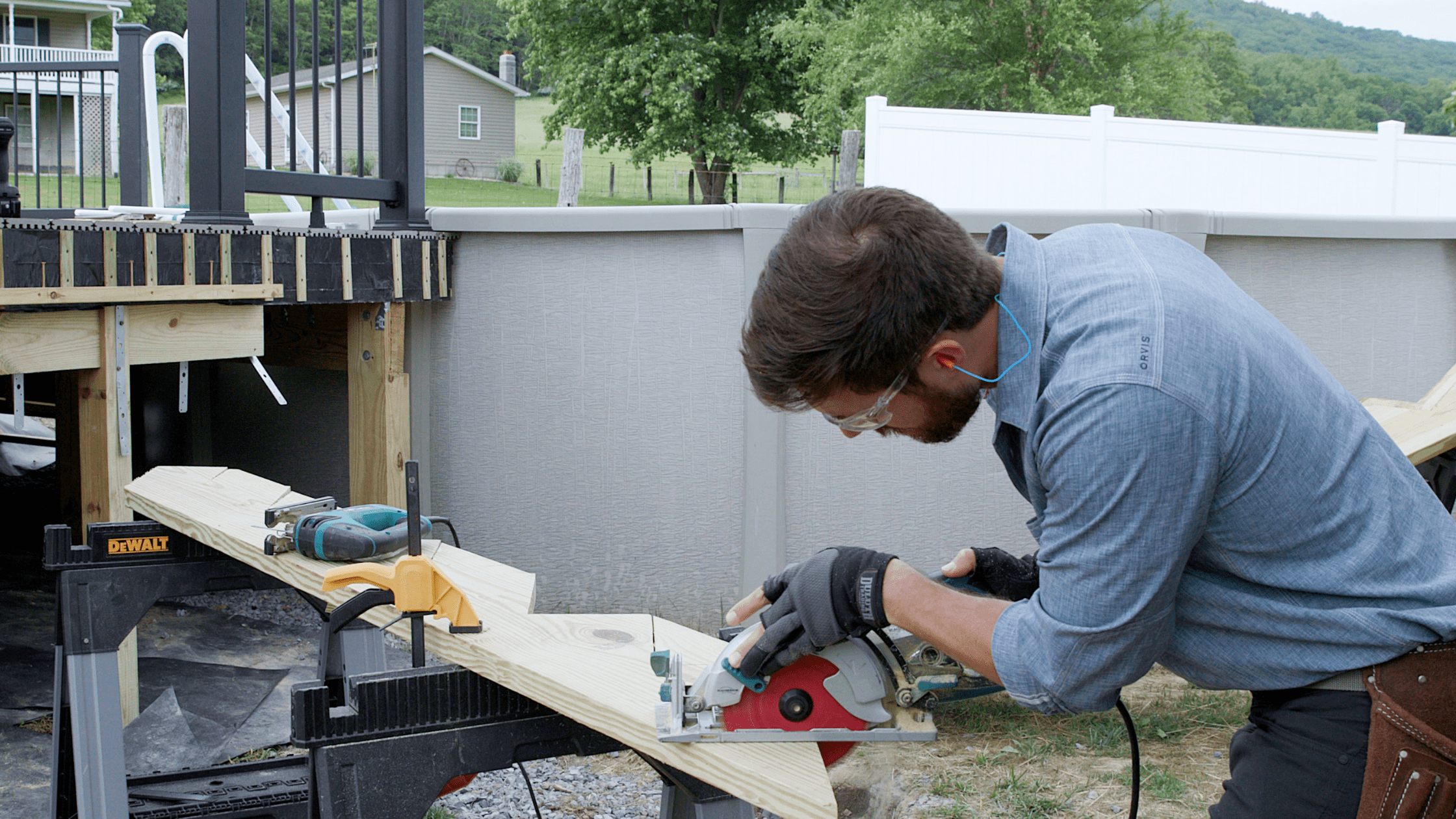
DIY vs. Hiring a Professional: Real Cost Comparison
DIY saves money on paper. In practice, the gap narrows quickly.
A professional handles permits, inspections, structural decisions, and the physical build. Typical labor runs $15–$40 per square foot. On a 20×20 deck, that’s $6,000–$16,000 in labor – real money.
DIY eliminates that cost but adds:
- Tool rental or purchase: $500-$1,500 for a basic build
- Permit filing and inspection scheduling: your time, plus $100–$500 in fees
- Material waste from cuts and mistakes: budget 10-15% extra on boards
- Timeline: a professional crew finishes a 12×12 in 1-3 days; DIY typically stretches 2-4 weekends
DIY makes financial sense if you have construction experience, the right tools, and the time to do it properly. For most homeowners replacing a mid-to-large deck with composite material, the warranty and quality of professional installation is worth the labor premium.
If you go DIY, use our Deck Calculators to get an accurate material list before you buy. Over-ordering composite boards is an expensive mistake.
What’s Included in the Final Price?
A complete deck replacement quote should cover:
- Demolition and disposal of the existing deck
- Permit fees (typically $100-$500, varies by municipality)
- Structural inspection or engineering if the site is elevated or complex
- Framing lumber for joists, beams, and ledger (if being replaced)
- Decking boards – the surface material
- Fasteners and hardware – hidden fasteners add cost but produce a cleaner finish
- Railings – priced per linear foot, separately from decking
- Stairs – priced per step or per run
- Lighting – if included, adds $500-$3,000 depending on scope
- Fascia boards – finishing the perimeter edge, often overlooked in initial quotes
Before signing any contract, ask for a line-item breakdown. Quotes that bundle everything into a single number make it hard to compare bids or understand where your money is going.
Permit Costs for Deck Replacement
Most municipalities require a permit for deck replacement, even if you’re keeping the existing frame. Replacing only boards on an attached deck often still triggers a permit requirement in Illinois, Indiana, and Wisconsin – the markets Premium Decking Supply serves.
Typical permit costs:
- Illinois: $100-$400 depending on city and project valuation
- Indiana: $75-$350
- Wisconsin: $100-$500
Some cities require a site plan or engineering stamp for decks above a certain height. Always check with your local building department before starting work. Unpermitted decks create problems at resale and can void manufacturer warranties.
What to Budget for a Deck Replacement in 2026
Here’s the honest summary:
Board replacement only (existing frame intact): $2,000-$8,000 for most residential sizes.
Full replacement, pressure-treated wood: $5,000-$16,000 depending on size.
Full replacement, mid-grade composite: $7,000-$22,000.
Full replacement, premium PVC: $10,000-$32,000.
Add 10-15% to any estimate as a contingency buffer. Hidden structural issues, permit delays, and material price changes are common enough that going in without a buffer creates stress mid-project.
The best way to get an accurate number before talking to a contractor is to run your dimensions through a deck cost calculator first. Use ours here: Deck Cost Calculator
Frequently Asked Questions
Repair is cheaper when the damage is isolated – a few rotted boards, loose railings, or worn surface boards on a solid frame. Full replacement makes more financial sense when the substructure has widespread rot, the deck is more than 20 years old, or you want to change the material. A structural inspection ($200–$500) gives you a definitive answer before committing either way.
A professional crew typically completes a 12×12 to 16×20 deck in 2–5 days. Larger decks, elevated structures, or projects with custom features can run 1–2 weeks. Permit processing adds 1–3 weeks in most municipalities before work can begin.
Pressure-treated lumber is still the lowest upfront cost at $15–$25 per square foot installed. It requires annual or biennial staining and sealing, which adds $200–$800 per treatment over the deck’s life. Entry-level capped composite (Trex Enhance, Fiberon Good Life, Deckorators Venture) costs more upfront but eliminates most of that ongoing maintenance.
Yes. The Zonda Cost vs. Value Report shows wood deck additions recouping 94.9% of cost at resale, and composite additions recouping 88.5%. Both outperform most kitchen and bathroom remodels for resale return. A new deck also improves days-on-market performance and buyer interest.
In most Illinois, Indiana, and Wisconsin municipalities, yes – even for board-only replacements on attached decks. Permits typically cost $100–$500 and require a site plan. Check with your local building department before starting. Unpermitted work can void warranties and create problems at resale.
Board-only replacement runs $15–$35 per square foot installed, depending on material. A 12×12 deck costs $2,160–$5,040. A 20×20 costs $6,000–$14,000. This assumes the existing frame is structurally sound. If joists or beams need repair, add $500–$2,000 in structural work.