The place for all your outdoor living space!


Trex hidden fasteners create a clean, seamless deck surface without visible screws. They secure grooved composite boards from the side instead of through the top. This fastening method improves appearance, spacing, and long-term performance.
Many homeowners focus on board color and style first. However, the fastening system plays an equally important role. The right fasteners protect your deck structure, control spacing, and support expansion and contraction.
Trex designs its hidden deck fasteners specifically for composite decking. These clips hold boards firmly in place while allowing natural movement. They also eliminate exposed screw heads, which helps prevent surface damage and keeps the deck looking smooth.
In this complete guide, we will explain what Trex hidden fasteners are, how they work, when to use them, and how they compare to other deck fasteners hidden beneath the surface. This guide will help you choose the right system for your deck project.

What Are Trex Hidden Fasteners?
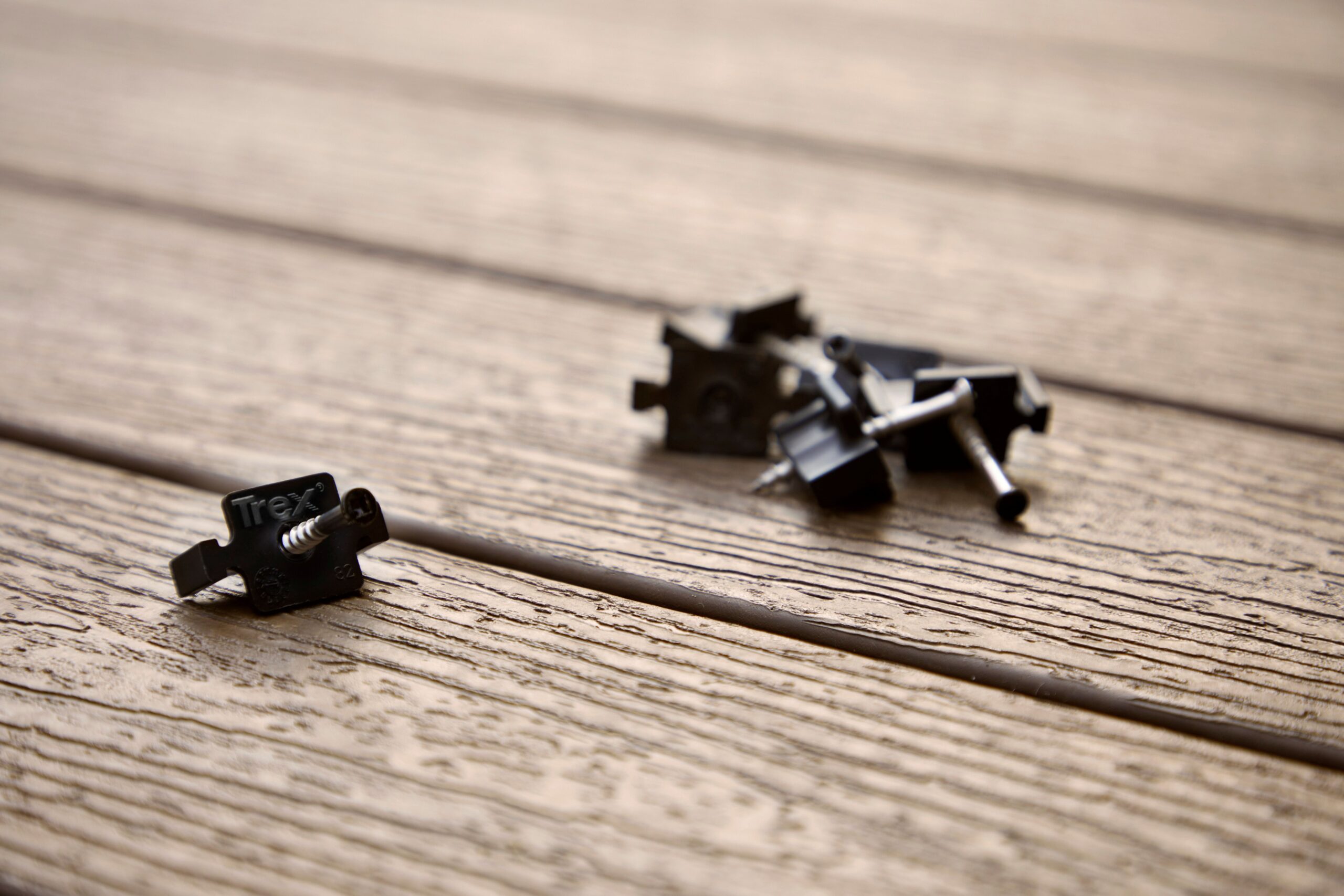
Trex hidden fasteners secure grooved composite deck boards without placing screws through the surface. Installers position the clip inside the board’s side groove and drive a screw into the joist below.
Each clip includes a durable spacer and a corrosion-resistant screw. The spacer automatically creates consistent gaps between boards while the screw locks everything firmly in place. This built-in spacing helps control alignment across the entire deck.
Trex designs these hidden deck fasteners specifically for grooved Trex decking. The system works as part of the Trex Hideaway® fastening solution. It allows boards to sit tightly against the clip while still accommodating natural expansion and contraction.
Because installers hide the hardware between boards, the surface stays smooth and uninterrupted. Deck fasteners hidden beneath the board edges create a clean, high-end finish that homeowners prefer.
Trex also manufactures several clip variations for different installation areas. Universal clips handle most field boards, while starter and butt joint clips serve specific structural needs. Together, these components create a fastening system built for strength, precision, and long-term performance.
How Trex Hidden Fasteners Work
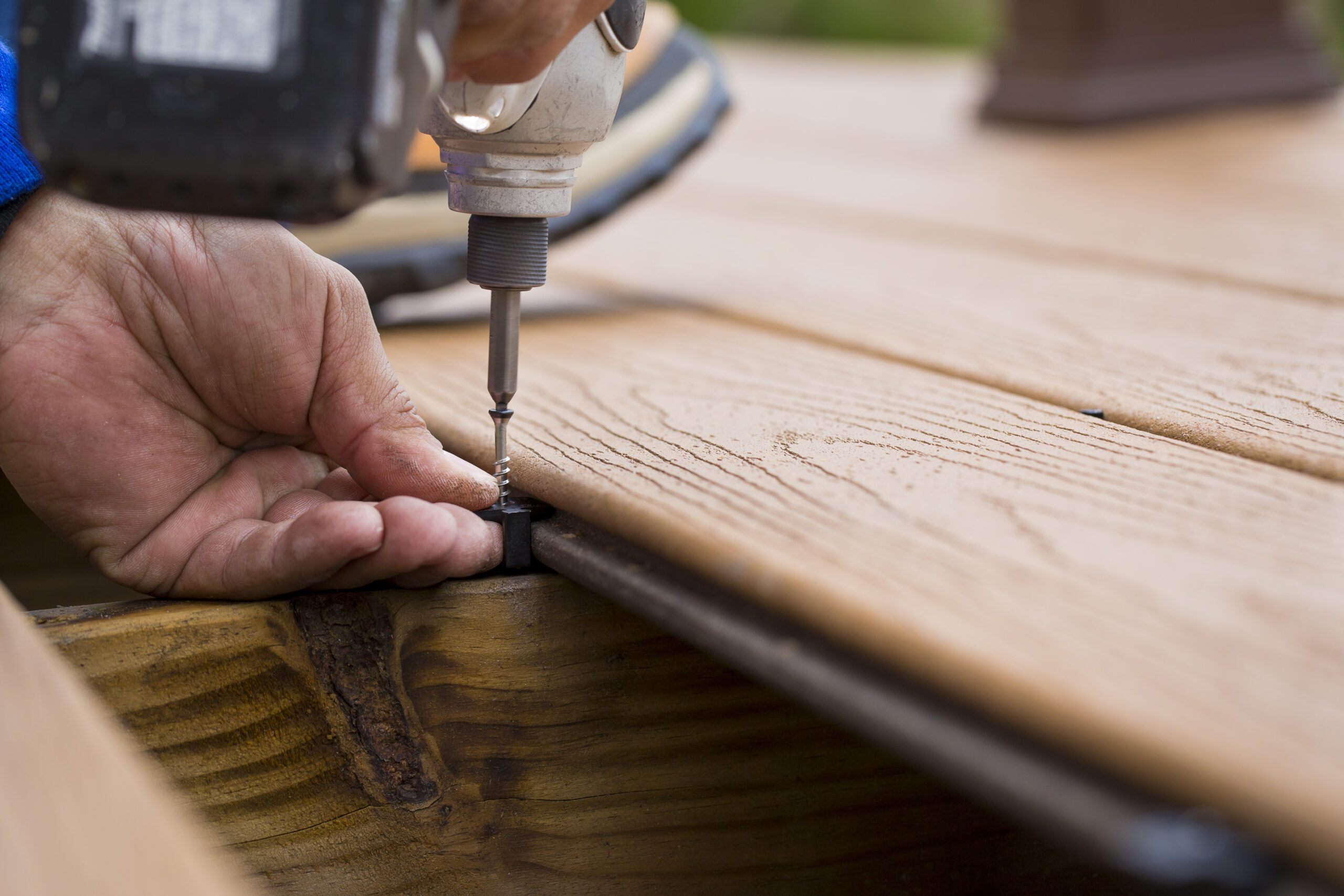
Trex hidden fasteners secure each board to the joist from the side rather than through the surface. Installers slide the clip into the groove of the first board and fasten it directly into the framing below.
Once secured, the next board slides into the exposed side of the clip. The clip automatically sets the spacing between the two boards. This process continues across the deck, creating uniform gaps and straight alignment.
Installers tighten each fastener as they move forward with each board. This method locks the boards in place while maintaining controlled spacing. The clips hold the boards firmly while still allowing natural movement.
Composite decking expands and contracts with temperature changes. The hidden fastening system accounts for this movement by securing the board edges instead of the top surface. This design reduces surface stress and helps prevent warping or shifting over time.
Because deck fasteners hidden between boards remain protected from direct exposure, they support long-term durability. The surface stays clean, smooth, and free of visible hardware.
The system creates both structural security and a refined finish, which makes it a preferred choice for modern composite decks.
Why Choose Hidden Deck Fasteners Over Traditional Screws?
Hidden deck fasteners create a seamless deck surface that many homeowners prefer. Traditional screws leave visible heads across every board, which can interrupt the overall design.
Trex hidden fasteners eliminate exposed hardware and maintain consistent spacing during installation. Each clip automatically sets the gap between boards, which improves alignment across the deck. Surface screws rely more heavily on installer precision and spacing accuracy.
Hidden fastening systems also protect the board surface. Face screws penetrate the top layer and can cause minor cracking or mushrooming over time. Side-mounted clips secure the board without disturbing the finished surface.
This method also improves comfort and safety underfoot. A smooth surface eliminates raised hardware and creates a cleaner walking area. The deck feels more refined and professionally built.
However, traditional screws still serve important structural purposes. Installers often use them for stair treads, picture framing, and solid edge boards. These areas require direct fastening through the board for added support.
For grooved composite decking, deck fasteners hidden between boards deliver the cleanest and most consistent result. When paired with proper installation, they support both long-term performance and a polished appearance.
Types of Trex Hidden Fasteners
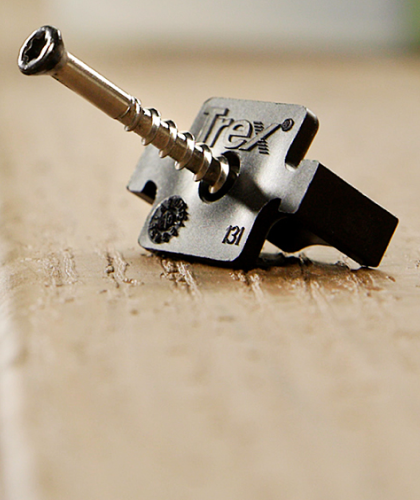
Trex designs several hidden fastening components to support different areas of a deck installation. Each type serves a specific purpose while maintaining consistent spacing and structural integrity. Understanding these options helps you choose the right system for your project.
Universal Hidden Fasteners
Trex uses universal hidden fasteners for the majority of grooved field boards. Installers place these clips between boards and secure them directly into the joists. The clip automatically creates uniform spacing while holding each board firmly in position.
These hidden deck fasteners handle most standard deck surfaces. They provide the clean finish homeowners expect and maintain consistent alignment across large deck areas.
Starter Clips
Installers use starter clips along the perimeter and at the first board row. These clips anchor the outer edge of the deck before installing universal fasteners. Starter clips secure the board from one side and create a stable starting point for the layout.
Without starter clips, the first row would lack proper edge support. They establish alignment and help keep the deck straight from the beginning.
Butt Joint Clips
Butt joint clips support areas where two deck boards meet over a joist. These clips provide additional strength at board seams and reduce movement at connection points. They help maintain even spacing while reinforcing high-stress areas.
Installers often use butt joint clips to improve durability in longer deck runs. This added support helps prevent shifting at board joints over time.
Cortex Plug System
Trex also offers the Cortex plug system as an alternative fastening method. This system uses color-matched screws and composite plugs to conceal surface fasteners. Installers drive the screw through the board and insert a matching plug to hide the hardware.
While this method does not function like clip-style deck fasteners hidden between boards, it still creates a concealed finish. Contractors often use this system for stairs, solid boards, or perimeter framing.
When to Use Trex Hidden Fasteners
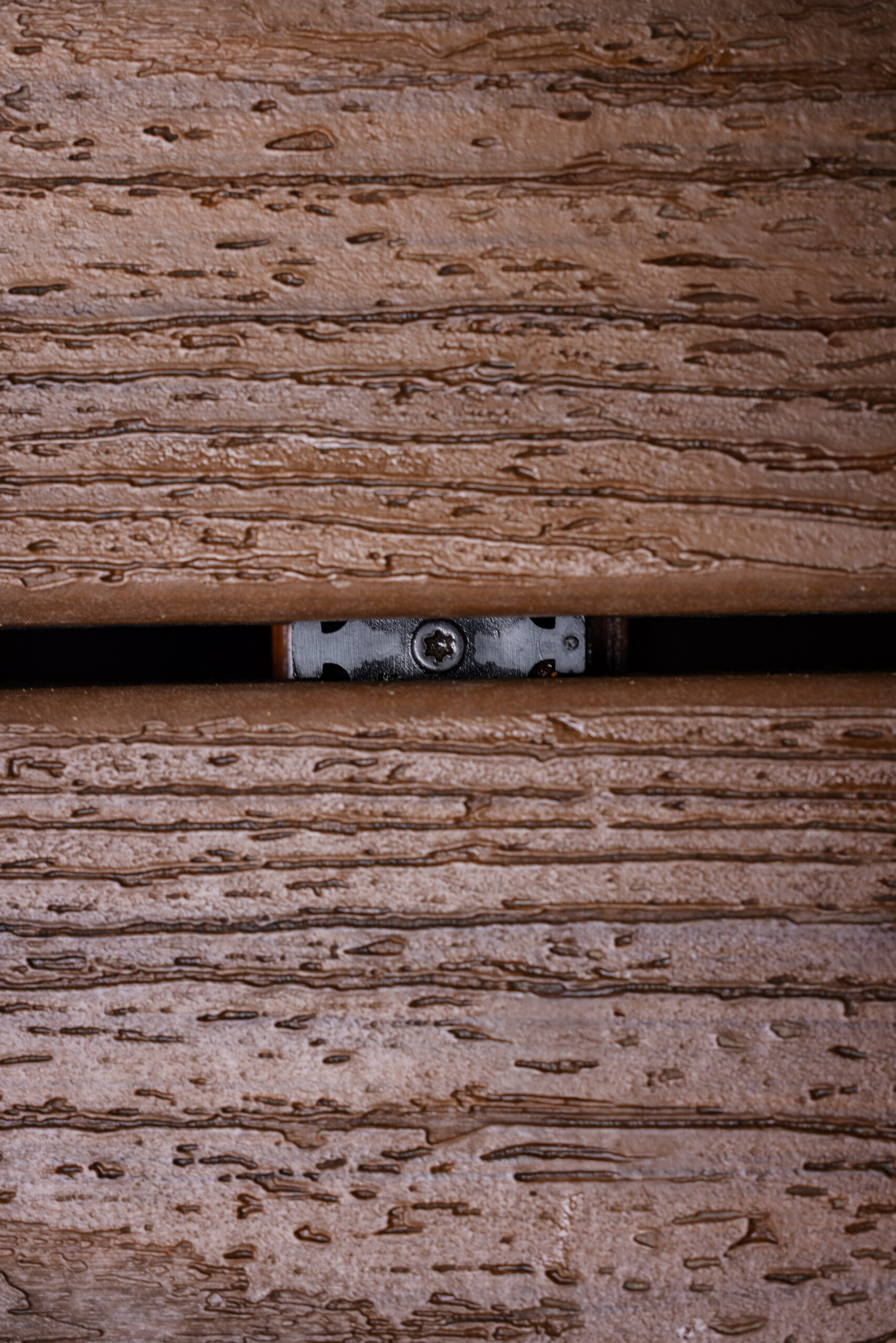
Trex hidden fasteners work best with grooved composite deck boards installed across the main surface area. Installers typically use them for field boards where clean lines and consistent spacing matter most. The system allows the deck surface to remain uninterrupted while maintaining structural support beneath each board.
Hidden deck fasteners make the most sense when appearance plays a central role in the design. Homeowners who want a modern, seamless look often choose this fastening method to avoid exposed hardware. The clips also help maintain straight alignment across long board runs without constant spacing adjustments.
Deck fasteners hidden between boards also support proper airflow and drainage. The built-in spacing reduces installation guesswork while helping the deck perform correctly over time. For most grooved Trex decking installations, this system delivers the most refined and consistent result.
When Hidden Deck Fasteners Are Not Ideal
Trex hidden fasteners work exceptionally well for grooved field boards, but they do not suit every area of a deck. Certain sections require direct surface fastening to provide proper structural support and long-term stability.
Installers typically avoid hidden deck fasteners on stair treads because stairs experience concentrated foot traffic and movement. Most stair installations require face fastening to secure the boards firmly to the framing. Solid edge boards also require surface screws or plug systems since they do not contain side grooves.
Picture framing around the perimeter often calls for surface fastening as well. These border boards need strong edge support and precise positioning, which direct fastening provides. In these areas, contractors commonly use color-matched screws or plug systems to maintain a finished appearance.
Deck fasteners hidden between boards perform best where grooves exist and spacing remains consistent. When a board lacks a groove or demands additional structural reinforcement, surface fastening becomes the appropriate solution. Understanding where each system works best helps ensure proper installation and long-term performance.
Installation Tips for Best Results
Proper installation plays a major role in how Trex hidden fasteners perform over time. Always confirm that your joist spacing meets Trex manufacturer requirements before installing any boards. Incorrect framing spacing can affect board stability and long-term durability.
Installers should fasten each clip securely without over-tightening the screw. Excessive torque can restrict natural board movement and place stress on the edges. A firm, controlled drive keeps the clip secure while allowing the board to expand and contract properly.
Work consistently in one direction as you install boards across the deck. This approach helps maintain straight alignment and prevents spacing variations from accumulating. Checking alignment periodically ensures the deck surface remains uniform.
Use the correct clip type in the appropriate location. Universal clips handle most field boards, while starter and butt joint clips support perimeter and seam areas. Matching the clip to the application improves both performance and appearance.
Following these best practices allows hidden deck fasteners to function as designed. When installed correctly, the system delivers long-term stability and a clean, professional finish.
Frequently Asked Questions About Trex Hidden Fasteners
To install Trex decking with hidden fasteners, secure starter clips along the perimeter, slide the first grooved board into place, insert universal clips into the board groove, and fasten each clip into every joist as you continue across the deck, maintaining consistent spacing and alignment according to Trex guidelines.
Yes, installers secure Trex hidden fasteners at every joist where a grooved board crosses the framing to ensure proper support, consistent spacing, and long-term structural stability across the entire deck surface.
Many homeowners consider Trex hidden fasteners worth the investment because they eliminate visible screws, improve spacing accuracy, create a smoother surface, and deliver a cleaner, more professional finish compared to traditional face fastening.
Trex hidden fasteners are designed specifically for Trex grooved boards, and while some profiles may appear similar, manufacturers do not guarantee compatibility across brands, so always confirm groove dimensions and warranty requirements before mixing systems.
Removing boards installed with Trex hidden fasteners requires backing out the screws that secure each clip to the joist, which may involve lifting adjacent boards depending on layout, so removal takes more time than surface-fastened boards.
Yes, Trex hidden fasteners secure the board edges while allowing natural expansion and contraction, which helps reduce surface stress and supports long-term deck performance in changing temperatures.