The place for all your outdoor living space!

Article Overview
- Composite vs Wood Deck Quick Comparison
- What Is Composite Decking?
- What Is a Wood Deck?
- Composite Decking vs Pressure Treated Wood Decking Cost
- Composite vs Wood Deck Maintenance Requirements
- Composite vs Wood Deck Durability and Lifespan
- Composite Decking Brands vs Wood Decking
- Which Decking Material Is the Better Choice?
- Frequently Asked Questions About Composite vs Wood Decking
- Is composite decking more expensive than wood?
- Is composite decking cheaper than wood in the long run?
- How long does composite decking last compared to wood?
- What is the difference between composite deck boards vs wood?
- Does composite decking look like real wood?
- Which decking material requires less maintenance?
Choosing between a composite vs wood deck can feel confusing for many homeowners. The decking material you choose affects cost, durability, maintenance, and long-term value. Many homeowners compare a wood deck vs composite deck before starting a new outdoor project because both materials offer different advantages.
Today, homeowners can choose from several decking materials for their outdoor living spaces. Traditional decks often use natural wood such as pressure treated lumber. Many people like this option because it provides the familiar look and texture of real wood.
At the same time, composite deck boards have become one of the fastest growing decking options. Manufacturers create these boards using wood fibers and composite materials. This design helps improve durability and reduce long-term maintenance.
Understanding the differences between these decking materials helps homeowners make better decisions. This guide compares cost, maintenance, durability, and popular composite brands so you can choose the right decking material for your project.
Composite vs Wood Deck Quick Comparison
Many homeowners search for a clear way to compare a composite deck and a wood deck. A simple comparison helps explain how these decking materials perform over time. The table below shows the main differences homeowners consider when choosing between composite deck boards and natural wood.
| FEATURE | COMPOSITE DECK | WOOD DECK |
|---|---|---|
| Upfront Cost | Higher initial material cost | Lower upfront material cost |
| Maintenance | Occasional cleaning | Regular staining and sealing |
| Lifespan | Often 25–30+ years | Often 10–15 years |
| Splinters | Does not splinter | Can splinter over time |
| Moisture resistance | Resists moisture well | Can absorb water |
| Appearance | Consistent color | Natural variation |
This quick comparison shows the main pros and cons between composite deck boards vs wood. Many homeowners choose composite materials for lower maintenance and longer lifespan. Others prefer decking vs wood options because they like the natural appearance of real wood.
The sections below explain these differences in more detail. We will look at how each material performs in terms of cost, maintenance, durability, and long-term value.
What Is Composite Decking?
Composite decking uses engineered composite materials instead of traditional lumber. Manufacturers combine wood fibers with recycled materials to create durable composite deck boards. This process creates boards that look similar to natural wood but perform differently.
Most composite decking products contain a mix of wood fibers and plastic polymers. These materials bond together to form strong and stable boards. The result is a decking surface designed to resist moisture, rot, and insect damage.
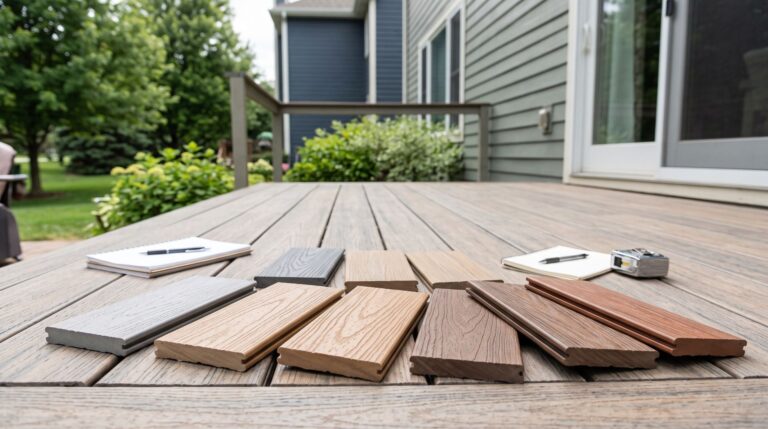
Many homeowners choose composite decking because it offers consistent appearance and long-term durability. Composite deck boards also come in many colors and finishes that resemble real wood grain.
Another reason homeowners consider composite decking involves sustainability. Many manufacturers use recycled materials during production. This process helps reduce waste while creating eco friendly decking materials.
Composite decking offers a modern alternative to traditional wood decking. Many homeowners choose it for durability, color consistency, and reduced maintenance over time.

What Is a Wood Deck?
A wood deck uses natural lumber to create the deck surface and structure. Most homeowners build these decks with pressure treated decking boards made from softwood. Builders treat this lumber with preservatives to help resist insects, rot, and moisture.
Pressure treated lumber remains one of the most common decking materials for residential projects. Many homeowners choose it because it costs less than many other decking options. This lower upfront cost often makes wood attractive for larger decks or budget-focused projects.
Wood decks also appeal to homeowners who prefer the look and texture of real wood. Natural wood creates a traditional outdoor appearance that many people still value. Each board shows unique grain patterns and color variation.
However, wood decks require ongoing care to stay in good condition. Homeowners must focus on treating wood regularly to help protect the surface. Without proper maintenance, natural wood can crack, splinter, or absorb moisture over time.
Composite Decking vs Pressure Treated Wood Decking Cost
Cost often becomes the first question homeowners ask during deck planning. Many people want to know the price of composite decking vs wood before choosing a material. The difference between composite decking and pressure treated lumber usually appears in the initial purchase price.
The cost of composite decking is higher at first. This is because makers use engineered composite materials and advanced production methods. These composite deck boards also include protective caps that improve durability and color stability.
Pressure treated decking costs less at the start, which attracts many homeowners working with tighter budgets. However, wood decks often require additional spending over time. Homeowners must account for maintenance costs such as sealers, stains, and occasional board replacements.
Many homeowners eventually ask whether composite decking is cheaper than wood in the long run. The answer often depends on how much maintenance a wood deck requires during its lifespan.
Composite vs Wood Deck Maintenance Requirements
Maintenance often becomes the deciding factor when homeowners compare a composite vs wood deck. The amount of upkeep affects both time and long-term maintenance costs.
Wood decks require regular care to stay in good condition. Homeowners must focus on treating wood to protect the surface from weather and moisture. This process usually includes staining, sealing, and cleaning the boards every year.
Pressure treated decking can also fade or crack over time without proper care. These maintenance requirements increase the effort needed to keep the deck looking good.
Composite deck boards require far less maintenance. The surface protects the composite materials from moisture and sun exposure. Most homeowners only clean the deck occasionally with soap and water.
This difference in upkeep often influences the final decking choice. Many homeowners choose composite materials because they want a deck that requires less work over time.
Composite vs Wood Deck Durability and Lifespan
Homeowners often consider lifespan when choosing between a composite vs wood deck. A deck should remain safe, stable, and visually appealing for many years.
Composite deck boards maintain their structure for long periods because manufacturers engineer the material for stability. The boards resist common structural issues such as twisting, splitting, or shrinking. This consistency helps the deck surface remain level and uniform over time.
Pressure treated lumber behaves differently because natural wood responds to moisture and temperature changes. Boards can expand during humid seasons and contract during dry weather. Over time, this movement may create gaps, raised boards, or uneven surfaces.
These structural changes do not mean wood performs poorly. However, they do influence how the deck looks and feels after many years of use. Composite decking provides more consistent performance, while natural wood continues to move and change throughout its lifespan.
Composite Decking Brands vs Wood Decking
Many homeowners compare specific composite brands when researching a composite vs wood deck. Several manufacturers design composite decking products that compete directly with traditional wood decking. These brands focus on durability, appearance, and long-term performance.
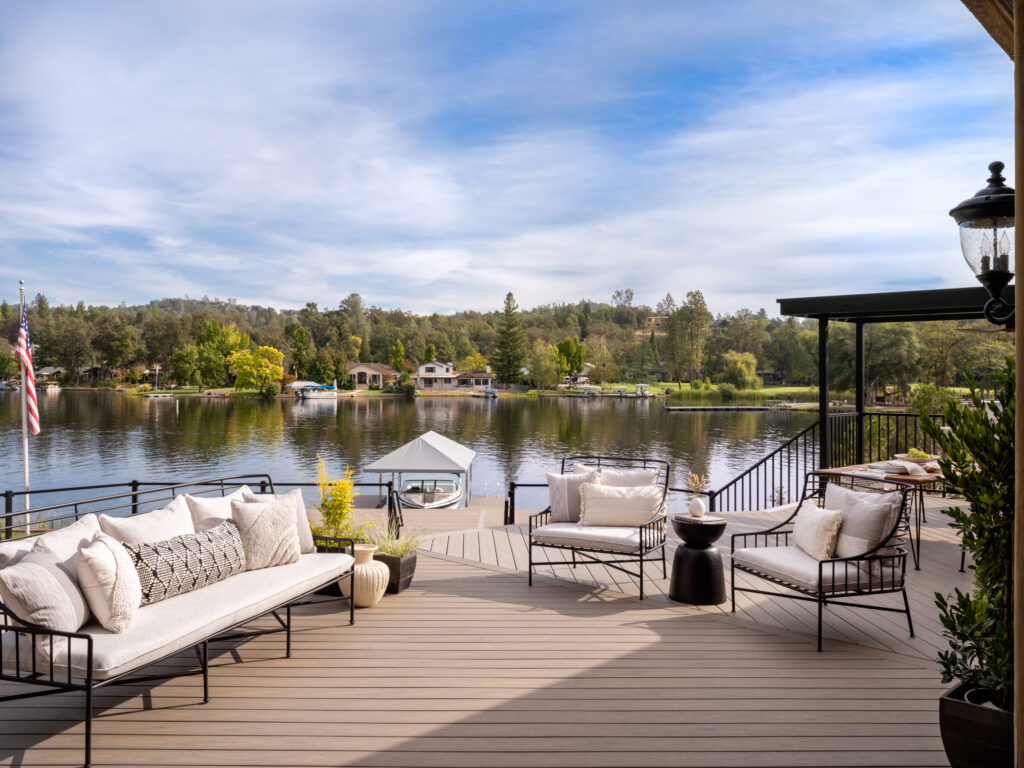
Trex remains one of the most recognized names in composite decking. Trex deck boards use composite materials made from recycled materials and wood fibers. These boards provide a consistent surface designed to resist fading and staining over time.
A Trex deck maintains uniform color and requires very little upkeep throughout its lifespan. In comparison, a wood deck shows natural variation and requires regular staining or sealing. Many homeowners choose Trex when they want a low-maintenance alternative to traditional wood decking.
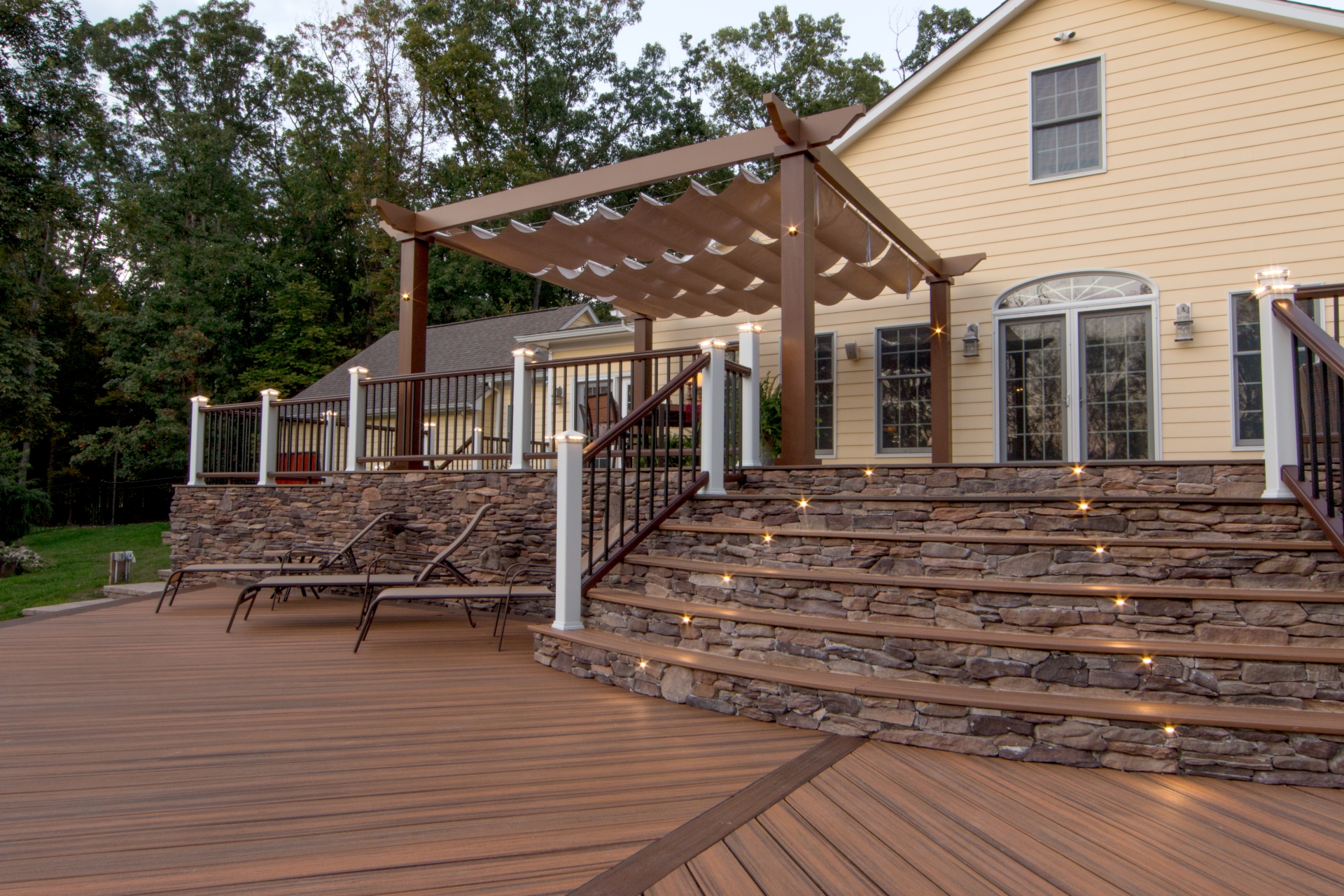
TimberTech produces composite decking designed to closely replicate the look of natural wood. Many TimberTech boards include protective caps that help preserve color and protect the surface. These composite deck boards also offer strong durability and consistent appearance.
Wood decking provides the authentic texture and grain patterns many homeowners appreciate. However, wood often requires regular maintenance to maintain its appearance. TimberTech decking provides a more uniform look while reducing long-term upkeep.
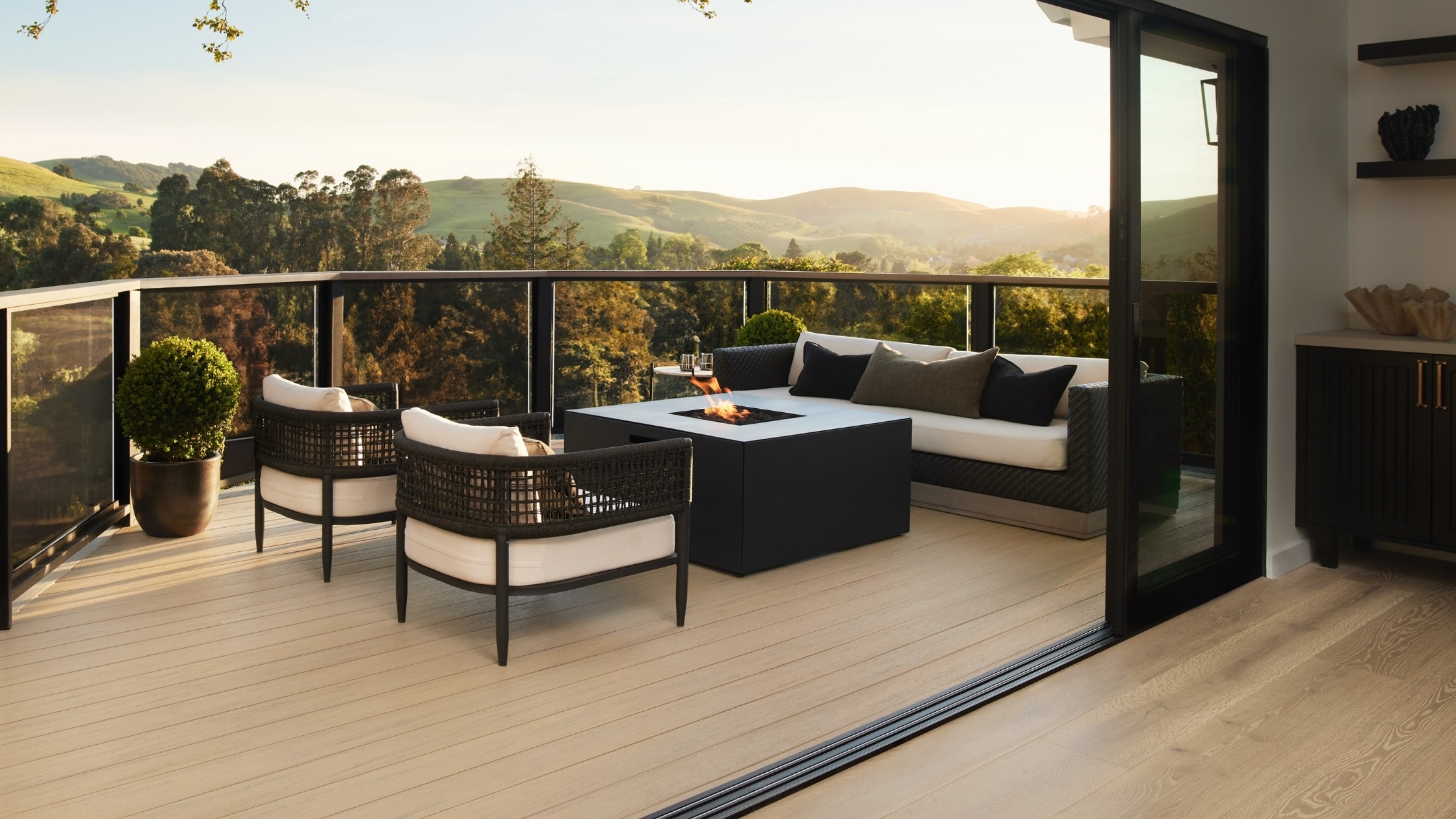
Deckorators manufactures composite deck boards using advanced composite materials. Some Deckorators products use mineral-based technology designed to improve board strength and stability. These boards help create durable decking surfaces that resist moisture and structural wear.
Wood decking continues to deliver the traditional look many homeowners recognize. However, natural wood can expand, crack, or splinter over time. Deckorators composite decking focuses on structural stability and long-term performance.
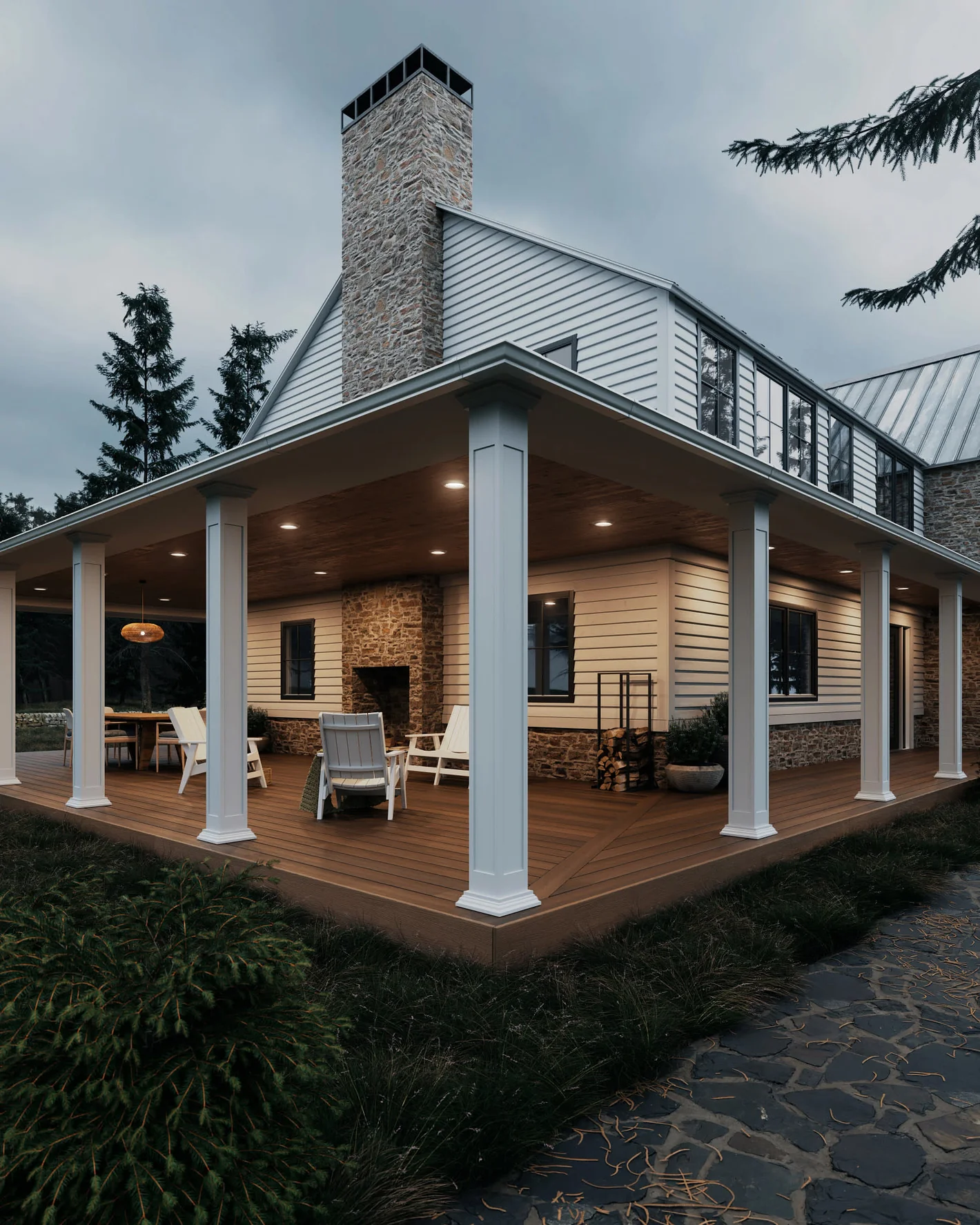
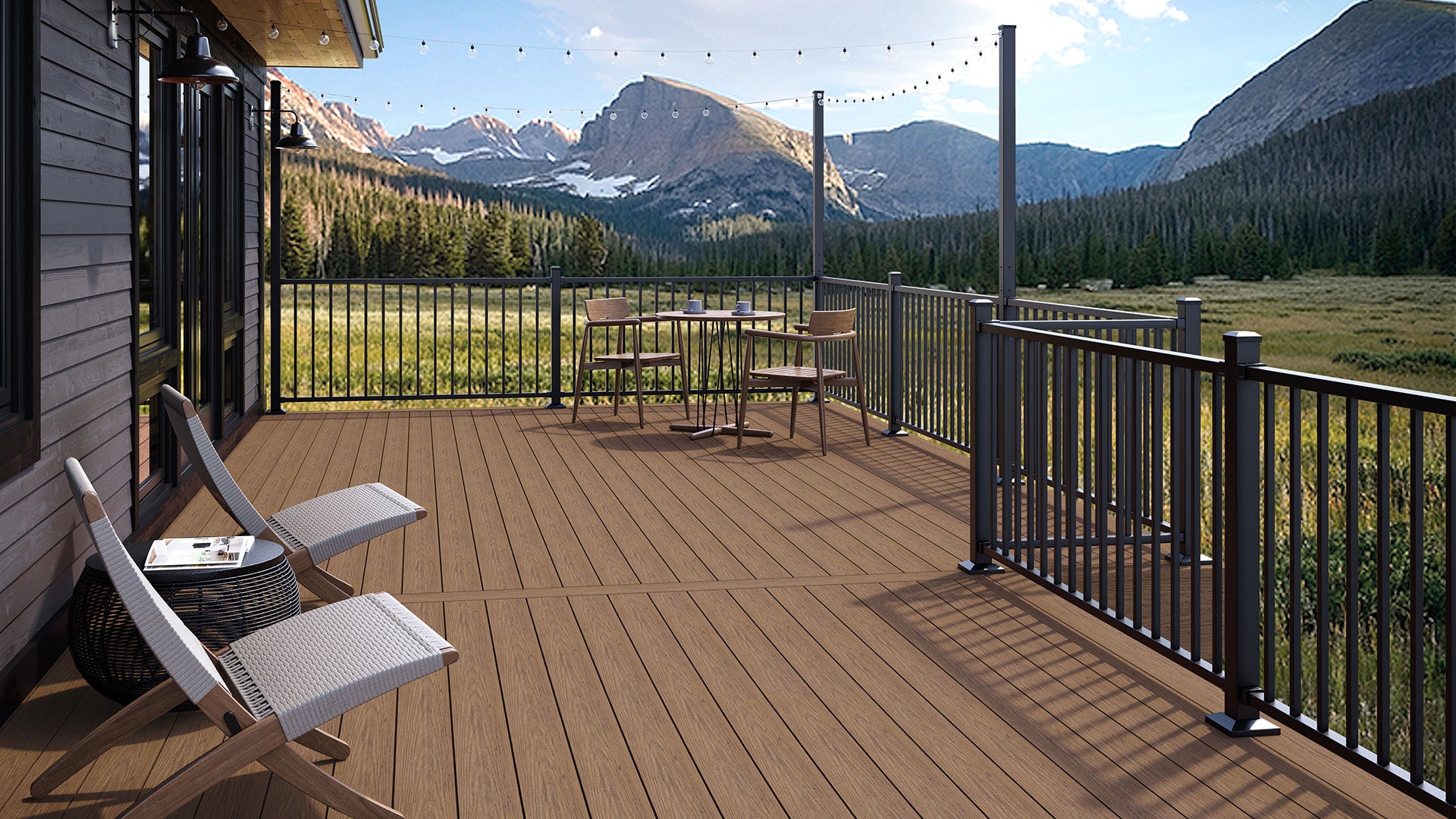
Fiberon produces composite decking that incorporates recycled materials and sustainable manufacturing practices. Many Fiberon boards feature detailed wood grain patterns that resemble natural wood. These composite deck boards maintain consistent color and appearance across the entire deck.
Natural wood provides a classic outdoor look that many homeowners still prefer. However, wood decking often requires regular maintenance to protect the surface. Fiberon composite boards offer a more consistent appearance with fewer long-term maintenance demands.
Which Decking Material Is the Better Choice?
Choosing between treated wood vs composite decking depends on budget, maintenance expectations, and long-term goals. Both materials meet different needs. That is why homeowners compare wood and composite decks before starting a project.
Composite decking works well for homeowners who want a low-maintenance outdoor space. Composite deck boards keep their appearance for many years without staining or sealing. Many homeowners also choose composite materials because they want consistent color and long-term durability.
Wood decking appeals to homeowners who prefer the traditional look of natural wood. Pressure treated lumber also offers a lower upfront cost, which can help when building larger decks. Some homeowners also enjoy the ability to stain or change the color of real wood over time.
The best decking choice depends on how you plan to use your deck. Some homeowners prioritize lower upfront cost, while others prefer a decking material that requires less maintenance over time.
Frequently Asked Questions About Composite vs Wood Decking
Composite decking usually costs more upfront than pressure treated wood. However, composite deck boards often reduce long-term maintenance costs because they do not require staining or sealing.
Composite decking can become more cost effective over time. Wood decks require regular maintenance, which increases maintenance costs over the life of the deck.
Composite deck boards often last 25 years or longer with proper installation. Natural wood decks can last many years but often have a shorter lifespan without regular maintenance.
Composite deck boards use composite materials made from wood fibers and recycled materials. Wood decking uses natural lumber such as pressure treated decking boards.
Many composite decking products include detailed grain patterns that resemble natural wood. However, real wood still offers natural variation that composite boards cannot fully replicate.
Composite decking requires much less maintenance than wood decking. Most composite decks only need occasional cleaning, while wood decks require regular sealing or staining.