The place for all your outdoor living space!
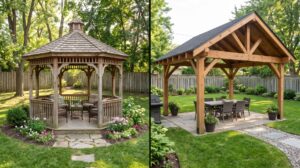

A backyard roof can make your deck, patio, or garden more useful. But the wrong structure can leave you with limited seating, unexpected installation costs, or a roof that does not suit your climate. The gazebo vs pavilion decision starts with how you plan to use the covered area. Both provide shelter from sun and rain, but their shapes, layouts, and construction options can differ.
A gazebo often creates a defined seating area with decorative features or optional screens. A pavilion usually offers an open layout that works well for outdoor dining, larger gatherings, and covered decks.
Neither structure is always the better choice. This guide compares designs, materials, costs, manufacturer options, and installation on decks, patios, and gardens. You’ll also learn what to check before buying a kit or requesting a materials quote.
Gazebo vs Pavilion: Key Differences at a Glance
The main difference between a gazebo and a pavilion is their typical shape and layout. Traditional gazebos often have six or eight sides, while pavilions usually have rectangular roofs supported by open columns.
Modern structures do not always follow these rules.
| Feature | Gazebo | Pavilion |
|---|---|---|
| Typical shape | Octagonal, hexagonal, square, rectangular | Rectangular or square |
| Roof | Solid, peaked, hip, or hardtop | Solid gable, hip, or low-slope |
| Sides | Open, screened, or partly enclosed | Usually open |
| Common use | Garden retreat, relaxing, smaller dining areas | Outdoor dining, entertaining, kitchens |
| Space | Often compact or medium-sized | Often medium or large |
| Privacy | Screens and curtains are common options | Privacy panels may be available |
| Flooring | May include a floor | Usually installed over a separate surface |
| Installation | Suitable foundation or engineered deck | Suitable foundation or engineered deck |
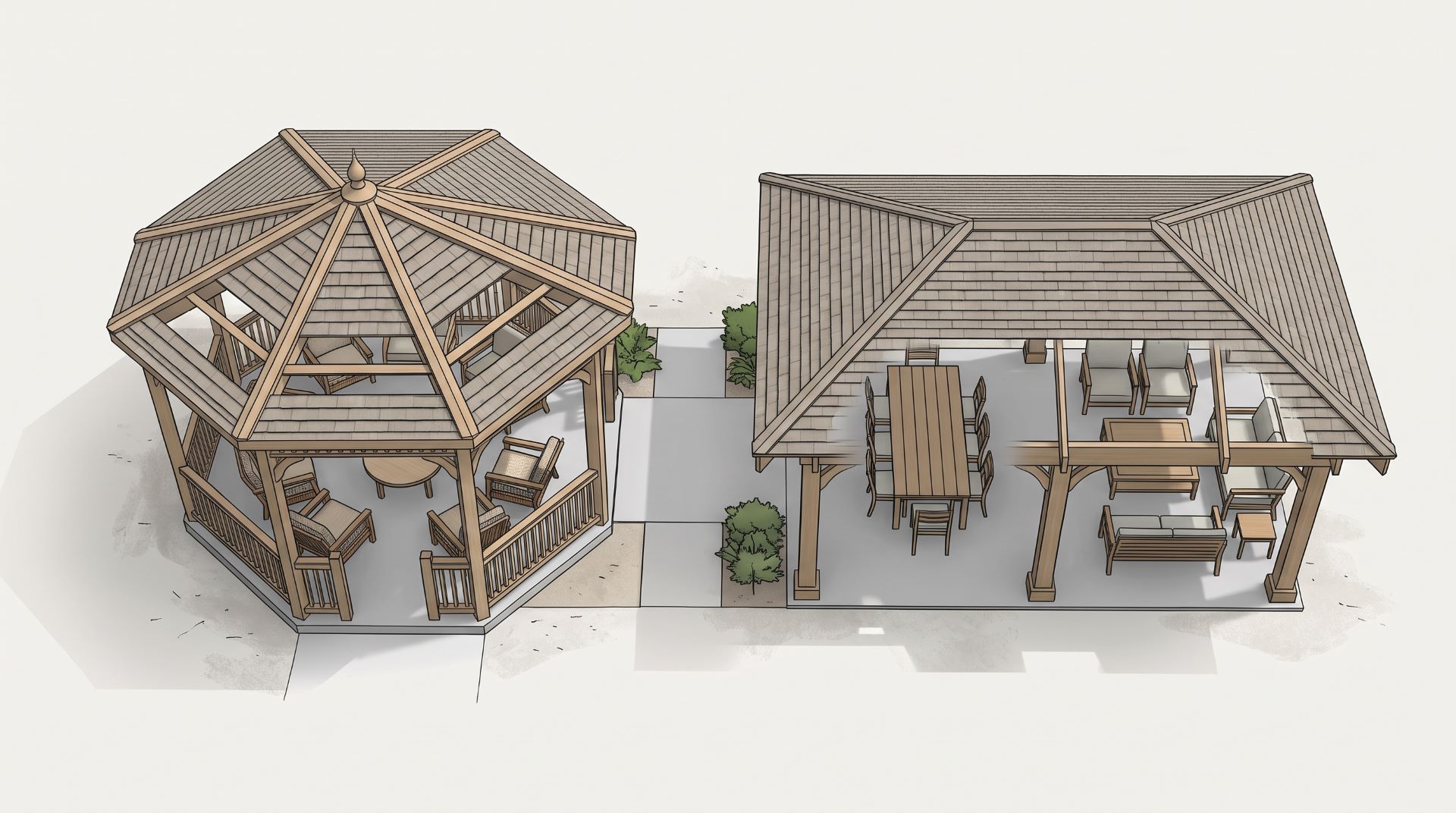
The biggest mistake is choosing by name alone. Some manufacturers sell rectangular hardtop gazebos that look much like traditional pavilions. Compare the actual roof, frame, dimensions, and included components before ordering.
Writing
Still considering a pergola? Unlike most gazebos and pavilions, traditional pergolas have open or slatted roofs that provide filtered shade rather than full overhead coverage. Our Pergola vs Gazebo guide explains the differences in roof design, weather protection, and backyard uses.
How Do Their Designs and Features Compare?
Roof Shape and Architectural Style
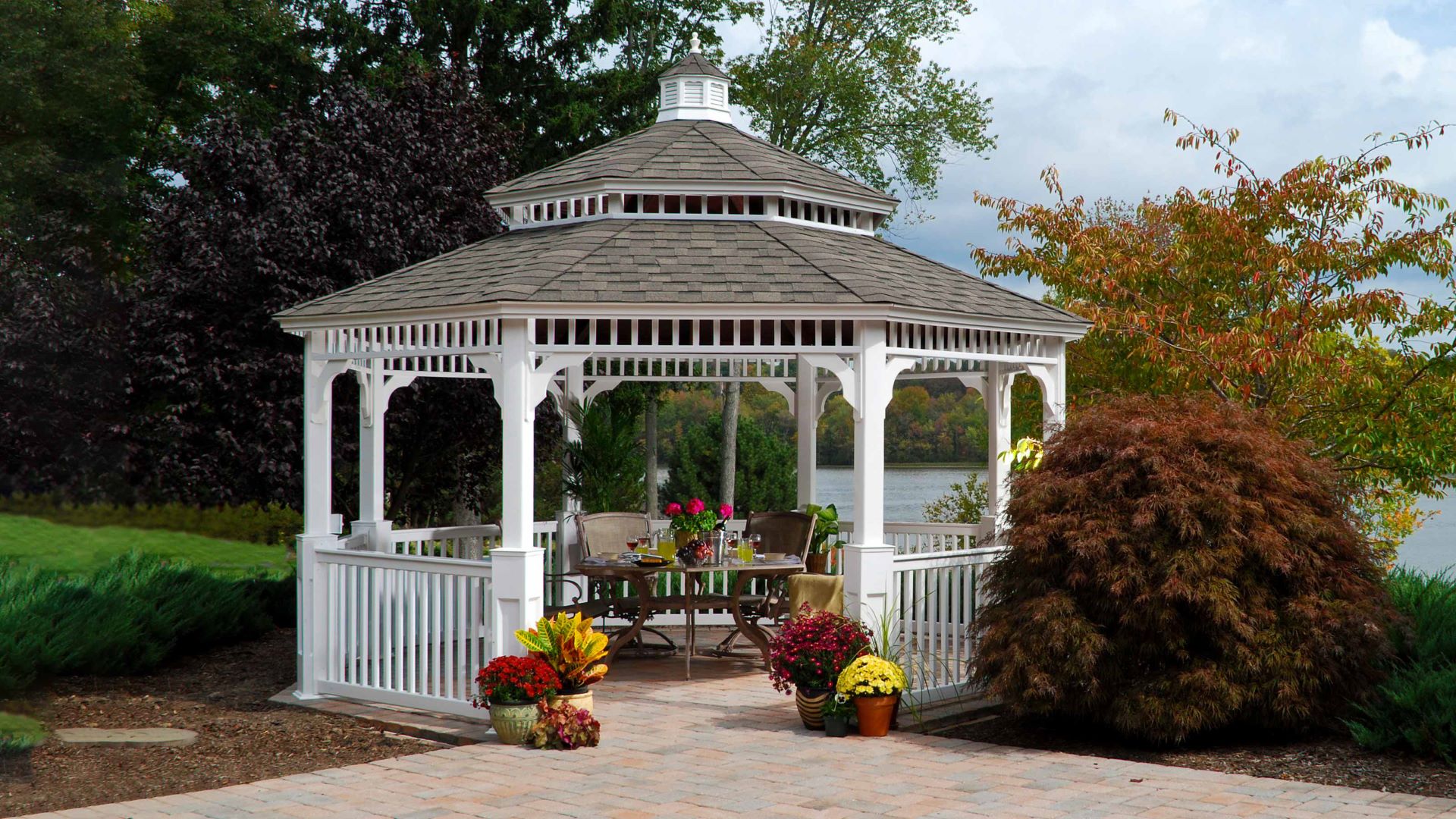
Traditional gazebos often feature pointed roofs, decorative trim, and six-sided or eight-sided floor plans. These details help them stand out in a garden. If you’re exploring different designs, our What Is a Gazebo? guide covers popular styles, materials, sizes, and gazebo kits.
Pavilions generally have simpler roof shapes. Gable roofs offer a familiar peaked appearance, while hip roofs slope toward several sides. Modern aluminum pavilions may use low-slope roof panels and built-in gutters.
Both can complement a house, but roof design affects more than appearance. It also determines drainage, headroom, and how snow moves across the structure.
Open Sides, Privacy, and Insect Protection
Most pavilions have open sides. This allows people to move freely around the space and helps air circulate. Gazebos may include railings, lattice panels, mosquito screens, or privacy curtains.
A screened gazebo can be useful during summer evenings when insects become a problem. However, neither structure must have screens or walls. Many modern hardtop gazebos look almost identical to open-sided pavilions.
Before buying, confirm whether the manufacturer offers compatible screens or privacy panels.
Space and Furniture Layout
A rectangular pavilion often makes furniture placement easier. For example, a 12×16-foot rectangular floor area provides 192 square feet before accounting for posts and obstructions. That may work well for a dining table and separate seating.
A traditional octagonal gazebo can feel more enclosed. Its angled sides may limit where you place large tables or couches. Don’t rely only on advertised dimensions. Check the clear distance between posts and the space beneath the roof.
Leave enough room for chairs to slide back and for guests to move safely.
Materials and Maintenance
Both gazebos and pavilions are available in wood, aluminum, steel, and vinyl-clad designs.
| Material | Benefits | Maintenance Considerations |
|---|---|---|
| Cedar | Natural appearance and decay resistance | Cleaning and periodic refinishing |
| Pressure-treated wood | Flexible construction options | Inspections and finish maintenance |
| Aluminum | Corrosion resistance and lighter framing options | Cleaning and connection checks |
| Coated steel | Strong frame options | Coating inspection and rust prevention |
| Vinyl-clad framing | Easy-to-clean exterior | Inspect underlying structural components |
Roof materials also affect maintenance. Metal panels, shingles, polycarbonate, and fabric covers have different care requirements. Choose a material based on your climate, preferred appearance, and willingness to maintain it.
Where Should You Install Each Structure?
Gazebos and pavilions can work over decks, on patios, or as freestanding garden structures. The installation surface changes what you need to plan.
Over a Deck
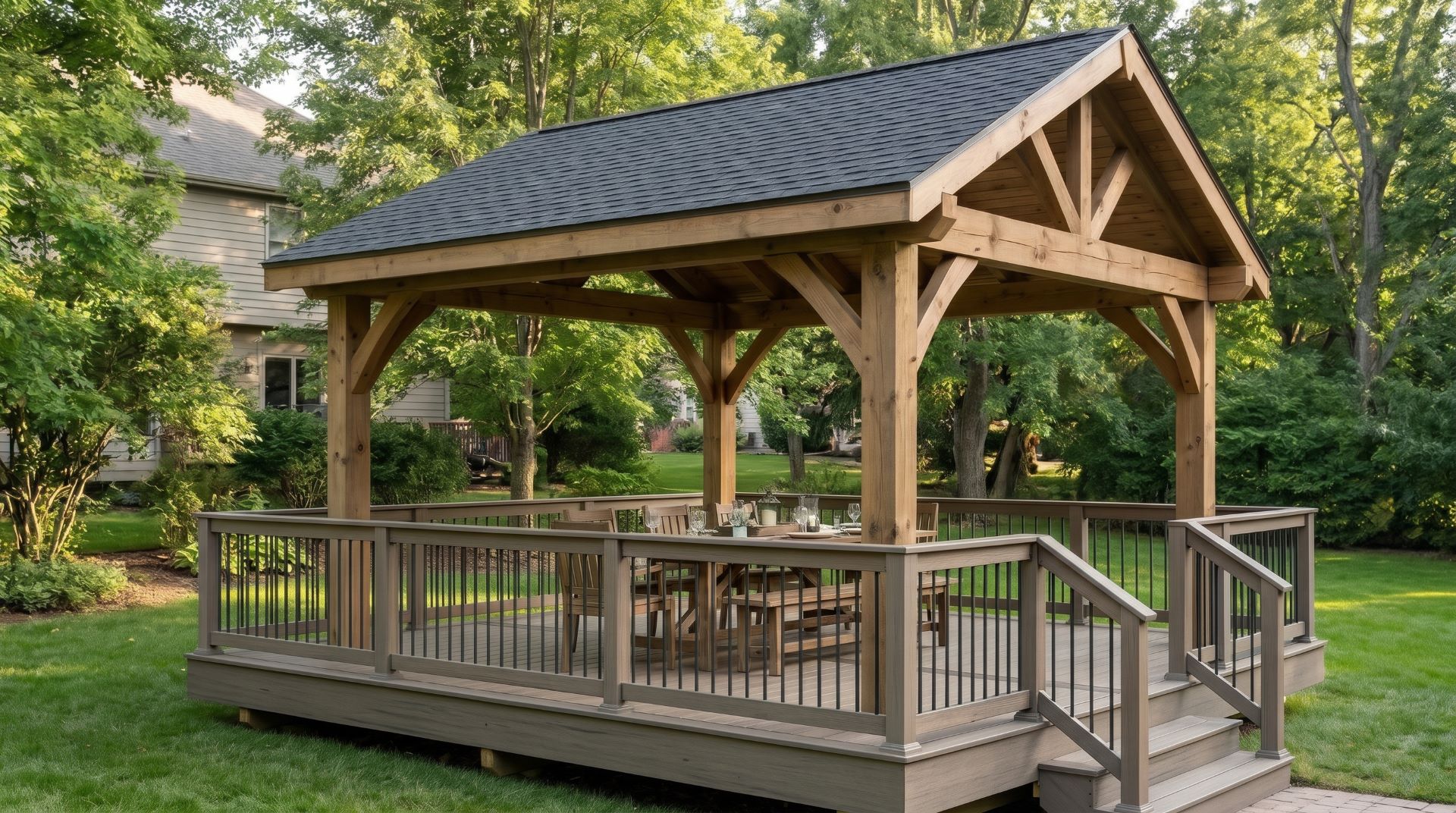
A pavilion often works well over a deck because its rectangular layout can follow the deck’s shape. Homeowners can create covered dining areas without enclosing the deck.
A gazebo also works, especially when you want a screened sitting area or a separate covered section. An existing deck must be checked before supporting either structure.
A roof adds dead loads, snow loads, and wind forces. Composite and PVC decking boards cannot carry structural roof-post loads by themselves. A qualified professional must verify the framing, connections, footings, and load path. Separate foundations may be required.
For new deck construction, plan the roof and deck together so the support locations work with stairs and railings.
Over a Concrete or Paver Patio
Both structures can provide shade over an existing patio. A pavilion is often better for large dining areas, outdoor lounges, and poolside spaces.
A gazebo may work better for a smaller patio where privacy or insect protection matters. Do not assume a concrete patio slab can support structural columns. Its thickness, reinforcement, footing details, and condition must meet the structure’s requirements.
Paver patios also need an approved anchoring solution. Fastening posts to loose pavers is not a suitable structural connection.
In a Garden or Open Backyard
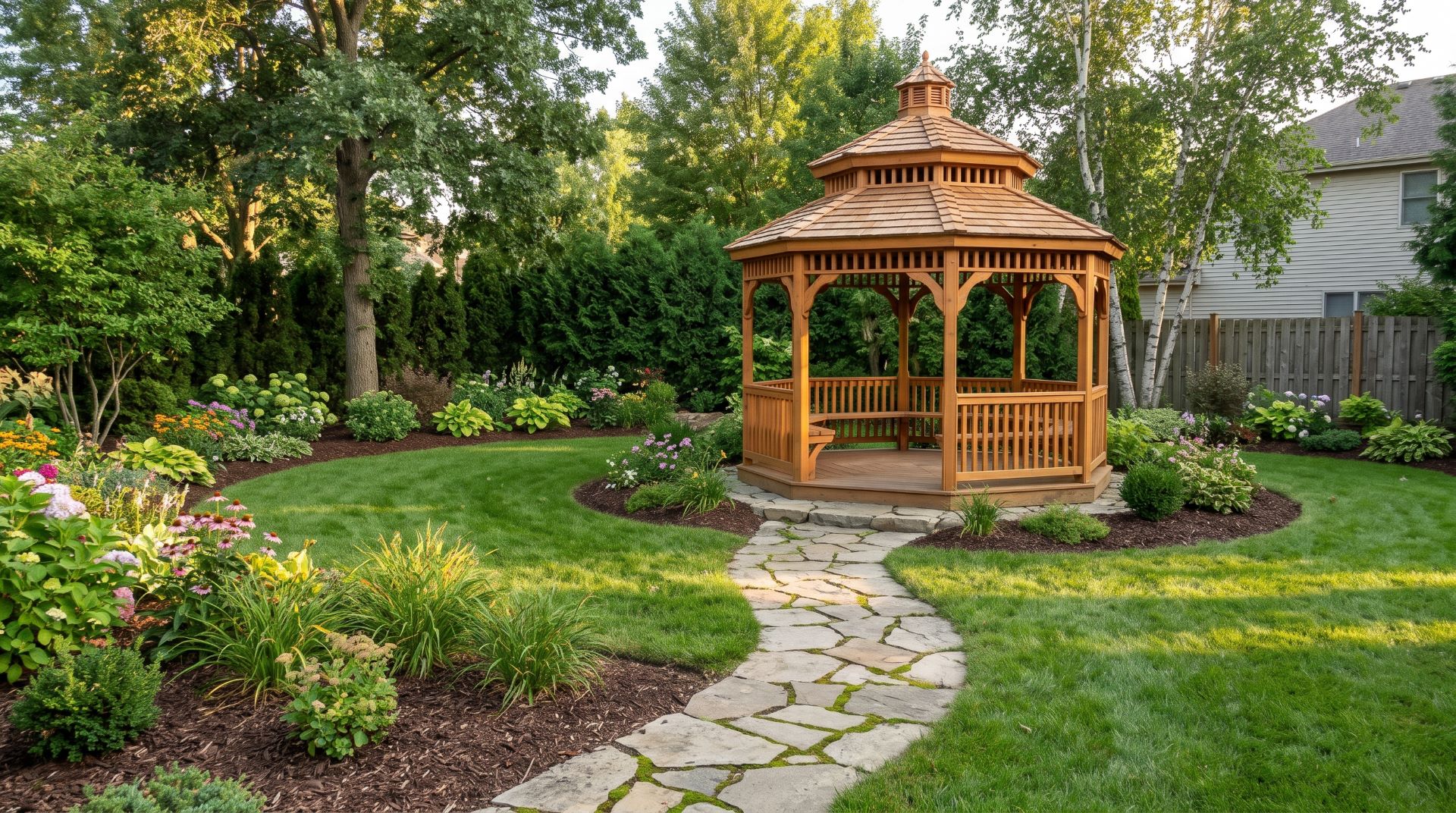
Traditional gazebos fit naturally into landscaped areas. They can create a separate destination along a path or away from the house. Pavilions work well as freestanding shelters over outdoor seating or dining spaces.
For either design, check grading, drainage, setbacks, underground utilities, and access for delivery. Plan how people will reach the structure after rain or snow. A walkway may make the covered area more useful throughout the year.
Which Gazebo and Pavilion Manufacturers Should You Consider?
Several established manufacturers offer complete kits or custom structures. The most useful comparisons focus on materials, roof design, and documented installation requirements.
Trex Pergola Pavilion
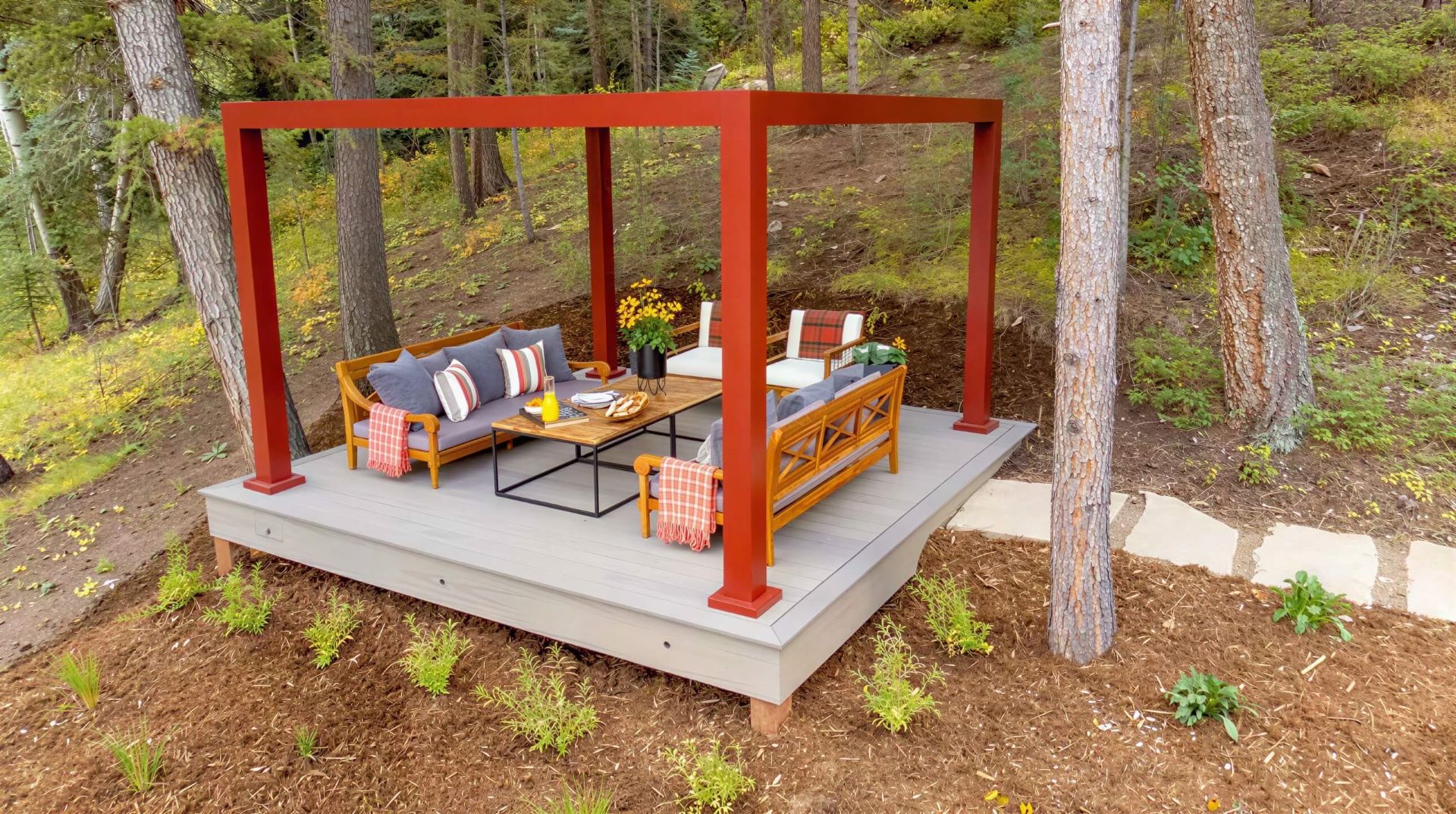
Trex Pergola Pavilion is a modern aluminum structure with a solid modular roof. Unlike a traditional open-roof pergola, the Pavilion model uses sloped aluminum panels and an integrated gutter system for overhead rain protection.
The manufacturer lists standard sizes from 12×12 to 18×18 feet, with freestanding and attached configurations. Its pre-engineered modular design and powder-coated aluminum components make it an option for modern decks and patios.
Premium Decking Supply features Trex Pergola products and can discuss current pavilion configurations, material pricing, and availability. For more information about the structure itself, read our What Is a Pavilion? guide.
Yardistry
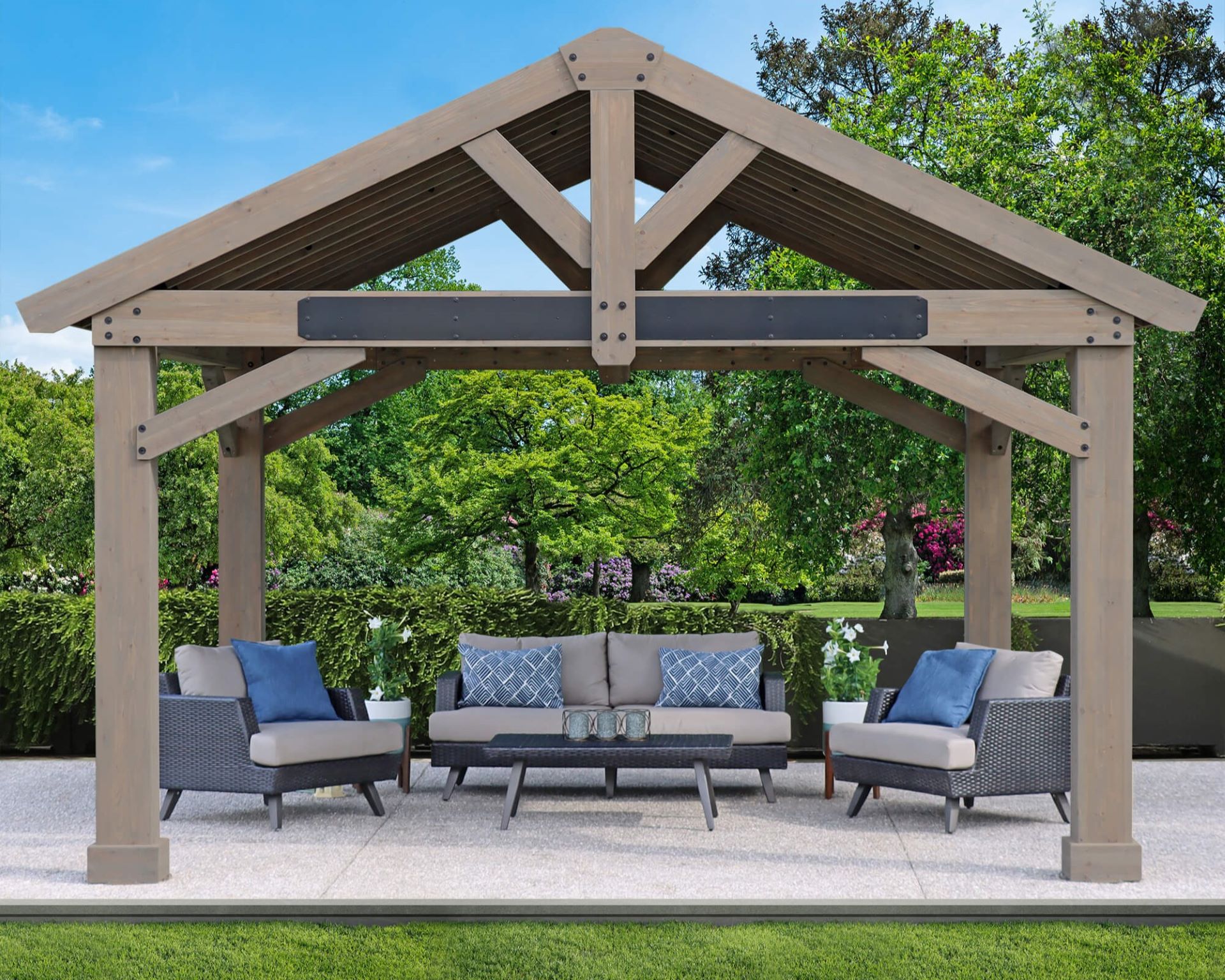
Yardistry offers ready-to-assemble gazebos and pavilions. Its product range includes rectangular hardtop gazebos and timber-frame pavilions. The 16×14 Timber Frame Pavilion uses a gable roof with aluminum panels.
This is a useful example of why buyers should look beyond the product name.
Country Lane Gazebos
Country Lane Gazebos manufactures wood and vinyl outdoor structures, including traditional gazebos and pavilions. Its designs offer options for buyers who prefer decorative woodwork or traditional architectural styles.
Amish Country Gazebos
Amish Country Gazebos produces customizable wood and vinyl gazebos and pavilions. Its product range includes traditional designs and gazebo kits intended for onsite assembly.
Backyard Discovery
Backyard Discovery offers backyard gazebo products with wood frames and metal-roof options. Its hardtop designs are useful examples of modern gazebos that may resemble open-sided pavilions.
Important: These brands are comparison examples, not a list of confirmed PDS inventory. Contact Premium Decking Supply to verify which complete structures and materials are available for your project.
Pavilion vs Gazebo: Which Costs More?
A pavilion does not always cost more than a gazebo. The final price depends on size, materials, roofing, site preparation, and labor. Two structures with the same dimensions may have very different costs.
The following 2026 national estimates from HomeGuide provide general budgeting guidance.
| Project | Estimated Installed Cost |
|---|---|
| 12×12 Gazebo, Precut kit | $4,300 – $10,000 |
| 12×12 Custom Gazebo | $8,600 – $14,400 |
| 12×12 Pavilion | $5,000 – $8,600 |
| 12×16 Pavilion | $6,700 – $11,500 |
Sources: HomeGuide, February 2026. Pavilion estimates assume a suitable existing foundation. These figures are national estimates, not Premium Decking Supply prices.
Costs can increase when a project needs new footings, grading, electrical work, or structural changes to an existing deck. For a fair comparison, separate the structure’s material price from freight, foundations, permits, and installation.
A materials quote helps you understand what the kit includes before committing to the full project.
What About Snow, Wind, and Building Permits?
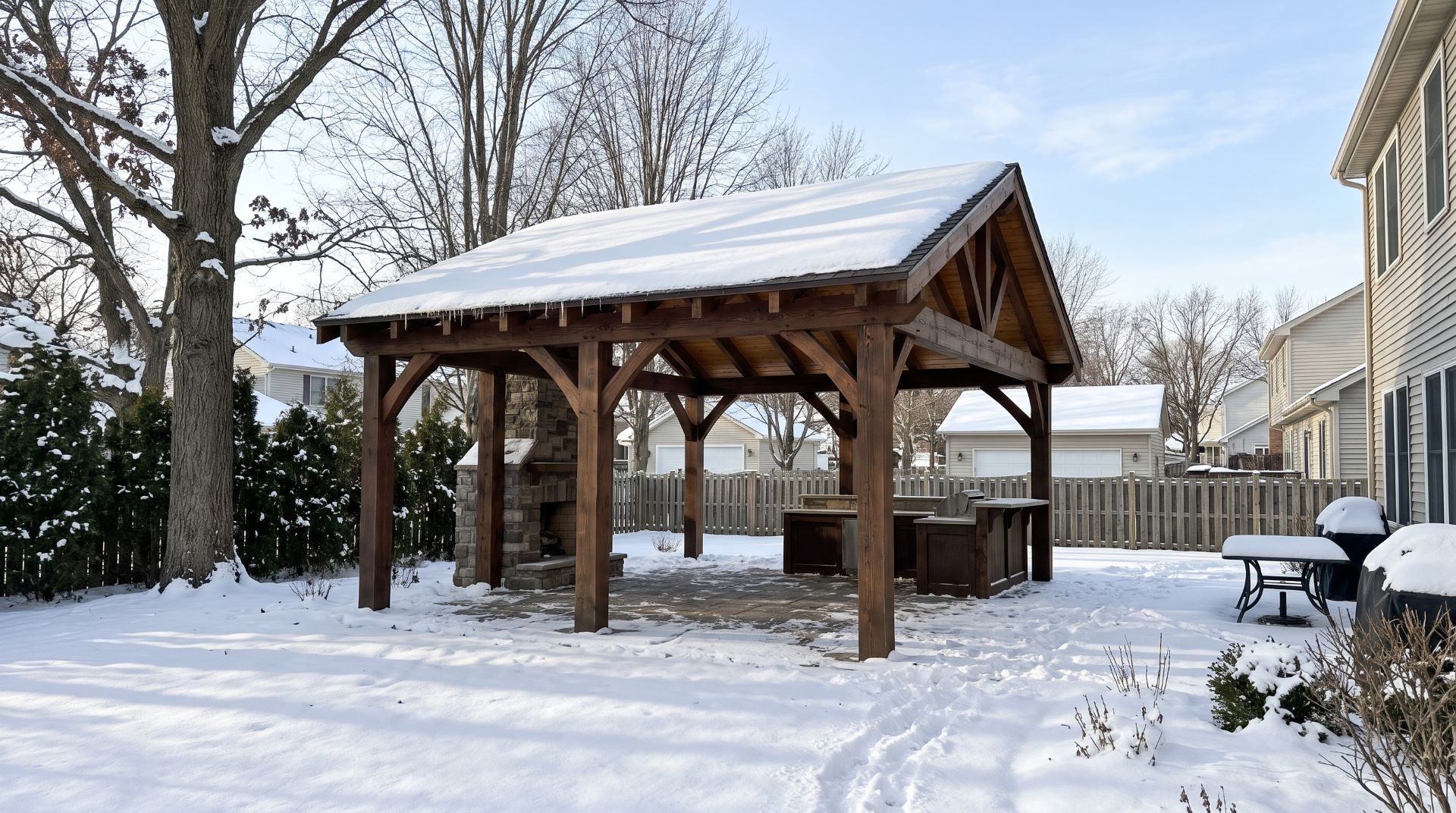
Weather requirements apply nationwide, but the conditions differ by location. In Illinois, Wisconsin, Michigan, and other cold-weather states, snow accumulation and freezing soil can affect structure selection.
Snow and Wind Loads
A permanent gazebo or pavilion should have documented structural information suitable for its location. Check the manufacturer’s published wind and snow load information, along with the required anchoring method.
A product approved for one climate may not meet the requirements in another. For example, a lightweight seasonal gazebo may require canopy removal before winter. A permanent hardtop structure may be designed for year-round use, but its rating must still be checked.
Footings, Drainage, and Frost Protection
Foundation requirements depend on soil, local frost conditions, structural loads, and building rules. Concrete footings or approved engineered foundation systems may be suitable.
Plan where roof runoff will go. Water should drain away from posts, nearby foundations, and frequently used paths.
Local Codes and Permits
Permit requirements vary by jurisdiction. Check local rules for setbacks, structural drawings, foundation depth, height, and electrical work.
Your homeowners association may also have design restrictions. Even when a small structure is exempt from a building permit, zoning and structural requirements may still apply.
How to Choose the Right Structure for Your Backyard
Use these five steps to compare your options:
- Decide how you will use the space. Choose between private seating, dining, entertaining, or a covered outdoor kitchen.
- Measure the usable area. Check post spacing, roof overhangs, furniture clearance, and access.
- Compare actual product specifications. Review roof type, materials, screens, and maintenance.
- Confirm installation requirements. Check structural loads, foundations, anchors, permits, and delivery access.
- Request an itemized materials quote. Confirm the included components, accessories, and shipping costs.
A gazebo often makes sense for a more defined garden retreat. A pavilion usually works better for open dining and entertaining areas. The gazebo vs pavilion choice becomes easier once you compare how each design fits your property.
Final Thoughts: Find the Right Outdoor Shelter
Both structures provide useful overhead protection. The right choice depends on the size of your space, your preferred design, and how you plan to use it.
Premium Decking Supply helps homeowners, DIY customers, and contractors compare available gazebo and pavilion options. We supply materials nationwide and can help with product selection and material lists. We do not perform installation work.
Request a Free Gazebo or Pavilion Materials Quote! Share your ZIP code, preferred dimensions, installation surface, and any products you’re considering. Our team can discuss available options and provide a materials quote.
You can also shop our online decking materials store for decking, railing, lighting, fasteners, and outdoor living accessories.
Frequently Asked Questions
A traditional gazebo often has a multi-sided roof and may include railings or screens. A pavilion usually has an open-sided, rectangular design. Both provide overhead shelter, and modern products can share many features.
A pavilion often works better for large dining or entertaining areas. A gazebo may be better for a compact seating area or when screens and privacy are priorities. The best choice depends on usable space and furniture placement.
It can be. Published national prices overlap, especially for similar-sized structures. The final price depends on materials, roof design, foundations, installation, and optional features. Compare total project costs instead of kit prices alone.
Yes, if the deck’s structural system can support the roof and required wind and snow loads. Composite decking boards are not structural post supports. Have a qualified professional review the deck and foundation before installing either structure.
Neither is automatically stronger. A permanent gazebo or pavilion must have suitable structural design, connections, and anchoring. Compare manufacturer ratings with local requirements, especially in areas with heavy snow or strong winds.