The place for all your outdoor living space!

Article Overview
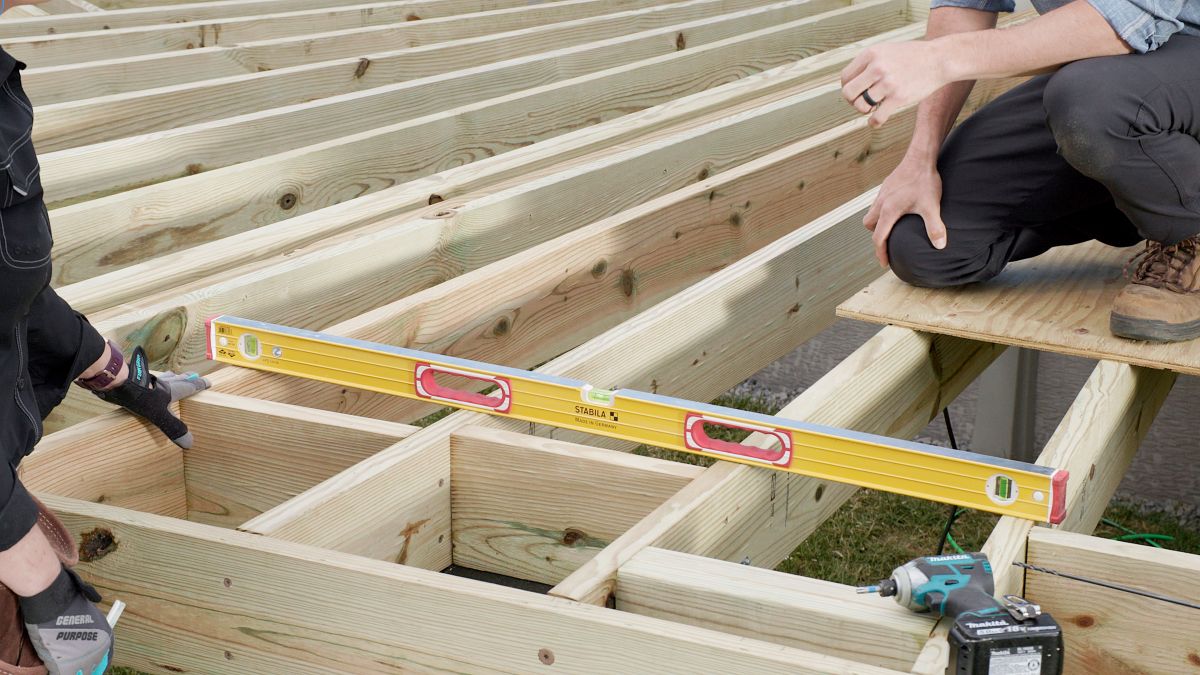
The 2024 IRC is starting to make its way into local jurisdictions across the country. If you build decks for a living, now is the time to get ahead of it – before an inspector catches you off guard mid-project.
Here’s a full breakdown of what changed in the irc 2024 edition and what it means on the job site.
2024 IRC vs 2021 IRC: What Changed for Deck Builders
| Requirement | 2021 IRC | 2024 IRC |
|---|---|---|
| Beam Sizing | Single column assumed maximum cantilever – often forced oversized beams | Multiple span/cantilever combinations per column – right-size beams for actual design |
| Ledger Flashing | No standardized flashing requirements | Flashing must be tight to WRB, extend 2″ above ledger – required in new and existing construction |
| Decay-Resistant Wood | “Wood materials” broadly required to be decay-resistant | Narrowed to “wood structural members” – active debate on what qualifies |
| Naturally Durable Species | Not defined with sapwood limits | Redwood, cedar, black locust, black walnut only – max 10% sapwood per face |
| Composite Decking | General performance guidelines | Must meet ASTM D7032 – joist spacing must match product spec |
| Guard Post Framing | No specific edge joist requirements | Roll blocking or reinforced joist required at every guard post location |
| Stair Landings | Landing required at least as wide as stair base, no exceptions | New exception for low-rise decks with 3 or fewer risers – 36″ landing permitted |
What Is the IRC and Why Does It Matter for Deck Builders?
Definition: The International Residential Code (IRC) is a model building code published by the International Code Council every three years. It is part of a family of codes developed by the ICC to set minimum standards for residential construction across the United States – covering everything from snow load calculations to exterior wall assemblies to deck structural requirements.
The 2024 International Residential Code is the latest version of the code. Like all model codes, it doesn’t automatically apply everywhere. State and local governments adopt each new version of the code on their own schedule, often with local amendments. But the IRC building code 2024 is the new baseline, and local jurisdictions are beginning to adopt it now.
Why it matters: Deck builders who stay ahead of building codes avoid costly rework, failed inspections, and liability exposure. The materials you stock, the framing details you use, and the hardware you spec all need to line up with whatever edition your local jurisdiction enforces.
The 2024 IRC is also distinct from the 2024 International Building Code (IBC). The IBC covers commercial construction – if your project falls under an IBC section, different requirements apply. The IRC covers one- and two-family dwellings. If you build residential decks, IRC codes 2024 are what apply to your work.
How Beam Sizing Changed in the 2024 IRC Deck Code
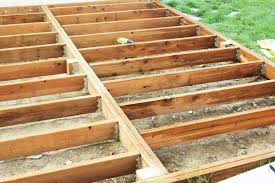
The old beam sizing tables in the 2021 IRC assumed every joist had a maximum cantilever. That assumption forced builders to oversize beams – and overpay for lumber – on jobs that didn’t need it.
What changed: The 2024 IRC deck code expanded the beam span tables to show multiple combinations of joist span and cantilever that produce the same beam load. A beam supporting a 10-foot joist span with a 2.5-foot cantilever, a 12-foot span with a 1-foot cantilever, and a 14-foot span with no cantilever now all fall under the same column.
What it means for you: Right-sizing beams gets easier. Less guesswork, less waste, and more accurate material estimates on cantilevered deck designs.
Ledger Flashing Now Has Clear, Enforceable Rules
Ledger failures are one of the leading causes of deck collapses. For years, the IRC offered limited guidance on flashing – which led to inconsistent installs and water intrusion problems along the exterior wall.
What changed: The 2024 IRC code changes require deck ledger flashing to be installed tight to the weather-resistive barrier (WRB) and extend at least 2 inches above the top of the ledger. On remodels where no WRB exists behind the exterior wall, one must be installed in the area behind the new ledger before flashing integration.
Flashing can lace shingle-fashion into the resistive barrier laps or be sealed to the face of the WRB using a self-adhering membrane.
What it means for you: Inspectors now have specific language to enforce. Sloppy flashing installs that slipped through before won’t pass under IRC 2024 requirements.
This is the change generating the most debate in the industry, and it directly affects what materials qualify under the IRC building code 2024.
What changed: The 2024 IRC updated Section R507.2.1 to require that all joists, beams, posts, decking, and stair stringers be made from either pressure-treated wood compliant with AWPA U1 or a naturally durable species. The 2024 International Residential Code now defines “naturally durable” as redwood, cedar, black locust, or black walnut – with no more than 10% sapwood on any face.
The controversy: The code also narrowed some language from “wood materials” to “wood structural members.” Code officials and local building departments are actively debating whether that shift removes decking boards and stair treads from the decay-resistance requirement. Expect this to be clarified – or challenged – in the 2027 code cycle.
What it means for you: Common sapwood grades of cedar and redwood that have been standard in the industry for decades no longer qualify as naturally durable under the 2024 IRC. Pressure-treated lumber and composite decking become the safer compliance play.
Composite Decking Faces New Performance Requirements
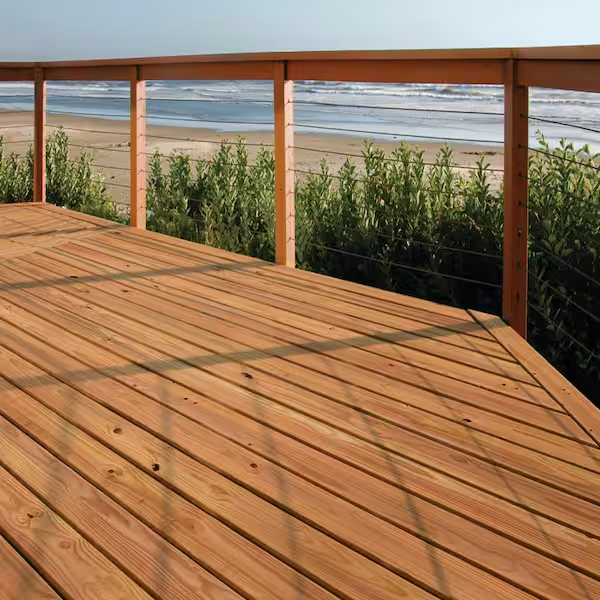
Composite decking has grown significantly in market share, and the IRC codes 2024 reflect that with tighter product performance standards.
What changed: Composite decking products must meet ASTM D7032 for span rating and load performance. Some products require 12-inch on-center joist spacing rather than the standard 16 inches used for wood decking.
What it means for you: If you frame a deck for wood and then switch to composite, you may end up out of code. Spec the decking material before you frame – not after.
Stair and Guardrail Requirements Were Updated
The 2024 IRC code changes tightened requirements around guardrails and exterior stairs, with updates that affect both new builds and remodels.
Guardrails: New provisions address how guard posts transfer loads into the deck framing. When a guard post is fastened to the edge joist, roll blocking or a reinforced joist is now required at each guard post location. The edge joist must be at least a double 2×10, or a minimum 6×10 sawn timber if blocking is not present at every 48 inches.
Stairs: Low-rise decks with three or fewer risers and no required handrail now have more flexibility on landing size. The code also allows existing non-conforming stairs to be reconstructed without changing geometry when surrounding construction restricts it.
Which States Are on the 2024 IRC Right Now?
The IRC is a model code – it only applies once your state or local jurisdiction formally adopts it. Many areas are still enforcing the 2021 or even the 2018 edition of the code.
In practice: Always confirm which version of the code your local building department enforces before pulling a permit. The 2024 IRC is the future standard, but your inspector is enforcing today’s adopted building codes – and those two things may not be the same yet. Note that energy conservation provisions in the IRC reference the International Energy Conservation Code separately and are not covered by the deck-specific changes in this post.
According to the ICC’s code adoption tracker, adoption timelines vary significantly by state and municipality.
Where to Find the 2024 IRC Code Book
The full 2024 IRC code book is available through the International Code Council directly. Free read-only access is available online by chapter. The IRC code book 2024 is also available for purchase as a PDF or print edition through the ICC store at shop.iccsafe.org.
For deck-specific provisions, start with Section R507 in the 2024 IRC code book. That section covers all prescriptive deck design requirements including ledger connections, beam sizing, post requirements, and material standards.
Common Reasons Decks Fail Inspection Under the 2024 IRC
Knowing what changed is one thing. Knowing what actually gets decks flagged at inspection is another. Use this checklist before your inspector shows up:
| Inspection Item | What Inspectors Look For | Pass/Fail Trigger |
|---|---|---|
| Lumber Treatment | Decay-resistant material on all structural members and decking | Standard grade lumber in exterior application = fail |
| Ledger Connection | Lag bolts or through-bolts in staggered pattern, no toenailing | Nails or non-staggered fasteners = fail |
| Ledger Flashing | Tight to WRB, extends 2″ above ledger | Missing or improperly lapped flashing = fail |
| Guard Post Framing | Roll blocking or reinforced joist at every post location | Missing blocking on edge joist = fail |
| Composite Joist Spacing | Matches manufacturer’s required spacing (12″ or 16″ o.c.) | Wrong spacing for specified product = fail |
| Fastener Type | Hot-dipped galvanized or stainless steel at all structural connections | Standard nails or untreated screws = fail |
| Footing Depth | Below local frost line | Shallow footings = fail |
| Guardrail Height | Minimum 36″ from deck surface when deck is 30″+ above grade | Under 36″ = fail |
| Baluster Spacing | No opening greater than 4″ | Any gap over 4″ = fail |
Untreated or wrong-grade lumber. Using standard-grade lumber where decay-resistant material is required is one of the most cited violations. Under the 2024 IRC the rules are tighter – verify treatment levels and species grades before you frame.
Bad ledger connections. Toenailing or using standard nails to attach a ledger to the house is prohibited. The IRC requires lag bolts, through-bolts, or code-approved structural screws in a staggered pattern. Missing or improperly installed ledger flashing also triggers failures.
Guard post connections. Guard posts must be designed to resist a 200 lb. horizontal load at the top. The 2024 IRC now requires roll blocking or reinforced joists at every guard post location – inspectors are looking for this specifically.
Composite decking on wrong joist spacing. Framing at 16 inches on center and then installing composite that requires 12 inches is an automatic fail. Spec the decking first, then frame to match.
Fasteners that won’t last. Non-weather-resistant fasteners – standard nails, untreated screws – corrode fast outdoors. The IRC requires hot-dipped galvanized or stainless steel hardware for all structural connections exposed to weather.
Footings and Frost Depth: What the 2024 IRC Requires
Deck posts must transfer their load safely into stable ground. The 2024 IRC requires footings to extend below the local frost line to prevent movement during freeze-thaw cycles. When soil freezes it expands – shallow footings get pushed up, which warps the entire frame.
Frost depth varies by region. In colder climates like the northern U.S. and Midwest, footings commonly need to reach 42 inches below grade. In warmer southern climates the requirement may be as shallow as 12 inches.
Always confirm the required frost depth with your local building department before pouring. Individual municipalities sometimes enforce stricter depths based on local soil conditions.
The 2024 IRC also requires that deck loads be designed for the greater of the live load in Section R301.5 or the ground snow load in Table R301.2. In regions with significant snow load, that calculation directly affects beam sizing and post spacing.
What This Means for Your Material Choices
The 2024 IRC changes don’t exist in a vacuum. They directly affect what you should be buying and specifying:
- Pressure-treated lumber remains the safest compliance choice for structural members and decking boards
- Composite decking now requires ASTM D7032 compliance – verify your product’s span rating before framing
- Ledger flashing tape and self-adhering membrane are now code-required products, not optional upgrades
- Cedar and redwood remain viable – but only sapwood-limited grades that meet the 10% threshold
Frequently Asked Questions
The 2024 IRC is the latest edition of the International Residential Code, published by the International Code Council. It is a model building code that sets minimum construction standards for one- and two-family homes, including decks, stairs, guardrails, and structural framing.
It depends on your jurisdiction. The 2024 International Residential Code is a model code that states and municipalities adopt on their own timeline. Some areas are already enforcing it; others are still on the 2021 or 2018 version of the code. Check with your local building department before starting a project.
Generally yes, for work that requires a permit. The ledger flashing requirements specifically call out existing construction scenarios where no weather-resistive barrier is present behind the exterior wall.
Yes, but only species and grades that meet the sapwood limit of no more than 10% per face. Standard B-grade redwood and common cedar grades may not qualify. Verify the grade before specifying.
ASTM D7032 is the performance standard for wood-plastic composite deck boards. It sets minimum requirements for span rating, load capacity, and resistance to slip and weathering. Products that don’t meet it are not code-compliant under IRC codes 2024.
Not necessarily. The 2024 IRC building code actually simplified some guardrail calculations that previously required engineering review. However, non-standard guard post configurations may still require a sign-off from a registered design professional.