The place for all your outdoor living space!

Composite deck screws affect more than how securely your deck boards stay in place. They also influence the finished appearance of the deck, how the boards install, and which board profiles you can use throughout the project. If you’re still choosing your decking, start with our guide on how to buy composite decking to compare materials, brands, board profiles, and other parts of your order.
Choosing the right fastener can feel complicated because composite decking does not rely on one universal system. Some projects use color-matched screws through the face of the boards. Others use screws and matching plugs to conceal those fastening points. Grooved boards can work with hidden fasteners and deck clips that secure the boards along their edges instead.
Most decks also use more than one type of fastener. The main deck surface, picture-frame border, stairs, and fascia can each require a different solution. Understanding those differences before you order helps you choose compatible products and build a more accurate material list.
This guide breaks down the major types of composite decking screws and fasteners, how they work, and how to choose the right option for each part of your deck.
What Are Composite Deck Screws?
Manufacturers design composite deck screws specifically for composite and other wood-alternative decking materials. Depending on the product, the screw may use specialized threads, head designs, coatings, or other features that help it drive cleanly into the decking material.
That distinction matters because composite deck boards respond differently to fastening than traditional wood boards. A screw that works well in pressure-treated lumber may not create the same result in composite decking. The wrong fastener can leave an unattractive fastening point or simply fall outside the fastening options recommended for that decking line.
Many composite decking screws come in colors that coordinate with popular deck-board finishes. The screw head remains visible, but the color helps it blend into the deck surface. Other systems combine a screw with a matching plug, which covers the fastening point after installation.
If you’re comparing screws for wood decking, framing, pressure-treated lumber, or other general deck applications, read our guide to the best deck screws. This guide focuses specifically on fastening composite and PVC deck boards.
Composite Deck Fasteners at a Glance
The best fastening system depends on where the board sits, which profile you choose, and what type of finished appearance you want.
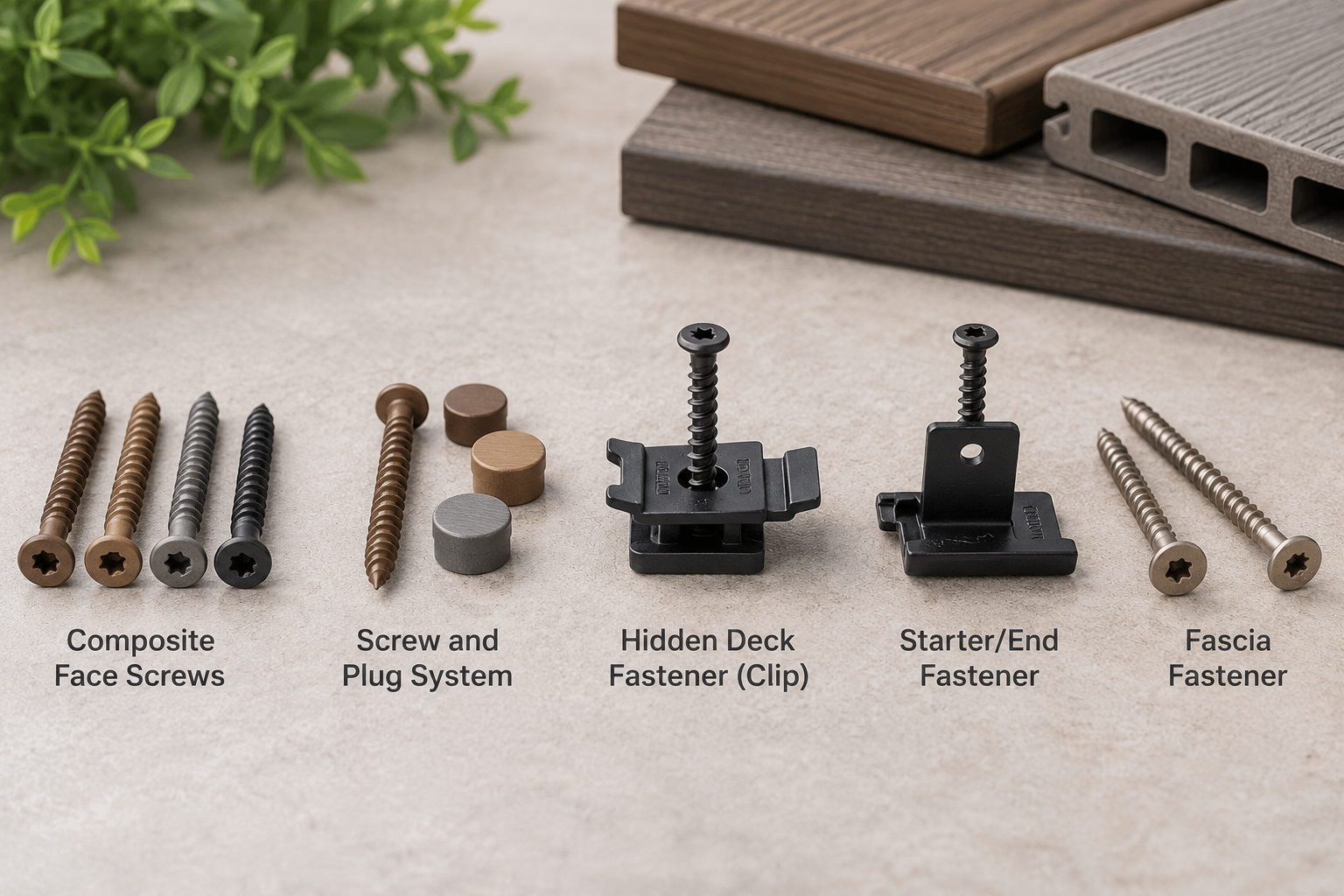
| Fastener Type | Common Use | Typical Board Profile | Finished Appearance |
|---|---|---|---|
| Composite face screws | Deck surface, borders, stairs | Square edge | Visible, but often color matched |
| Screw-and-plug systems | Borders, stairs, perimeter boards | Square edge | Plug conceals the screw |
| Hidden deck fasteners | Main deck field | Grooved | No visible face screws |
| Starter/end fasteners | First and last boards | Usually grooved | Typically concealed |
| Fascia fasteners | Fascia boards | Fascia | Depends on the system |
A single deck can use several of these fasteners. For example, you might install grooved boards with hidden clips across the main deck field, then use square-edge boards with screws or plugs around the picture-frame border. Stairs and fascia can introduce additional fastening requirements.
Planning those areas separately makes it easier to order the right hardware from the beginning.
Can You Use Regular Deck Screws on Composite Decking?
You should not choose a screw simply because its size looks right or because the package labels it as a deck screw.
Composite decking brands develop installation requirements around their specific products. The recommended fastener can depend on the decking collection, board profile, application, framing material, and fastening location.
This becomes especially important when you compare deck screws for composite decking with general-purpose deck screws. A traditional screw may work well for wood decking or another part of the deck structure without making it the right choice for the composite deck surface.
Instead, identify your decking brand and collection first. From there, you can narrow your choices to fastening systems that work with that product and your deck design.
That does not mean every composite deck requires one specialty screw from beginning to end. It means the board should determine the fastener – not the other way around.
Types of Composite Decking Fasteners
The term composite decking fasteners includes several products beyond traditional face screws. Understanding the major options will help you decide which ones belong in different areas of the deck.
Color-Matched Composite Deck Screws
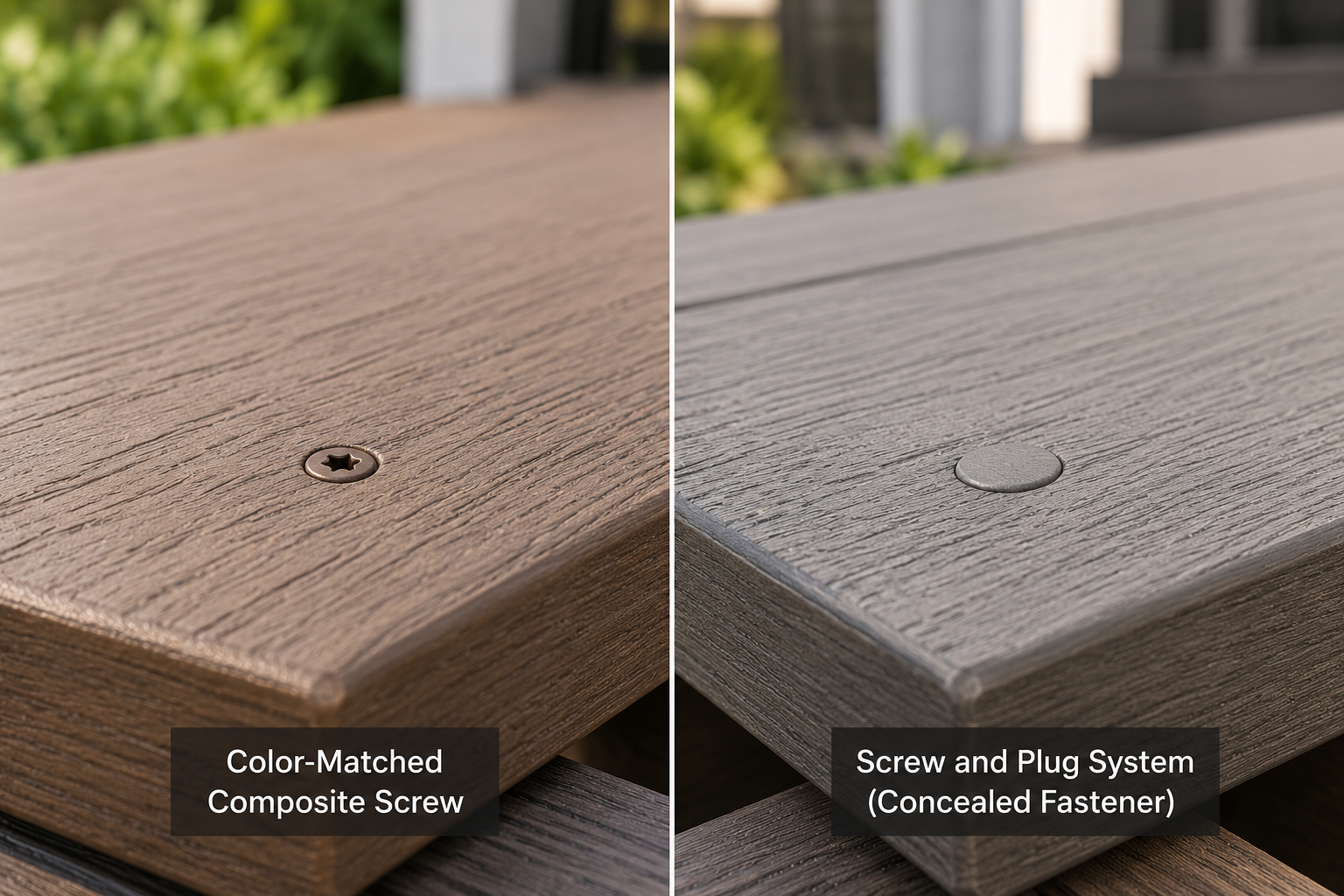
Color-matched screws for composite decking offer one of the simplest ways to face-fasten a board while keeping the screw heads relatively subtle.
Installers drive these screws directly through the face of the board and into the framing below. Unlike a standard contrasting screw, the head uses a color that coordinates with the decking. You can still see the fastening point when you look closely, but it blends more naturally with the surrounding surface.
This approach works well in areas where the deck design calls for face fastening and you do not need to completely conceal the screw. Square-edge perimeter boards, picture frames, and stairs are common examples, depending on the decking product.
Color should come after compatibility, however. Two screws may look almost identical from above while using different threads, materials, or intended applications. Choose the fastener that works with the decking first, then find the appropriate color.
Composite Deck Screws With Plugs
A screw-and-plug system offers another solution for areas that need face fastening.
With this system, the screw sits below the surface of the board and a matching plug covers the opening. Manufacturers design the plug to coordinate with the decking, which makes the fastening point much less noticeable than an exposed screw head.
This combination works especially well when you want the secure placement of a face screw without rows of visible screw heads. Builders often use plug systems on picture-frame borders, perimeter boards, stairs, and other finishing areas where hidden deck clips may not work.
Plug systems still require compatible components. The screw, plug, decking collection, and installation method need to work together as a system.
Hidden Deck Fasteners and Deck Clips
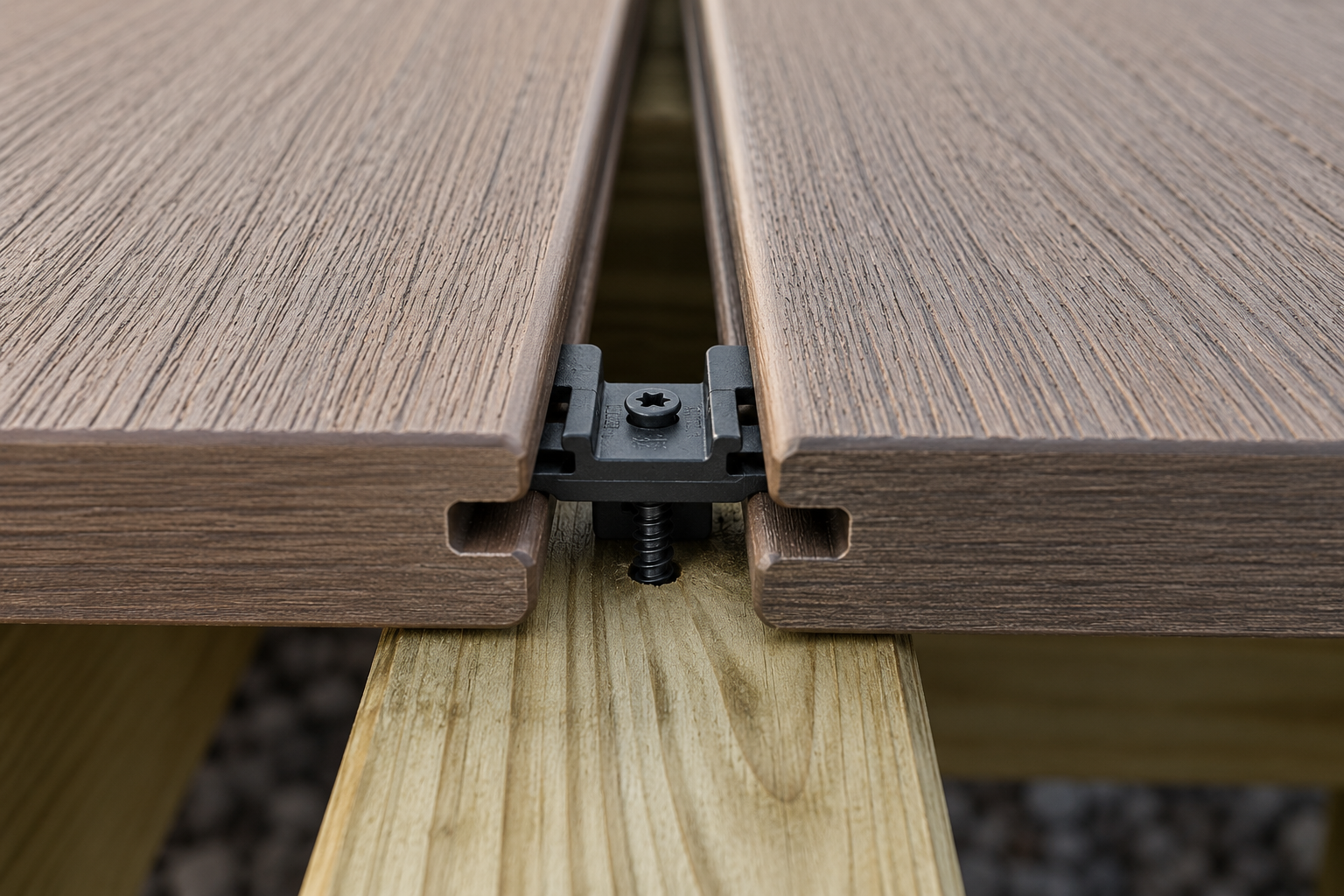
Hidden deck fasteners take a different approach. Instead of driving a screw through the visible surface, these systems typically use deck clips that engage the grooves along the sides of compatible boards.
The clip sits between neighboring boards and attaches to the framing below. Once the next board goes into position, the decking conceals most or all of the hardware from above.
The result creates a clean deck surface without rows of visible face screws. Many hidden fastener systems also help maintain consistent spacing between boards during decking installation, which can make them particularly useful across larger sections of the main deck field.
However, a hidden fastener system needs a compatible board profile. You cannot assume that any clip will work with any grooved composite board.
If you’re installing Trex, our complete guide to Trex hidden fasteners goes deeper into the brand-specific options and where to use them. For Fiberon projects, our guide to installing Fiberon decking covers its different hidden fastening options and installation requirements.
Some systems also support specialized installation methods. For example, certain products allow pneumatic installation, while others require a particular driver, bit, or installation tool. Check the system before choosing your tools.
Starter and End Fasteners
The first and last boards on a deck can create a fastening challenge because you may not have access to both sides of the board once installation begins.
Starter and end fasteners solve that problem within compatible hidden fastening systems. They secure perimeter boards while helping preserve the concealed appearance across the deck surface.
You may not need many of them compared with the clips used across the main field, but leaving them off the order can bring the project to a stop. Include them when you calculate the complete fastening system rather than focusing only on the main deck clips.
Fascia Fasteners
Fascia covers the vertical portions of the deck framing and creates a finished appearance around the perimeter. Because fascia serves a different purpose from the deck boards under your feet, manufacturers often specify a separate fastening method for it.
Do not automatically use leftover deck-board screws on the fascia. Check the fascia product and its installation requirements separately when planning your hardware.
This is a small part of the material list, but it is an easy item to overlook until the project reaches the finishing stage.
Composite Deck Screws vs. Hidden Fasteners
Choosing between composite deck screws and hidden fasteners is not really an either-or decision. Many composite decks need both.
Face screws work well when a board requires direct surface fastening. Depending on the product, that can include square-edge boards, picture-frame borders, perimeter boards, stairs, and other finishing details. Color-matched screws make those fastening points less noticeable, while plug systems can conceal them further.
Hidden fasteners usually make the most sense across large areas of compatible grooved decking. Because the clips sit along the sides of the boards, they create a smooth deck surface without visible rows of screws.
The deck design should determine where each system goes. Rather than trying to find one fastener for every board, think of the fastening system as part of the overall deck layout.
Which Fasteners Work With Grooved vs. Square Deck Boards?
Board profile gives you one of the fastest ways to narrow your fastening options.
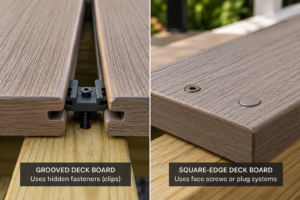
Grooved boards have channels running along their sides. Compatible hidden clips fit into those grooves and secure the boards without putting screws through the visible face. This makes grooved boards a popular choice across the main deck field.
Square-edge boards do not have those side grooves. They commonly use approved face screws or screw-and-plug systems instead. That makes them useful around picture-frame borders, stairs, and other locations where an exposed board edge needs a finished appearance.
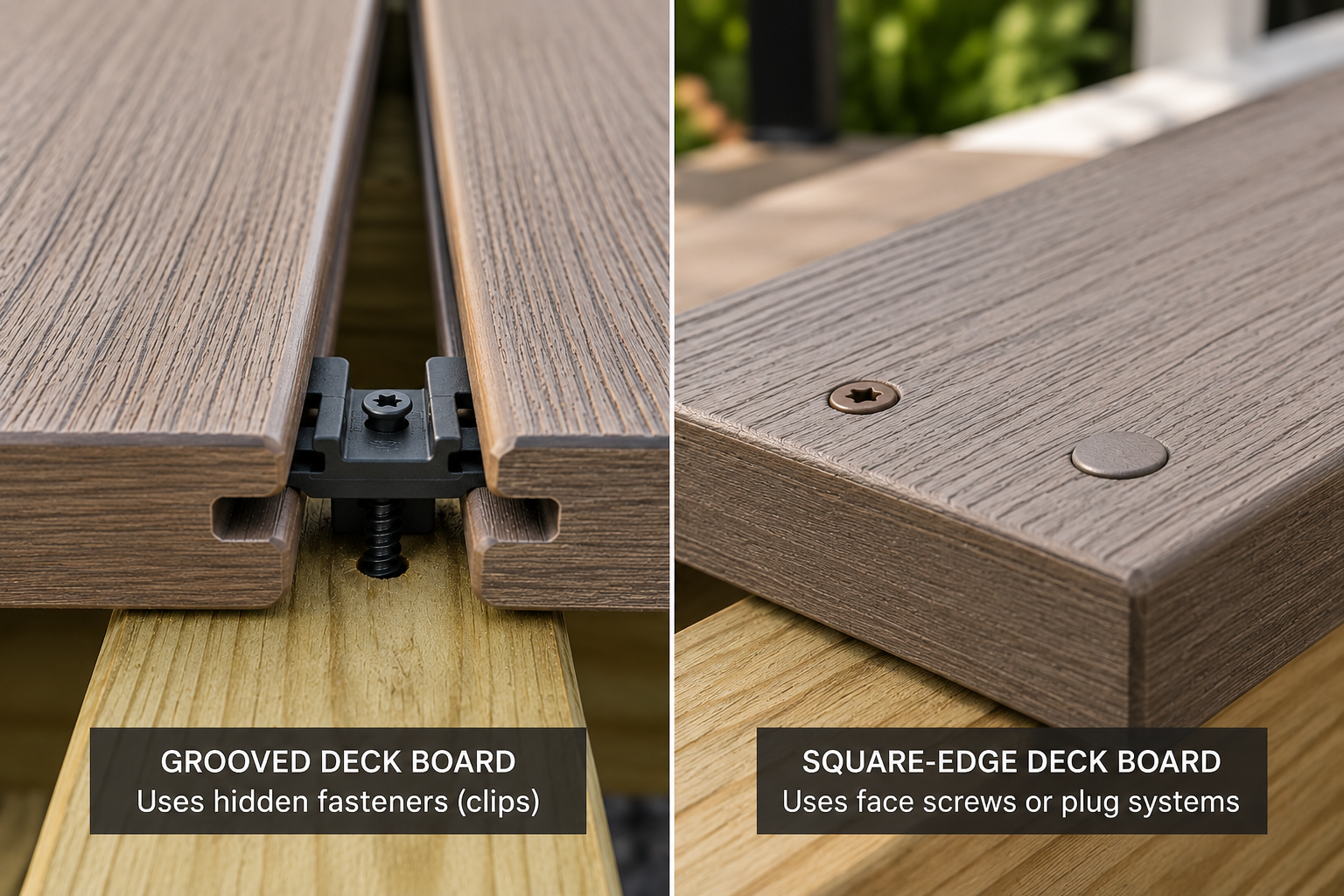
If your design uses both profiles, you will probably need more than one type of fastener.
Our guide to grooved vs. square deck boards explains where each board profile typically works best and why many composite decks use both.
This is also why you should not calculate fasteners from square footage alone. Two decks with the same total area could require different hardware based on their board profiles, borders, stairs, framing, and overall layout.
Where Do You Use Composite Deck Screws?
Once you understand the board profiles, the next step is looking at the individual areas of the deck. The fastening method that works across the main field may not work around the perimeter or on the stairs.
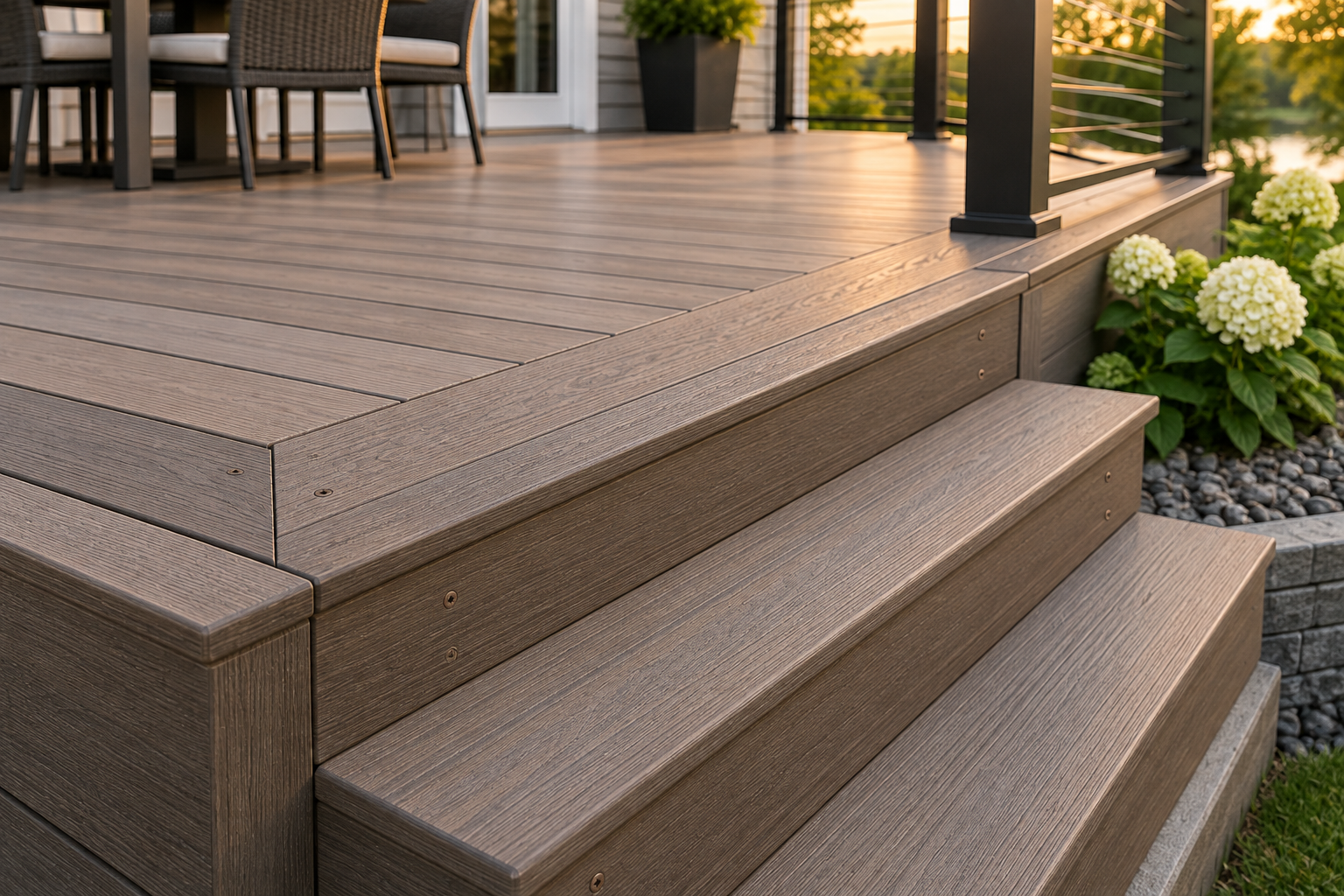
Main Deck Surface
The main deck surface usually contains the largest number of boards, so your fastening decision here has the greatest effect on the overall appearance.
Compatible grooved boards can use hidden fasteners across this area, creating a clean surface without visible face screws. Square-edge boards may require an approved face-fastening system instead.
Before ordering, confirm the board profile, joist material and spacing, fastening system, and quantity requirements. A large deck can require hundreds of fastening points, so small planning mistakes can turn into significant ordering problems.
Picture-Frame Borders and Deck Edges
Picture framing creates a finished border around the deck and can conceal the cut ends of the field boards. These perimeter boards often require a different fastening approach from the boards inside the frame.
Square-edge boards commonly work well here because the outer edge remains visible. Depending on the decking line, an approved composite deck screw or plug system can secure the border without relying on a side groove.
Planning the picture frame before you order boards and hardware helps you account for both the different board profile and its fasteners.
Stairs
Stairs also deserve their own place in the fastening plan.
Many decking systems use square-edge boards for stair treads because the board edge remains exposed. The exact screw and fastening pattern depend on the decking product and stair design.
Instead of assuming the hidden fasteners from the main deck will carry over to the stairs, calculate the stair materials separately.
Fascia
Fascia finishes the vertical perimeter of the deck rather than the walking surface. Include the appropriate fascia fastening system when you calculate your material package.
Treating fascia as its own application keeps you from trying to make a deck-board fastener perform a job it was not designed to do.
How to Choose the Right Composite Deck Screws
Start with the exact decking product. Knowing that you have “composite decking” does not narrow the choice enough. Identify the manufacturer, collection, and board profile before you buy the hardware.
Next, map the board profiles to the deck layout. If the main field uses grooved boards but the picture frame and stairs use square-edge boards, you may need hidden clips plus another face-fastening system.
Consider the framing as well. Wood and metal framing can require different fastening components. Some manufacturers offer specialized systems for steel joists, so confirm the framing material before ordering a full bucket of fasteners.
Then look at the environment. Corrosion resistance becomes especially important around saltwater and other harsh conditions. Depending on the system and application, the manufacturer may recommend a particular coating or stainless steel fastener. Follow the specifications for the actual product and location rather than applying one material recommendation to every deck.
Finally, decide how much visible hardware you want. Color-matched screws provide a straightforward face-fastening option. Plug systems conceal those screws further. Grooved boards and hidden fasteners can create a surface without visible face screws across larger areas.
If you’re still choosing the decking itself, browse PDS’s composite and PVC decking to compare brands and collections before building the rest of the material package.
Do Composite Deck Screws Need to Match the Decking Color?
No, but matching the screw color can make a noticeable difference when the fastener remains visible.
A contrasting deck screw creates a distinct point on the deck surface. A color-matched screw blends more closely with the board, which can give face-fastened areas a cleaner appearance.
A plug system can take that a step further by covering the screw with material designed to coordinate with the board. Hidden fasteners avoid visible face screws altogether when the board profile and application support them.
Appearance matters, but it should not drive the entire decision. First choose a compatible fastening system for the decking and application. Then compare the available finishes or concealment options within that system.
How Many Composite Deck Fasteners Do You Need?
Fastener quantity depends on the deck layout, framing, board lengths, joist spacing, fastening system, borders, stairs, and other design details. Square footage alone does not tell the entire story.
A hidden fastening system generally needs clips at specified framing locations along each board. Face-fastened areas follow a different fastening pattern. Picture frames, breaker boards, stairs, starter boards, and fascia can add hardware that a basic square-foot calculation misses.
Finalize the deck layout before calculating the order. Once you know which boards go where, you can calculate the fasteners for each section instead of estimating one quantity for the entire project.
This approach also helps prevent a frustrating situation where you have enough boards to keep working but not enough clips, screws, plugs, or starter fasteners to install them.
Common Mistakes When Choosing Composite Deck Fasteners
One of the easiest mistakes to make is buying the fasteners before choosing the decking. Without the exact decking collection and board profiles, you do not have enough information to choose the complete fastening system.
Another mistake is treating every area of the deck the same. The main field, picture-frame border, stairs, and fascia can use different boards and fastening methods. Planning those areas individually gives you a more accurate order.
Some buyers also focus too heavily on creating a fastener-free appearance. A clean deck surface looks great, but hidden hardware only makes sense where the decking and installation support it. Face screws and plug systems still play an important role in many well-designed composite decks.
Finally, do not assume that similar-looking screws or deck clips are interchangeable. Products can differ in board compatibility, framing compatibility, spacing, materials, installation tools, and intended use.
Find the Right Composite Decking and Fasteners at Premium Decking Supply
The easiest time to choose your composite deck screws is while you are planning the rest of the deck – not after the boards arrive.
Premium Decking Supply carries composite and PVC decking along with the fasteners, clips, fascia, railing, hardware, and structural materials needed to complete the project. Our team can help you match board profiles with the appropriate fastening options and account for the different materials needed across the deck.
Whether you are building the entire project yourself or ordering materials for a professional installation, planning the boards and fasteners together can save time and prevent missing or incompatible hardware.
Contact Premium Decking Supply to get help building the right material package for your deck.
Frequently Asked Questions About Composite Deck Screws
Use screws or fasteners that work with your specific composite decking product and application. Composite-specific screws may use head or thread designs that work better with the material, while color-matched and plug systems can improve the finished appearance.
Do not assume that a general-purpose deck screw will work with your composite decking. Check the fastening options for the specific manufacturer, collection, board profile, and application before choosing the screw.
The right screw depends on your decking brand, product line, board profile, fastening location, framing, and environment. Your options may include composite face screws, color-matched screws, screw-and-plug systems, or screws used within an approved hidden fastening system.
Many composite decking products support face fastening in certain applications. Use the correct fastener and follow the installation requirements for the specific board rather than applying one fastening method to every composite product.
Neither option works best everywhere. Hidden fasteners create a clean surface across compatible grooved boards, while composite deck screws work well for many square-edge boards, borders, stairs, and other face-fastened areas. Many decks use both.
That depends on the decking product, fastener, location, and installation conditions. Some applications require pre-drilling while others do not. Check the current installation instructions for your decking and fastening system before you begin.