The place for all your outdoor living space!
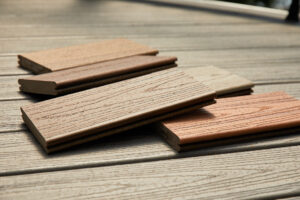

Understanding grooved vs square deck boards can help you choose the right composite decking for your project.Although these board profiles may look nearly identical from above, their edges affect how installers fasten them and where they work best within a deck design.
Grooved deck boards have channels along their sides that work with hidden fasteners, making them a popular choice for the main deck surface. Square-edge boards have solid, finished sides and often appear around picture-frame borders, stairs, and other areas where the edge of the board remains visible.
Many composite decks use both profiles rather than choosing one or the other. Your deck layout, fastening system, stairs, borders, board lengths, and selected decking collection can all affect how many grooved and square boards you need. Understanding those differences before you order can help you choose the correct boards, compatible fasteners, and quantities for the entire project.

Grooved vs Square Deck Boards at a Glance
The main difference between grooved and square deck boards comes down to the edge profile, fastening method, and where each board gets used. Grooved boards typically work with hidden clips that secure the decking between boards. Square boards provide a finished edge and can use approved screws or plug systems.
| Feature | Grooved Deck Boards | Square Deck Boards |
|---|---|---|
| Edge Profile | Grooves along the sides | Solid, finished edges |
| Typical Fastening | Hidden clips or hidden fasteners | Screws or plug systems |
| Common Placement | Main deck surface | Borders, stairs, and exposed edges |
| Finished Appearance | Clean surface with fewer visible fasteners | Finished edge where the side shows |
| Picture Framing | Commonly used inside the border | Commonly used for the outer border |
| Fastener Visibility | Fasteners sit between the boards | Depends on the fastening system |
| Used Together? | Often | Often |
These are general guidelines rather than rules for every deck. The decking material, manufacturer, product collection, deck design, and approved fastening system can all affect which profile works best in each area.
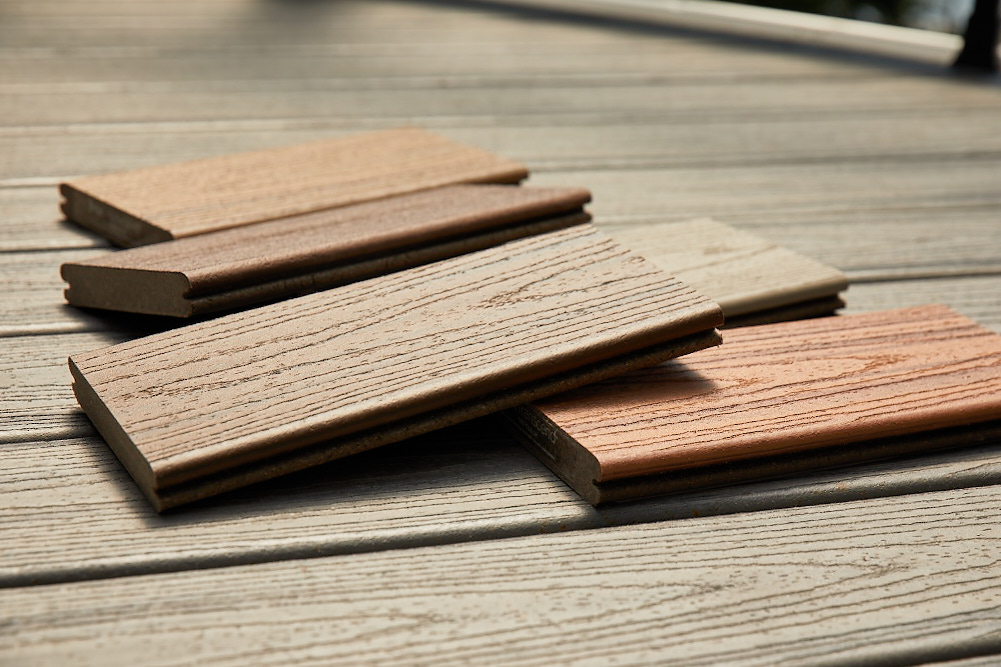
What Are Grooved Deck Boards?
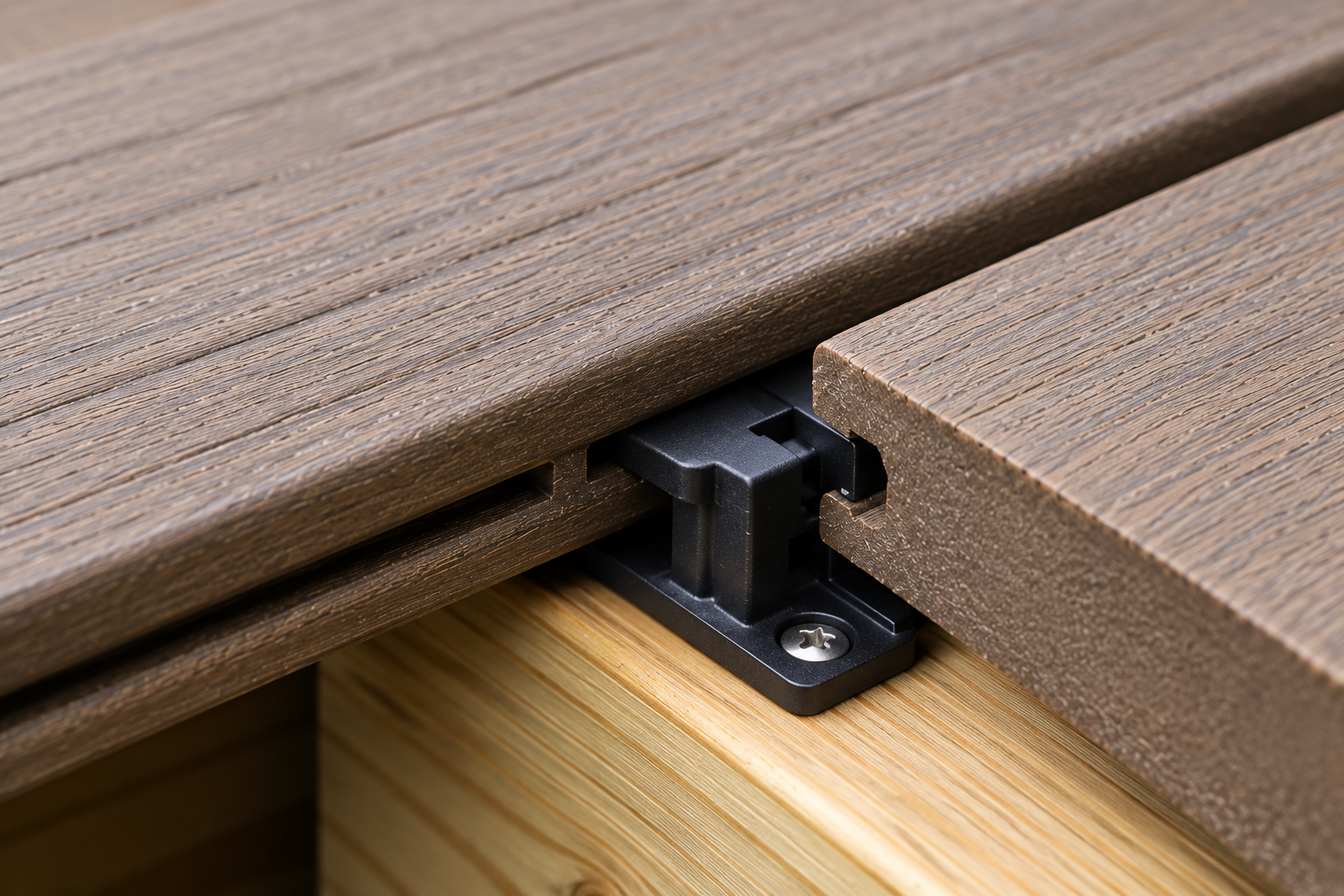
Grooved deck boards have channels along their sides that allow compatible fasteners to secure the boards to the framing. Installers can fasten the decking without driving screws directly through the visible surface.
The result is a cleaner deck surface with fewer visible fasteners. This makes grooved boards especially popular with composite and PVC decking, where homeowners often want the color and grain pattern to remain the focus.
Grooved profiles are common across many composite decking lines, although they are not exclusive to composite materials. Some wood decking products also use side grooves with compatible hidden fastening systems. Always check the requirements for your specific decking material instead of assuming the same installation method works across different products.
Many manufacturers offer grooved composite deck boards alongside square-edge options within the same collection. However, available profiles and board lengths can vary between brands and individual collections. Always check the specifications for the exact product you plan to purchase.
Choosing the right grooved deck board fasteners depends on the decking manufacturer and product collection. A typical hidden fastening system uses clips that fit inside the side grooves between neighboring boards. A screw secures each clip to the joist below, allowing the clip to hold the boards without driving screws through the visible surface.
Because the attachment happens between the boards, the finished deck avoids long rows of visible screw heads. This creates the clean appearance that makes hidden fastening popular with composite decking.
The exact system varies by manufacturer. Some decking products use proprietary hidden deck fasteners, while others work with several compatible systems. A starter clip may also secure the first or last board where a standard hidden clip cannot fit.
Always match the fastener to the decking manufacturer’s requirements. The correct fastener affects more than appearance. It also helps maintain the required spacing and allows the decking system to perform as designed.
Where Are Grooved Composite Deck Boards Used?
Installers commonly use grooved boards across the main field of a deck. Large areas benefit from the clean appearance created by hidden fasteners, especially when the design uses long, uninterrupted decking lines.
However, the groove becomes visible when the side of a board remains exposed. That makes a standard grooved board less desirable for many outside edges, stair treads, and picture-frame borders.
This is one reason a deck built primarily with grooved boards may still require several square-edge boards.
What Are Square Deck Boards?
Square deck boards have solid sides without the channels found on grooved boards. You may also see them described as square-edge or non-grooved composite deck boards.
The solid edge creates a finished appearance in locations where someone can see the side of the board. For that reason, builders frequently use square boards around deck edges, picture frames, and stairs.
Square boards can also provide more flexibility in areas where hidden clips cannot secure the decking properly. Depending on the manufacturer and application, installers may use approved deck screws, color-matched fasteners, or a screw-and-plug system.
How Are Square-Edge Boards Fastened?
Unlike a grooved board, a square-edge board does not provide a side channel for a standard hidden clip. Installers often secure these boards through the face using an approved fastening system.
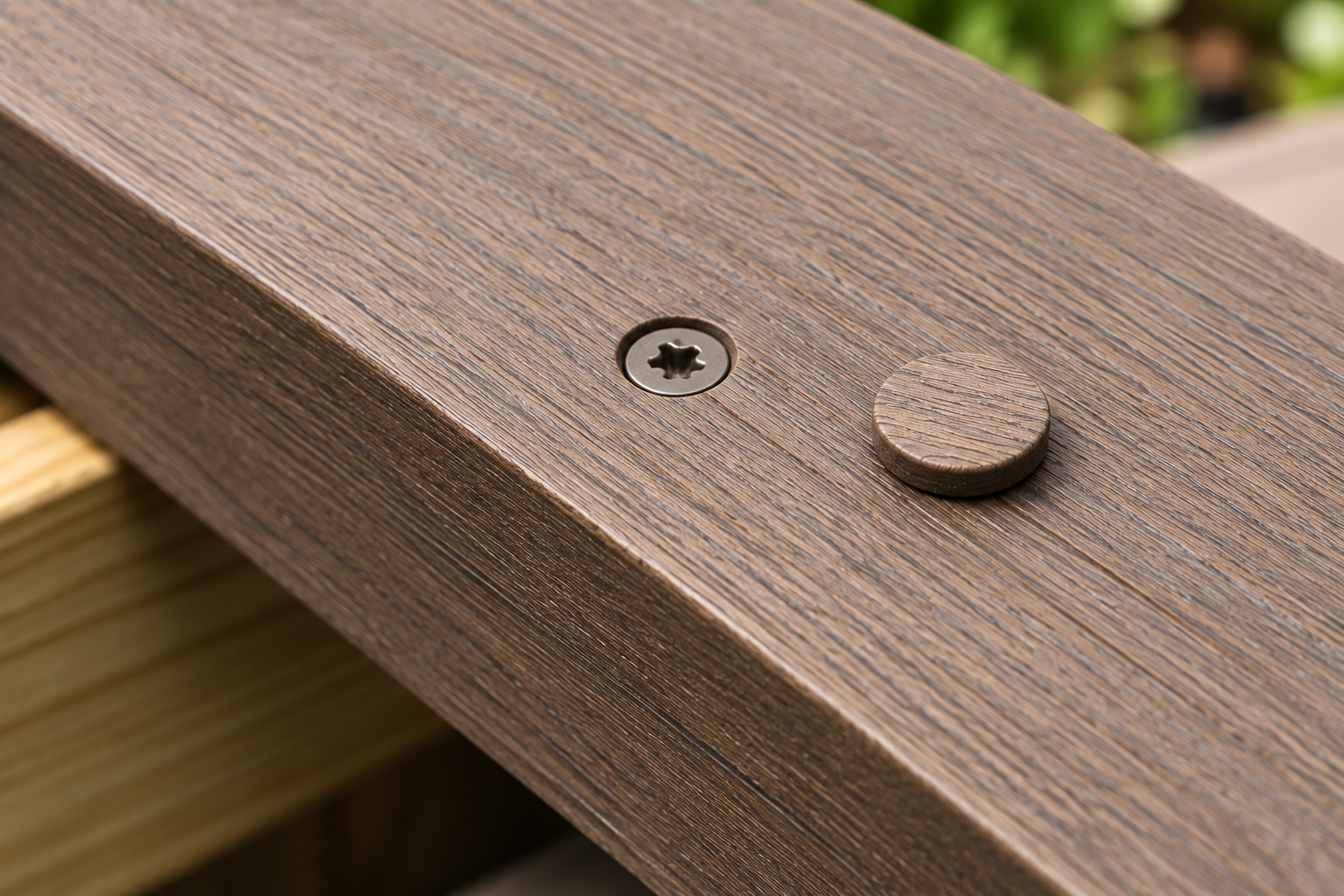
Traditional face fastening can leave screw heads visible on the deck surface. However, many composite decking systems offer color-matched deck screws or plugs designed to make those attachment points less noticeable.
Plug systems use material that closely matches the deck board. The installer drives the approved screw into the board and inserts the plug above it. This creates a cleaner appearance without leaving rows of visible screws across the finished surface.
The correct method depends on the decking material and manufacturer. Never assume that any screw or plug system will work with every composite deck board.
Where Are Square Deck Boards Used?
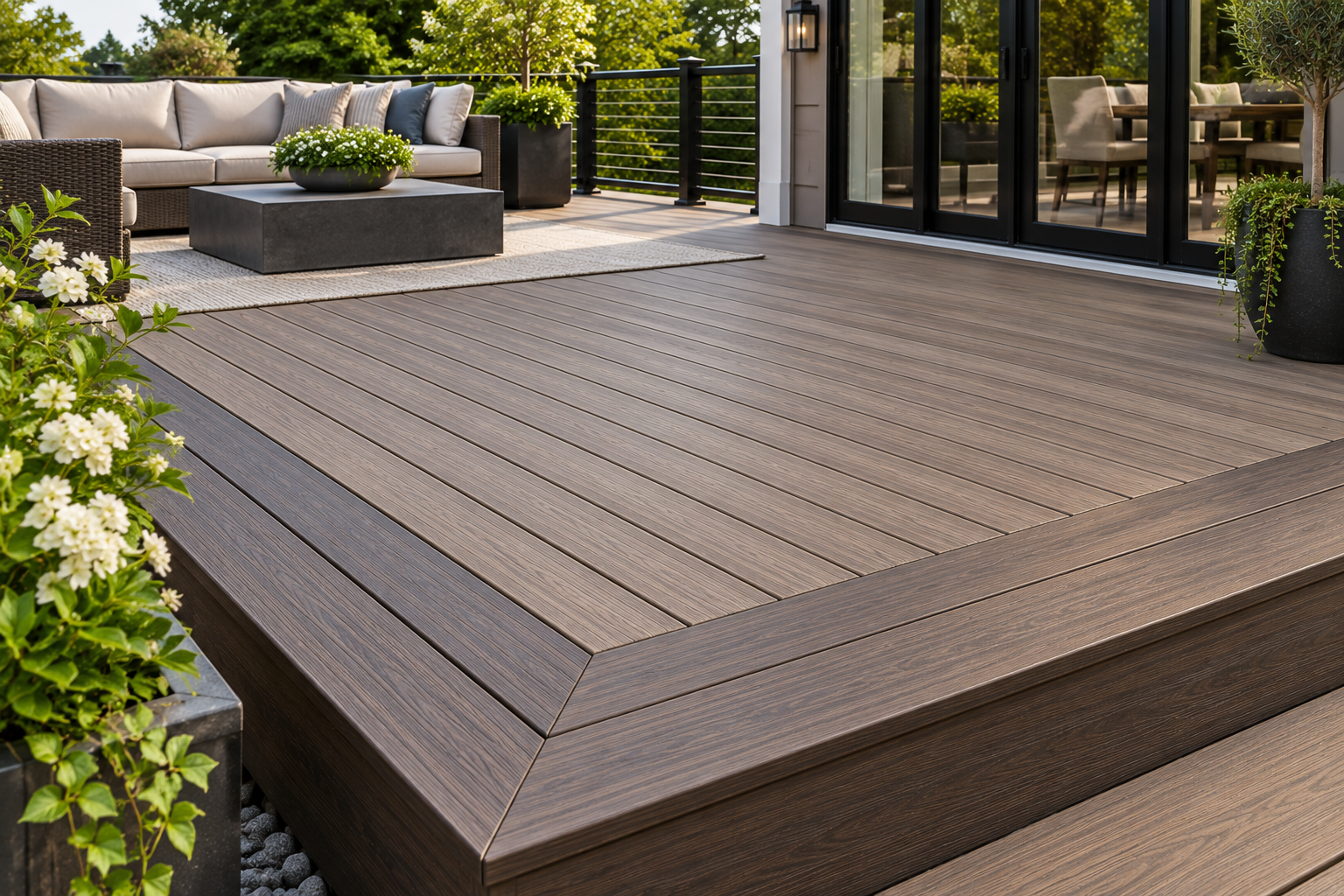
Square boards become especially useful anywhere a finished deck edge remains visible. Picture-frame borders are one of the most common examples. A square-edge board can create a clean perimeter without exposing a groove around the outside of the deck.
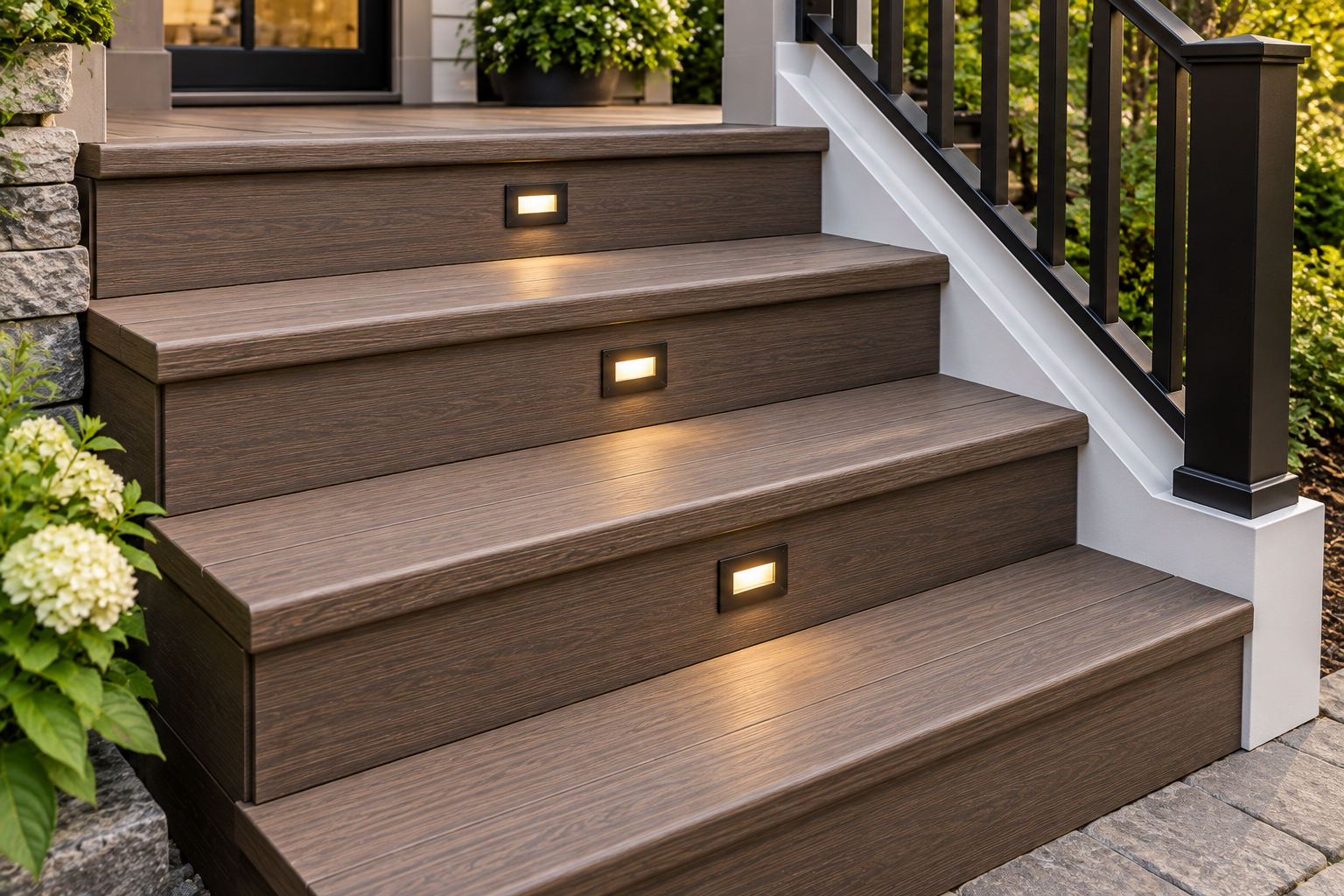
Builders also commonly use square boards for stair treads and other exposed deck edges. Depending on the design, they may appear around openings, breaker boards, or other areas where the layout requires a finished side.
The main field can still use grooved boards and hidden clips. Combining the two profiles gives builders the clean surface of hidden fastening while preserving finished edges where they matter.
Where Do You Use Grooved vs Square Deck Boards?
Choosing between the two profiles becomes easier once you map the deck layout. Instead of deciding that one profile is better, determine what each section of the deck requires.
Main Deck Surface
Grooved boards usually make sense across the main deck surface when the selected decking supports a hidden fastening system. The grooves allow hidden clips to secure the boards while keeping most hardware below or between the visible surfaces.
This approach creates the fastener-free surface many homeowners associate with modern composite decking. It can also create consistent spacing when installers use the manufacturer’s approved fastening system.
Picture-Frame Borders and Deck Edges
A picture frame uses deck boards around the perimeter to create a defined border. These boards may run perpendicular to the field boards and leave one side exposed along the outside of the deck.
Square-edge boards work well here because the solid side creates a finished deck edge. Using a grooved board along an exposed perimeter could leave the side channel visible.
The layout matters before you order materials. If your deck includes a picture-frame border, calculate the square boards required for that border separately from the grooved boards used across the field. This can help prevent an order that contains enough total decking but the wrong combination of profiles.
Stairs
Stair treads frequently require square-edge boards because their sides or front edges may remain visible. The solid profile creates a more finished appearance and allows installers to use an approved face-fastening or plug system when necessary.
Your stair design can significantly affect how many square boards you need. A deck with several stairs may require more square-edge material than a simple platform deck with the same overall square footage.
Fascia vs Square-Edge Deck Boards
Square-edge deck boards and fascia boards serve different purposes. A square board forms part of the walking surface or another decking application. Fascia covers the vertical sides of the deck framing to create a finished appearance.
Many composite decking collections offer coordinating fascia in colors that match or complement the deck boards. Do not substitute fascia simply because you need a finished edge. Check the manufacturer’s intended application for each product and include both materials in your order when your design requires them.
Do You Need Both Grooved and Square Boards for a Deck?
Many composite deck projects use both.
A common layout uses grooved boards throughout the main field with square-edge boards around the perimeter and on the stairs. This combination gives the primary deck surface the clean appearance of hidden fasteners while creating finished edges where the sides of the boards remain visible.
However, not every deck requires the same combination. A simple design without many exposed board edges may use fewer square boards. A deck with extensive picture framing, multiple staircases, or complex borders may require considerably more.
This is why you should finalize the deck layout before ordering your composite deck boards. Knowing the total square footage is useful, but square footage alone does not tell you how many boards you need in each profile.
If you’re still deciding on the rest of your decking material, our How to Buy Composite Decking: A Complete Guidewalks through the larger buying process, including materials, board lengths, fasteners, railing, quantities, and availability.
Hidden Fasteners vs Deck Screws: What’s the Difference?
The board profile and fastening method work together. Grooved boards generally allow installers to secure the decking from the sides, while square boards often require fastening through the surface.
Neither method automatically makes one board profile better than the other. They simply solve different installation and design needs.
Hidden Clips for Grooved Boards
Hidden clips sit between grooved boards and secure them to the framing below. Since the fastener remains between the boards, it does not create a visible row of screws across the deck surface.
Different manufacturers may specify different clip systems, spacing requirements, and installation methods. Some systems also use a starter clip along the first board or another location where a standard clip cannot engage both sides.
If you plan to install grooved composite deck boards, identify the compatible fastener system before ordering. Do not wait until installation begins to discover that you need a specific clip or accessory that was not included with your decking order.
Face Fasteners and Plug Systems for Square Boards
Square boards often require face fastening because they lack the side groove used by hidden clips. Standard deck screws can leave visible screws or screw heads, although color-matched fasteners can help them blend into the board.
Plug systems provide another option for compatible decking products. The installer drives the approved screw into the board and covers the opening with a matching plug. When installed correctly, this method can make the fastening points much less noticeable.
This gives builders a way to create finished borders and stairs without sacrificing the clean appearance that makes hidden fastening attractive in the first place.
Do Grooved and Square Deck Boards Cost the Same?
Do not compare the profiles based only on the price of an individual board. Even when grooved and square versions of a product have similar board pricing, the complete installation cost can differ because they may require different fasteners and quantities.
Grooved boards require compatible hidden fasteners, clips, and potentially starter clips. Square boards may require screws, plugs, or another approved face-fastening system. A deck that uses extensive picture framing or several stairs may also require more square-edge boards than a simpler layout.
Compare the complete decking system instead of focusing on one board price. Your layout, selected decking line, fasteners, board lengths, and required profiles all contribute to the final material cost.
Check Board Profiles and Lengths Before You Order
Finding the right decking color does not automatically mean every profile and length you need will be available in that collection.
Manufacturers may offer different lengths for grooved and square boards. One collection might offer several grooved board lengths but fewer length choices for its square-edge version. Another collection may offer a different combination entirely.
That difference can affect your layout, seams, picture framing, waste, and final material quantities. Before designing the deck around a particular board length, confirm that your chosen decking line offers that length in the profile you actually need.
Availability matters too. A supplier may have the main grooved boards available while a coordinating square board, fascia color, or required fastener needs additional lead time. Check the entire material package before scheduling installation.
You can explore composite and PVC decking from leading manufacturers at Premium Decking Supply and compare available collections, colors, profiles, and decking materials for your project.
Need Help Choosing the Right Boards?
Not sure which profiles, lengths, or fasteners your deck requires? Premium Decking Supply can help you build a complete material list before you order.
Common Mistakes When Ordering Grooved and Square Deck Boards
One of the easiest mistakes is ordering the entire project in grooved boards because they will cover most of the deck surface. Once installation reaches the picture frame or stairs, the exposed grooves can create a problem that was not obvious when calculating the original order.
The opposite mistake can happen when shoppers order square boards for the entire project without considering the fastening system they want. If your goal is a clean surface with hidden fasteners, using square boards across the main field may require a different installation approach than you expected.
Another common problem involves assuming every board profile comes in the same lengths. Your preferred decking line may offer one length as a grooved board but not offer that same length in square edge. That can change a border or stair plan after you have already calculated materials.
Finally, do not order the boards without checking the compatible fasteners. Your decking, hidden clips, screws, plugs, starter clips, and other installation components need to work as one system.
How to Choose the Right Deck Board Profile
Start with your deck layout rather than choosing a profile in isolation. Mark the main field, picture-frame borders, stairs, breaker boards, and any other locations with exposed edges. From there, identify which areas can use grooved boards with hidden fasteners and which require a finished square edge.
Next, confirm that your selected decking collection offers the colors, profiles, and board lengths your design requires. Review the manufacturer’s installation requirements and identify the compatible fastening system before calculating the final order.
You do not necessarily have to choose between grooved and square deck boards. For many composite decks, the best solution is using each profile where it makes the most sense.
Shop Composite Deck Boards at Premium Decking Supply
Premium Decking Supply carries composite and PVC decking from leading manufacturers, including Trex, TimberTech, Fiberon, Deckorators, Envision, MoistureShield, and more.
Whether you’re comparing Trex composite decking with another composite product or exploring PVC options, our team can help you review board profiles, lengths, fasteners, and other materials before placing your order. We also offer material lists, materials-only job quotes, building advice, pickup, and delivery options.
Browse our decking selection or shop composite decking online to start planning your project.
Frequently Asked Questions About Grooved vs Square Deck Boards
Grooved boards have channels along their sides that work with compatible hidden fasteners. Square boards have solid edges and commonly use face-fastening or plug systems. Builders often use grooved boards across the main deck surface and square boards where the edge remains visible.
You can use grooved boards in some layouts, but an exposed groove may remain visible along the perimeter. Many builders use square-edge boards for picture-frame borders and other exposed deck edges to create a cleaner finished appearance.
Standard hidden clips generally require the side channel found on grooved boards. However, some fastening and plug systems can reduce the appearance of fasteners on square boards. Always use a system approved for your specific decking product.
Many deck designs use square-edge boards for stair treads because the board edges may remain visible. The exact requirements depend on the decking product, stair design, and manufacturer’s installation instructions.
Yes. Many decks use both profiles from the same collection and color. Grooved boards can cover the main field, while square boards can finish picture frames, stairs, and exposed edges.
They may have the same width and thickness within a decking collection, but available lengths can differ between profiles. Always check the specifications for your selected product before ordering.
Grooved composite boards typically use compatible hidden deck fasteners or clips that fit into the side grooves. The approved system varies by manufacturer and decking line, so check the installation requirements for your specific product.