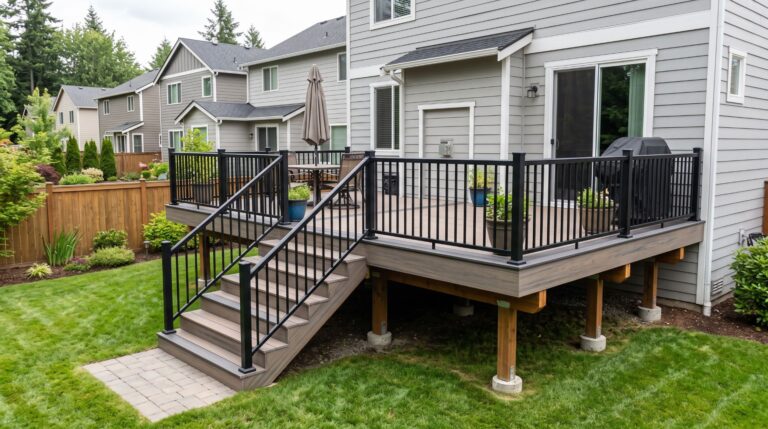
The place for all your outdoor living space!


Buying composite decking involves more than finding a color you like and calculating your deck’s square footage. The brand, collection, board construction, profile, length, fastening system, railing, and availability can all affect what you need to order.
A little planning makes those decisions much easier. It can also help you avoid ordering the wrong boards, overlooking important materials, or delaying your project because one component is unavailable.
This decking buying guide explains what to consider before you buy composite decking, from comparing decking material options to planning your final order. Whether you are a homeowner, contractor, or DIY builder, understanding the buying process can help you choose materials with confidence.
Premium Decking Supply carries composite and PVC decking, railing, hardware, lighting, and other products for a complete deck build.
What to Know Before You Buy Composite Decking
Start with the deck you want to build rather than a specific brand.
Think about the size and layout of the deck, your overall budget, the amount of maintenance you want, and the style of your home. Sun exposure, moisture, stairs, railing, and other design features can also influence your material choices.
These are the major decisions you will make during the buying process:
| Buying Decision | What to Consider | Why It Matters |
|---|---|---|
| Material | Composite, PVC, or wood | Affects maintenance, performance, and cost |
| Budget | Boards and the complete deck system | Helps prevent unexpected expenses |
| Brand and collection | Construction, warranty, and appearance | Products can vary significantly |
| Board profile | Grooved or square edge | Affects placement and fastening |
| Board length | Deck dimensions and layout | Can reduce seams and waste |
| Fasteners | Hidden fasteners, screws, or plugs | Must work with your selected boards |
| Railing | Material, color, and style | Affects design and project cost |
| Availability | Color, profile, and board lengths | Can affect your project timeline |
You do not need every answer before you start shopping. However, knowing these decisions ahead of time will make it easier to compare products based on your actual project.
1. Decide If Composite Decking Is Right for You
Composite decking offers a low-maintenance alternative to traditional lumber, but it is only one of several types of decking available. Understanding the basic differences will help you decide whether composite fits your priorities.
Composite Decking vs. Real Wood
Many homeowners still choose wood decking because they like the appearance and feel of real wood. Cedar and pressure treated lumber remain common choices, and yellow pine frequently appears in pressure-treated decking and structural applications.
Wood can also offer a lower upfront material cost. However, that initial price does not tell the entire story.
Pressure treated wood usually requires more maintenance over its lifetime. Depending on the product and environment, homeowners may need to clean, stain, seal, or refinish the deck. Natural lumber can also crack, splinter, warp, and experience moisture-related damage.
Composite decking requires less routine maintenance compared to natural wood. Manufacturers engineer composite decking products for outdoor exposure without the regular staining and sealing that traditional lumber often requires.
If you are still comparing the two materials, our composite vs. wood deck guide takes a closer look at cost, maintenance, durability, and long-term performance.
Think Beyond the Initial Price
The right material depends on more than what costs less today.
Consider how long you expect to own the deck and how much maintenance you want to perform. Think about appearance, warranty coverage, moisture exposure, and how frequently you use your outdoor space. Some homeowners prefer the character of natural lumber and do not mind maintaining it. Others prefer the lower-maintenance approach of composite or PVC.
Neither decision should come from price alone.
2. Understand Your Decking Material Options
Shopping becomes confusing when every synthetic deck board gets called “composite.”
Several decking material options exist, and manufacturers use different materials and construction methods. Understanding what you are actually buying makes product comparisons much more meaningful.
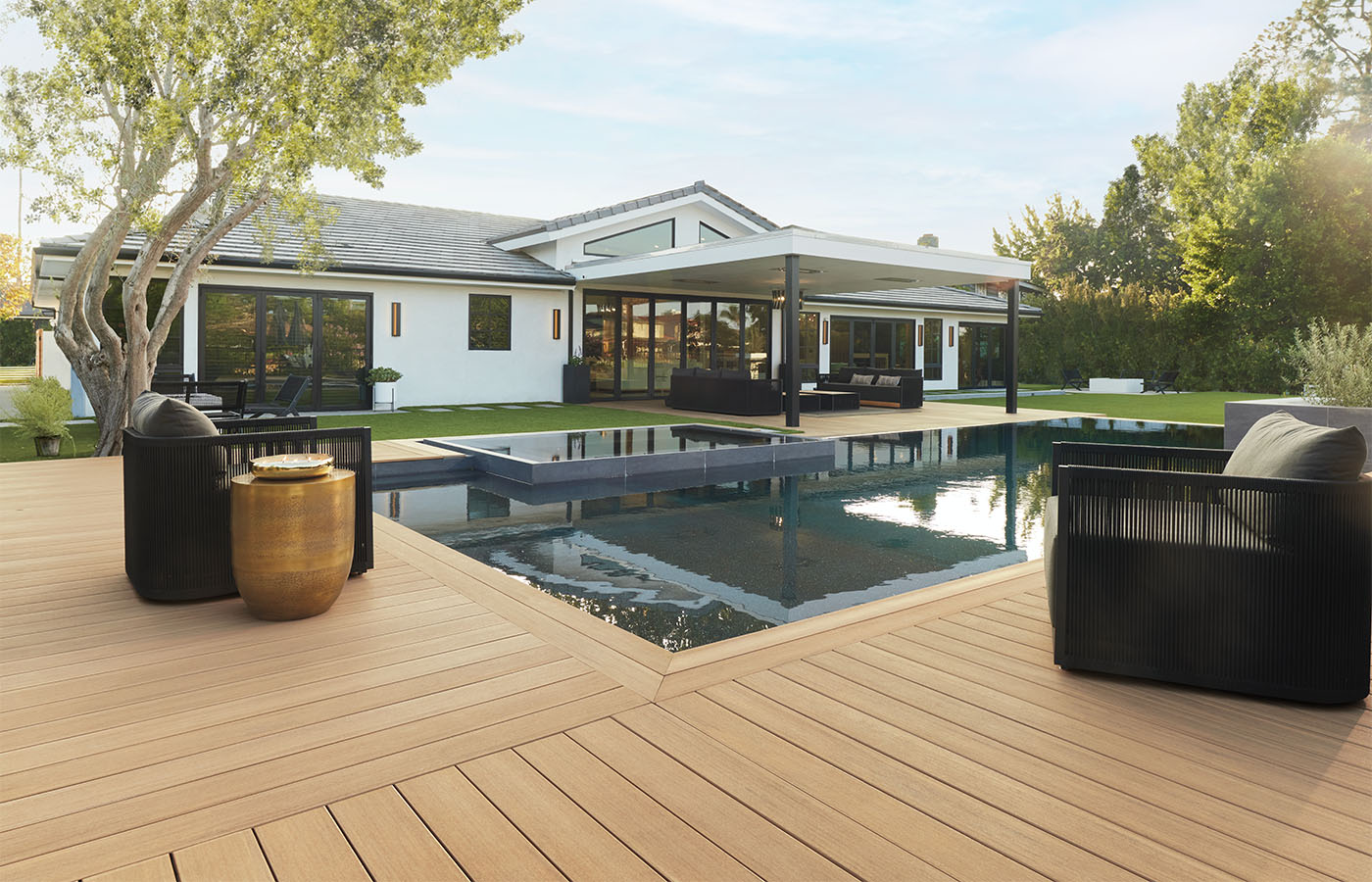
Capped Composite Decking
Many traditional composite boards use a core made from a combination of wood fiber and synthetic material. That core often contains wood fiber and plastic, including recycled materials.
Manufacturers protect the core with an engineered outer cap. Depending on the product, the cap may cover three or four sides of the board.
The cap helps resist moisture, staining, fading, and everyday wear. It also allows manufacturers to create realistic colors and wood-grain patterns.
A capped composite deck can provide a wood-inspired appearance without the routine refinishing associated with natural lumber.
However, manufacturers use different core formulas, cap technologies, and production methods. Two boards labeled “composite” can differ significantly in construction and performance.
PVC Decking
PVC decking uses a different construction.
Manufacturers make these boards with PVC (polyvinyl chloride) or other engineered polymer formulations rather than a traditional wood-fiber composite core.
PVC decking offers strong moisture resistance and requires little routine maintenance. Manufacturers now produce PVC boards with sophisticated colors and grain patterns that can closely resemble painted or stained wood.
Composite and PVC often appear together when homeowners shop for synthetic decking, but understanding the distinction helps you compare products accurately.
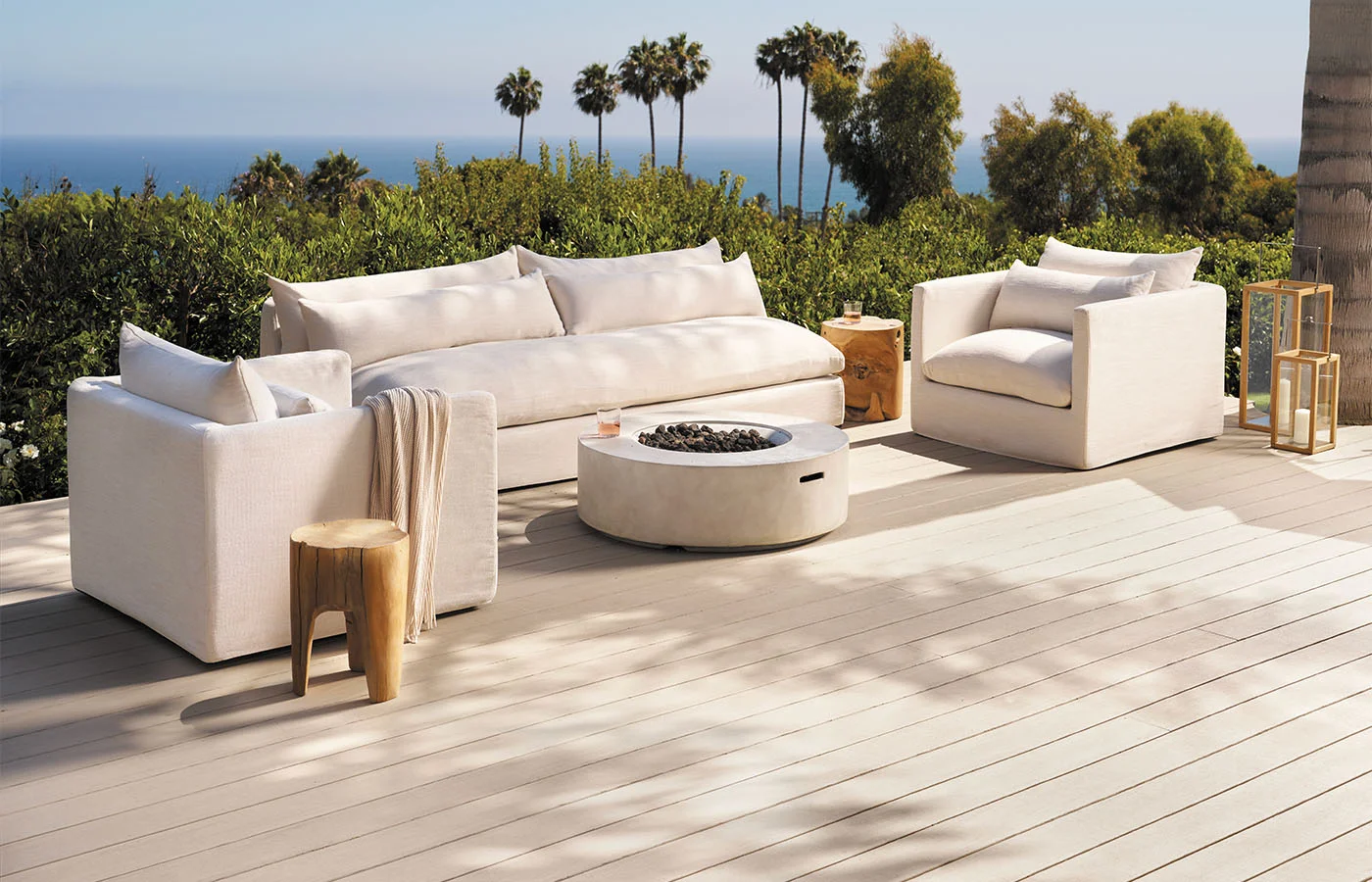
Other Engineered Decking Products
Not every synthetic product fits neatly into the traditional composite or PVC categories.
Some manufacturers use mineral-based technology or proprietary materials that contain no traditional wood-fiber composite core. These products may offer different weights, expansion characteristics, installation requirements, or performance benefits. Instead of choosing based solely on the material label, compare the construction and specifications of the individual product.
You can explore composite and PVC decking from multiple manufacturers to see how the available technologies and collections differ.
3. Set a Realistic Decking Budget
One of the easiest mistakes to make when you buy decking is comparing only the price of the deck boards.
Boards make up a large portion of the material cost, but they do not make up the entire project.
Look at the Complete Deck System
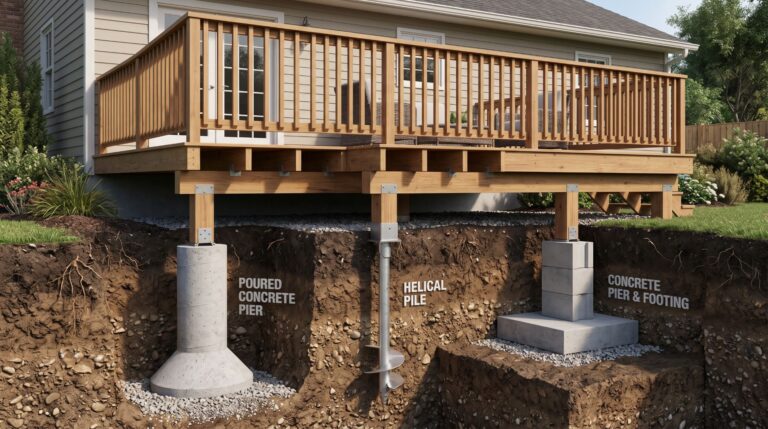
Your deck may also require framing, fascia, joist tape, structural hardware, fasteners, railing, stair materials, lighting, and other accessories. Picture-frame borders and complex layouts can also require additional boards and installation materials, while your choice of railing can significantly affect the overall budget.
Premium aluminum, cable, composite, or glass systems, for example, can add to the total material cost. As a result, two decks with the same square footage can have very different costs depending on their design and material choices. Instead of multiplying the deck’s square footage by the price of one board, set your budget around the complete design and materials you actually want.
Compare Value, Not Just Board Price
Composite manufacturers usually offer collections at several price points, giving you options based on your budget and project priorities. An entry-level collection may meet your needs perfectly, while a higher-priced collection may offer a different appearance, longer warranty, enhanced performance features, or more color choices. Compare what you receive for the price rather than focusing on cost alone. The cheapest board does not automatically offer the best value, just as the most expensive board is not necessarily the right choice for your project.
4. Compare Composite Decking Brands and Collections
Once you establish your budget, you can start narrowing down brands and collections.
Premium Decking Supply carries products including options from Trex, TimberTech, Fiberon, Deckorators, Envision, Eva-Last, MoistureShield, Wolf, Zuri, and other manufacturers.
That variety gives you more choices, but it also makes side-by-side comparison important.
Compare Individual Collections
Choosing a manufacturer is only the first step, since most major decking brands offer multiple collections at different price points. Those collections may vary in board construction, colors, grain patterns, warranties, and performance features, so it is important to compare the individual products within each brand. One manufacturer may offer your favorite premium product, while another may have a better match within the price range you want. Focus on the individual board and how well it fits your project rather than relying only on brand recognition.
See the Decking in Person
Online photos can help you narrow down your options, but they cannot fully show how a board will look outside your home.
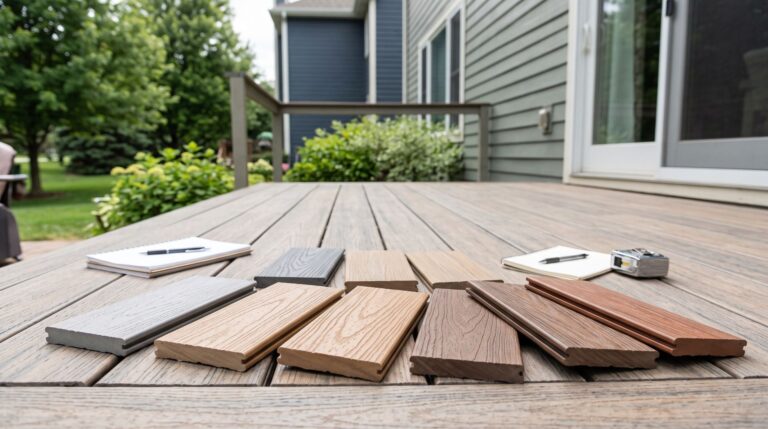
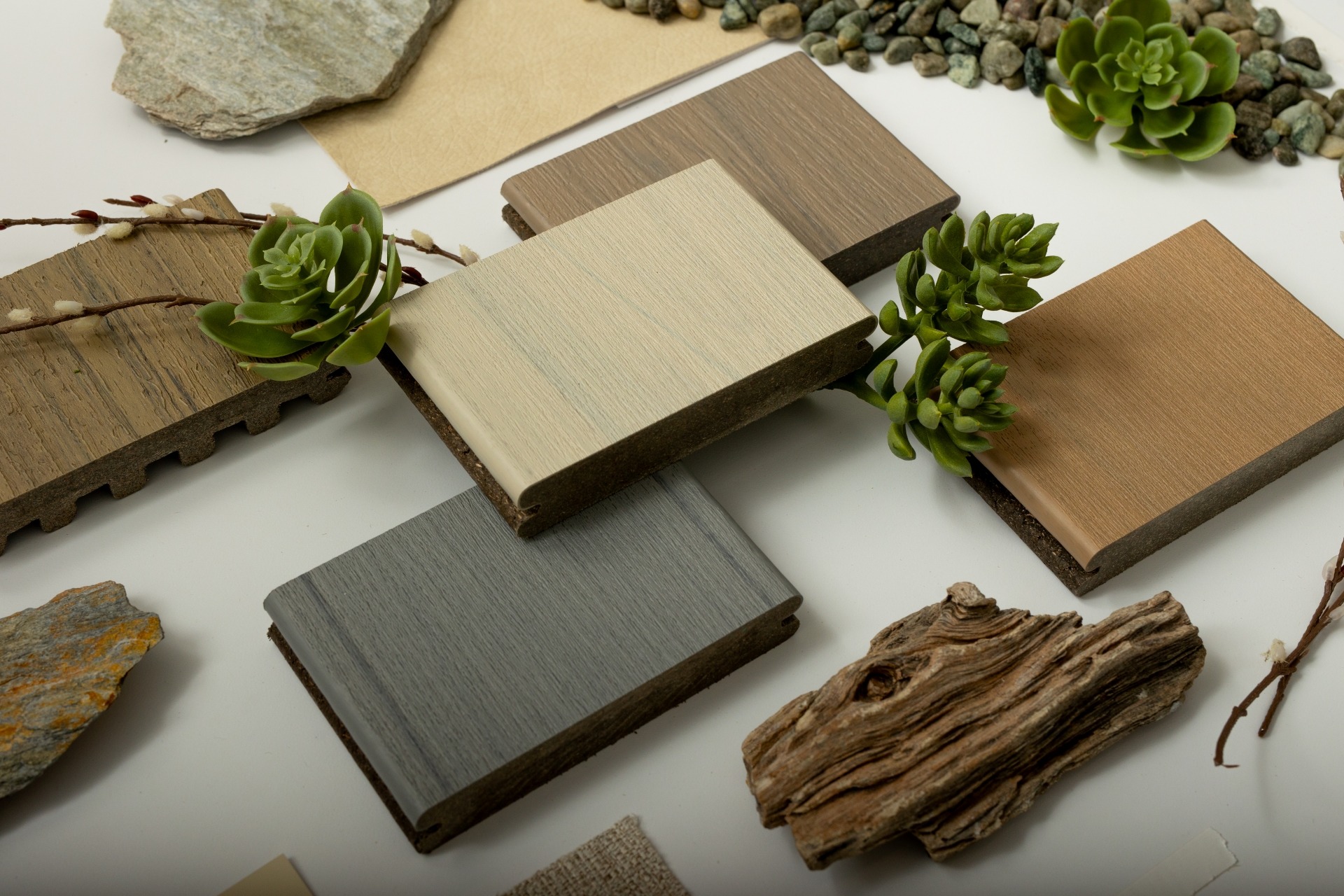
Whenever possible, compare physical samples.
Look at them in direct sunlight and shade. Place them next to your siding, brick, stone, trim, or other exterior materials. If you already know your railing color, compare that too.
A board that looks gray on a computer screen may have warm brown undertones in natural light. Multi-tonal boards can also vary considerably from one section to another.
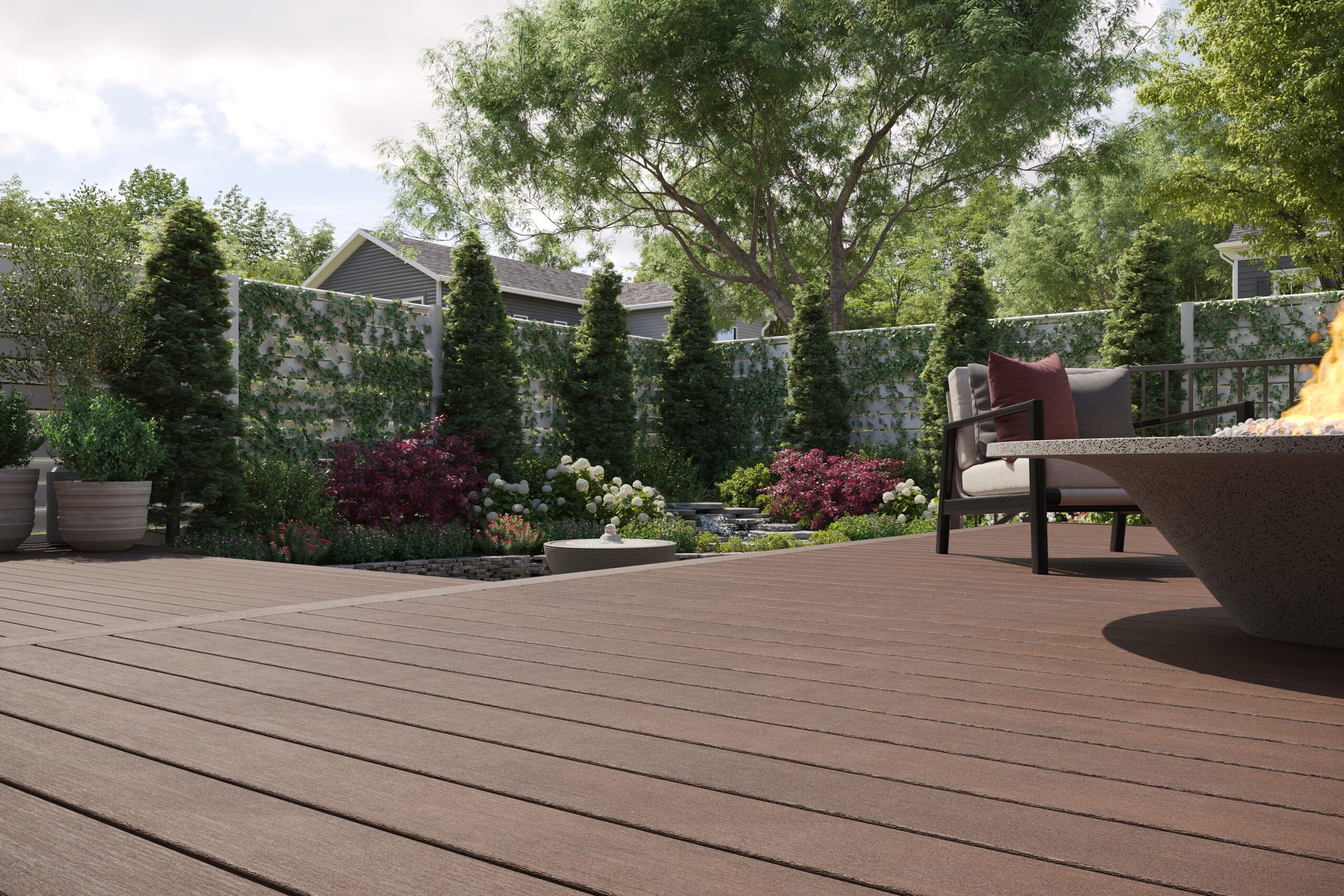
5. Choose the Right Deck Boards
After choosing a collection, you still need to determine which deck boards your design requires.
Color gets most of the attention, but board profile and length can have just as much impact on your material order.
Choose a Color and Grain Pattern
Start with the overall look of your home.
Warm brown decking often complements brick, stone, and traditional exteriors. Gray and cooler tones can work well with contemporary designs. Multi-tonal products can create more movement and mimic the natural variation found in wood.
Think about picture framing and railing at the same time. A contrasting border can define the deck, while a complementary railing color can tie the entire design together.
Understand Grooved and Square-Edge Boards
Grooved deck boards have channels along their sides that allow installers to use many types of hidden fasteners. These fasteners secure the boards without leaving rows of visible screws across the deck surface, which creates a cleaner finished appearance. Installers commonly use grooved boards throughout the main field of the deck.
Square-edge boards have finished solid edges, making them better suited for areas where the side of the board remains visible. These boards often appear around the perimeter, on stairs, and in picture-frame designs. Since a single deck can require both profiles, knowing where each board will go before ordering can prevent you from buying the correct color in the wrong profile.
Choose Board Lengths Around the Layout
Manufacturers typically offer multiple board lengths, although the exact options vary by collection. Longer boards can reduce seams, but they do not automatically reduce waste, so the best combination depends on your deck dimensions and layout. Consider board direction, stairs, breaker boards, picture framing, and the location of seams when choosing your lengths. Most importantly, confirm that your preferred board lengths are available before designing the entire deck around them.
6. Measure Your Deck Before Ordering
Accurate measurements help turn a design into an actual material order.
For a simple rectangular deck, start with the length and width. If your deck has multiple levels or sections, measure each area separately.
Then look beyond the main surface.
Account for the Actual Layout
Stairs, landings, angled sections, picture-frame borders, breaker boards, and changes in board direction can all affect how much material you need. For example, adding a picture-frame border changes more than the total square footage because you may need square-edge boards around the perimeter and different board lengths for the field. Board direction can also change your material calculations, so create the complete layout first and calculate your materials around that design instead of treating the entire project as one rectangle.
7. Calculate How Much Decking You Need
Once you know the dimensions and layout, calculate your board quantities.
Avoid ordering exactly enough material to cover the finished square footage. Every project creates some waste.
Account for Cuts and Waste
Cuts at the ends of boards create waste, as do stairs, angles, borders, and complex layouts. A straightforward rectangular deck may produce relatively little waste, while a deck with diagonal boards, several levels, multiple stairs, and extensive picture framing can produce much more. Base the amount of extra material you order on the complexity of your project instead of applying the same percentage to every deck.
You may also want to keep a few matching boards after installation for future repairs. Manufacturers update colors and collections over time, so finding an exact match several years later may be difficult. Having extra material available can make replacing a damaged board much easier.
Not Sure How Much Decking You Need?
Take the guesswork out of planning your project. Use our decking calculators to estimate the materials you need before you order.
8. Choose the Right Fasteners
Fasteners may seem like a small part of the purchase, but they directly affect installation and the finished appearance.
Do not order the boards first and figure out the fasteners later.
Hidden Fasteners for Grooved Boards
Many grooved composite boards work with hidden fasteners. Installers place these clips between boards, creating consistent spacing while keeping the fasteners largely out of sight.
Manufacturers may recommend specific fastening systems for their products. Always check compatibility with the exact collection you choose.
Screws, Plugs, and Installation Accessories
Square-edge boards, stairs, picture frames, and fascia may require face-fastening systems, including color-matched screws or plugs that make attachment points less noticeable. Depending on your deck design and selected products, you may also need starter clips, fascia fasteners, joist tape, flashing, and structural connectors. Always follow the manufacturer’s installation instructions and use compatible components to help the entire decking system perform as intended.
9. Plan Your Deck Railing With Your Decking
Railing can dramatically change the appearance of a finished deck, so choose it while you choose your decking.
Waiting until the end can leave you trying to match a railing system to decisions you already made.
Coordinate the Complete Design
Think about color, material, sightlines, posts, stairs, and lighting when choosing your railing. Black aluminum railing can create a clean, modern contrast against many decking colors, while composite railing can complement more traditional homes. Cable and glass systems can preserve views and make the outdoor space feel more open. Browse our deck railing systems while comparing your decking options to see how different materials and styles work together.
Remember to account for stair railing, posts, post caps, gates, lighting, and mounting hardware when calculating your complete project budget. Planning these components alongside your decking can help you create a cohesive design while getting a more accurate picture of the total material cost.
10. Make Sure You Have the Complete Deck Package
Before placing your order, look beyond the deck boards and review everything your project may require. Depending on your design, the complete material package could include deck boards, picture-frame boards, fascia, hidden fasteners, screws, plugs, joist tape, framing, structural hardware, railing, stair materials, and lighting. You may not need every component for every project, but reviewing the complete system can help you catch missing materials before installation begins.
This step is especially important for DIY builders because discovering a missing fastener, piece of fascia, or other component after installation starts can cause unnecessary delays. A specialty decking supplier can also help you review your material package before placing the final order, making it easier to identify anything you may have overlooked.
11. Check Availability Before You Order
Finding the right product does not help if one critical component is unavailable when you need it.
Confirm availability before setting your installation schedule.
Check the Entire Product System
When checking availability, confirm more than whether the main deck board is in stock. Verify the color, collection, board profiles, required lengths, fascia, fasteners, and coordinating railing components before finalizing your order. Even one unavailable square-edge board or piece of fascia can delay finishing work when the rest of the decking is already at the jobsite. Special-order products may also require additional lead time, so if a contractor will install your deck, coordinate the material timeline with the construction schedule before work begins.
12. Plan for Pickup or Delivery
Composite deck boards are long and heavy. A large deck order can become difficult to transport without the right vehicle or trailer.
Plan the logistics before ordering.
Inspect Materials Before Installation
Whether you pick up your order or receive a delivery, inspect all materials before installation begins. Confirm that you received the correct brand, collection, color, profile, lengths, and quantities, along with the required fascia, fasteners, and railing components. Check the materials for visible handling or shipping damage so you have time to resolve any issues without disrupting the project schedule. Once everything is accounted for, store the decking according to the manufacturer’s instructions until installation begins.
Where to Buy Composite Decking
You can purchase decking through big-box stores, lumberyards, specialty suppliers, and online retailers.
Where you shop can affect the product selection and support available during the buying process.
Why Choose a Specialty Decking Supplier?
A specialty supplier focuses on decking and outdoor building products rather than thousands of unrelated home improvement categories.
That specialization can give you access to more brands, collections, colors, profiles, railing systems, and compatible installation products.
It also gives you a resource when you have specific questions about board profiles, fastening systems, material quantities, or product compatibility.
Premium Decking Supply works with homeowners, contractors, builders, and DIY customers. You can compare composite and PVC decking, coordinate railing and accessories, and plan the materials needed for your project.
Can You Buy Composite Decking Online?
Yes. Buying online can make sense when you already know the product and specifications you need.
Double-check the brand, collection, color, profile, length, quantity, and compatible accessories before submitting a large order.
Whenever possible, look at a physical decking sample before choosing a color based solely on a screen.
Once you know what you need, you can shop composite decking online through the Premium Decking Supply online store.
Ready to Buy Composite Decking?
A successful material order starts with a plan.
Understand your decking material options first. Then compare brands and collections, choose your boards, create the layout, calculate quantities, select compatible fasteners, coordinate your railing, and confirm availability.
Taking the time to make those decisions before you buy composite decking can reduce waste, prevent missing materials, and keep your project moving.
Premium Decking Supply can help you compare products and plan your complete material order. Browse our decking selection, visit us in person, or shop online when you are ready to start your project.
Frequently Asked Questions About Buying Composite Decking
Look at the board construction, warranty, price, color, grain, maintenance requirements, profiles, fastening system, and availability. Compare individual collections instead of choosing a product based only on the manufacturer.
That depends on your priorities. Composite decking generally requires less maintenance than pressure-treated wood. Wood often costs less upfront and offers a natural appearance. Compare maintenance, long-term cost, appearance, and performance before choosing.
Your deck layout determines how much extra material you need. Stairs, angles, picture framing, board direction, and other cuts can increase waste. Calculate the complete layout before deciding how much additional decking to order.
Many composite deck boards work with manufacturer-approved hidden fasteners, screws, clips, or plugs. Check the installation instructions for your exact brand and collection before purchasing the fastening system.
Yes. You can buy many composite decking products online. Confirm the brand, collection, color, profile, length, quantity, and accessories before ordering. You can also shop decking online through Premium Decking Supply.