The place for all your outdoor living space!

Article Overview
- Pergola vs Gazebo: Key Differences at a Glance
- Roofs, Shade, and Rain: What Changes in Daily Use?
- Which Is Better for a Deck, Patio, or Backyard?
- Pergola vs Gazebo Cost in 2026
- Pergola Brands and Systems Worth Comparing
- Materials and Maintenance: What Will You Need to Care For?
- Foundations, Wind, Snow, and Permits
- How to Choose Before You Request a Quote
- Find the Right Pergola or Gazebo With Premium Decking Supply
- Frequently Asked Questions About Pergola vs. Gazebo
A bare deck or patio can become too hot for an afternoon meal. Yet adding the wrong shade structure may leave you exposed to rain or paying for a roof you do not need.
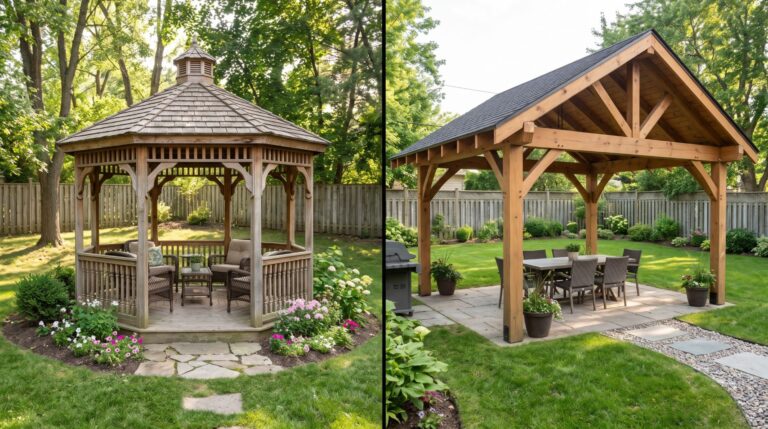
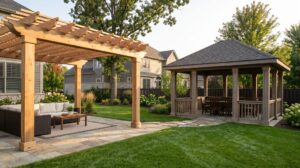
The pergola vs gazebo decision starts with one point: the roof. Traditional pergolas filter sunlight through open beams. Gazebos have fixed, covered roofs that shelter the area below. Modern pergolas with adjustable louvers offer another option.
Neither structure is right for every yard. Your choice should match how you use the space, the weather, and the surface beneath it. This guide compares roof styles, prices, installation, and real product options so you can plan with confidence.
Pergola vs Gazebo: Key Differences at a Glance
A pergola usually provides partial or adjustable shade, while a gazebo provides fixed overhead coverage. Both can create an outdoor seating area, but they handle sunlight and rain differently.
| Feature | Traditional Pergola | Louvered Pergola | Gazebo |
|---|---|---|---|
| Roof | Open beams or slats | Adjustable panels | Fixed, solid covering |
| Shade | Partial; changes with the sun | Adjustable | Consistent overhead shade |
| Rain protection | Little or none | Depends on model and drainage | Overhead shelter |
| Typical placement | Deck, patio, garden | Deck or patio | Patio, deck, or yard |
| Main advantage | Open feel and simple design | Control over sun and shade | Fixed roof with no adjustment |
| Main tradeoff | Rain passes through | Higher system complexity | Roof cannot open to the sky |
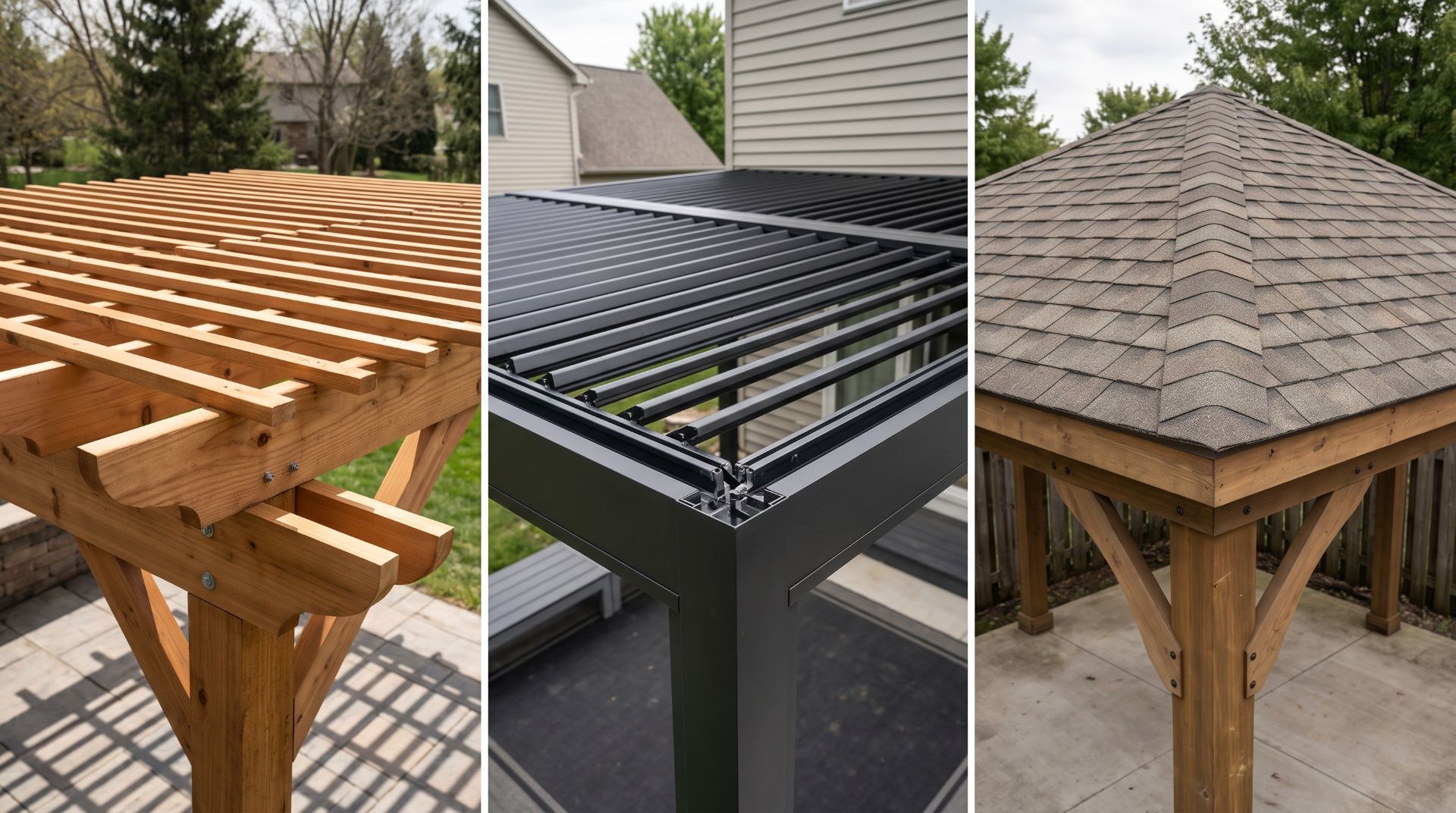
Some pergolas have retractable fabric covers or fixed roof panels. In a pergola vs gazebo comparison, check roof performance rather than product names.
Roofs, Shade, and Rain: What Changes in Daily Use?
Traditional Pergola: Light and Airflow
An open-beam pergola works well when you want shade without losing the view above. Its rafters cast patterns that shift throughout the day. You can still enjoy the sky and nearby trees. For a closer look at different roof styles, materials, and designs, explore our guide to the different types of pergolas.
That open roof does not stop rain. A canopy can increase shade, but fabric performance varies. Some covers must be removed during storms or winter.
Louvered Pergola: More Control
Adjustable louvers let you change roof coverage. Open them for daylight or close them to reduce direct sun. Certain systems also route rain into built-in drainage channels.
For a pergola vs gazebo decision, check each model’s stated rain performance. Closed louvers do not guarantee a dry space during wind-driven rain. Motors, controls, and drains also need routine care.
Gazebo: Steady Overhead Shelter
A hardtop gazebo uses a fixed roof to block overhead sun and shed normal rainfall. This suits dining furniture or a sitting area you want to keep shaded throughout the day. If you’re considering a gazebo for your backyard, our guide to gazebo types and designs explains the differences between hardtop, soft-top, screened, and traditional models.
Open sides still allow wind and blowing rain to enter. Screens and curtains may help with insects and glare, but they are not full walls. A soft-top gazebo may need seasonal canopy removal.
Which Is Better for a Deck, Patio, or Backyard?
On an Existing Deck
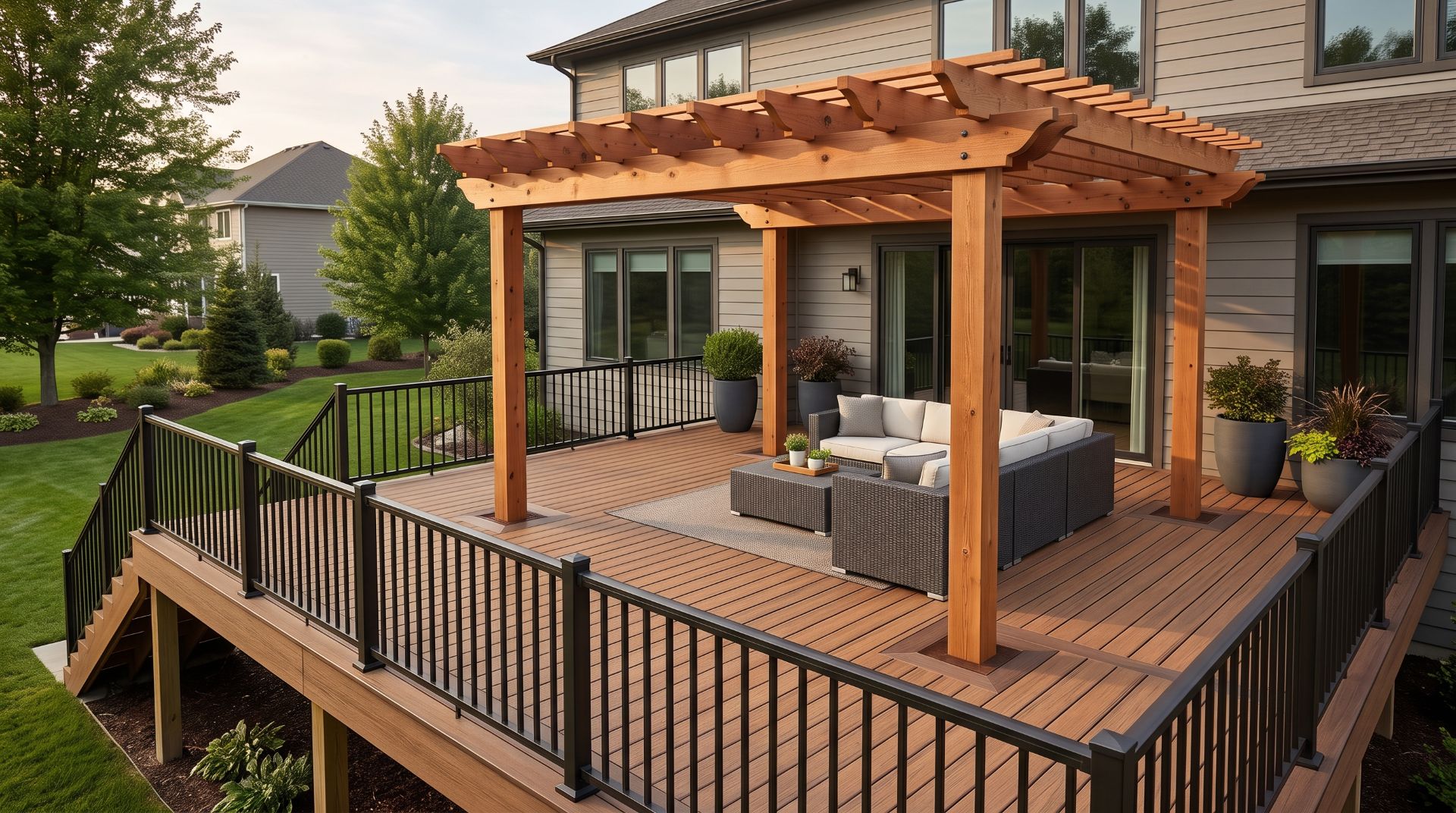
A pergola can frame a dining area without visually closing off the deck. Open-roof models also pair well with composite decking and modern railings. A gazebo works when a fixed roof matters more than an open view.
In a deck-based pergola vs gazebo project, both add loads and wind forces. Deck boards and ordinary railing posts cannot support roof frames on their own. Have the framing, connections, and foundations checked before selecting either structure.
Over a Patio
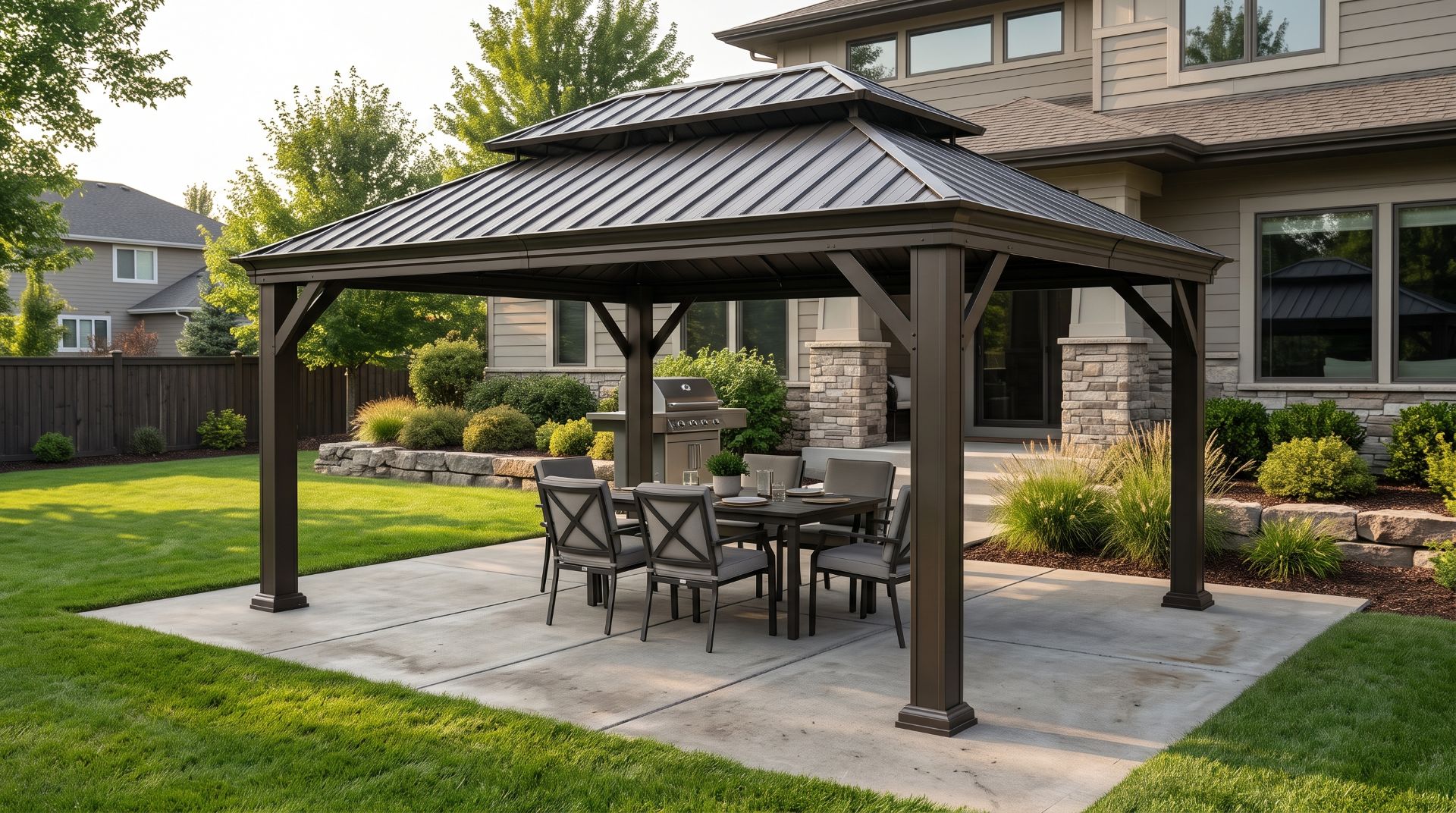
A concrete or paver patio gives you several layout choices. Pergolas suit areas beside the house where you want adjustable or partial shade. A gazebo fits a patio built around sheltered dining or lounge furniture.
Do not assume an existing slab is thick or strong enough for post anchors. Pavers alone cannot serve as structural foundations. Follow the approved anchor and footing plan for the chosen product.
In a Freestanding Backyard or Garden
A pergola can mark a path, shade a bench, or support suitable climbing plants. Check that the frame can carry mature plant weight and added wind exposure.
A gazebo creates a clear destination farther from the house. It works for reading, outdoor meals, or a screened gathering area. Plan a firm walking path and safe access after dark.
Near Pools, Hot Tubs, and Outdoor Kitchens
For pools and hot tubs, compare shade needs with airflow, moisture, access, and electrical clearances. A louvered roof can offer flexible sun control. A gazebo gives fixed overhead shelter.
For grills and cooking equipment, never assume any overhead roof is safe. Appliance instructions, ventilation, clearance rules, and local codes come first.
Pergola vs Gazebo Cost in 2026
There is no universal cheaper choice. A plain open-beam pergola may cost less than a custom gazebo. Yet a large motorized pergola can cost far more than a basic hardtop kit.
Angi’s September 2026 national project reports show these typical ranges:
| Structure | Reported Project Range | National Average |
|---|---|---|
| Pergola | $2,118 to $6,433 | $4,253 |
| Gazebo | $1,580 to $7,952 | $4,766 |
These are estimates from different reported projects, not quotes for equal-sized structures. Premium designs, custom work, and motorized features may exceed these ranges.
The pergola vs gazebo price gap can change once you include freight, site work, footings, anchors, labor, permits, and electrical work. Screens, fans, lighting, and curtains can raise the total too.
Ask for a written scope showing what the kit includes. A low kit price means little if the roof, anchors, or delivery are separate.
Pergola Brands and Systems Worth Comparing
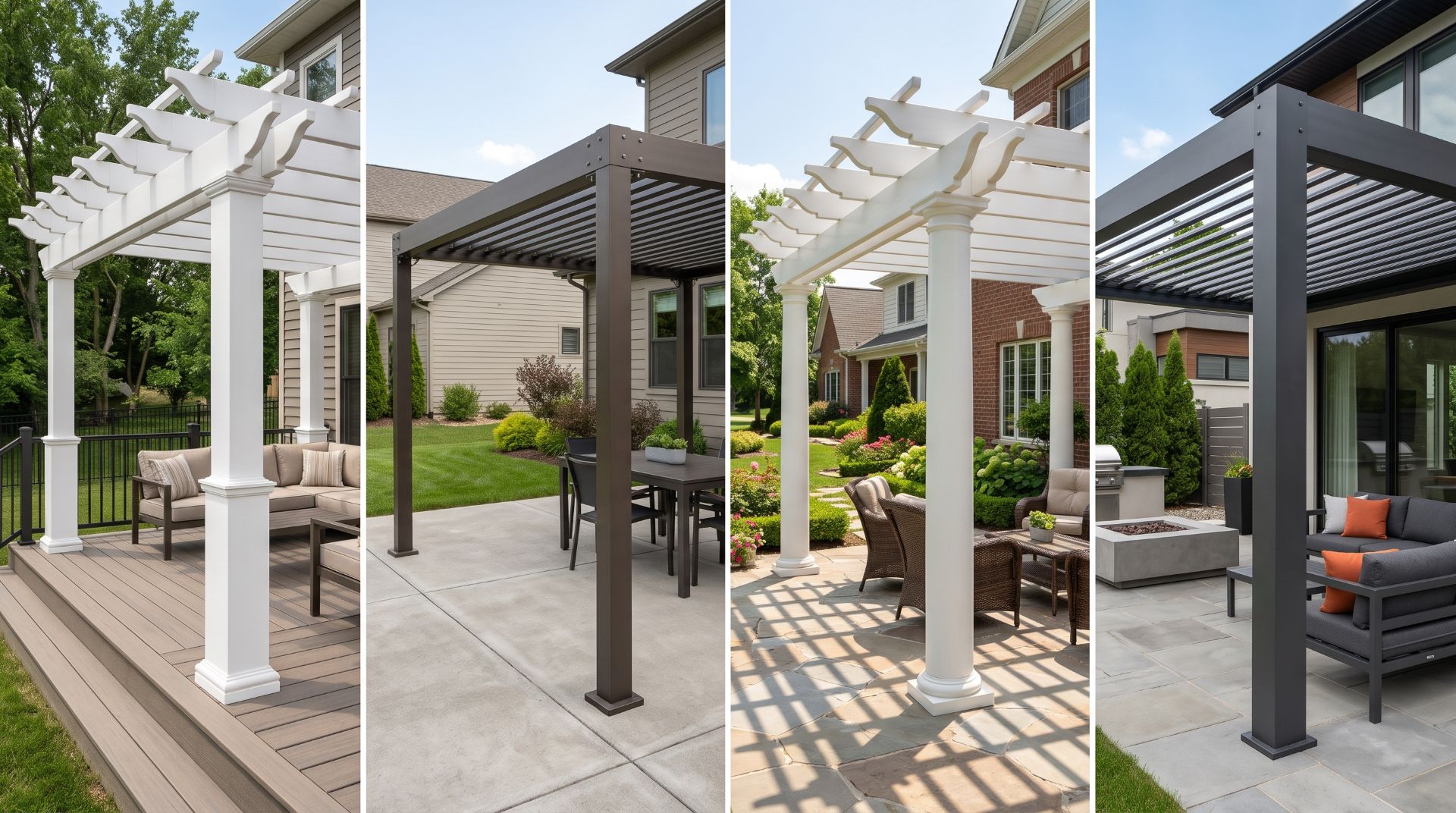
Premium Decking Supply helps customers explore pergola products for different styles and project needs. These four options show why choosing a pergola takes more than picking a roof shape.
Trex Pergola
Trex Pergola includes styles made with aluminum-reinforced cellular PVC and aluminum. Selected models offer shade panels or canopy options. They suit homeowners who want a clean look with less finish care than many wood structures.
Americana Outdoors
Americana offers aluminum pergolas in freestanding and attached layouts. The range includes decorative roof patterns and selected wood-grain finishes. Consider it when you want the look of traditional framing with aluminum construction.
HB&G
HB&G offers fiberglass pergolas, including Serenity, Tranquility, and Solace. Its column styles can suit traditional homes and formal patios. Fiberglass resists rot, but the complete structure still needs cleaning and inspections.
EDG Patio & Shade
EDG Patio & Shade specializes in motorized pergola solutions from multiple manufacturers. These systems can include adjustable roofs, integrated drainage, and optional screens. They suit projects where changing shade and weather control are priorities.
Product choices, sizes, and availability should be confirmed when you request a quote. PDS supplies outdoor materials and structures; installation is handled separately.
Materials and Maintenance: What Will You Need to Care For?
In a pergola vs gazebo choice, the finish and roof system affect how much care you will need. Wood offers a natural look but may need periodic staining or sealing. Aluminum needs cleaning and checks for finish damage or loose fasteners.
Fiberglass and reinforced cellular PVC are alternatives for buyers seeking less regular finish work. Gazebo roofs add their own tasks, including checks for leaks, loose panels, and blocked drainage.
Motorized pergolas need care around louvers, tracks, controls, and gutters. Before buying, ask how replacement parts are handled and what the written warranty covers.
Foundations, Wind, Snow, and Permits
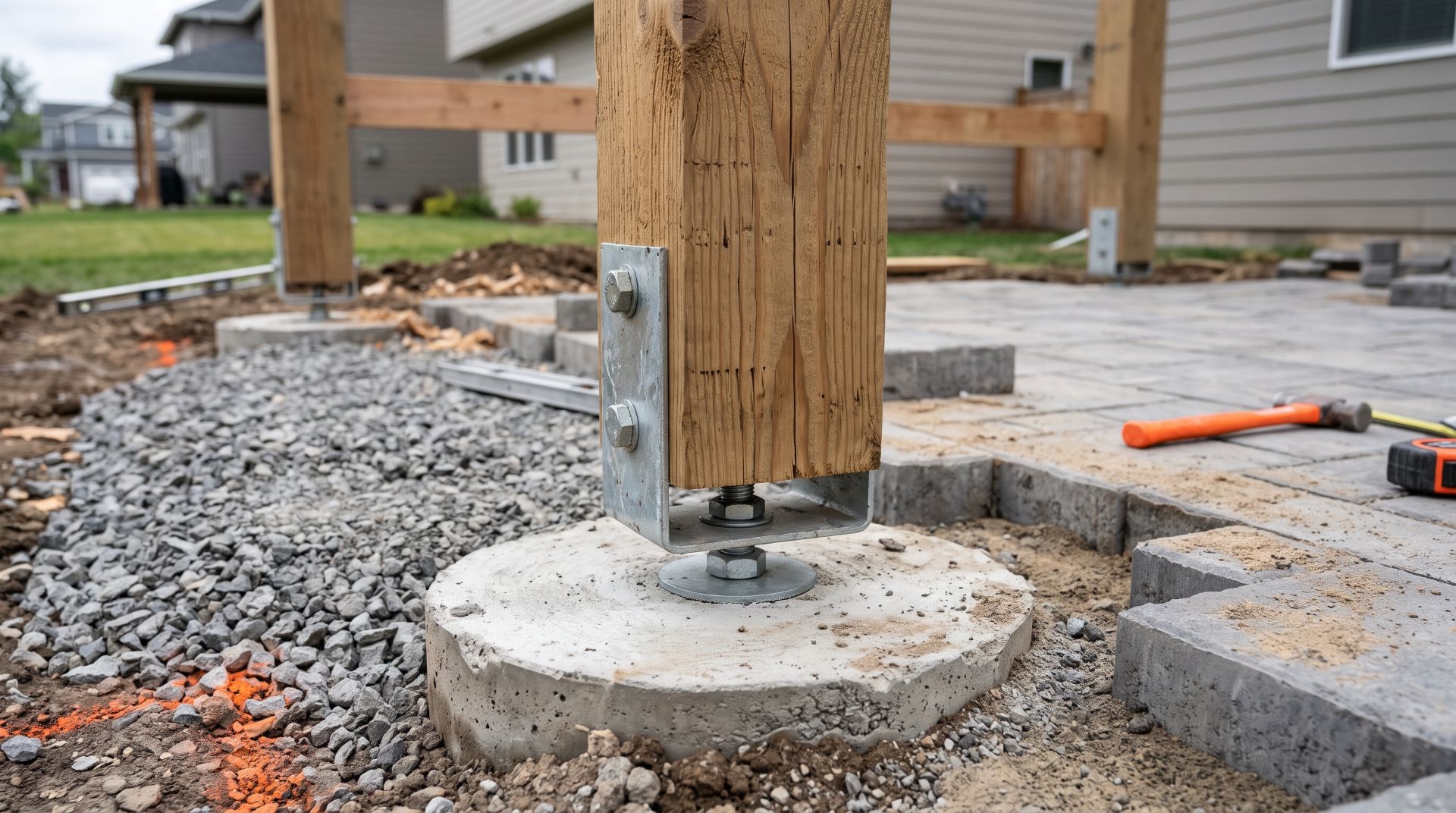
A permanent pergola or gazebo needs an approved path for loads to reach the ground. This may involve concrete footings, engineered piers, or other rated systems. Our deck footings guide explains common foundation choices.
In Illinois, Wisconsin, and other cold regions, frost depth and snow loads affect the design. A gazebo roof must meet the site’s required loads. An open pergola still faces wind and uplift forces. Adjustable roofs also have operating limits during harsh weather.
Ask for manufacturer drawings and the model’s actual wind and snow ratings. Review the design with your contractor or engineer where required.
Check permits, property lines, setbacks, HOA rules, and electrical work before placing an order. A small detached kit is not automatically exempt from local requirements.
How to Choose Before You Request a Quote
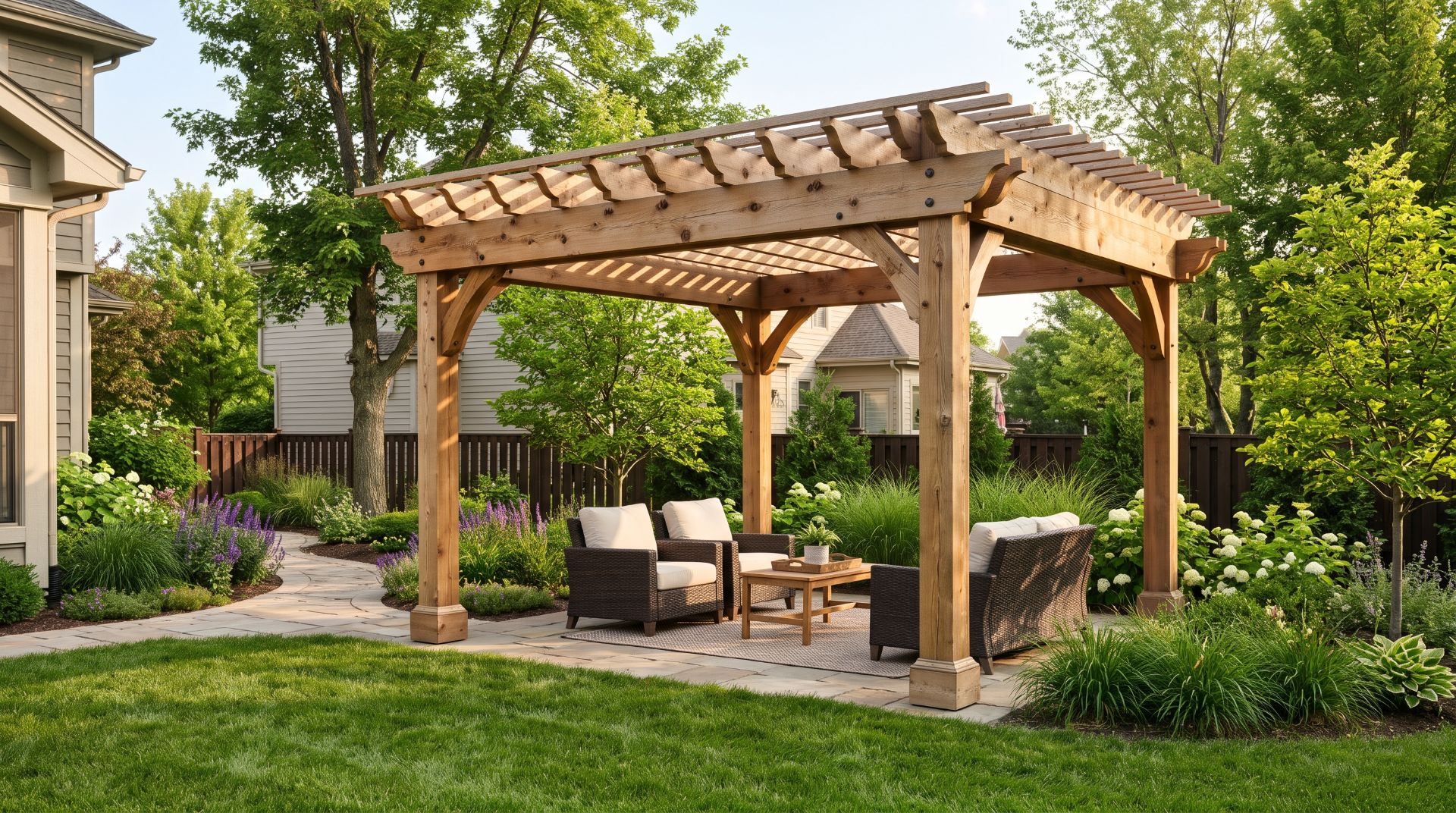
Start your pergola vs gazebo decision with the main job of the structure. If you only need some shade and an open feel, a traditional pergola may be enough. For a covered garden dining area, a gazebo may be the stronger match.
Choose a louvered pergola when you want to adjust daylight and overhead coverage. Then compare the installed price and upkeep against a fixed roof.
Before contacting a supplier, gather these details:
- Approximate length, width, and preferred height.
- Whether the structure goes on a deck, patio, or bare ground.
- Your address or ZIP code for site requirements and shipping.
- The amount of shade, rain cover, and privacy you need.
- Photos of the location and any nearby doors, stairs, or railings.
Those details help narrow the product list and reduce changes later.
Find the Right Pergola or Gazebo With Premium Decking Supply
The best choice is the one that fits your weather, layout, and daily needs. Choose open beams for filtered shade, adjustable louvers for control, or a gazebo for a fixed roof.
Premium Decking Supply can help you compare available pergola systems, gazebo kits, and related deck materials. We serve homeowners, DIY customers, and contractors, and we ship products nationwide. We supply materials rather than build the structures.
Request a free pergola or gazebo quote. Share your dimensions, location, and project photos so our team can discuss suitable options. For decking, railing, lighting, and hardware, you can also shop our online store.
Frequently Asked Questions About Pergola vs. Gazebo
The roof is the biggest difference. A traditional pergola has open slats that allow some sunlight and rain through. A gazebo has a fixed roof for steady overhead shade and rain shelter.
A hardtop gazebo is usually the simpler choice for fixed rain cover. Some louvered pergolas also manage rain when closed, but performance depends on their design and drainage. Wind-driven rain may enter either structure through open sides.
It depends on size, materials, and features. Simple pergolas often cost less than custom gazebos. Motorized pergolas may cost more than standard hardtop gazebo kits. Compare complete project quotes rather than kit prices alone.
Yes, if the deck or a separate support system is designed for it. Composite boards cannot carry the structure by themselves. A qualified professional should check framing, connections, footings, and wind loads before work starts.
Neither type is automatically stronger. A safe choice depends on engineering, anchors, roof design, and the manufacturer’s rated limits. Confirm the requirements for your property before buying a kit.