The place for all your outdoor living space!


Article Overview
- Before Cleaning, Identify Your Trex Decking
- What Do You Need to Clean a Trex Deck?
- How to Clean Trex Decking in 6 Simple Steps
- What Is the Best Cleaner for Trex Decking?
- Can You Pressure Wash Trex Decking?
- How to Remove Stains From Trex Decking
- Common Trex Deck Cleaning Mistakes to Avoid
- Why Does Your Trex Deck Still Look Dirty After Cleaning?
- How Often Should You Clean Trex Decking?
- Keep Your Trex Deck Looking Its Best
- Frequently Asked Questions About Cleaning Trex Decking
Dirt, pollen, food spills, and wet leaves can leave your Trex decking looking worn. Some stains rinse away in minutes, while others need a different cleaning method.
The good news is that learning how to clean Trex decking is simple once you know which boards you have. Most modern Trex decks need warm water, mild soap, and a soft-bristle brush. Older composite boards require more care, especially when choosing cleaning products or using a pressure washer.
Using the wrong method can scratch the surface, leave white residue, or affect warranty coverage.
This guide explains how to clean your Trex deck step by step. You’ll learn which cleaners work best, how to remove common stains, and when pressure washing is safe.
Before Cleaning, Identify Your Trex Decking
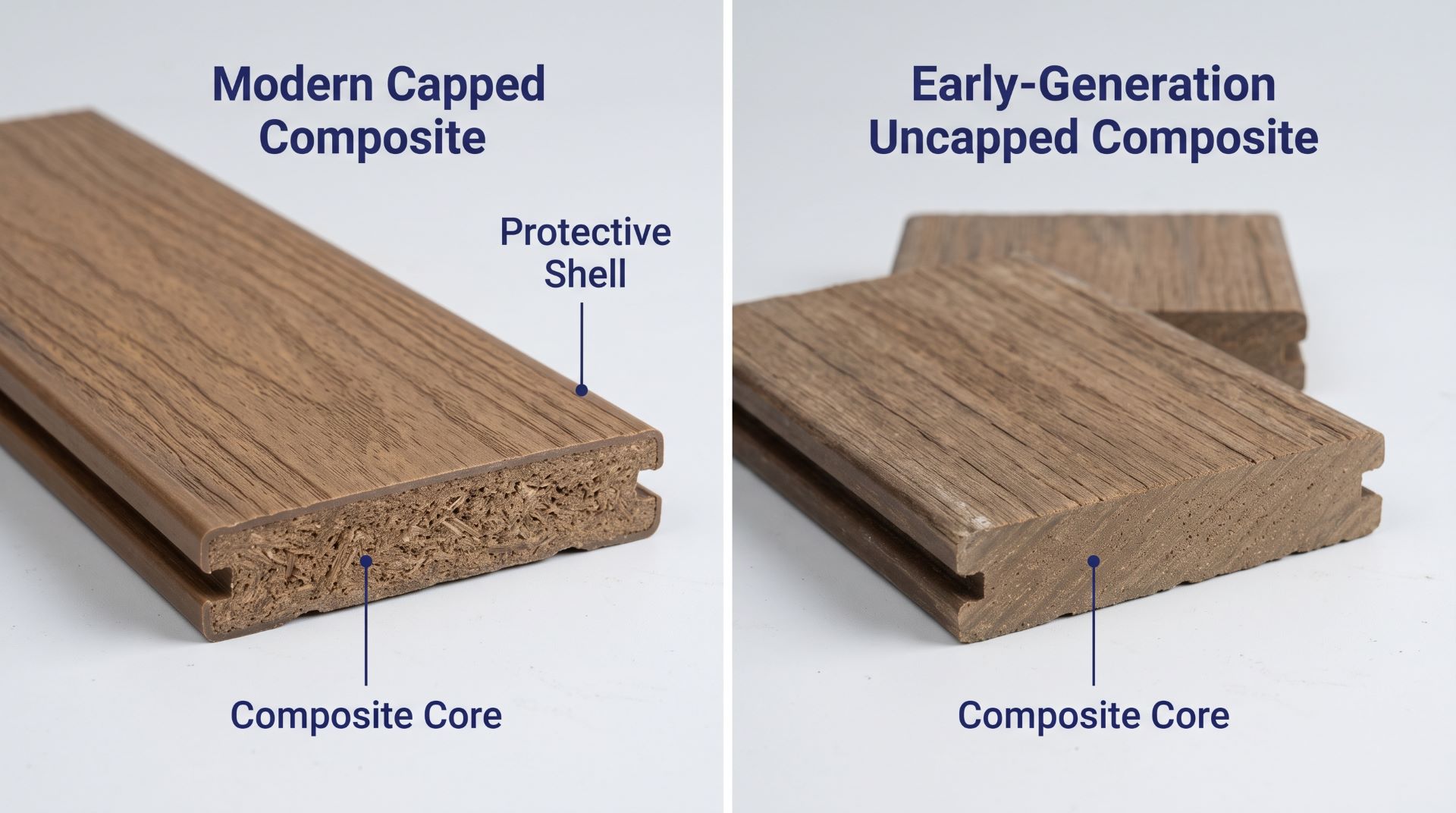
Trex has produced several generations of composite decking. Their surface construction affects how you should clean them.
Newer Trex Decking With a Protective Shell
Modern collections, including Trex Transcend, Transcend Lineage, Enhance, and Select, have protective outer surfaces that help resist stains and fading.
Routine cleaning is usually straightforward. Mild soap, warm water, and a soft brush can remove most dirt, pollen, and food residue.
Trex Signature also has its own care instructions. Check the product-specific guide before using specialty cleaners.
Early-Generation Trex Composite Decking
Older products such as Trex Accents, Origins, Brasilia, Profiles, and Contours lack the protective shell used on many newer boards.
Dirt and organic debris can become harder to remove from these exposed composite surfaces.
Trex recommends cleaning early-generation boards twice yearly with a suitable composite deck cleaner.
Do not pressure wash early-generation Trex decking. High-pressure water can damage the exposed composite surface and affect warranty coverage.
Trex Cleaning Methods by Collection
| Trex Decking | Routine Cleaning | Pressure Washing |
|---|---|---|
| Transcend and Transcend Lineage | Mild soap, water, soft brush | Follow Trex pressure limits |
| Enhance and Select | Mild soap, water, soft brush | Follow Trex pressure limits |
| Signature | Follow the Signature care guide | Allowed within its specified limits |
| Accents, Origins, Brasilia, Profiles, Contours | Suitable composite cleaner | Not recommended |
| Unknown or specialty collection | Check product-specific instructions | Verify compatibility first |
If you cannot identify your boards, begin with gentle soap-and-water cleaning.
You can also compare current Trex decking collections to help identify your product.
What Do You Need to Clean a Trex Deck?
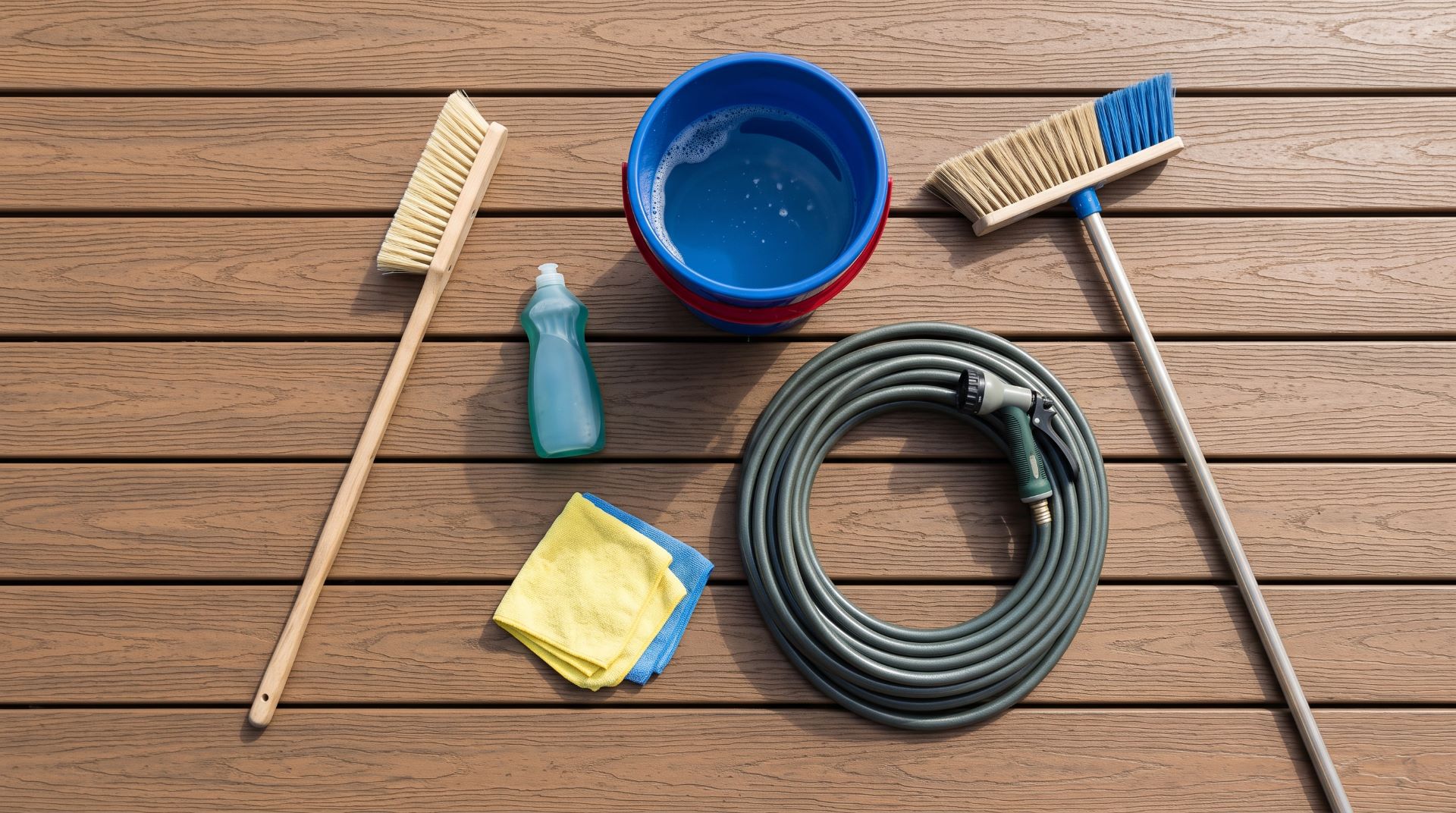
Most routine cleaning jobs require just a few household supplies.
Recommended cleaning tools:
- Soft-bristle nylon deck brush
- Mild dish soap
- Bucket of warm water
- Garden hose with adjustable spray nozzle
- Soft outdoor broom or leaf blower
- Clean microfiber cloth for stubborn water spots
- Suitable composite deck cleaner when required
Choose a brush with soft synthetic bristles. A long handle makes it easier to clean larger decks without kneeling.
Avoid wire brushes, steel wool, and aggressive scrubbing pads. These can scratch or change the appearance of the decking surface.
A regular garden hose is enough for most cleaning jobs.
How to Clean Trex Decking in 6 Simple Steps
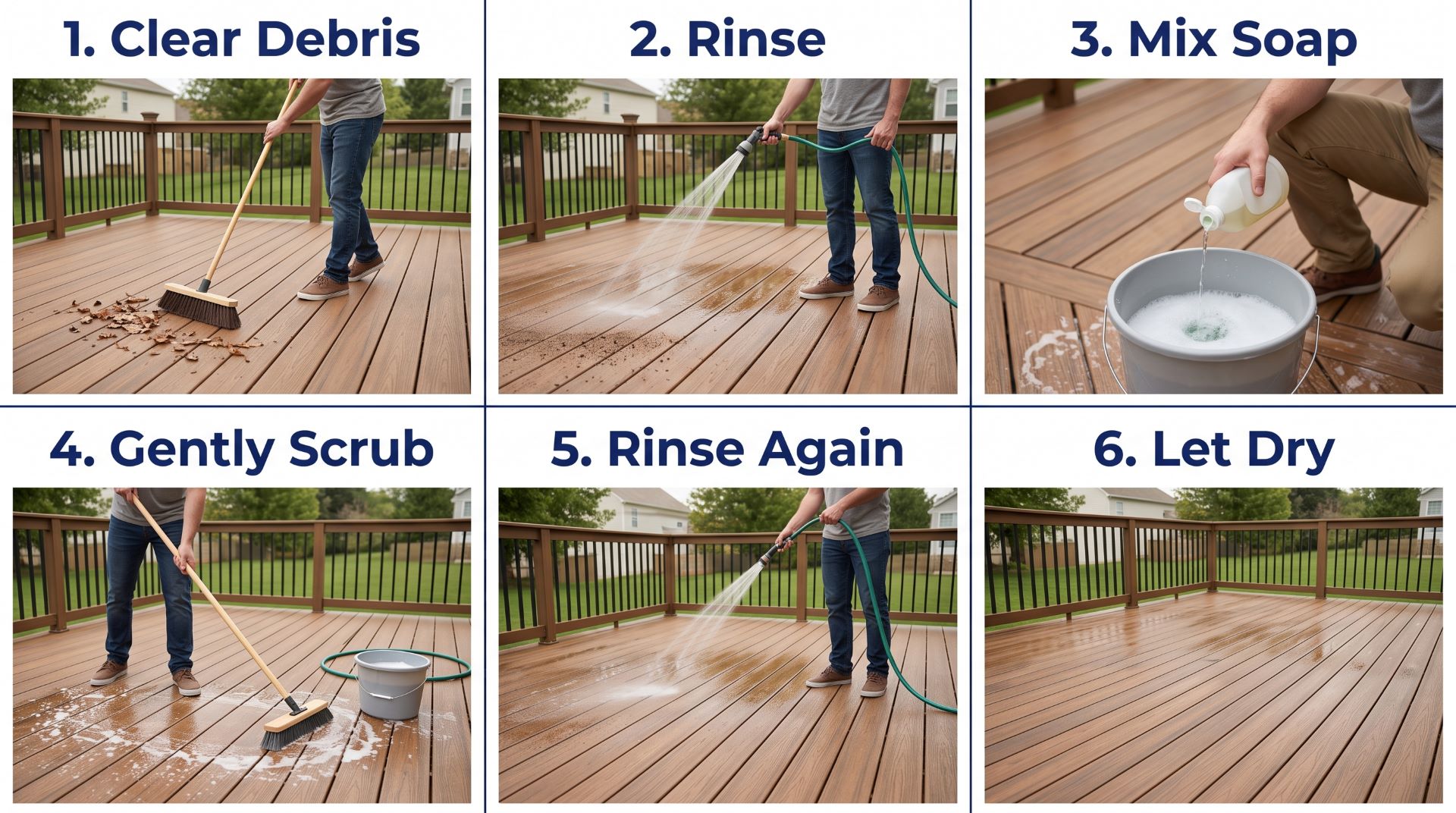
Use this process for routine cleaning on modern Trex composite decking. Early-generation boards may need the cleaning products listed in their specific care guide.
Step 1: Remove Furniture and Loose Debris
Move chairs, planters, outdoor rugs, and other movable items away from the cleaning area.
Sweep the deck with a soft broom or use a leaf blower to remove loose dirt.
Pay attention to corners, stairs, railing posts, and the gaps between deck boards.
Leaves and other debris can trap moisture against the surface. Remove buildup without forcing sharp tools between the boards.
Step 2: Rinse the Deck With Water
Use a garden hose to rinse away surface dirt, pollen, and mud.
Start at one end of the deck and work toward the other.
Rinsing first removes loose particles that could scratch the boards during scrubbing.
A gentle spray also helps loosen dirt caught in the textured wood-grain pattern.
Step 3: Prepare a Mild Soap Solution
Fill a bucket with warm water and add a small amount of mild dish soap.
Follow the soap label for mixing and use. You do not need excessive foam to clean the surface.
Avoid mixing different cleaning chemicals or adding bleach to a homemade solution.
For ordinary dirt on modern Trex decking, stronger cleaners are usually unnecessary.
Step 4: Gently Scrub the Deck Boards
Dip a soft-bristle brush into the soapy water.
Scrub along the board direction, paying attention to textured areas where dirt collects.
Apply enough pressure to loosen buildup without scraping the surface.
Clean small sections rather than applying soap to the entire deck at once. This helps prevent the cleaning solution from drying before rinsing.
Step 5: Rinse Each Section Thoroughly
Use clean water to remove the soap and loosened dirt.
Rinse every board, including the textured grooves and board edges.
Trex warns that dirty cleaning water left to dry can form a visible film on the surface.
If your water contains many minerals, it may also leave white spots. Using soft water for the final rinse can help reduce mineral residue.
Step 6: Allow the Deck to Dry and Inspect It
Let the boards air-dry before returning furniture and rugs.
Check for grease spots, dark stains, mineral deposits, and other marks that remain after cleaning.
Do not keep scrubbing a stubborn stain without identifying its cause.
Different stains need different treatments, and stronger cleaning products are not always safer.
PDS Cleaning Tip: For a large deck, work in sections small enough to wash and rinse before the soap dries. This helps prevent streaks and repeated cleaning.
What Is the Best Cleaner for Trex Decking?
For most newer Trex boards, warm water and mild dish soap are the best first choice.
However, not every stain responds to soap. Some need a specialty treatment listed in Trex’s manufacturer instructions.
Recommended Cleaners by Cleaning Problem
| Cleaning problem | Recommended starting point |
|---|---|
| Dirt, dust, and pollen | Mild soap and warm water |
| Food and grease | Warm soapy water and soft brush |
| Mold and mildew on newer boards | Soap, water, and removal of organic buildup |
| Hard water mineral spots | White vinegar where Trex recommends it |
| Leaf tannins | Cleaning followed by a suitable deck brightener if needed |
| Rust stains on applicable boards | Manufacturer-recommended deck brightener |
| Cement or mortar dust | Trex-recommended specialty treatment |
| Heavy buildup on early-generation boards | Suitable composite deck cleaner |
Trex specifically mentions products such as Sakrete Concrete Dissolver for certain construction residues. Its older-product guidance also lists Pour-N-Restore for some remaining oil stains.
These products have specific uses. They are not general cleaners for every Trex deck.
Premium Decking Supply recommends following the manufacturer’s cleaning instructions. PDS does not stock the cleaning products discussed in this guide. Product names are included to help readers identify suitable treatments.
Can You Use Vinegar on Trex Decking?
Yes, for certain cleaning problems.
Trex recommends white vinegar for many hard water deposits that leave white or cloudy spots on composite boards.
Apply it according to the applicable product guidance, then rinse thoroughly.
Avoid rinsing with the same mineral-heavy water that caused the stains. If necessary, dry the area with a clean cloth or blower.
Vinegar should not replace soap and water for routine deck cleaning.
Can You Use Bleach or Deck Brightener?
Trex lists bleach-based or acid-based treatments for certain older composite cleaning problems. It also warns that these products may lighten the board surface.
Deck brighteners containing oxalic or phosphoric acid can help with particular stains. However, they are not appropriate as routine cleaners for every collection.
Check the correct care guide and test an inconspicuous area before use.
Never mix bleach with vinegar, ammonia, or other cleaning chemicals.
For cleaning advice covering other brands, see our guide on how to clean composite decking.
Can You Pressure Wash Trex Decking?
Yes, you can pressure wash certain modern Trex decking collections if you follow the manufacturer’s instructions.
Trex allows pressure washing on specified high-performance products, including Transcend, Enhance, and Select. Trex Signature also has pressure-washing instructions in its separate care guide.
Safe Pressure Washing Guidelines

Follow these limits for compatible Trex boards:
- Use a pressure washer rated no higher than 3,100 PSI.
- Attach a wide fan spray nozzle.
- Keep the nozzle at least 8 inches from the deck surface.
- Apply soap before gently scrubbing with a soft brush.
- Rinse each board thoroughly to prevent residue.
The 3,100 PSI figure is an upper equipment limit, not a recommended target pressure.
Use the lowest effective pressure setting. Never hold the nozzle close to one spot or use a concentrated spray to remove a stubborn stain.
Avoid turbo nozzles and other attachments that produce an aggressive water stream.
Why Shouldn’t You Pressure Wash Older Trex Decks?
Early-generation Trex decking has a different surface construction.
Power washing can damage the exposed composite material. Trex warns that damage caused by pressure washing can void applicable warranty coverage.
A hose, suitable composite cleaner, and gentle brush are safer options for these products.
Always consult the official Trex care and cleaning guide before using pressure-washing equipment.
How to Remove Stains From Trex Decking
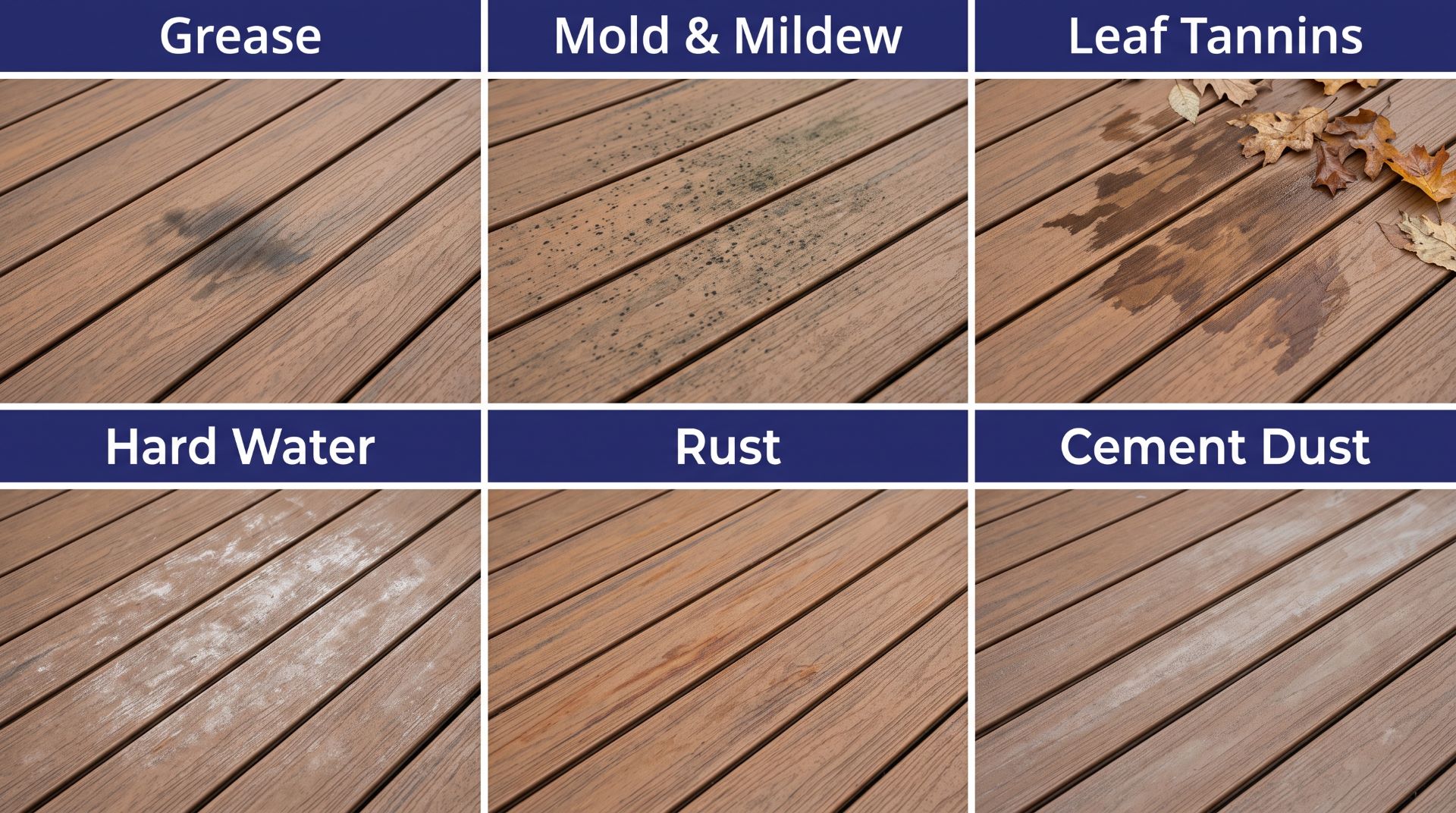
Food spills, moisture, leaves, and construction materials can leave different marks on a Trex deck.
The best way to remove a stain depends on what caused it and which decking collection you own.
Remove Grease, Oil, and Food Stains
Grills and outdoor dining areas are common sources of grease stains.
Remove the spilled material immediately. Rinse the area with water, then apply warm soapy water.
Gently scrub with a soft-bristle brush, focusing on the textured surface. Rinse the boards completely.
Trex requires covered food spills to be cleaned within seven days to maintain applicable stain-warranty coverage.
For stubborn grease on early-generation products, check Trex’s instructions for suitable specialty cleaners.
Remove Mold and Mildew From Trex Decking
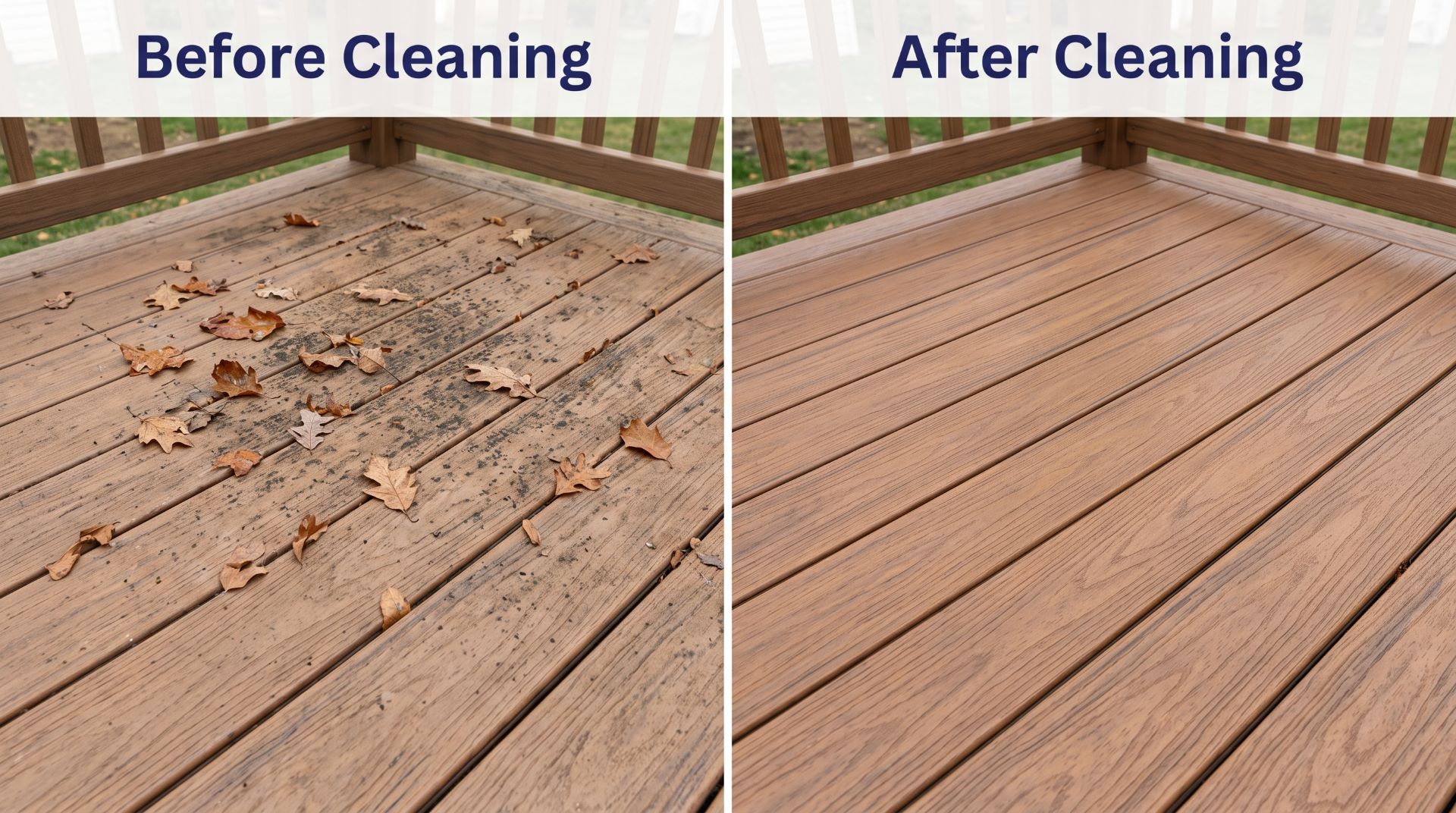
Mold can develop on dirt, pollen, and other organic material left on the deck.
This does not necessarily mean mold is growing inside the decking itself.
For modern Trex boards, first sweep away leaves and debris. Wash the area with warm soapy water and gently scrub with a soft brush.
Rinse the surface thoroughly.
If dark marks return, look for recurring moisture and organic buildup. Shaded areas and blocked board gaps may need more frequent cleaning.
Early-generation products have separate mold-cleaning guidance. Use the manufacturer-recommended treatment for those boards.
Remove White Spots and Hard Water Stains
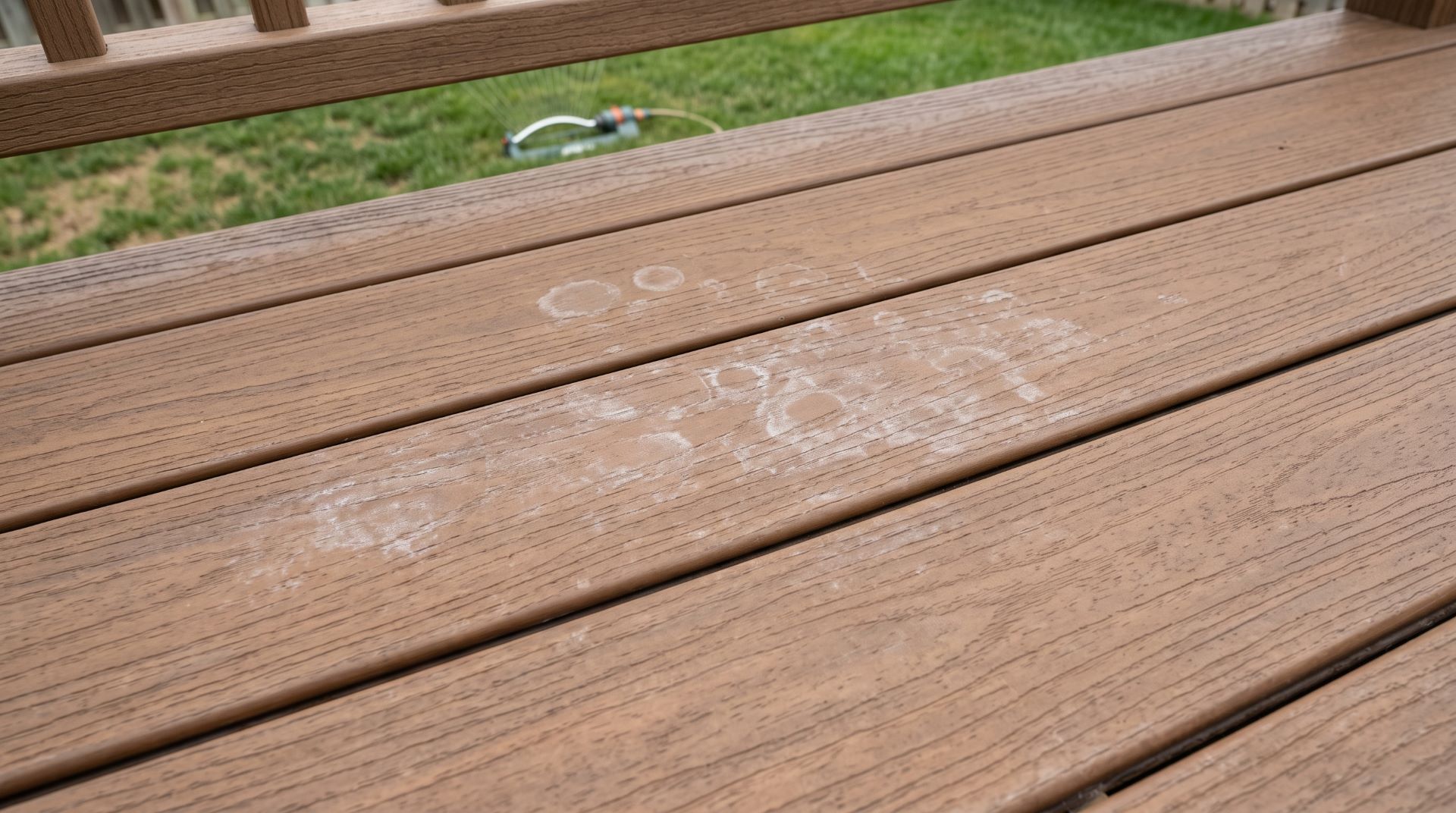
Hard water contains minerals such as calcium, silica, and lime.
When water evaporates, these minerals can leave white spots or a cloudy film.
Trex recommends white vinegar for many hard water deposits on applicable composite surfaces.
After treatment, rinse with soft water if available. Dry the boards to help prevent more deposits.
If the white marks appeared after washing, check for leftover soap before applying another cleaner.
Remove Leaf Stains and Tannins
Wet leaves can leave brown stains after sitting on a deck for several days.
Remove the leaves and wash the boards with soap and water.
For stains that remain, Trex lists certain deck brighteners as possible treatments.
These products may affect surface color. Use them only when the applicable Trex care instructions recommend them.
Regular leaf removal helps prevent the problem.
Remove Rust Stains
Metal furniture, hardware, and objects left outdoors may produce rust-colored marks.
Remove the source first, then clean the area with mild soap and water.
For persistent rust stains, Trex identifies specific deck brightener treatments for applicable products.
Avoid general-purpose rust removers unless their compatibility is confirmed.
Remove Concrete, Cement, and Mortar Dust
Construction dust is a special concern during deck installation or nearby masonry work.
Trex warns that cement, concrete, mortar, and stucco particles can react when exposed to heat or moisture.
Protect the deck before masonry work begins.
If dust reaches the boards, consult the manufacturer’s cleaning instructions. Trex lists Sakrete Concrete Dissolver for certain applicable products.
Avoid scraping hardened construction residue with metal tools.
What About Paint, Adhesives, and Other Chemicals?
Do not assume that a cleaner suitable for painted wood or concrete will work on composite decking.
Solvents, adhesive removers, and strong degreasers may change the appearance of certain Trex surfaces.
Identify the substance and decking collection before choosing a treatment.
If the stain cannot be removed with an approved method, contact Trex for product-specific advice.
Common Trex Deck Cleaning Mistakes to Avoid
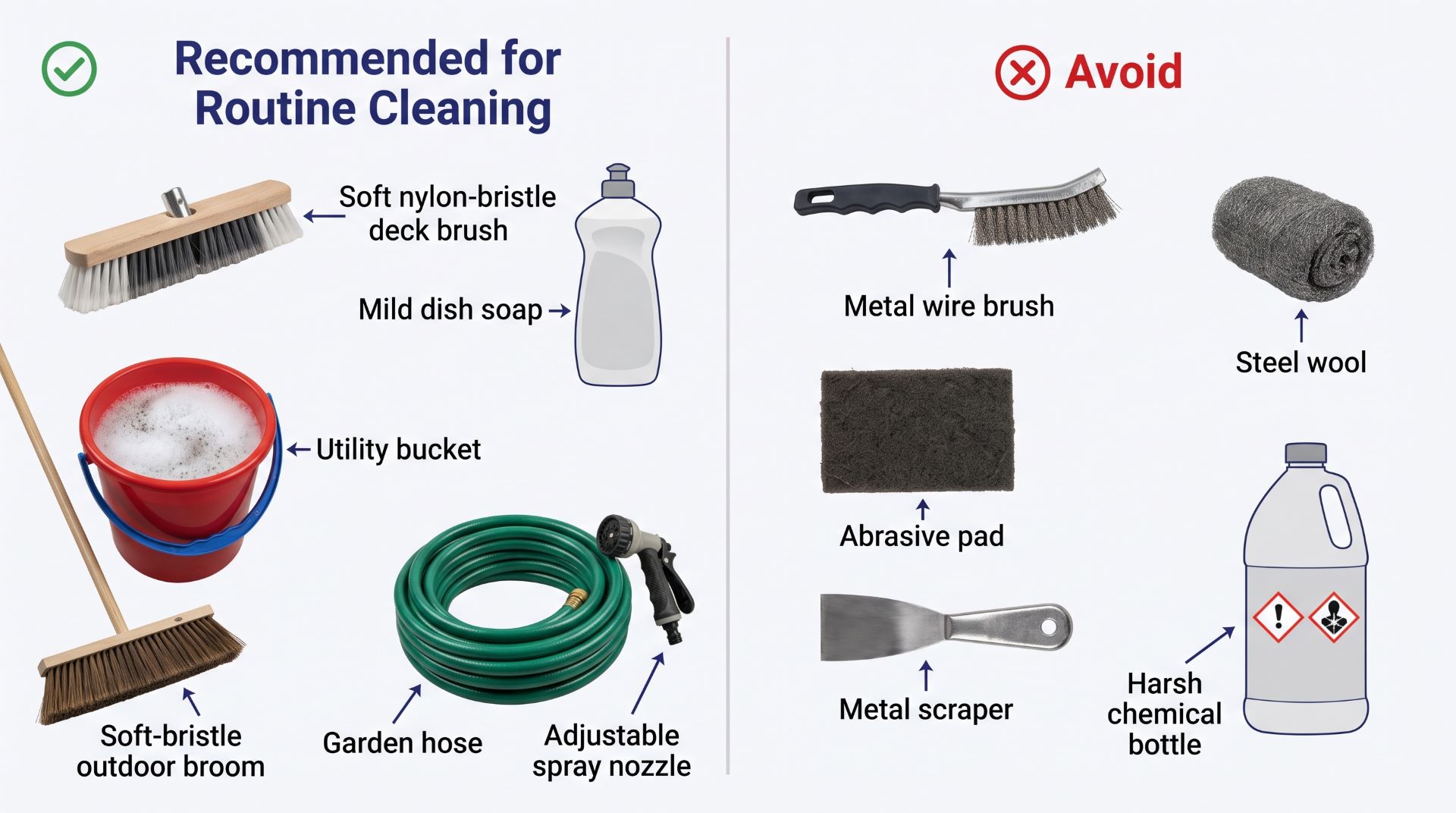
Cleaning too aggressively can damage decking that only needed a mild wash.
Avoid these mistakes:
- Using wire brushes: Hard metal bristles can scratch the protective surface.
- Sanding the boards: Trex states that sanding changes the surface and can affect warranty coverage.
- Applying unapproved chemicals: Strong solvents, acids, or bleach-based products may cause discoloration.
- Pressure washing unidentified boards: Older Trex products can suffer surface damage.
- Allowing soap to dry: Leftover cleaning residue can cause visible streaks.
- Ignoring wet leaves: Organic debris can contribute to staining and mold buildup.
- Dragging heavy furniture: Furniture legs and trapped grit may scratch the decking surface.
Be careful with rubber-backed outdoor mats as well. Trex warns that some rubber materials can cause discoloration.
Why Does Your Trex Deck Still Look Dirty After Cleaning?
A deck that looks cloudy or stained after washing may not need stronger cleaning chemicals.
Check these common causes first.
White Film After Cleaning
Leftover soap or dirty rinse water may have dried on the boards.
Rinse the affected area again and allow it to dry.
If the marks remain, check whether hard water minerals caused them.
Dark Spots That Keep Returning
Dirt and pollen may be accumulating in the same shaded or damp area.
Remove debris, wash the boards, and keep the deck gaps clear.
If the problem continues, check for drainage or moisture issues around the deck.
Permanent-Looking Discoloration
Some marks come from chemical exposure, material transfer, or surface damage rather than ordinary dirt.
Avoid repeated hard scrubbing.
Identify the source and contact the manufacturer before applying stronger products.
How Often Should You Clean Trex Decking?
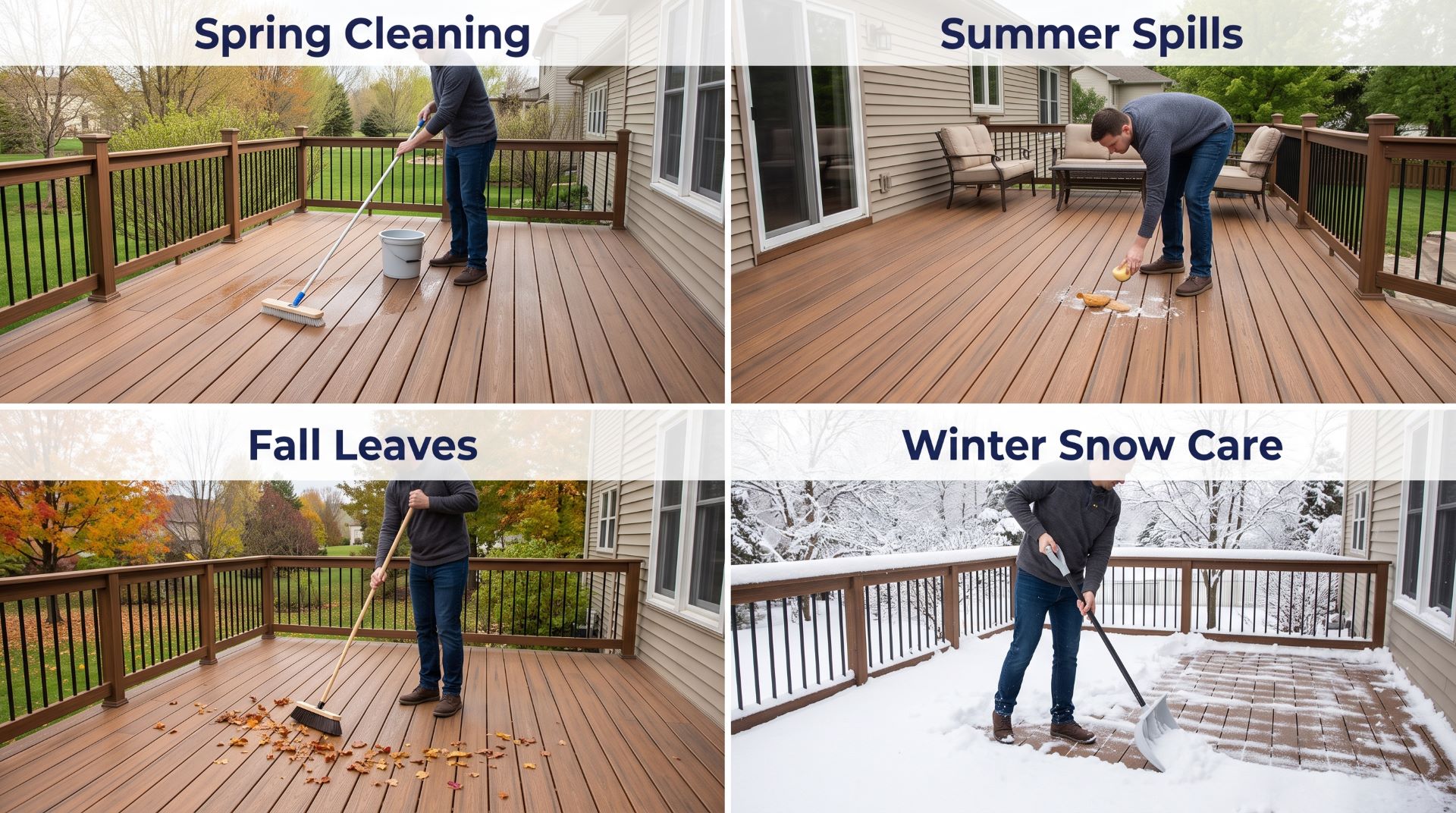
A good starting schedule is to clean your deck thoroughly in spring and fall.
Trex specifically recommends semiannual cleaning for early-generation composite boards. Newer products may need cleaning more or less often, depending on conditions.
Spring Cleaning
Remove winter debris and rinse away dirt left by snow and melting ice.
Wash the boards with mild soapy water. Check the gaps between boards for trapped material.
Inspect railings, stairs, and deck components while cleaning.
Summer Cleaning
Sweep pollen and dirt as needed.
Clean grill grease and food spills immediately. Move planters and furniture when cleaning underneath them.
Fall Cleaning
Remove wet leaves regularly to reduce tannin stains and mold buildup.
Wash the deck before freezing weather begins. Clear debris from board gaps and check that water can drain freely.
For homeowners in Illinois and other cold-weather areas, our guide explains how to winterize a deck before Chicago winters, including cleaning, inspections, drainage, and preparing outdoor furniture.
Winter Care
Use an all-plastic shovel to clear snow from your Trex deck. Avoid metal edges, sharp tools, and aggressive scraping that could damage the boards.
For deeper snow, remove it in layers and push along the direction of the boards when possible. Our guide to removing snow from composite decking explains the safest tools and techniques.
Trex permits calcium chloride and rock salt for melting snow and ice. However, other decking brands may have different requirements. Read our guide to ice melt for composite decking to compare manufacturer recommendations.
When temperatures allow, remove leftover deicer residue and rinse the deck according to your Trex product’s care instructions.
Keep Your Trex Deck Looking Its Best
The best way to clean Trex decking is to start with simple methods. Mild soap, warm water, and a soft brush handle most routine cleaning jobs on newer boards.
Identify your decking collection before using a pressure washer or specialty stain treatment. Regular maintenance and quick spill removal can help prevent harder cleaning problems.
If you’re building a new deck or replacing older composite boards, shop Trex decking, railing, and deck materials at Premium Decking Supply’s online store. We supply Trex products to homeowners, DIY builders, and contractors nationwide.
Frequently Asked Questions About Cleaning Trex Decking
Mild dish soap, warm water, and a soft-bristle brush are the best starting supplies for most modern Trex decking. Rinse thoroughly after washing. Early-generation boards may require a suitable composite deck cleaner.
Mild dish soap is suitable for routine cleaning of many modern Trex products. Dawn can serve as a mild dish soap option, but Trex’s general care instructions do not require that brand. Use a small amount and rinse completely.
Yes, on specified modern Trex collections. Follow the maximum 3,100 PSI pressure-washer rating and keep a fan nozzle at least 8 inches from the surface. Never pressure wash early-generation Trex boards against the manufacturer’s guidance.
First determine whether the spots come from mold, organic debris, grease, or another substance. Remove loose dirt and wash newer boards with warm soapy water. If the marks remain, follow the stain instructions for your Trex collection.
Spring and fall are practical times for a thorough cleaning. Sweep more often when leaves, pollen, or dirt collect. Clean food and grease spills immediately, and follow any product-specific maintenance requirements.