The place for all your outdoor living space!

Article Overview
- Is Ice Melt Safe for Composite Decking?
- Composite Decking Ice Melt Rules by Brand
- What Is the Best Ice Melt for Composite Decking?
- How to Remove Snow and Ice From Composite Decking
- Should You Use Sand for Traction?
- Why Does Ice Melt Leave White Residue?
- How to Choose a Deck Safe Ice Melt
- Winter Rules That Protect Composite Decking
- Check the Brand Before the Next Freeze
- Frequently Asked Questions
Ice can make a composite deck slippery fast, but choosing the wrong deicer can create a second problem. The rules for ice melt composite decking care are not the same across manufacturers.
Trex allows calcium chloride and rock salt. TimberTech allows most calcium chloride products but says to avoid rock salt. Fiberon permits both, while other manufacturers give different instructions.
That means the best ice melt for composite decking depends on the brand under your feet. This guide compares Trex, TimberTech, Fiberon, Deckorators, Envision, Eva-Last, MoistureShield, Wolf, Zuri and Lumberock. You will learn which products manufacturers allow, which ones they warn against, and how to remove winter ice without scratching your deck.
Is Ice Melt Safe for Composite Decking?
Yes, many composite and PVC decking brands allow some type of ice melt. The problem is that there is no single product approved across every manufacturer.
Calcium chloride appears in the care instructions for several major brands. Rock salt is more complicated. Trex and Fiberon allow it, while TimberTech tells homeowners to avoid it.
Trex states that calcium chloride or rock salt can be used to melt snow and ice. It also recommends a plastic shovel for snow removal.
TimberTech’s 2026 guide says most products containing calcium chloride can be used. However, it specifically warns against rock salt and other abrasive ice melts.
That difference is why you should never assume a bag labeled deck safe ice melt is right for every composite deck.
Ice melt works best after you clear as much loose snow as possible. If you need help with the right shovel, direction, and technique, read our guide to removing snow from composite decking before applying a deicer.
Composite Decking Ice Melt Rules by Brand
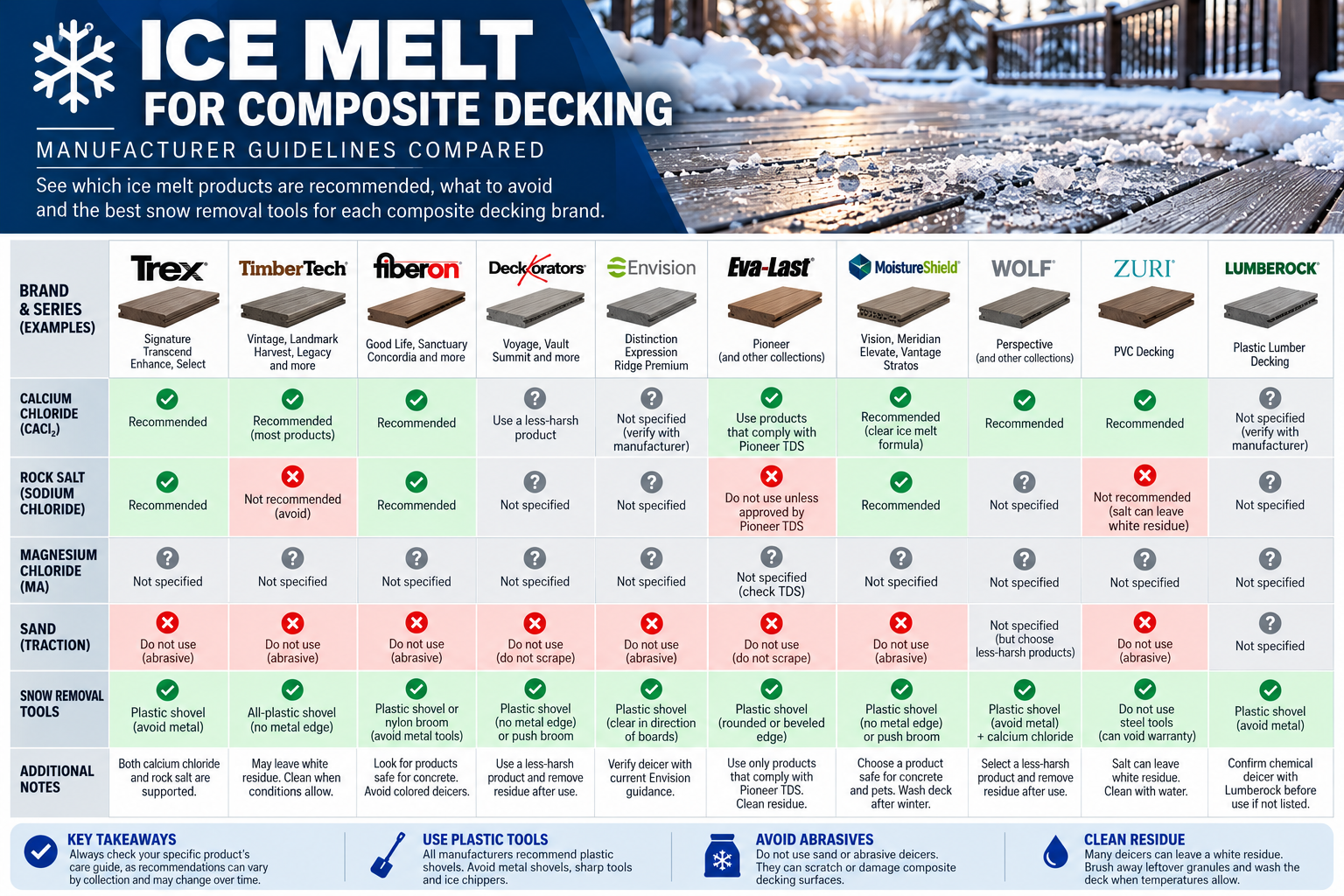
The table below gives a quick comparison of the manufacturer guidance reviewed for this article.
| Brand | Recommended or permitted approach | Rock salt | Main winter rule |
|---|---|---|---|
| Trex | Calcium chloride or rock salt | Allowed | Use a plastic shovel |
| TimberTech | Most calcium chloride products | Avoid | Avoid abrasive ice melt |
| Fiberon | Calcium chloride-based ice melt or rock salt | Allowed | Avoid sand and colored deicer |
| Deckorators | Less-harsh ice melt products | Not specifically approved | Remove residue after melting |
| Envision | Use gentle winter-care methods | Not established in supplied source | Avoid metal tools and sand |
| Eva-Last Pioneer | Ice/snow remover compatible with Pioneer TDS | Not specified | Verify product compatibility |
| MoistureShield | Clear ice melt formula or rock salt | Allowed | Remove residue and rinse later |
| Wolf Perspective | Calcium chloride and gentler ice melt products | Not specifically addressed as preferred | Remove residual product |
| Zuri | Calcium chloride | Not specifically recommended | Never use steel tools |
| Lumberock | No specific deicer listed | Not specified | Use a plastic shovel |
This ice melt composite decking comparison shows why brand-specific guidance matters. A deicer that fits one manufacturer may conflict with another manufacturer’s care instructions.
Trex
Trex gives clear winter guidance for Signature, Transcend, Enhance and Select decking.
The company says you may use calcium chloride or rock salt to melt snow and ice. A plastic shovel may also be used to remove snow.
For Trex decking owners, both of those common deicing options are supported in the care guide.
Trex Rule: Calcium chloride or rock salt may be used. Use a plastic shovel instead of metal tools.
TimberTech
TimberTech takes a different approach.
Its 2026 Care & Cleaning Guide states that most products containing calcium chloride can be used without damaging TimberTech decking or porch surfaces. These products may leave a white residue, which should be cleaned once temperatures safely allow.
TimberTech then gives an important warning: avoid rock salt and other abrasive ice melt products. For snow removal, use an all-plastic shovel. A metal shovel or plastic shovel with a metal leading edge can damage the deck surface.
TimberTech Rule: Choose a calcium chloride product. Avoid rock salt and abrasive deicers.
This is one of the clearest examples of why generic advice about ice melt for composite decking can be misleading.
Fiberon
Fiberon allows both calcium chloride-based ice melt and rock salt.
Its care guide says homeowners can use either option when winter weather leaves the Fiberon decking icy or slippery. Fiberon suggests looking for products marked “safe for concrete,” “safe for flagstone,” or “will not kill grass.”
Fiberon also gives two useful restrictions.
Do not use sand for traction because it can scratch the surface. Avoid ice melt containing added colorants because those dyes may stain composite or PVC decking.
For snow removal, Fiberon recommends plastic shovels or plastic and nylon-bristled brooms. Metal shovels, sharp tools and ice chippers can scratch or gouge the boards.
Fiberon Rule: Calcium chloride-based ice melt or rock salt can be used. Avoid sand, colored ice melt and sharp tools.
Deckorators
Deckorators does not identify one required deicer chemistry in the care guide.
Instead, the manufacturer says it is not aware of adverse effects from the temporary use of ice-melting products on Deckorators decking. It recommends choosing a less-harsh product.
Deckorators suggests looking for wording such as:
- “Safe for Pets”
- “Will not harm concrete”
- “Will not kill grass”
Once the snow and ice melt, brush away any remaining ice-melt product.
The same guide recommends a plastic snow shovel without a metal edge. A stiff-bristled push broom or leaf blower can also work for snow. Do not scrape or break ice from the surface.
Deckorators Rule: Use a less-harsh ice melt when needed and remove leftover granules afterward.
Envision
Envision winter care focuses heavily on preventing surface scratches.
Envision cleaning guide recommends using only plastic shovels for snow. It also says to avoid sand because it is abrasive and to clear snow in the direction of the deck boards.
The supplied Envision resource does not establish a specific approved ice-melt chemistry, so this article does not assign calcium chloride, magnesium chloride or rock salt to Envision decking without manufacturer confirmation.
If a deicer leaves residue, rinse the deck after winter conditions improve.
Envision Rule: Use non-metal snow-removal tools and avoid sand. Verify a chemical deicer against current Envision guidance before application.
Eva-Last Pioneer
Eva-Last collections requires closer attention to the specific product you apply.
The 2026 Cleaning and Care Guide says snow and ice should be removed with a rounded or beveled plastic shovel or with certain ice and snow removers that comply with the Eva-Last Technical Data Sheet.
It also says to clean white residue left by those products as soon as possible. Metal shovels and sharp objects should not be used.
The guide goes further. Any cleaning agent used on Eva-Last should comply with the chemical compatibility information in the TDS. Using an incompatible cleaning agent may affect future warranty claims.
Eva-Last Rule: Check your chosen deicer for snow against the TDS instead of relying on a generic “composite safe” claim.
Eva-Last collections may have different instructions, so check the care guide for your exact product.
MoistureShield
MoistureShield gives homeowners two options.
The manufacturer recommends using a clear ice melt formula or rock salt. It also suggests choosing a product labeled safe for concrete and flagstone, as well as safe around children and pets.
Once the ice is gone, remove excess ice melt or salt with a push broom. When outdoor temperatures allow, wash the decking with warm soapy water and rinse it thoroughly.
MoistureShield also warns against sand because its abrasive texture can scratch composite decking. Metal shovels and metal or plastic ice picks can gouge the boards.
MoistureShield Rule: Clear ice melt or rock salt may be used. Remove the residue and wash the deck when weather permits.
Wolf
Wolf decking also addresses winter deicing directly.
Wolf says it is not aware of adverse effects from the temporary use of ice-melting products. It recommends selecting a less-harsh product. Labels may use wording such as “pet friendly,” “will not harm concrete,” or “will not kill grass.”
The manufacturer tells users to brush away residual ice melt once the ice and snow have melted.
The same guide states: “For snow and ice removal always use a plastic shovel and calcium chloride.”
That makes calcium chloride the clearest manufacturer-supported choice for Wolf decking.
Wolf Rule: Use a plastic shovel and calcium chloride, then remove leftover ice-melt residue.
Zuri
Zuri decking care guide gives a direct answer.
Calcium chloride may be used to prevent or remove ice.
Zuri notes that salt-based products can leave a white deposit behind. The residue can be cleaned with water.
The manufacturer also warns against steel shovels, rakes and picks. These tools can damage the deck surface. The guide states that using steel implements can void the warranty.
Zuri Rule: Calcium chloride may be used. Clean white residue with water and never use steel tools.
Lumberock
Lumberock’s current Cleaning and Care page addresses snow removal but does not name a specific chemical deicer.
For winter conditions, Lumberock recommends using a plastic shovel to reduce the chance of scratching the boards.
Its care page also says standard household cleaners can be used on Lumberock plastic lumber, but that does not establish approval for any particular ice melt.
Lumberock Rule: Use a plastic shovel for snow. Confirm a chemical deicer with Lumberock before applying one if the current product literature does not list it.
What Is the Best Ice Melt for Composite Decking?
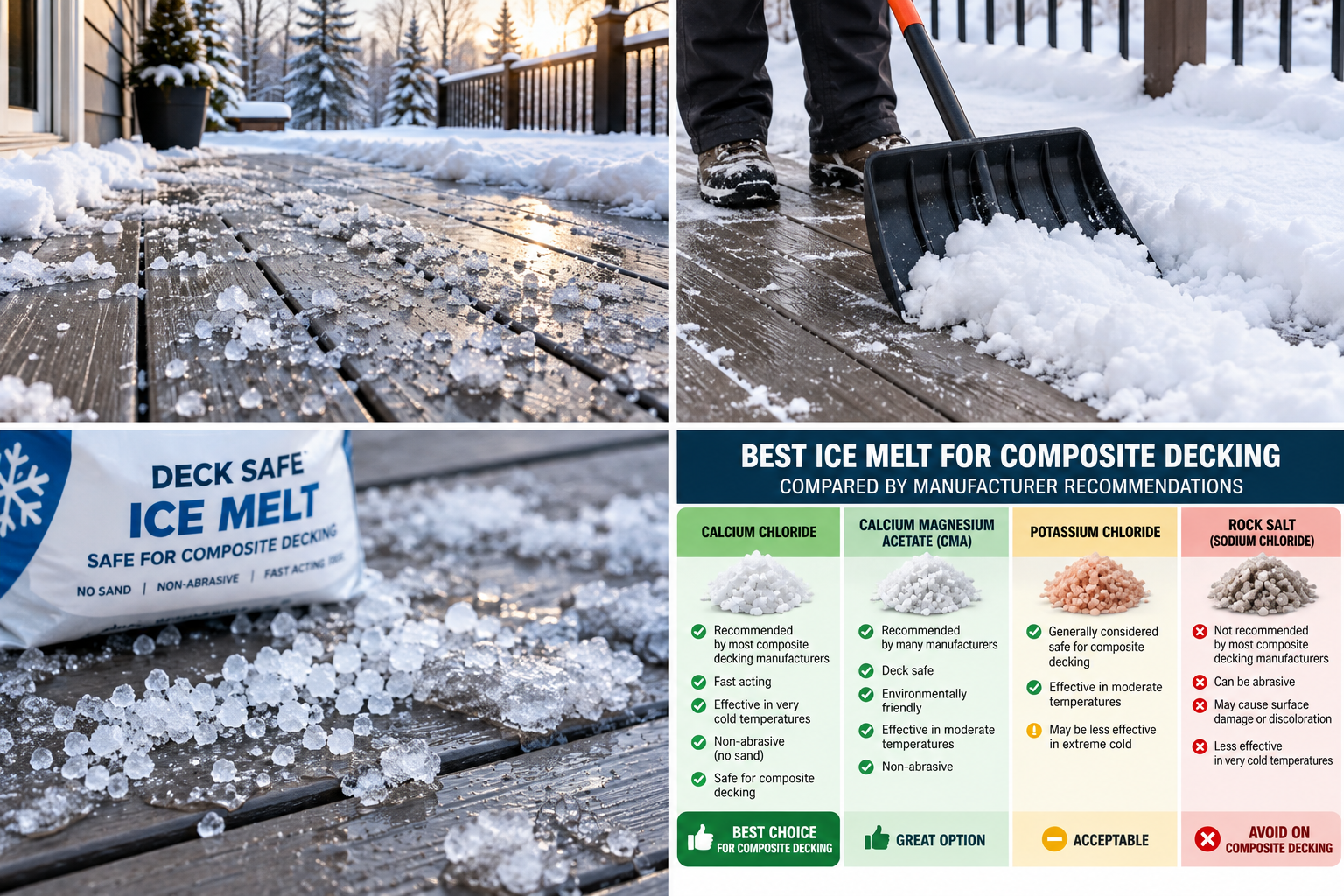
The best ice melt for composite decking is the product approved by the manufacturer of your specific boards.
There is no universal answer.
Calcium chloride has some of the broadest explicit manufacturer support among the brands reviewed. Trex, TimberTech, Fiberon, Wolf and Zuri all address calcium chloride in their winter-care guidance.
That does not mean every calcium chloride blend is automatically acceptable.
A commercial deck safe ice melt may contain other ingredients, colorants or abrasive materials. Check the complete product label and compare it with the care instructions for your decking.
Rock salt shows why brand-specific research matters.
Trex allows it. Fiberon allows it. MoistureShield also permits rock salt. TimberTech specifically says to avoid it.
If you are choosing a de icer for snow, do not pick one only because it works on a driveway or sidewalk. Start with your decking brand.
How to Remove Snow and Ice From Composite Decking
Choosing a safe deicer for snow is only half of the job. The shovel or scraper you use can cause more damage than the chemical itself.
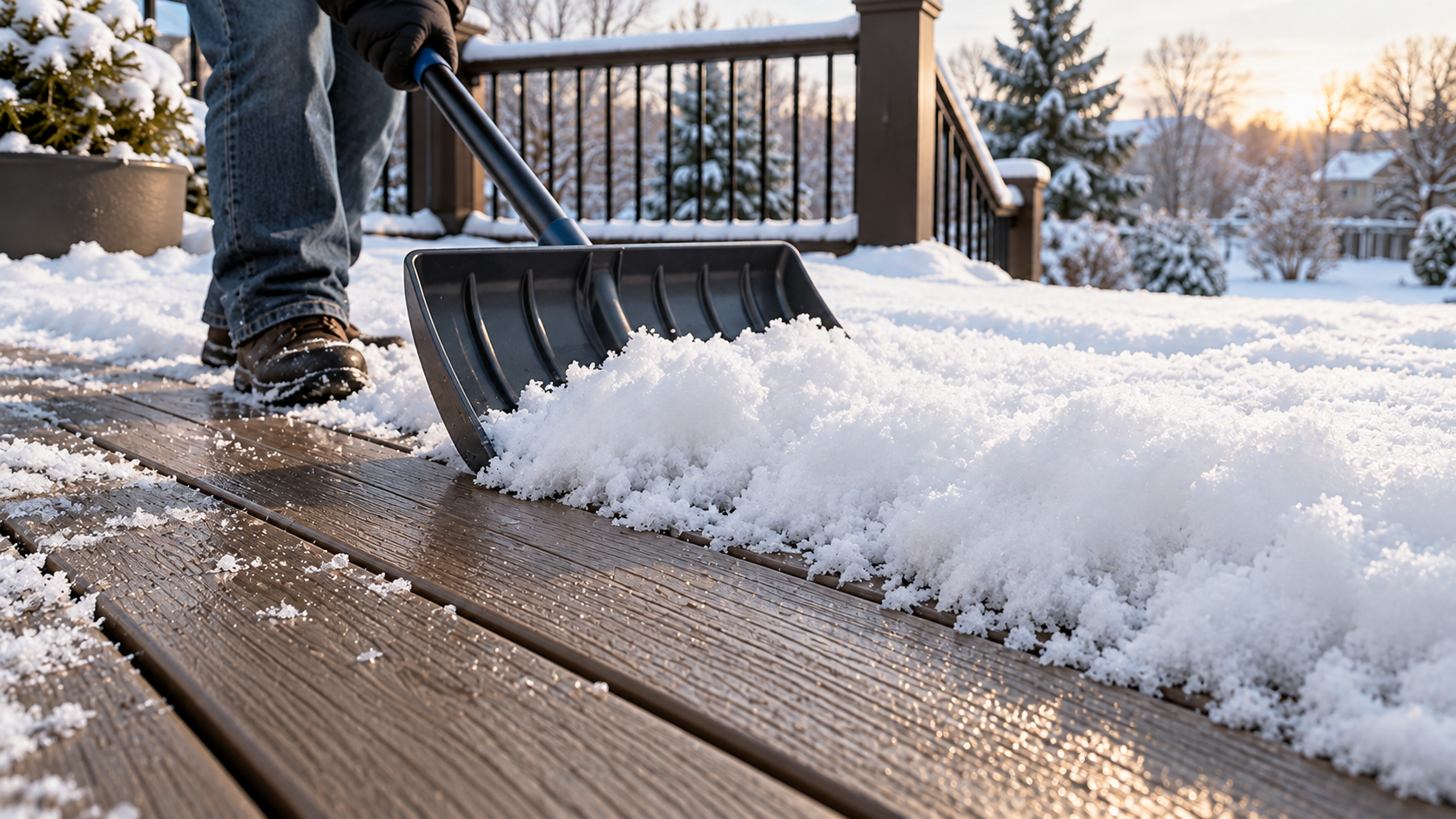
Follow these steps unless your manufacturer gives different instructions:
- Remove loose snow first. Use a broom, leaf blower or approved plastic shovel.
- Avoid metal edges. Metal shovels can scratch or gouge composite and PVC surfaces.
- Do not chip solid ice. Let an approved ice melt loosen it instead.
- Apply only the amount needed. Follow the deicer label and the decking manufacturer’s instructions.
- Sweep away remaining granules. Remove excess material after the ice melts.
- Clean residue when temperatures permit. Use the cleaning method recommended by your decking manufacturer.
Fiberon even advises shoveling parallel to the boards rather than perpendicular to them. It also warns against using an ice chipper, including plastic ones.
Should You Use Sand for Traction?
Usually, no.
Sand may seem harmless because it does not melt ice chemically. The problem is abrasion. Small mineral particles can become trapped under shoes and dragged across the capped surface.
Fiberon specifically warns against sand because it can damage the board surface. MoistureShield also says not to apply sand because it is highly abrasive and can scratch composite decking.
Envision’s winter-care guidance follows the same approach and tells homeowners to avoid sand.
If traction is your concern, use a manufacturer-approved winter treatment rather than spreading an abrasive material across the deck.
Why Does Ice Melt Leave White Residue?
White residue after using ice melt on composite decking does not always mean the surface has been damaged.
Salt-based products can leave mineral deposits after the moisture evaporates.
TimberTech says calcium chloride products may leave white residue. It recommends cleaning the residue when temperatures safely allow.
Zuri gives similar advice. Its guide states that salt-based products can leave a white deposit that can be cleaned with water.
Eva-Last Pioneer also tells owners to clean white residue from compatible ice and snow removers as soon as practical.
Do not attack the residue with a wire brush, sharp scraper or other abrasive tool. Follow your manufacturer’s standard cleaning instructions instead.
How to Choose a Deck Safe Ice Melt
A package can say “safe” without being approved for your exact decking product.
Before buying a deck safe ice melt, check these points:
- Confirm the decking manufacturer and collection.
- Read the current care and maintenance guide.
- Check the active deicing ingredient.
- Avoid colored products when the manufacturer warns against dyes.
- Avoid added sand or abrasive traction material.
- Check whether the product is labeled safe for concrete or flagstone when your decking manufacturer recommends that wording.
- Follow pet and child safety directions when those concerns apply.
- Remove leftover granules after the ice melts.
The safest buying process starts with the decking manufacturer, not the marketing on the front of the ice-melt bag.
Winter Rules That Protect Composite Decking
When researching ice melt composite decking care, keep these five rules in mind.
First, identify your decking brand. Second, never assume rock salt is approved across all composite products. Third, keep metal tools away from the deck surface. Fourth, avoid abrasive traction materials such as sand when your manufacturer warns against them. Fifth, remove deicer residue once winter conditions improve.
For contractors, this information is worth passing to the homeowner when the deck is finished. A short winter-care handoff can prevent someone from treating a new composite deck like a concrete driveway.
Check the Brand Before the Next Freeze
The safest winter routine is simple. Clear loose snow with a non-metal tool. Use only an approved deicer for snow. Sweep away leftover granules and clean the surface when temperatures allow.
The brand on your deck boards matters more than a generic “composite safe” claim on an ice-melt package.
Premium Decking Supply carries composite and PVC decking from leading manufacturers and helps homeowners, contractors and deck builders choose the right products for their projects. If you need help identifying your decking or finding the correct manufacturer care information, contact Premium Decking Supply before applying a winter treatment.
You can also shop composite decking online from Premium Decking Supply with nationwide shipping.
Frequently Asked Questions
Yes. Many manufacturers allow certain ice-melting products, but the approved type varies by brand. Check the care guide for your exact decking before applying a deicer.
The best ice melt for composite decking is one specifically permitted by your decking manufacturer. Calcium chloride has broad support among several major brands, but other ingredients and additives still need to be checked.
It is specifically allowed or addressed by several manufacturers, including Trex, TimberTech, Fiberon, Wolf and Zuri. That does not make it universally approved for every brand or every product line.
It depends on the brand. Trex and Fiberon allow rock salt, and MoistureShield also permits it. TimberTech says to avoid rock salt because it is abrasive.
Avoid sand when the decking manufacturer warns against it. Fiberon, MoistureShield and Envision all caution against sand because it can scratch the surface.