The place for all your outdoor living space!

Article Overview
- When Should You Winterize Deck Areas in Chicago?
- How to Winterize a Deck: 9-Step Fall Checklist
- 1. Remove Leaves, Dirt, and Debris
- 2. Clean the Deck Before Cold Weather Arrives
- 3. Inspect Deck Boards, Fascia, Railings, and Stairs
- 4. Check the Structure Below the Deck
- 5. Make Sure Water Can Drain Away
- 6. Protect the Deck Based on Its Material
- 7. Move Furniture, Rugs, and Planters
- 8. Inspect Lighting, Outlets, and Deck Accessories
- 9. Prepare for Snow and Ice Before You Need the Tools
- How to Winterize a Covered Deck
- Common Deck Winterizing Mistakes
- Quick Fall Deck Checklist for Chicago Homeowners
- When Should You Call a Deck Contractor?
- Get Your Deck Ready Before Chicago Freezes
- Frequently Asked Questions About Winterizing a Deck
Wet leaves collect between deck boards. Temperatures start falling at night. Furniture, planters, grills, and summer gear are still sitting outside. Then Chicago gets its first hard cold snap.
That is why fall is the right time to winterize deck surfaces and the structure below them.
Winter preparation does not mean covering the entire deck or applying chemicals to every surface. A good fall routine is much simpler. Clean the deck, inspect it, correct drainage problems, protect the right materials, and prepare for snow and ice.
Timing matters in Chicagoland. The National Weather Service lists October 19 as the normal first autumn freeze at Chicago O’Hare, based on 1991 – 2020 climate normals. That makes late September through early October a practical time to finish most outdoor deck maintenance.
This checklist explains “how to winterize a deck” without treating wood, composite, and PVC as if they need the same care.
When Should You Winterize Deck Areas in Chicago?
The best time to winterize deck surfaces in Chicago is before repeated overnight freezes begin.
For most Chicago-area homeowners, that means starting in September or early October. You want enough dry weather to clean the surface, make repairs, and let wood finishes cure when needed.
Do not wait for the first snowstorm. A practical schedule looks like this:
| Time | Deck Maintenance |
|---|---|
| September | Inspect boards, railings, stairs, framing, and drainage |
| Late September to early October | Deep clean the deck and clear board gaps |
| Early to mid-October | Complete repairs and protect wood if needed |
| Before first freeze | Store furniture, planters, rugs, and seasonal items |
| Before first snow | Prepare safe snow-removal tools and check deck lighting |
You do not need one perfect weekend. Breaking the work into smaller jobs makes it easier to catch problems before cold weather limits your options.
How to Winterize a Deck: 9-Step Fall Checklist
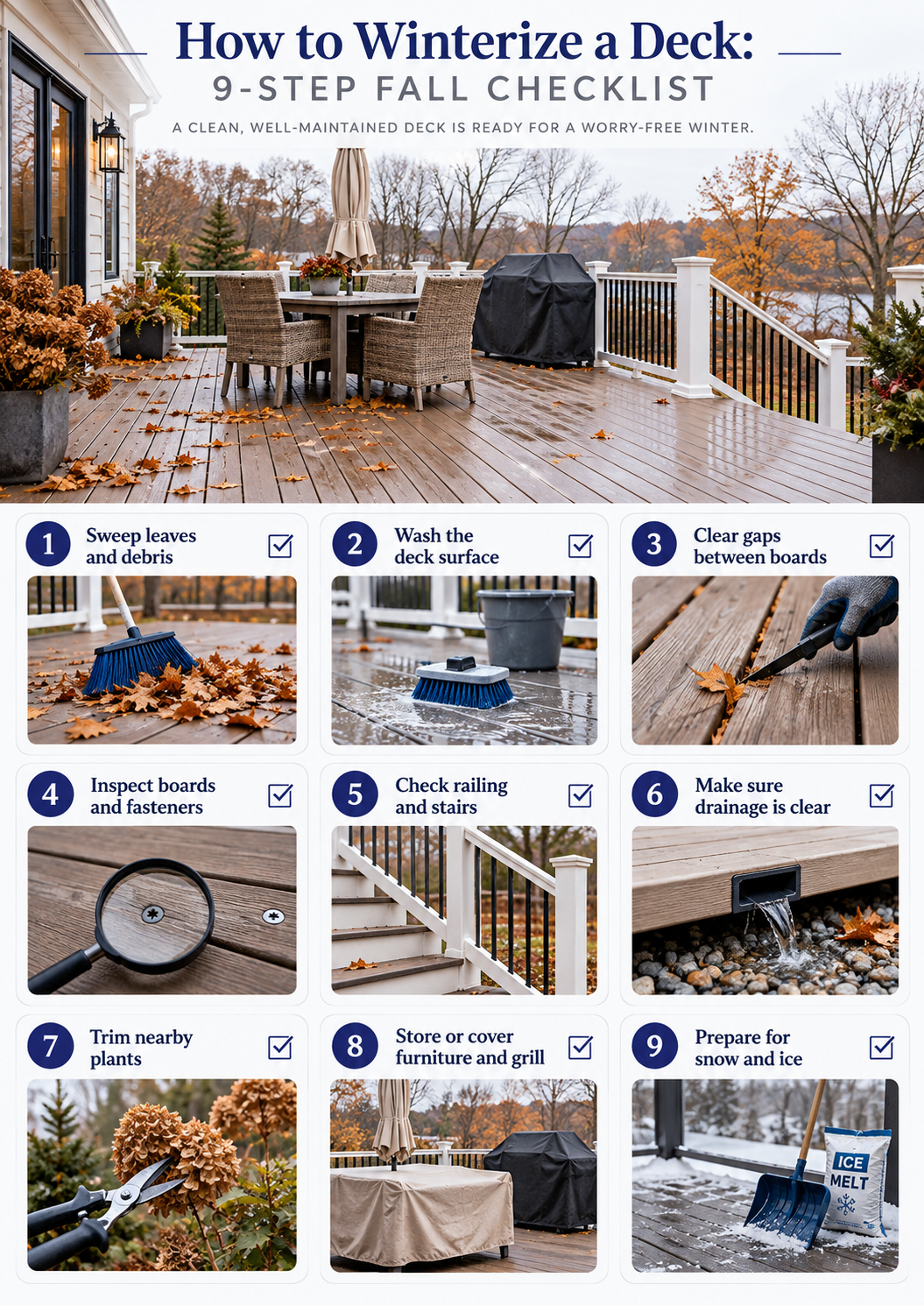
To winterize deck areas correctly, work from the surface down to the framing, drainage, stairs, railings, and accessories.
1. Remove Leaves, Dirt, and Debris
Start with a dry deck.
Move furniture, planters, outdoor rugs, toys, decorations, and other loose items. Sweep the entire surface and pay close attention to corners and areas against the house.
Leaves can hold moisture against decking for long periods. Packed debris between boards can also slow drainage.
Clear the gaps between deck boards with a tool that will not damage the surface. Avoid sharp metal tools on composite or PVC decking.
Also check beneath the deck when you can safely access it. Leaves often collect around beams, joists, posts, lattice, and drainage areas.
2. Clean the Deck Before Cold Weather Arrives
A clean deck is easier to inspect and less likely to carry fall grime into winter. When you winterize deck surfaces, cleaning should come before repairs, storage, or other seasonal work.
The correct cleaning method depends on the decking material.
For composite decking, start with the manufacturer’s care instructions. Warm soapy water, a hose, and a soft-bristle brush are common cleaning methods for many products. Trex, for example, recommends warm soapy water and a soft-bristle brush for several common cleaning conditions.
Do not assume every composite or PVC product can be pressure washed at the same pressure or with the same cleaner.
If your deck needs more than a quick fall wash, follow our step-by-step guide on How to Clean Composite Decking for recommended tools, cleaning methods, and stain-removal tips.
3. Inspect Deck Boards, Fascia, Railings, and Stairs
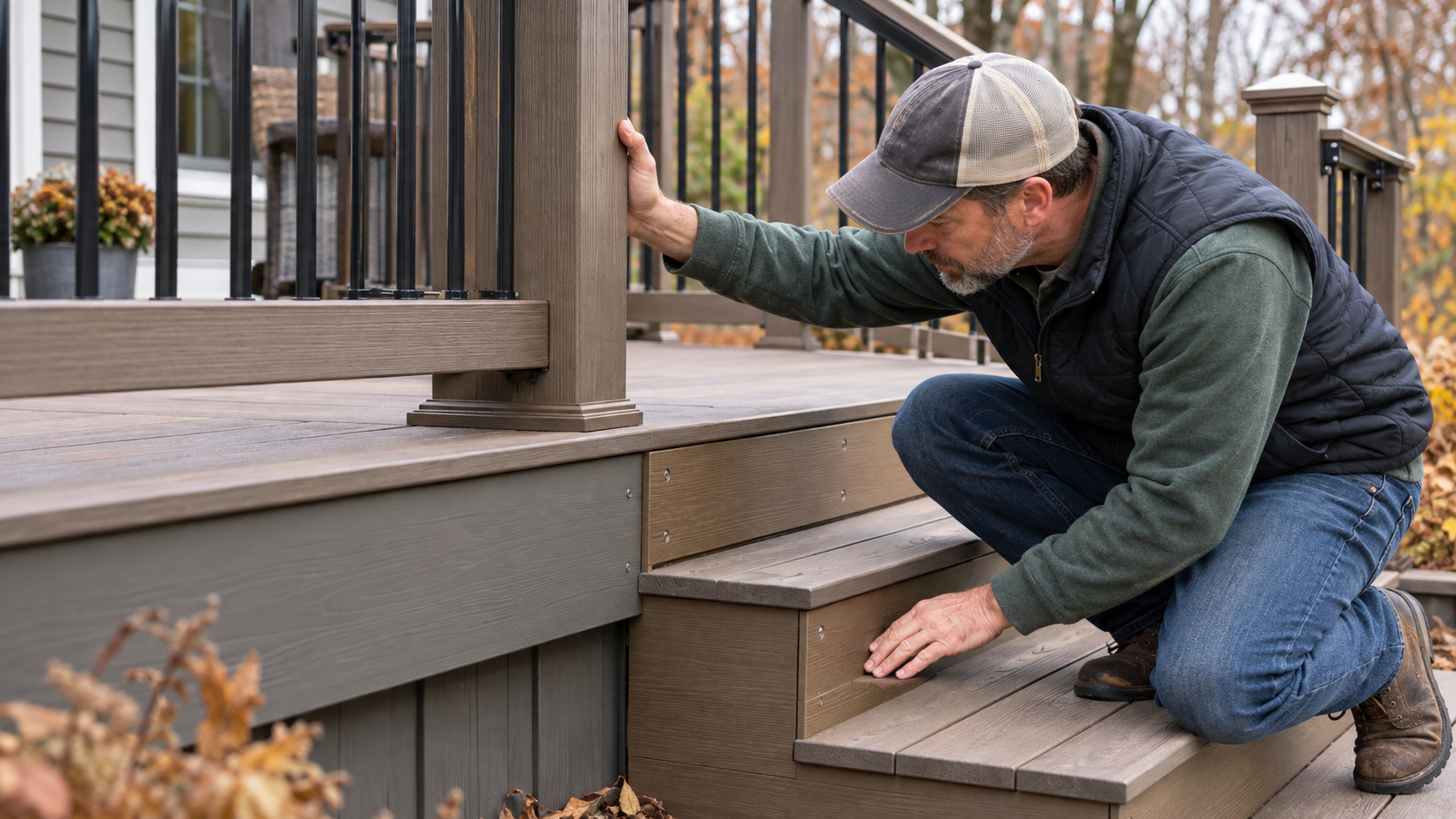
Once the surface is clean, walk the entire deck slowly. This inspection is one of the most useful steps when you winterize deck areas before freezing weather.
Look for:
- Loose or damaged deck boards
- Cracks or splits in wood
- Soft or rotted areas
- Raised or loose fasteners
- Damaged fascia
- Loose railing posts
- Moving handrails
- Uneven or damaged stair treads
- Loose stair components
- Corroded connectors or hardware
Do not ignore a railing that moves when you push against it.
Winter moisture and freezing temperatures will not repair an existing problem. Address visible damage before the deck is covered with snow.
Composite and PVC boards may resist many moisture problems that affect wood, but the framing underneath may still be wood. Surface condition alone does not tell you the condition of the whole deck.
4. Check the Structure Below the Deck
Many fall deck checklists stop at the walking surface. Your inspection should go farther.
Where safely accessible, look at the:
- Ledger area
- Joists
- Rim joists
- Beams
- Posts
- Connections
- Stair stringers
- Footings
- Flashing
Watch for dark or soft wood, corrosion, movement, damaged connectors, and areas that stay wet long after rain.
Pay close attention to where the deck connects to the house.
If you find structural movement, widespread rot, damaged framing, or questionable footings, contact a qualified deck contractor or structural professional. Those problems go beyond routine DIY maintenance.
5. Make Sure Water Can Drain Away
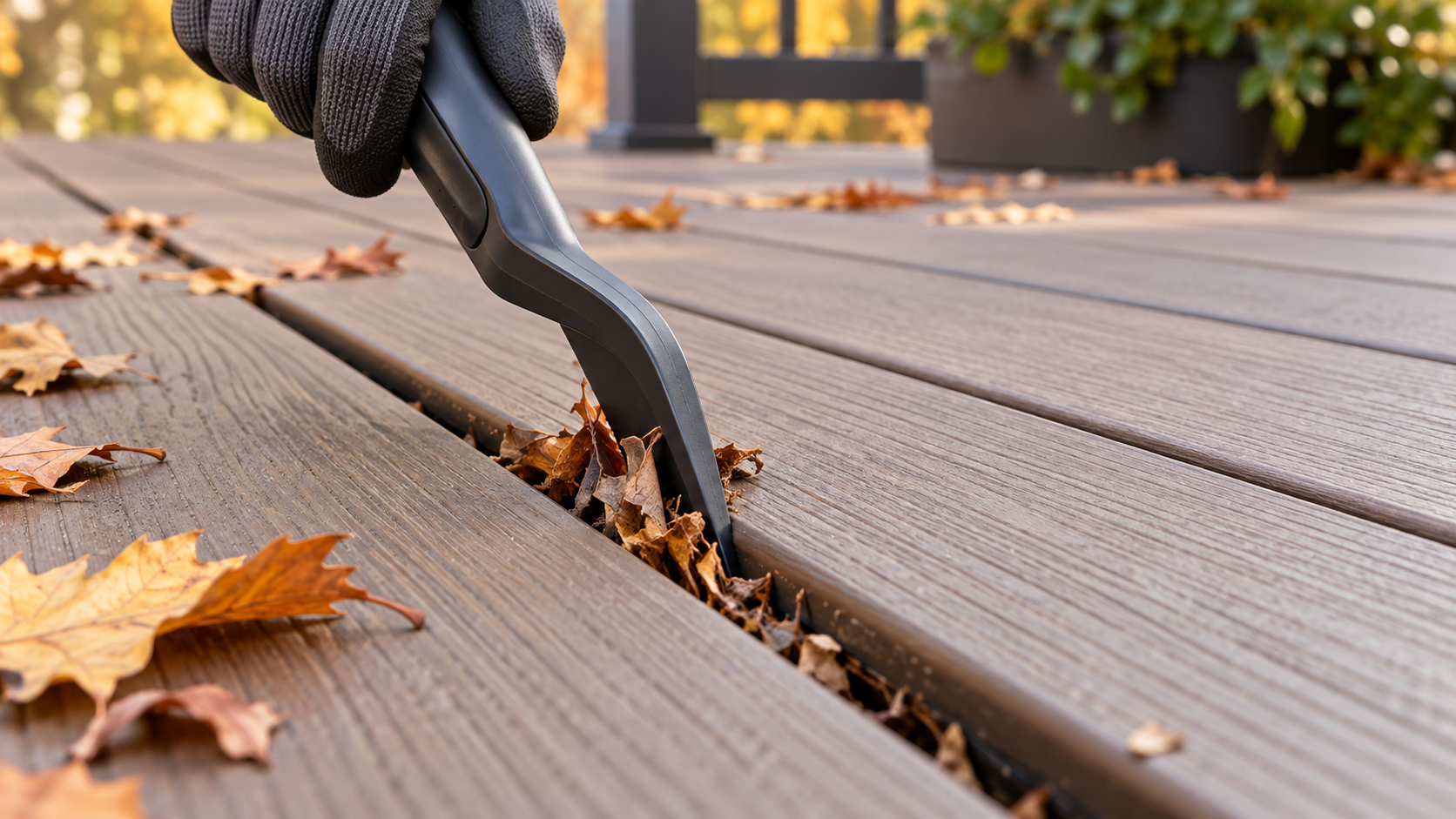
Drainage is one of the most useful steps when you winterize deck surfaces for a Chicago winter.
Check the gaps between boards again. Make sure water can move off the deck instead of collecting around debris.
Then look beyond the boards.
Check nearby gutters and downspouts. Water should not discharge onto the deck or create a wet area beside deck posts and footings.
Look for standing water after rain. If one section stays wet much longer than the rest, determine why before freezing weather arrives.
Also keep leaves from building up around the base of stairs, posts, or skirting.
Chicago winters repeatedly move above and below freezing. Keeping water moving away from the structure reduces the amount of standing moisture that can freeze around vulnerable areas.
6. Protect the Deck Based on Its Material
How you winterize deck materials depends on what the surface is made from. Wood, composite, and PVC decking do not need the same coatings, cleaners, or seasonal treatments.
This is where many generic deck winterizing guides become too broad.
Wood, composite, and PVC do not need identical treatments.
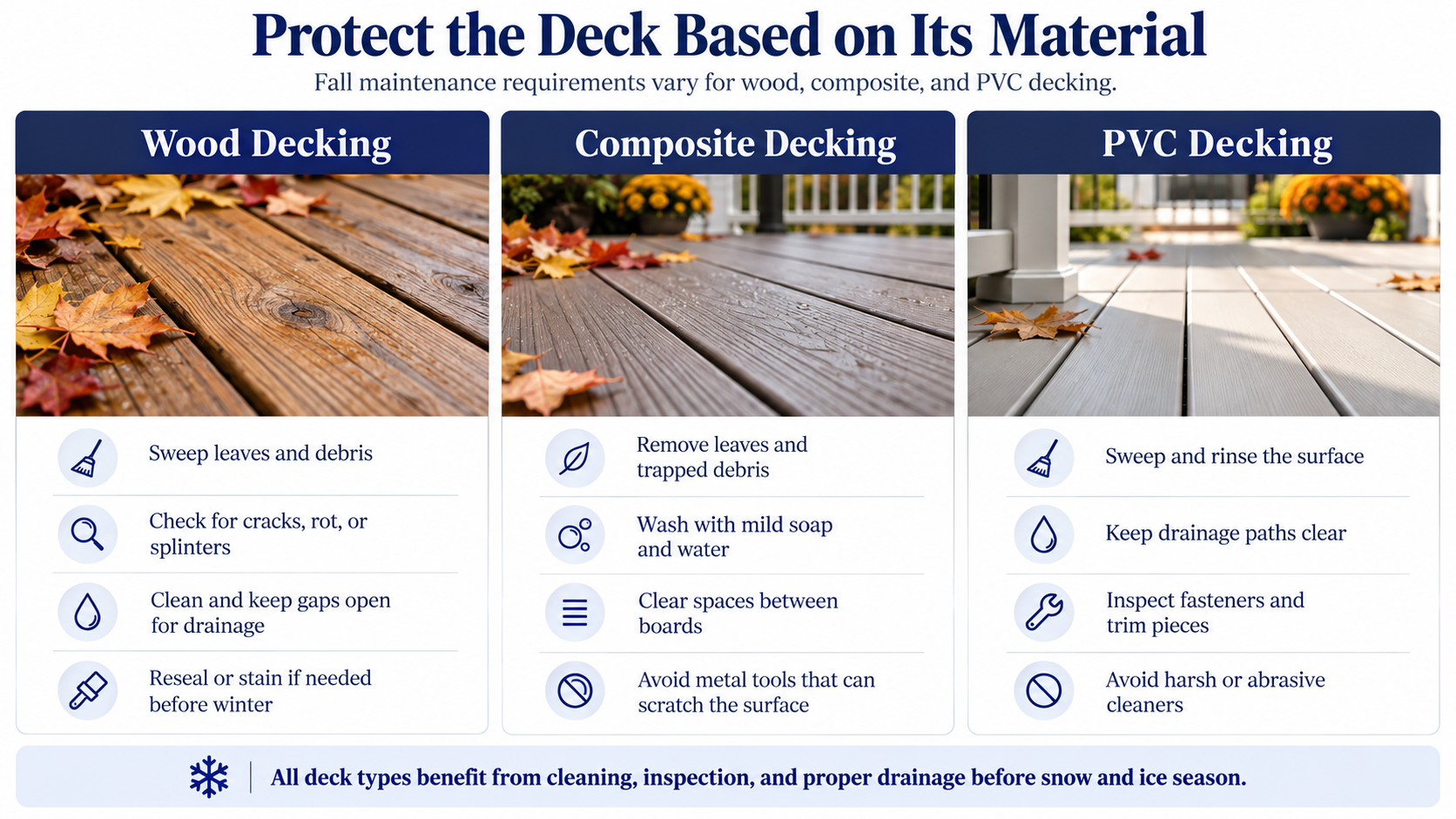
Wood Decks
Wood may need staining or sealing if its existing finish no longer protects the surface.
Inspect the finish before applying another coat. Follow the stain or sealer manufacturer’s temperature, moisture, and curing requirements.
Do not apply a finish simply because winter is approaching. Applying it in weather that is too cold or damp can produce poor results.
Composite Decking
Composite decking normally requires cleaning and inspection rather than the same sealing routine used for natural wood.
Do not apply wood stain, paint, sealer, or a coating to composite boards unless the decking manufacturer specifically approves that product and method.
Check hidden fasteners, board movement, gaps, fascia, and the wood framing below.
If damaged boards need to be replaced, you can also explore our composite decking options from leading manufacturers to compare colors, collections, profiles, and performance features.
PVC Decking
PVC decking is also different from natural wood.
Clean it with products and methods approved for the specific decking. Inspect boards, fasteners, expansion areas, fascia, stairs, and the framing beneath the surface.
Do not add coatings or treatments simply because they are marketed for wood decks.
7. Move Furniture, Rugs, and Planters
Large items can hide moisture, leaves, staining, and surface damage.
Whenever possible, remove outdoor rugs and portable planters before winter.
Move seasonal furniture into a dry storage area or prepare it according to the furniture manufacturer’s instructions. If furniture must remain outside, use suitable covers and avoid creating places where water stays trapped against the decking.
Be especially careful with heavy planters.
Check beneath each planter for stains, trapped dirt, or moisture before moving it. Empty or relocate seasonal plants before frozen soil makes containers much heavier.
Clean grills and outdoor cooking equipment before storage or covering. Follow the equipment manufacturer’s winter storage instructions.
Avoid wrapping the entire deck surface in a plastic tarp. A large cover can trap moisture and debris rather than solve the problem.
8. Inspect Lighting, Outlets, and Deck Accessories
Chicago’s shorter fall and winter days make working deck lighting useful.
Walk the stairs after sunset and look for dark areas. Check step lights, post lights, under-rail lighting, and other fixtures for visible damage.
Inspect accessible outdoor outlet covers and cords for damage. Remove extension cords and temporary electrical items that are not intended for winter exposure.
Do not attempt electrical repairs unless you are qualified to perform them.
Fall is also a good time to check post caps, railing accessories, gates, and other components before ice makes outdoor repairs harder.
9. Prepare for Snow and Ice Before You Need the Tools
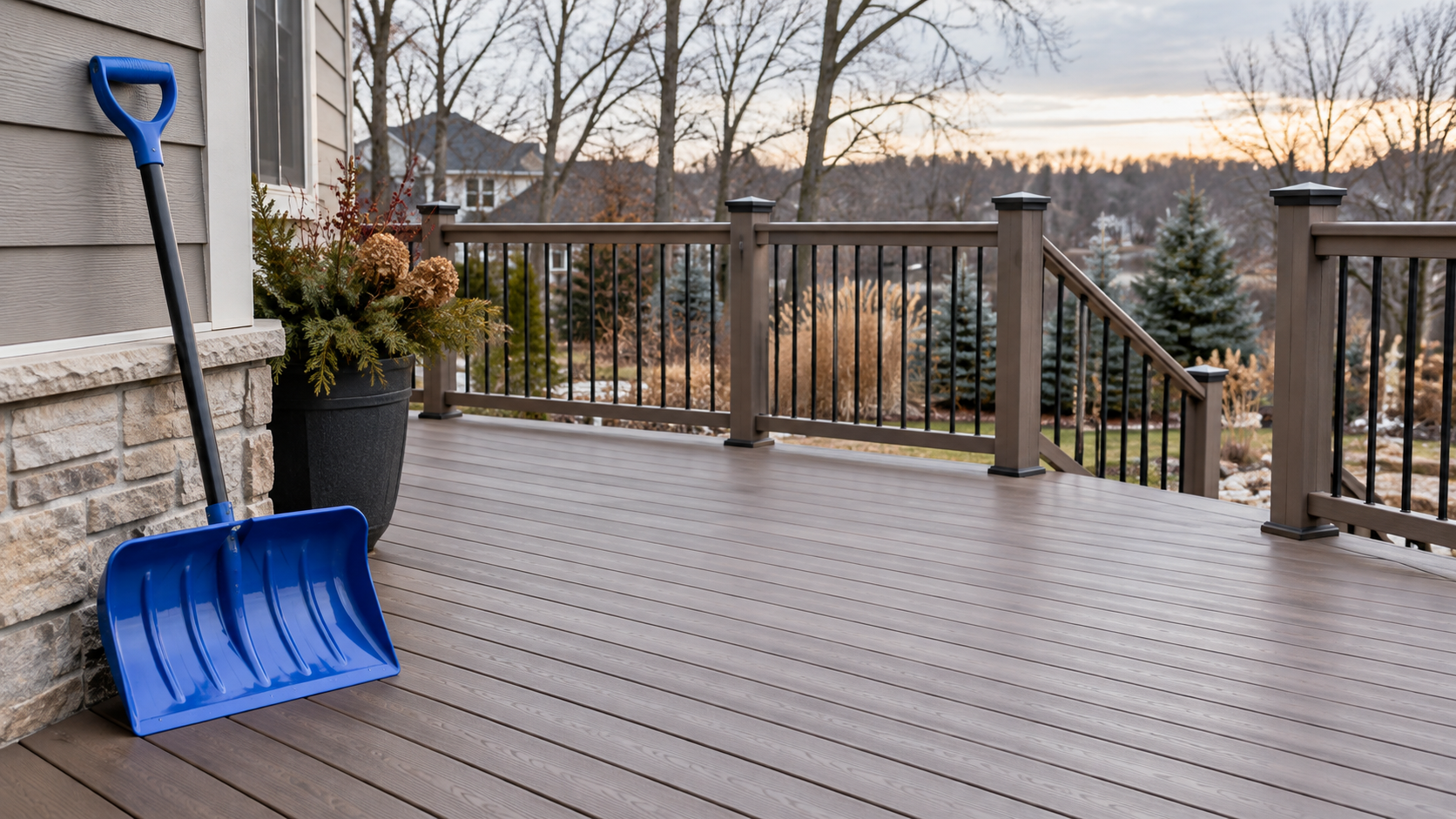
Do not wait until six inches of snow is on the deck to look for a shovel.
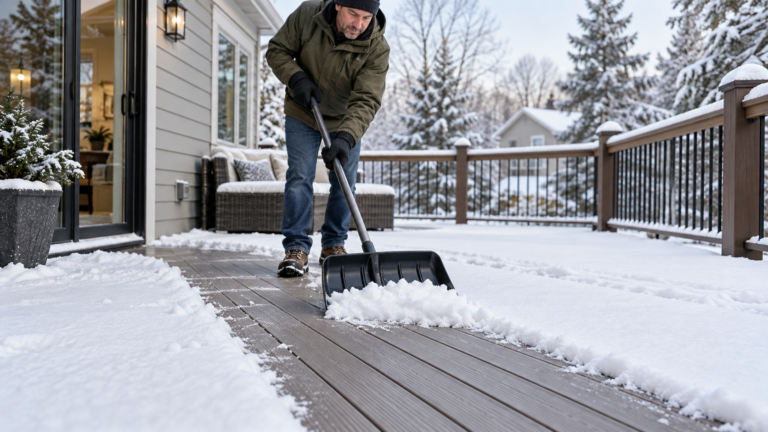
Keep a suitable snow-removal tool ready before the first storm. A plastic shovel is commonly recommended for composite decking because metal edges can scratch deck surfaces. Trex permits plastic shovels for snow removal, while TimberTech warns against metal shovels and plastic shovels with metal leading edges.
Once winter weather arrives, proper technique matters too. See our guide to Removing Snow From Composite Decking for safe shovel types, snow-removal direction, and tips for handling deeper accumulation.
How to Winterize a Covered Deck
A roof reduces direct exposure, but you still need to winterize deck surfaces under covered areas. Wind-driven snow, moisture, freezing temperatures, and poor drainage can still affect the deck.
If you are researching how to winterize a covered deck, focus on airflow, drainage, wind-driven moisture, and the areas where the roof changes how water moves.
Start by cleaning the deck surface and board gaps. Remove rugs, leaves, and items that can hold moisture.
Then inspect gutters and downspouts connected to the covered structure. Make sure roof runoff is directed away from the deck, stairs, and footings.
Check areas near screens, walls, and furniture where airflow is limited. Covered areas can stay damp after open areas have dried.
Snow can also blow under a roof from the sides. Keep your normal snow-removal plan available even when most of the deck is covered.
If your covered deck includes heaters, lighting, fans, screens, or removable panels, follow each product manufacturer’s winter storage and maintenance instructions.
Common Deck Winterizing Mistakes
Some winter prep can cause more damage than doing nothing.
Homeowners sometimes winterize deck areas using methods meant for other exterior surfaces. That can create unnecessary problems, especially with composite and PVC decking.
Avoid these common mistakes:
- Leaving wet leaves packed between deck boards
- Applying wood sealer to composite or PVC without manufacturer approval
- Using aggressive cleaning methods without checking the care guide
- Ignoring loose railings or damaged stairs until spring
- Leaving outdoor rugs in place all winter
- Allowing planters to trap moisture against the decking
- Blocking drainage with tarps, furniture, or debris
- Using sharp metal tools on finished decking
- Assuming a covered deck does not need fall maintenance
- Ignoring the framing because the deck boards still look good
The goal is not to cover the deck with products. The goal is to leave it clean, sound, dry, clear, and ready for winter weather.
Quick Fall Deck Checklist for Chicago Homeowners
Use this winterize deck checklist before regular freezing temperatures and snow arrive in Chicagoland.
- Remove leaves and debris.
- Clear the gaps between deck boards.
- Clean the surface with a material-approved method.
- Inspect decking and fascia.
- Test railings and stairs for movement.
- Check visible framing and connections.
- Correct standing-water and drainage problems.
- Repair damaged components.
- Protect wood when the existing finish requires it.
- Store or protect furniture, rugs, planters, and accessories.
- Inspect deck lighting and outdoor electrical components.
- Prepare a deck-safe snow shovel.
- Review your decking manufacturer’s winter care instructions.
That is the core of how to winterize outdoor decks in the Chicago area.
When Should You Call a Deck Contractor?
Routine cleaning and visual inspections are reasonable DIY projects for many homeowners.
Some findings need professional attention.
Call a qualified deck contractor if you notice significant rot, moving support posts, loose ledger connections, unstable stairs, failing railings, damaged beams, questionable footings, or major structural movement.
Do not hide a structural problem beneath new decking or a fresh finish.
If repairs require replacement boards, railing, fascia, fasteners, framing products, or other materials, Premium Decking Supply can help you identify compatible products for the project.
Get Your Deck Ready Before Chicago Freezes
You do not need a complicated process to winterize deck surfaces before a Chicago winter.
Clean the deck. Inspect the boards and structure. Keep water moving. Store items that trap moisture. Use the correct care method for your decking material. Then prepare for snow before the first storm arrives.
If your inspection reveals damaged decking, fascia, railing, fasteners, or other components, Premium Decking Supply can help with the materials you need. Homeowners and contractors can explore our deck materials in Chicago for decking, railing, fasteners, framing products, and other outdoor-living supplies. We supply homeowners, DIY customers, deck builders, and contractors in Chicagoland and ship deck materials nationwide.
Frequently Asked Questions About Winterizing a Deck
Start in September or early October so you have time for cleaning, inspection, repairs, and drying before regular freezes arrive. Chicago O’Hare’s normal first autumn freeze is October 19.
Yes, but composite deck winterizing is mainly about cleaning, drainage, inspection, and safe winter maintenance. Do not automatically seal or stain composite decking as you would a wood deck.
Wood may need a new protective finish when the existing coating has worn out. Composite and PVC should not be treated like wood. Always check the decking manufacturer’s care instructions before applying coatings.
Clean the surface, remove moisture-trapping items, clear drainage, inspect the structure, and check gutters and roof runoff. Maintain airflow around furniture and enclosed areas. A roof does not prevent wind-driven snow or freezing temperatures.
Storage is usually the cleaner option when space is available. If furniture remains outside, use suitable covers and prevent moisture, leaves, and debris from staying trapped beneath it.