The place for all your outdoor living space!

Planning a new deck involves much more than choosing the color and style of the deck boards. The finished surface may be the most visible part of the project, but underneath it is a complete system of framing lumber, structural hardware, fasteners, and moisture protection. Depending on your design, you may also need fascia, deck railing, stairs, lighting, and other finishing pieces before the project is complete.
Creating a deck materials list before you order gives you a much clearer picture of everything the project requires. It also makes it easier to catch smaller components that can be overlooked when the focus stays on larger building materials. For a DIY deck in particular, having a complete list ready before installation begins can prevent a missing fastener, connector, or trim piece from bringing the project to a stop.
Of course, the materials needed to build a deck will vary based on the size of your deck, its height and framing design, the decking you choose, and any additional features included in the plan. A simple ground-level deck will have a very different materials list from an elevated deck with stairs, railing, picture-frame borders, and lighting. The checklist below gives you a complete starting point, but structural materials should always follow your approved plans and local building codes.
Complete Deck Materials List
Use this complete deck materials list to work through your project from the foundation to the finishing details. You can check off materials as you plan or purchase them, add your project information and notes, and return to the list later without starting over. When you are finished, you can print the checklist or save a copy as a PDF to use while ordering or building your deck.
DECK PROJECT PLANNER
Complete Deck Materials List
Use this checklist to organize the materials for your deck project. Check off items as you plan or purchase them. Your selections save automatically on this device.
Foundation & Framing
Moisture Protection
Decking & Finish Boards
Fasteners & Installation Hardware
Deck Railing
Deck Stairs
Optional Features
What Materials Do You Need to Build a Deck?
The materials for building a deck extend far beyond the boards that create the finished surface. A complete project may require foundation components, pressure treated lumber for the deck frame, structural hardware, moisture protection, fasteners, fascia, and several other building materials. If the design includes stairs, deck railing, lighting, or other features, those components also need to be planned before you place the order.
The easiest way to create a complete deck building materials list is to work through the project in the same order the different parts come together. Start with the foundation and framing, then move into the decking and installation hardware before accounting for railing, stairs, and finishing details. This approach keeps the list organized while making smaller components much harder to overlook.
Your choice of decking will also affect several items on the list. Composite, PVC, pressure treated wood, and other natural wood products do not always use the same fasteners or finishing pieces, so choose the surface material before finalizing the order. Even decks with the same dimensions can require different materials because the board layout, railing, stairs, and other design details may be completely different.
Foundation and Deck Framing Materials
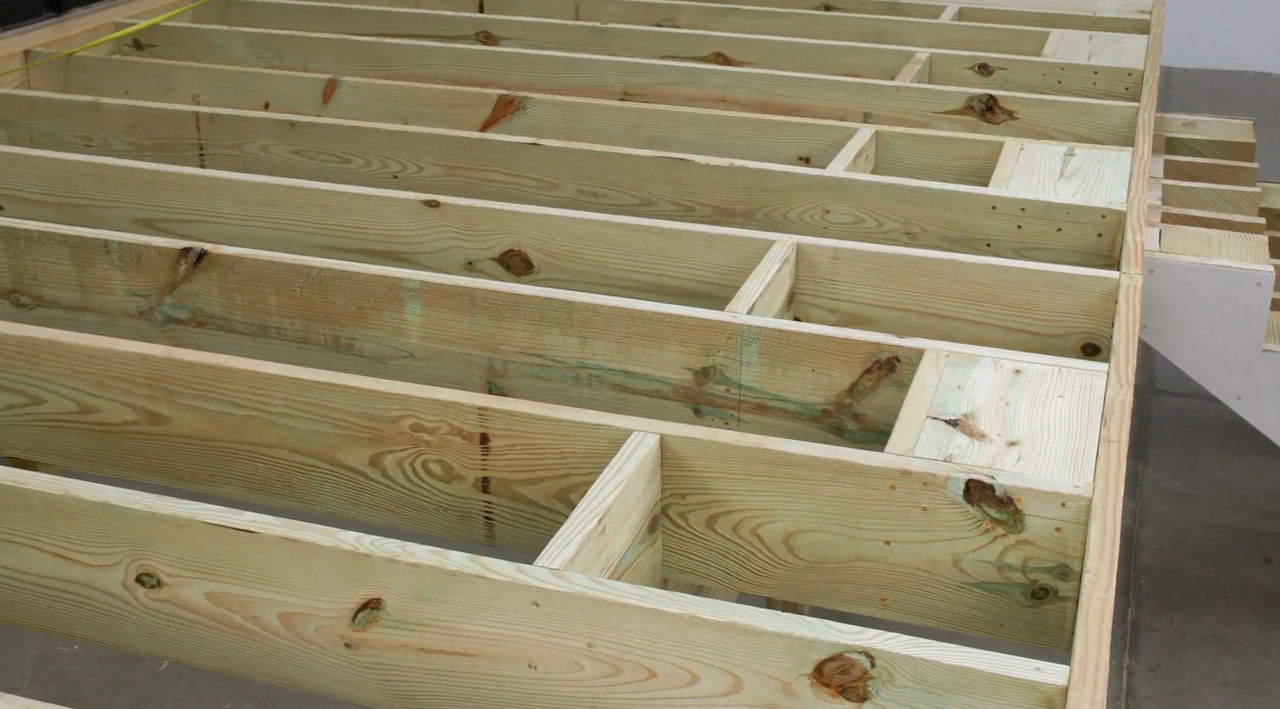
Although homeowners naturally focus on the finished surface, every deck depends on the structure underneath it. The deck frame supports the boards and transfers the weight of the structure to the foundation below. Most deck frames contain several types of lumber and hardware, so this part of the materials list deserves more attention than simply adding “framing lumber.”
Pressure treated lumber remains a common choice for deck framing because it can handle the outdoor conditions a deck will face. However, the size and amount of lumber will depend on the actual framing plan rather than square footage alone. Deck height, beam placement, joist spans, stairs, and other design details can all affect what the structure requires.
Footings, Posts, and Beams
The foundation transfers the weight of the deck into the ground, while posts and beams support the framing above it. Depending on the project, the foundation may include concrete footings, post bases, anchors, or another approved system.
Because the required sizes and quantities depend on the actual design, avoid estimating these materials from deck dimensions alone. Use the structural plan to determine what belongs on your material list for deck construction, then confirm that the design meets local building codes.
Ledger Board
Many decks attached to a home use a ledger board to connect the deck frame to the structure. When your design includes one, remember that the ledger itself is only part of the connection.
You may also need approved structural fasteners, flashing, and other hardware where the deck meets the home. Planning those pieces together makes it easier to account for the complete connection before framing begins.
Joists, Rim Joists, and Blocking
Joists create the main framing beneath the walking surface and provide support for the deck boards above them. Rim joists close the outside edges of the frame, while blocking adds support between framing members where the design calls for it.
The required joist spacing can change with the decking product, board direction, and overall design. Railing posts, stairs, breaker boards, and picture-frame borders may also require additional blocking, which is why reviewing the complete plan matters before ordering lumber.
If you are installing composite decking, our joist spacing for composite decking guide explains how decking layout and product requirements can affect the frame.
Joist Hangers and Structural Hardware
Lumber is only one part of a strong deck frame. Most projects also use structural hardware such as joist hangers, post bases, connectors, structural screws, bolts, washers, or anchors.
The correct hardware depends on the connection it needs to make, so follow your plans and the instructions for each structural connector. Decking screws and hidden fasteners serve a different purpose and should not replace structural hardware unless they are specifically approved for that use.
Moisture Protection for the Deck Frame
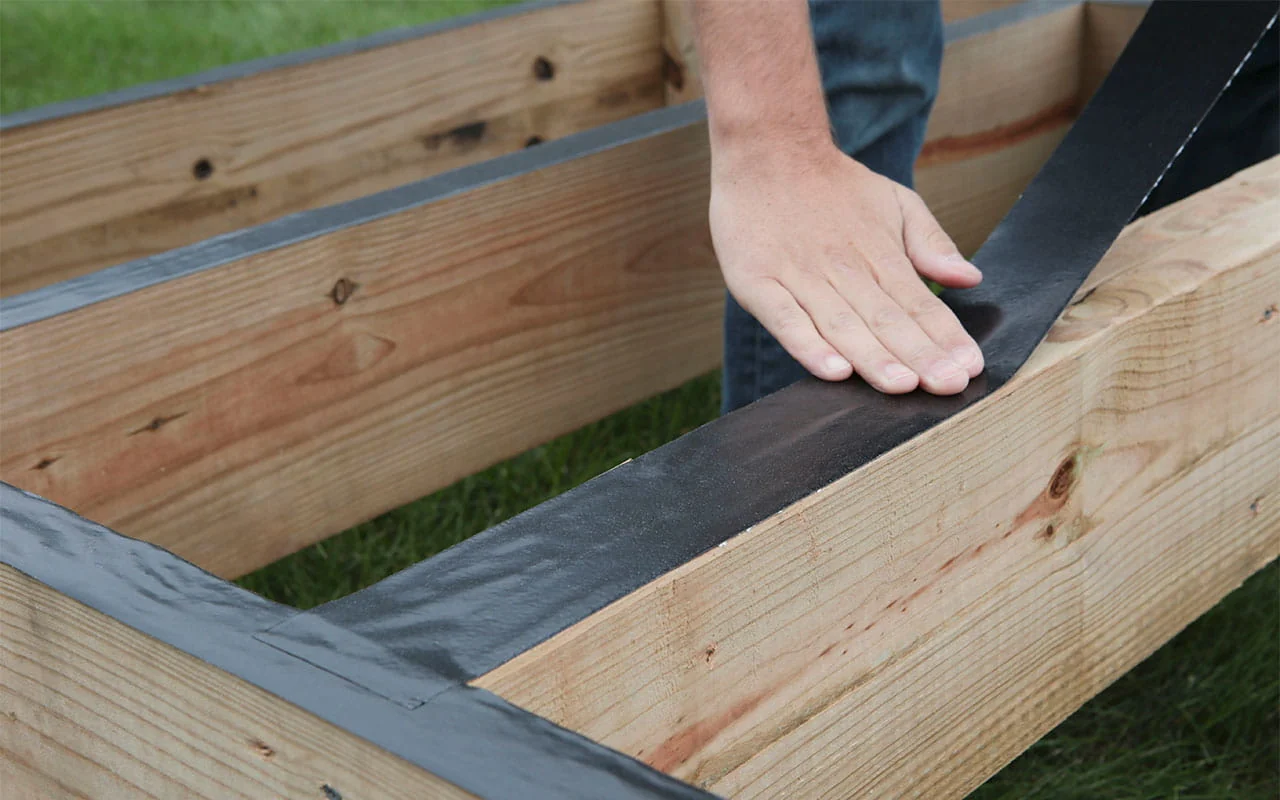
Moisture protection is easy to overlook because most of it disappears once the deck boards are installed. However, the wood deck frame can still face repeated moisture exposure even when the finished surface uses composite or PVC decking. Adding ledger flashing, joist tape, and beam tape where the project calls for them can help protect vulnerable areas before they become difficult to reach.
Joist tape covers the tops of joists and can also protect areas where fasteners enter the framing. Beam tape serves a similar purpose on larger framing members, while ledger flashing helps direct water away from the connection between an attached deck and the home.
If moisture protection is part of your project, add it to the deck materials list before installation begins. It is much easier to install these products while the framing remains exposed than after the deck surface covers it.
Deck Boards and Finish Materials
Deck boards create the walking surface and have one of the biggest effects on the appearance of the finished outdoor living space. Homeowners can choose from composite, PVC, pressure treated wood, and other real wood options, each with its own appearance, maintenance needs, and installation method.
The decking you select will also affect other materials to build a deck. Board profile, available lengths, fastening method, and layout can change the fasteners and finishing pieces required for installation. Choosing the decking before finalizing the rest of the order helps keep those components compatible.
The number of boards you need depends on more than the total square footage. Board width and length matter, but the direction of the boards, stairs, borders, cuts, and planned waste can also change the final quantity.
If you still need to calculate your quantities, learn how to measure a deck for materials before placing the order.
Picture-Frame and Breaker Boards
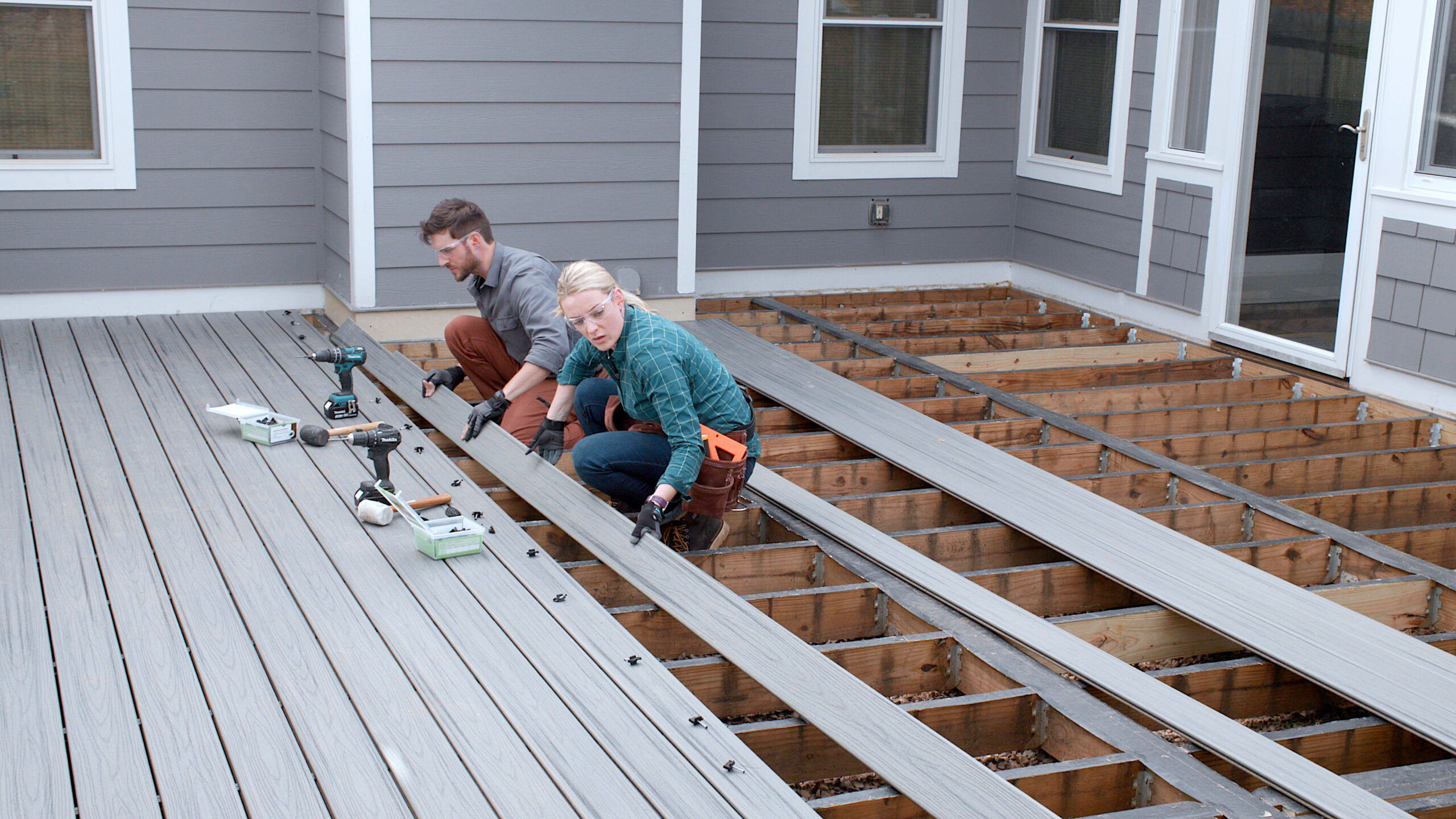
Picture framing adds a border around the main deck surface and can give the finished deck a more polished appearance. Breaker boards divide sections of decking and can help manage board layouts on larger projects.
Both features can change your materials because they may require additional boards, framing, blocking, and fasteners. If your design includes a border, learn how to picture frame a deck before calculating the final quantities.
Fascia Boards
Fascia covers exposed areas around the outside of the deck frame and creates a cleaner finished edge. Because fascia serves a different purpose from the main walking surface, calculate it separately from the deck boards.
The fastening system may also differ from the one used on the deck surface. Depending on the product, you may need fascia screws, plugs, or another approved fastening system, so include those components in the same order.
Deck Fasteners and Installation Hardware
Fasteners may be small, but choosing the right ones is an important part of any deck building material list. The correct system depends on the decking product, board profile, layout, and location of each board.
Many grooved composite and PVC boards work with hidden fastening systems that sit between the boards instead of through the visible surface. A complete hidden fastening system may include standard clips along with starter or finish fasteners for borders and outside edges.
If you are deciding how to install grooved decking, our information about hidden deck fasteners can help you understand how the system works.
Square-edge boards and certain areas of the deck may require face fasteners instead. Some composite systems use color-matched screws or plugs to make those fasteners less noticeable, while wood decks may use a different type of deck screw.
You can also compare the best deck screws before choosing fasteners for your project.
Remember that surface fasteners are separate from the structural hardware used in the frame. Structural screws, bolts, anchors, and connector fasteners should have their own place on your materials list rather than being grouped with decking fasteners.
Deck Railing Materials
If your project includes deck railing, avoid treating “railing” as one item on the order. Most systems contain several parts that work together, and the exact components can change based on the brand, style, and layout you choose.
A typical system may include posts, post mounting hardware, rails, balusters or another type of infill, brackets, post sleeves, caps, and fasteners. Corners, stair sections, and gates can introduce additional components, so review the complete railing layout before ordering.
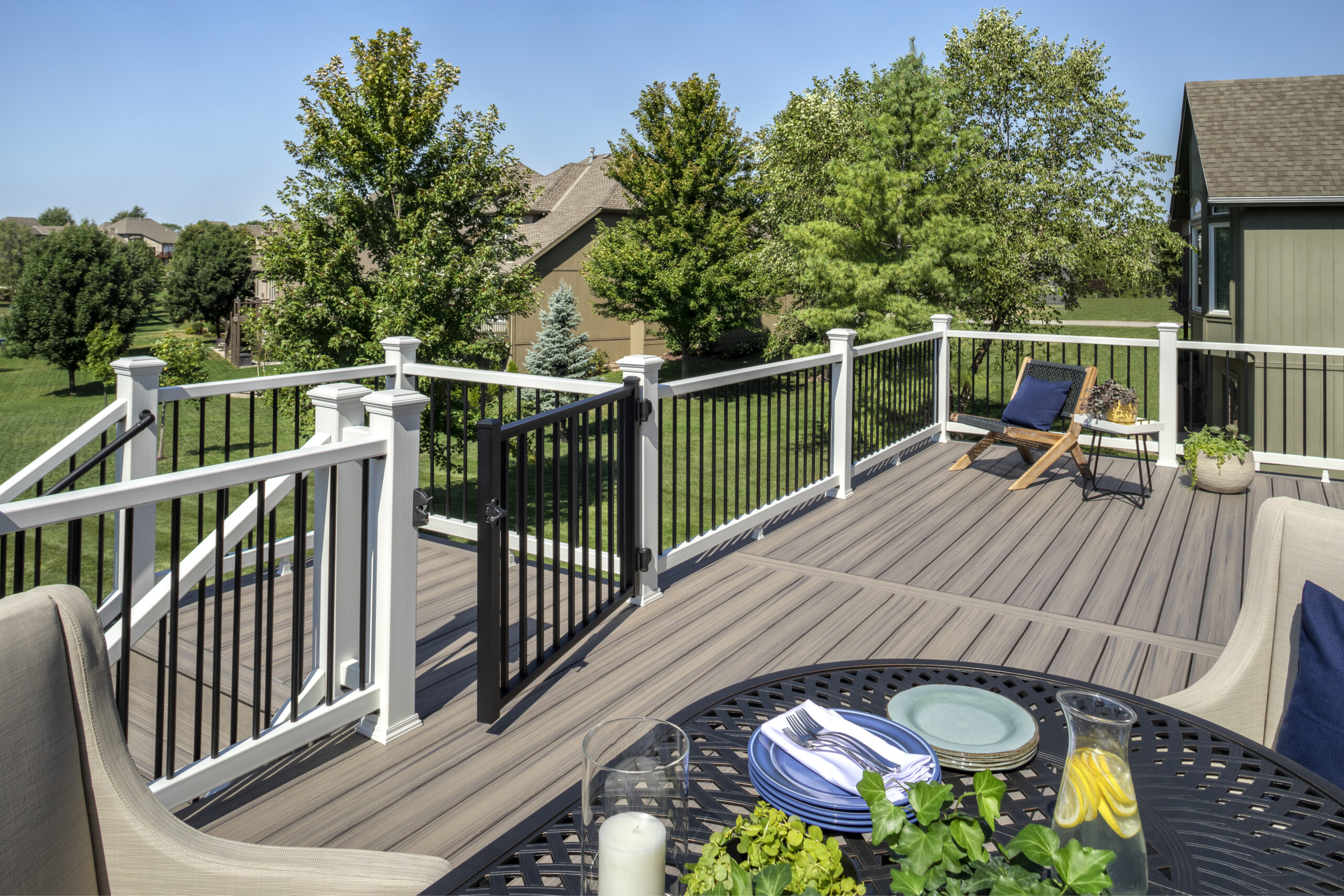
Planning the railing while the deck frame is still accessible also makes it easier to identify areas that need blocking or added support. This is especially important around railing posts and stairs, where the framing may need to accommodate the mounting system.
Railing requirements vary by project and location, so use your approved design and local building codes when planning these parts.
Materials Needed for Deck Stairs
Stairs add another group of materials needed to build a deck because they have their own framing, decking, hardware, and railing requirements. Depending on the design, your project may need stringers, framing lumber, stair treads, risers, structural connectors, fasteners, posts, and railing components.
Do not assume the boards calculated for the main deck surface will automatically cover the stairs. Treads, risers, fascia, and trim can require different board lengths or profiles, so calculate the staircase as its own part of the project.
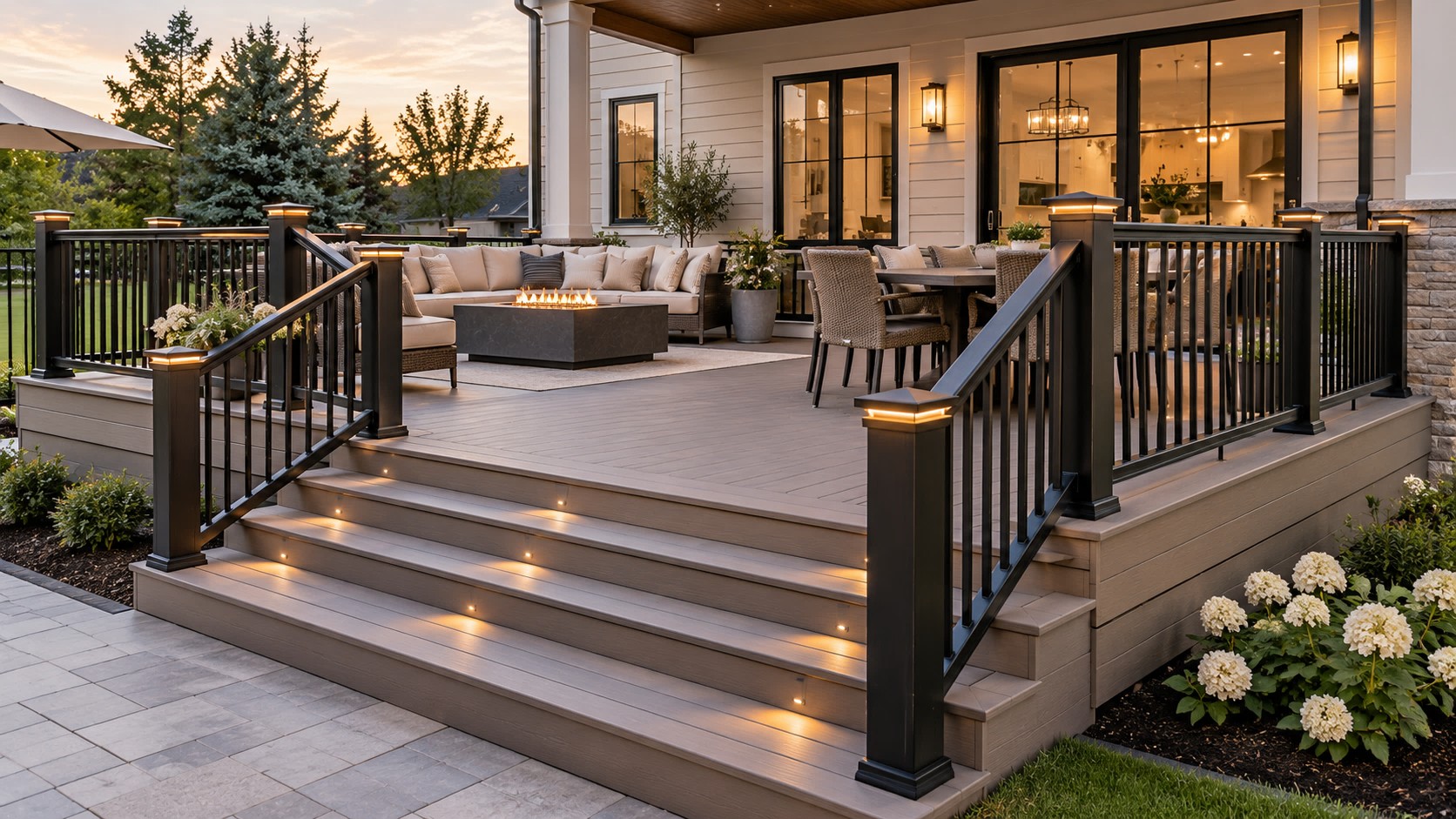
When adding stairs to your deck building materials list, review the entire staircase rather than counting only the visible treads. Accounting for its framing, surface materials, railing, hardware, and finishing pieces together gives you a more complete order.
Optional Deck Materials and Features
Once the main structure and surface are planned, consider the features that will make the finished deck work for your outdoor spaces. Lighting, skirting, gates, drink rails, and other accessories may not be required for every project, but planning them early can make installation much easier.
Some of these additions also affect the main build. Lighting may require wiring to run through or beneath the deck before everything is closed, while skirting can change how the outside edges of an elevated deck are finished.
Deck Lighting
Deck lighting can extend the use of an outdoor living space after sunset while adding another layer to the overall design. Depending on the system, you may need fixtures, transformers, wiring, splitters, connectors, and other installation parts.
If lighting is part of the plan, decide where the fixtures will go before finishing the deck. This gives you more flexibility when routing and hiding wires. You can also explore [INTERNAL LINK: Trex outdoor lighting] while planning the system.
Deck Skirting and Finishing Details
Skirting covers the open area below an elevated deck and can give the project a more finished appearance. The amount you need will depend on the deck perimeter, height, and type of skirting you choose.
Other finishing details may include gates, post caps, trim, drink rails, or decorative accessories. Thinking through these features while planning a deck helps you account for them before the main order is placed.
Deck Materials People Commonly Forget
Large items such as framing lumber and deck boards are usually easy to remember, but smaller components can slip through the cracks. Unfortunately, a missing connector or box of fasteners can still delay the project even when every major material has already arrived.
Before placing your order, check the deck materials list for joist and beam tape, ledger flashing, blocking material, joist hangers, connector fasteners, starter clips, fascia fasteners, border boards, stair components, railing hardware, and lighting accessories. If the project includes composite decking, remember to account for extra boards needed for cuts, waste, and design details.
Rather than trying to remember everything at once, review the project one system at a time. Start with the foundation and framing, then work through moisture protection, decking, fasteners, railing, stairs, and accessories. This makes the final review easier to manage while reducing the chance that a small but necessary component gets overlooked.
How Much Deck Material Do You Need?
Knowing what belongs on your materials list is only the first part of planning the order. You also need accurate quantities, and square footage alone rarely tells the full story.
The size of your deck provides a useful starting point, but board direction, available lengths, stairs, picture-frame borders, breaker boards, cuts, and waste can all affect the amount of material required. Two decks with the same square footage can therefore need different quantities of decking.
Rather than turning this article into another calculator, use the resources we already have for that part of the planning process. You can learn how to measure a deck for materials or use our decking calculators when estimating a deck project.
For a more detailed order, a material takeoff can account for the decking, framing, fasteners, railing, stairs, and other components included in the design.
Does a Deck Materials List Change for Composite Decking?
The main categories on a deck materials list remain similar whether you build with composite, PVC, or wood, but the specific products within those categories can change. Composite decking may use hidden fasteners, starter clips, plugs, fascia fasteners, and other parts made to work with a particular decking system.
Board profile can make a difference as well. Grooved boards often work with hidden fastening systems, while square-edge boards may require face fasteners in certain areas. Fascia, stairs, picture-frame borders, and breaker boards can introduce additional installation requirements.
Wood decks have their own considerations because the finished surface may use pressure treated wood or another natural wood species. Fasteners and finishing products can differ from those used with composite or PVC decking, so these systems should not be treated as the same.
Composite products also vary by brand and collection. Homeowners may compare appearance, maintenance needs, warranties, and how well different boards resist fading or staining before choosing a product. Once you select the decking, you can build the rest of the order around the installation system designed for it.
Before You Order Your Deck Materials
Before placing the final order, review the deck from the foundation to the finishing details rather than checking only the major products. Confirm the dimensions, board direction, and layout first, including any picture-frame borders, breaker boards, stairs, or fascia that affect decking quantities.
Next, compare the deck frame with your plans and confirm that you have accounted for the framing lumber, structural hardware, connectors, fasteners, and moisture protection. From there, review the railing and stairs for posts, brackets, mounting hardware, and other components that may need to be ordered separately.
Finally, look at any optional features such as lighting, skirting, gates, or trim. Working through the project in this order gives you a much more useful materials list and makes it easier to catch missing pieces before installation begins.
Need Help Building Your Deck Materials List?
A simple deck may have a fairly short materials list, but larger projects can become complicated quickly. Picture-frame borders, stairs, railing, lighting, and different fastening systems can add many individual components to one order, especially when several product systems need to work together.
Premium Decking Supply can help you sort through those details. Send us your project information, and our team can help prepare a material takeoff based on the decking, framing, railing, and other products needed for your build. You can use your deck materials list as a starting point, then work with our team to make sure the order fits the project.
Deck Materials List FAQs
The materials needed to build a deck usually include foundation components, framing lumber, structural hardware, moisture protection, deck boards, and fasteners. Depending on the design, the project may also require fascia, deck railing, stairs, lighting, and other finishing pieces.
A deck building materials list should account for the entire project rather than only the visible decking. Start with the foundation and deck frame, then include structural hardware, moisture protection, deck boards, installation fasteners, and fascia. Railing, stairs, lighting, skirting, and other features should also be added when they are part of the design.
A DIY deck can require framing lumber, structural hardware, decking, fasteners, moisture protection, fascia, railing, and stair materials. The exact list will depend on the deck design and products you choose, while the structural components should follow your plans and local building codes.
Start with the approved deck design and organize the project into sections such as foundation, framing, decking, railing, and stairs. Then add the hardware, fasteners, moisture protection, and finishing pieces required for each section. Working through the deck in this order makes the material list easier to organize and review.
The terms are often used to describe the same thing: a list of products and components needed for a deck project. A detailed deck building material list should include more than decking and lumber, with fasteners, structural hardware, moisture protection, railing, stairs, and accessories added when the project requires them.
Begin with accurate deck measurements and the dimensions of the boards you plan to install. Board direction, available lengths, picture-frame borders, stairs, cuts, and waste can all change the final quantity, so square footage should not be the only measurement you use.
Most projects need some extra decking for cuts and waste, although the amount will vary with the design. Board lengths, stairs, diagonal layouts, picture framing, and the shape of the deck can all affect how efficiently the material is used.
Joist tape can help protect the tops of wood framing and areas where fasteners enter the lumber. Whether you use it will depend on the framing system, project requirements, and the products selected for the build.