The place for all your outdoor living space!
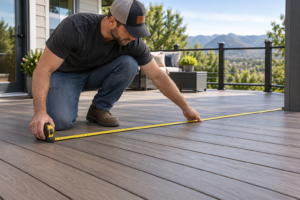

Accurate measurements are the starting point for any decking project. If you order too little material, you could delay installation while waiting for additional deck boards. Order too much, and you may spend money on decking that never gets used. Taking the time to measure correctly before ordering can help you avoid both problems.
Learning how to measure a deck starts with calculating the size of the deck surface, but square footage isn’t the whole story. Your deck shape, board direction, board dimensions, stairs, borders, and expected waste can all affect how much material you need. A 200-square-foot deck doesn’t necessarily require the same order as every other 200-square-foot deck.
Whether you’re replacing existing boards or planning a new build, this guide will walk you through the measuring process. You’ll learn how to calculate your deck’s square footage and account for the details that can change your final material order.
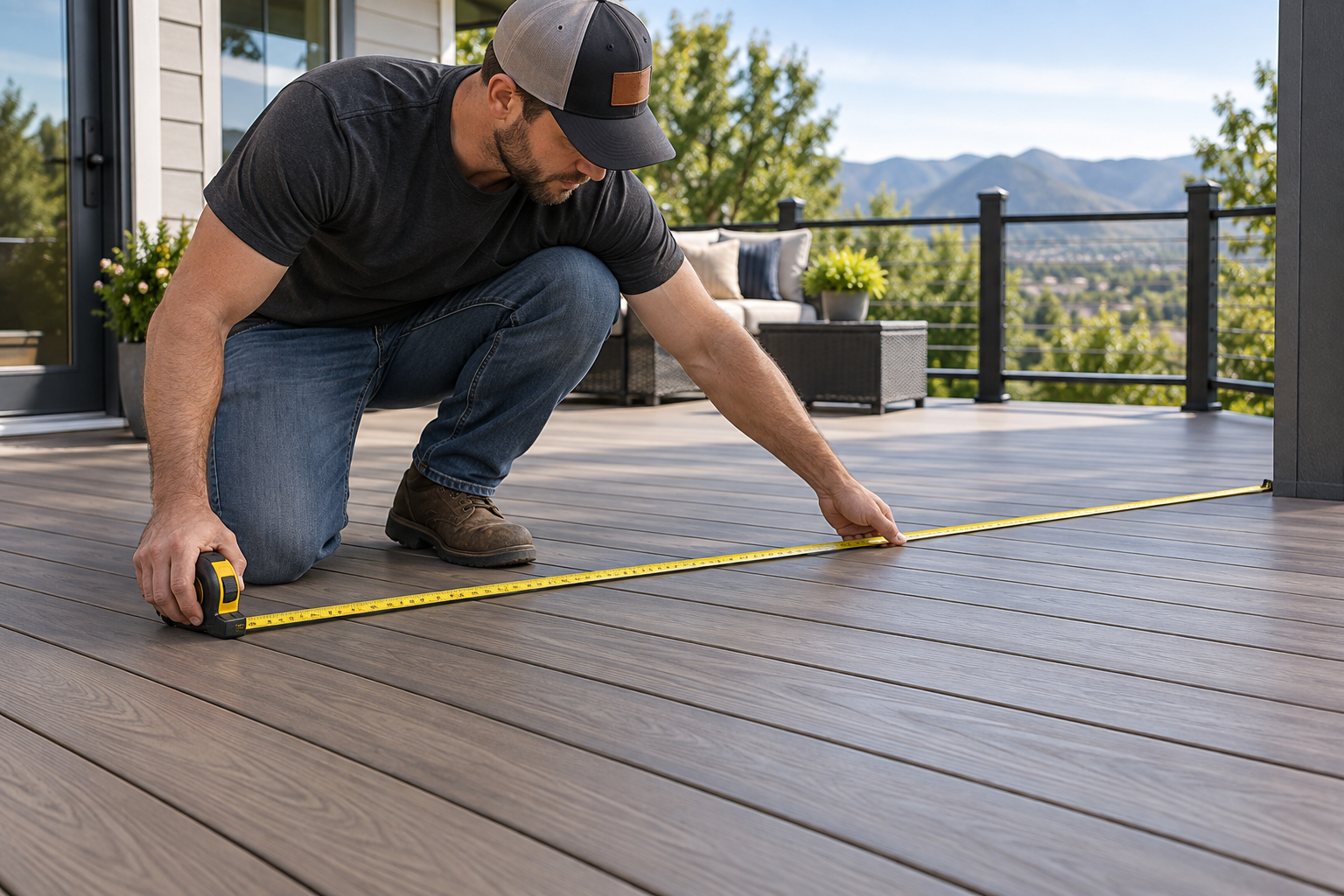
What You Need Before Measuring Your Deck
You don’t need specialized equipment to measure for decking. A tape measure, pencil, paper, and calculator will handle most projects. Graph paper can also be helpful if you’re working with an unusual deck shape or several separate sections.
Before taking measurements, draw a simple sketch of the deck and use it to record your numbers as you go. The drawing doesn’t need to be perfect. You just need enough detail to identify the main deck area, stairs, bump-outs, angled sections, and other features that affect the footprint.
This is also a good time to think about your finished deck layout. If you’re planning a picture-frame border, breaker board, or a specific board direction, mark those details on your sketch. They may not change the deck’s square footage, but they can change the number and length of boards you need.
How to Measure a Deck for Decking
When learning how to measure for decking, start with the main deck surface. A rectangular deck makes the calculation straightforward because you only need its length and width. If your deck has an irregular shape, you can use the same basic method by breaking the design into smaller sections.
The goal at this stage is to determine the total area you need to cover. Once you have that number, you can account for board sizes, layout, waste, and other project details.
Measure the Length and Width
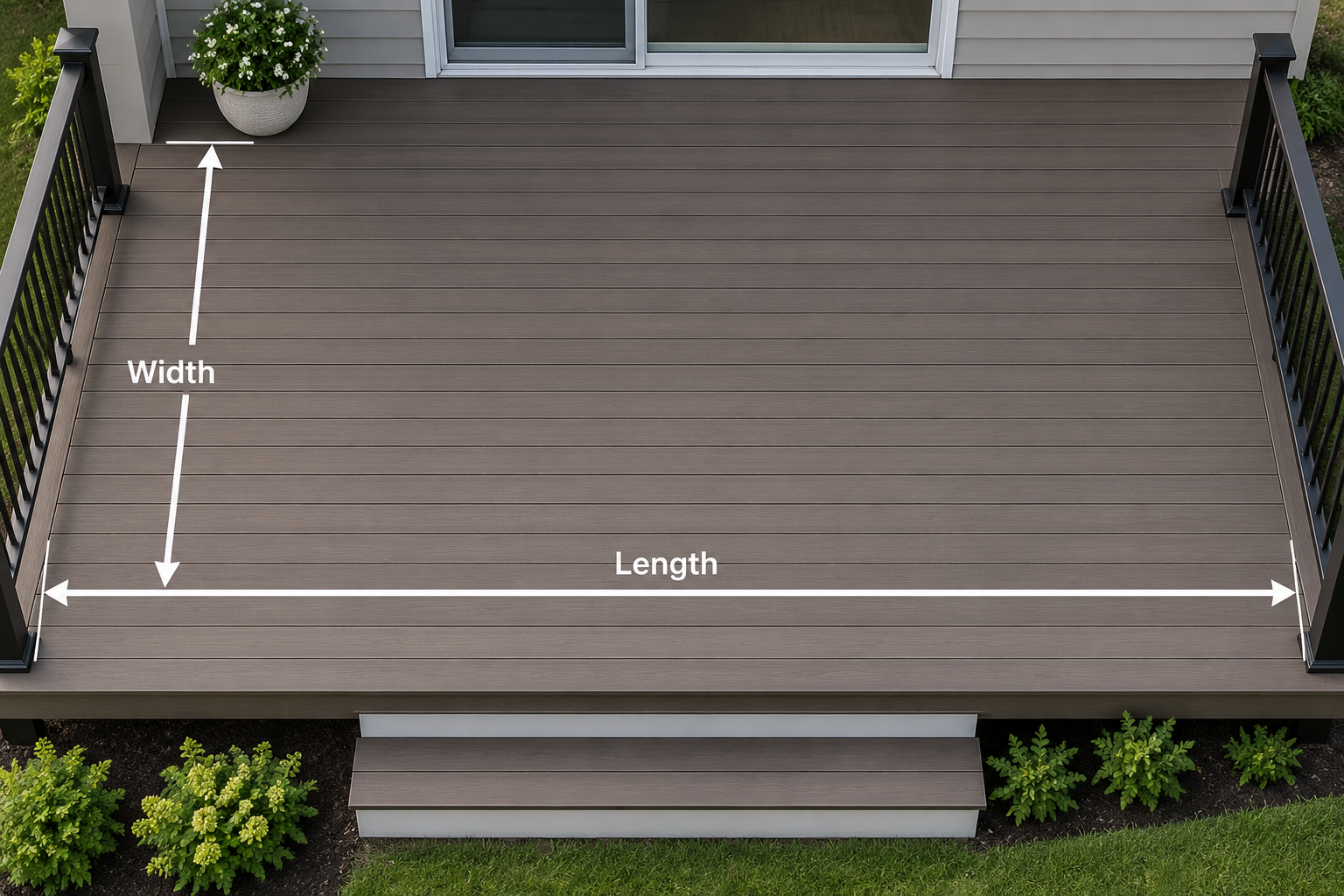
Start by measuring the deck from one end to the other to determine its length. Then measure across the deck to find its width. Record both measurements on your sketch and double-check them before moving on.
For example, suppose your deck measures 16 feet long and 12 feet wide. Those two measurements give you what you need to calculate the main deck area. If your measurements include inches, record those too rather than rounding immediately.
Small differences may not seem important when you’re holding a tape measure, but they can add up across a larger project. Accurate measurements will also make the next steps easier when you begin comparing board lengths and planning your layout.
Calculate the Deck’s Square Footage
Once you know the length and width, calculating the square footage of a rectangular deck is simple. Multiply the two measurements together:
Length × Width = Square Footage
For a deck that measures 16 feet by 12 feet:
16 × 12 = 192 square feet
In this example, the main deck surface covers 192 square feet. That number gives you the foundation for your material estimate, but it shouldn’t become your final order quantity. You’ll still need to consider how the boards fit the space, how much material cuts may create, and whether your project includes stairs or decorative features.
This distinction matters because decking isn’t purchased as one continuous 192-square-foot surface. You’re covering that area with individual boards that come in specific dimensions, so the layout ultimately affects how efficiently you can use them.
How to Measure an L-Shaped or Irregular Deck
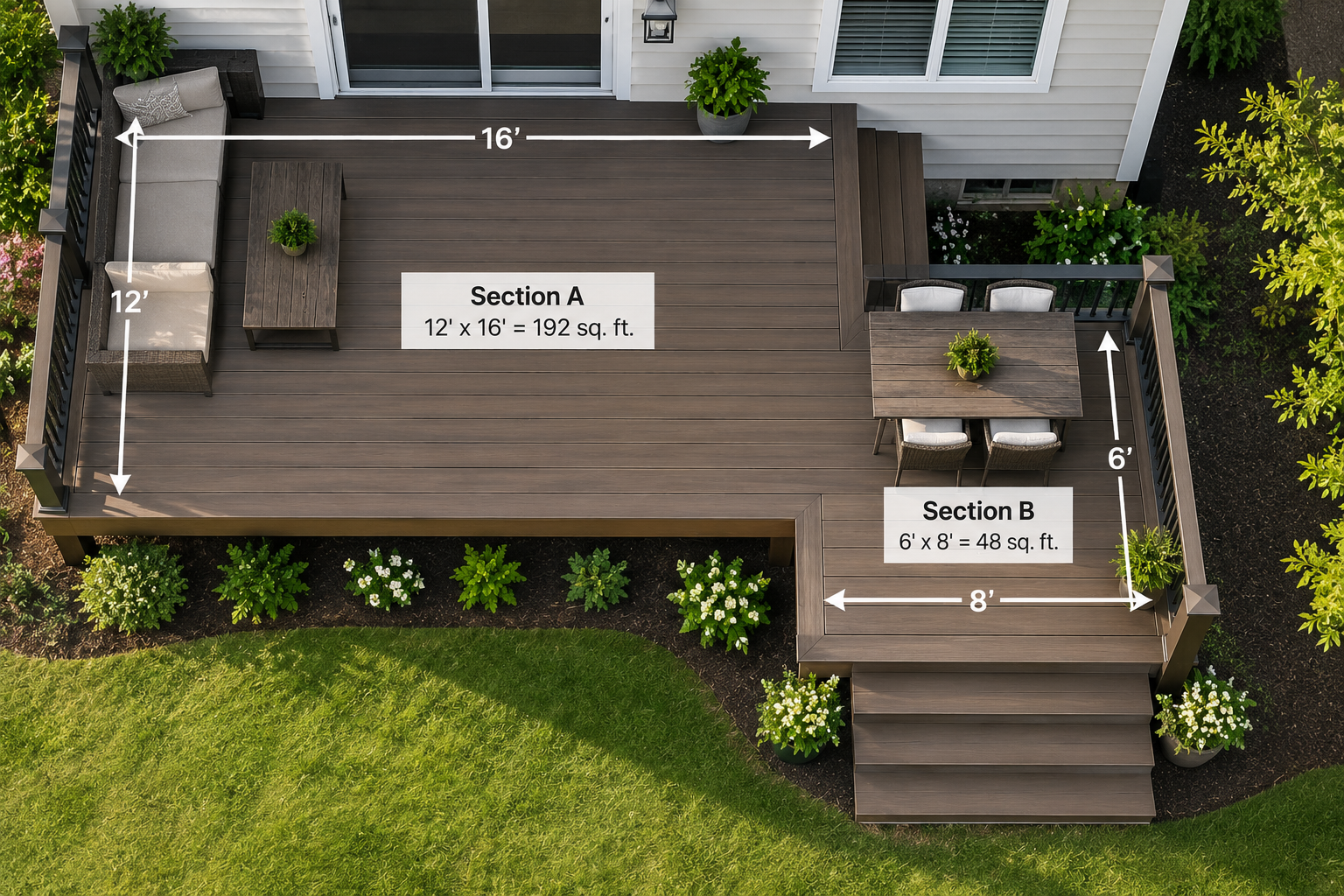
An L-shaped deck, bump-out, or multi-section design can look more complicated to measure, but you don’t need a complicated formula. Instead, divide the overall deck into smaller rectangles and calculate the square footage of each section separately.
Imagine an L-shaped deck with two areas:
Section A: 12 × 16 = 192 square feet
Section B: 6 × 8 = 48 square feet
Add those two sections together:
192 + 48 = 240 square feet
The total deck area is 240 square feet.
You can use this approach for most irregular deck designs by continuing to divide the footprint into manageable sections. If your design includes a triangular area, multiply its base by its height and divide the result by two.
Keep every section labeled on your original sketch instead of writing down only the final square footage. Those individual measurements can become useful again when you plan board direction and determine which board lengths make the most sense.
Account for Deck Board Direction
Once you know the deck’s total area, think about how the boards will actually run across that space. Square footage tells you how much surface needs coverage, but board direction affects how efficiently your decking can cover it.
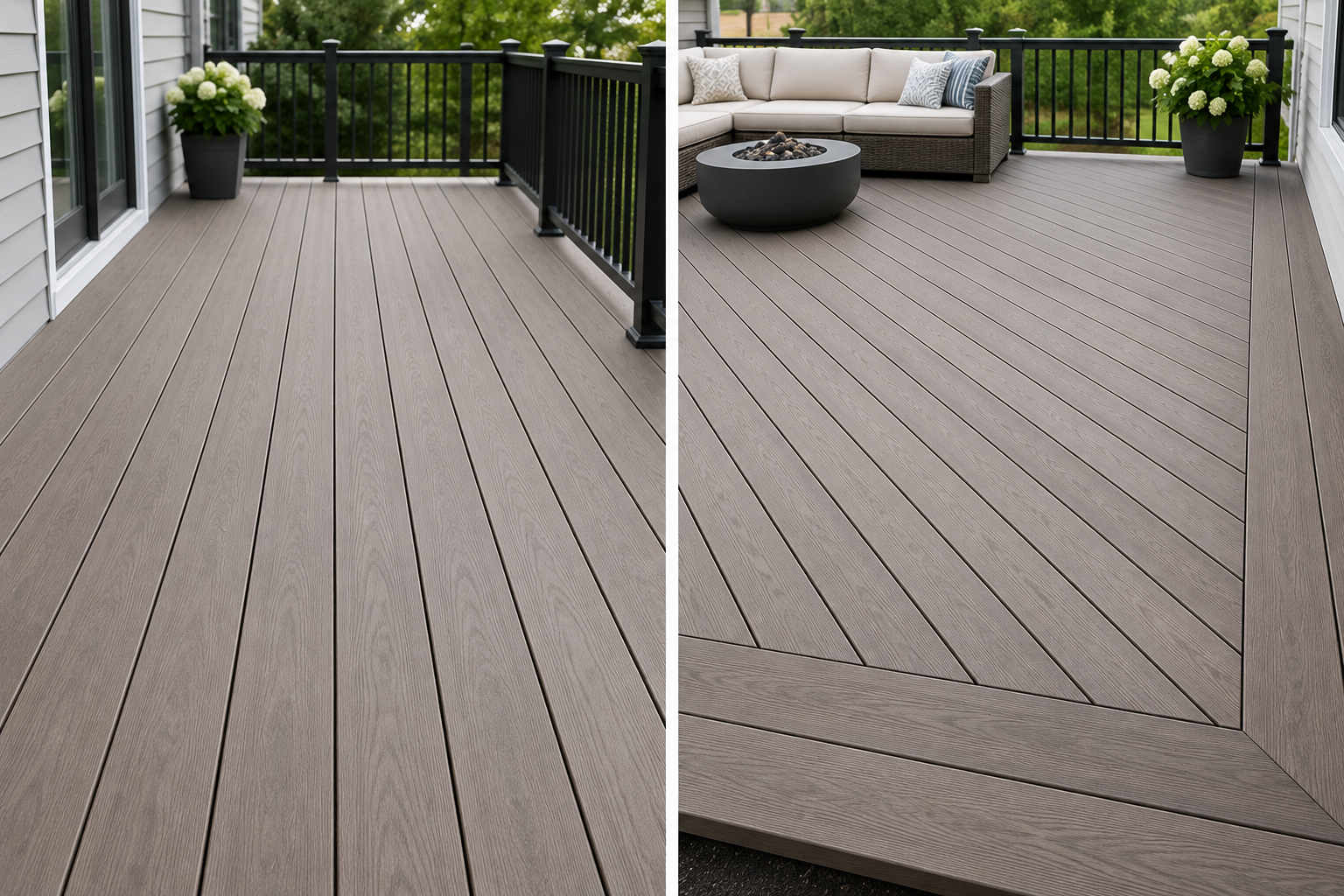
A simple straight layout typically requires fewer complicated cuts than a diagonal installation. When boards run diagonally, installers make angled cuts along the deck edges. Some leftover pieces may be too short or incorrectly angled to use elsewhere, which can increase the amount of waste.
Picture-frame borders and breaker boards can affect your material estimate for the same reason. These features use boards that run separately from the main decking field, creating additional cuts and changing how standard board lengths fit the project.
Planning your board direction before ordering gives you a better picture of your actual material needs. It can also help you choose board lengths that work efficiently with the design rather than trying to adapt the layout after the materials arrive.
Consider Deck Board Width and Length
Square footage gives you a good starting point, but it doesn’t tell you exactly how many boards to order. Two decks with the same square footage can require different quantities depending on the board size and layout. That’s why you should consider the actual width and length of your chosen decking before finalizing your order.
Composite and PVC deck boards come in several lengths, depending on the manufacturer and collection. Choosing lengths that work well with your deck dimensions can help reduce seams, cuts, and leftover material. For example, if one side of your deck measures 16 feet, using a compatible 16-foot board may create a cleaner layout with fewer cuts. Other deck dimensions may require multiple boards per row, which can change your material needs even when the total square footage stays the same.
Board width and spacing also affect how many rows you’ll need to cover the deck. Use the manufacturer’s actual board dimensions and installation requirements when making your calculations. These details give you a much more accurate estimate than relying on square footage alone.
If you haven’t chosen your decking yet, material type should be part of the planning process too. Our composite vs. wood deck comparison covers cost, maintenance, durability, and other differences that can help you narrow down your options.
How Many Deck Boards Do You Need?
After measuring your deck and choosing a product, you can turn those dimensions into an estimated board count. The calculation depends on more than total square footage because actual board width, spacing, board length, and layout all affect coverage.
We’ve covered that calculation separately in our guide on how many decking boards you need. It goes deeper into board coverage, spacing, waste, and other factors that can change your quantity. Keeping those calculations separate also makes it easier to work from the measurements you’ve already gathered here.
If you already know which decking brand you plan to use, our deck calculators can help with the next step. Enter your project measurements to build a more detailed material estimate based on the decking you’re considering.
How Much Extra Decking Should You Order?
Your calculated deck area still won’t account for every piece of material used during installation. Cuts create waste on almost every project, and the amount can vary considerably depending on the deck design. This is why ordering only enough material to match the exact square footage can leave you short.
A straightforward rectangular deck with boards running in one direction will usually create fewer complicated cuts. Add diagonal decking, picture-frame borders, stairs, unusual angles, or multiple board directions, and the amount of unusable material can increase. Your choice of board lengths can make a difference too, since lengths that fit the deck efficiently may produce fewer offcuts.
You should also leave some room for the unexpected. A board could become damaged during installation, or a cut might not go as planned. Having additional material available keeps one mistake from bringing the entire project to a stop.
There can also be value in keeping a few matching boards after the deck is finished. Manufacturers occasionally change or discontinue products, colors, and collections. If you need to replace a board several years later, having material from the original project can make that repair much easier.
Rather than assuming the same waste allowance works for every project, look at the complexity of your specific design. A straightforward installation and an intricate custom layout don’t create the same material needs.
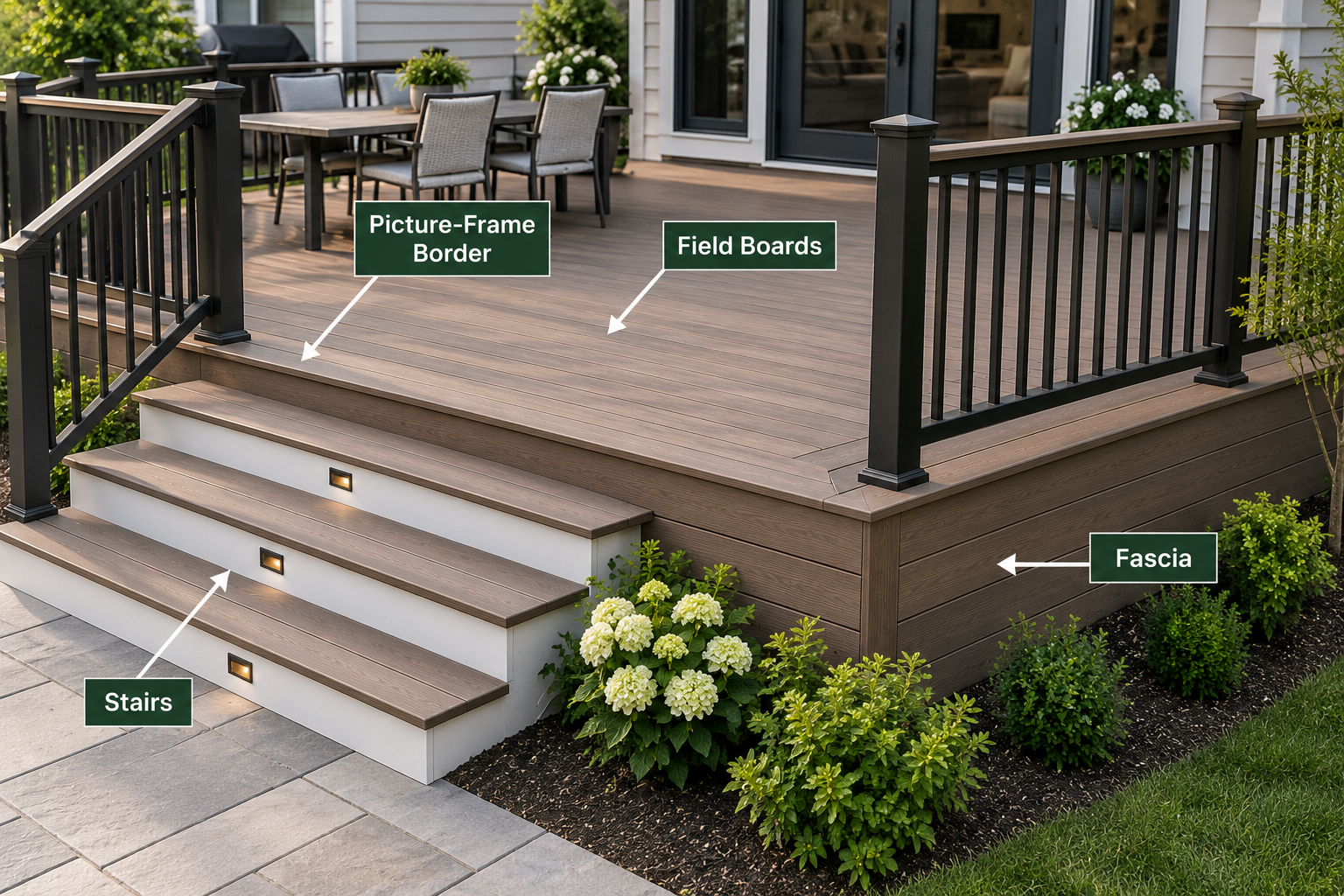
Don’t Forget Stairs, Fascia, and Picture Framing
The main deck surface usually gets the most attention during measuring, which makes the surrounding details easy to overlook. Stairs, fascia, and picture-frame borders can all require additional material that isn’t included in the basic square-footage calculation.
Treating these areas as separate parts of your material plan makes the estimate easier to organize. You can calculate the main field first, then add each additional component based on its own measurements.
Measure Deck Stairs Separately
Start by counting the steps and measuring the width of the staircase. The tread design and decking product will determine how many boards you need for each step, so don’t assume the main deck measurement accounts for them.
Depending on your stair design, you may also need material for risers or trim. Record these measurements separately on your sketch so you can add them when you create the final material list.
Calculate Fascia Separately
Fascia covers exposed areas around the deck structure and typically uses different boards than the main decking surface. Instead of calculating fascia by square footage, measure the linear footage of each edge where you plan to install it.
Once you have the total length, compare it with the fascia-board sizes available for your chosen product. Planning those lengths carefully can help reduce unnecessary seams and leftover pieces.
Account for Picture-Frame Borders
A picture-frame border creates a finished edge around the main decking field, but those boards need their own place in your material estimate. Measure the perimeter areas where you plan to install the border and consider how the boards will meet at corners.
Your picture frame may also change the lengths of the field boards inside it. Planning both parts of the layout together will give you a better estimate than simply adding border boards after calculating the main surface.
Common Deck Measuring Mistakes
Most deck-measuring mistakes don’t come from difficult math. They happen when a small part of the project gets overlooked during the planning process. Taking a few minutes to review your measurements and layout before ordering can prevent much larger problems later.
Start by measuring important dimensions more than once, especially on larger decks. If your deck has an irregular shape, don’t treat the entire footprint like one rectangle. Divide it into smaller sections, record each measurement, and keep those numbers with your project sketch.
It’s also important to decide on your board layout before finalizing the material quantity. Straight boards, diagonal installations, picture frames, and breaker boards can produce different cuts and waste. Changing the layout after calculating your materials may change the quantity you need.
Finally, check the details beyond the main deck surface. Actual board dimensions, manufacturer-required spacing, stairs, fascia, borders, and expected waste should all be part of the final estimate. Your square footage gives you the starting number, but these details turn that number into a practical material plan.
Turn Your Deck Measurements Into a Material Order
Knowing how to measure a deck gives you the foundation for a more accurate decking order. Start with the basic length and width, calculate the square footage of each section, and keep those individual measurements available as you plan the rest of the project.
From there, consider how your chosen decking will fit the space. Board dimensions, board direction, stairs, fascia, picture framing, and expected waste can all change the amount you ultimately need. Working through those details before ordering can help reduce material shortages, unnecessary waste, and avoidable project delays.
Once your measurements are ready, use our deck calculators to start building your material estimate. You can select the calculator that matches the decking you’re considering and use your measurements to take the next step toward planning your order.
Premium Decking Supply carries composite and PVC decking, railing, accessories, hardware, and structural materials for deck projects of all sizes. Taking the time to measure and plan before ordering gives you a much better chance of having the right materials ready when installation begins.
Frequently Asked Questions About Measuring a Deck
Measure the length and width of a rectangular deck, then multiply those numbers to calculate the square footage. For irregular decks, divide the surface into smaller rectangles and calculate each section separately. Add the sections together to find the total square footage before accounting for waste and other materials.
Multiply the deck’s length by its width. For example, a 12-foot-by-16-foot deck has 192 square feet of surface area. If the deck has several sections, calculate each area separately and add the results together.
Divide an L-shaped deck into two or more rectangles. Measure the length and width of each rectangle, calculate their square footage separately, and then add the totals together. Keeping each section on a simple sketch can also help when you plan your board layout.
The main deck square footage does not automatically include your stairs. Measure the staircase separately and calculate the decking needed for each tread. Depending on the design, you may also need additional material for risers, trim, or other stair components.
Yes. Straight layouts generally create fewer complicated cuts, while diagonal boards, picture frames, and breaker boards can create additional waste. Plan your board direction before ordering so you can account for those cuts in your material estimate.
Yes, most projects need additional material for cuts and waste. The appropriate amount depends on your deck shape, board layout, stairs, picture framing, and other design details. More complicated layouts typically create more waste than simple rectangular decks.