The place for all your outdoor living space!

Article Overview
- Why You Should Order Decking Samples Before Buying
- Composite Decking Samples vs. PVC Decking Samples
- Where to Order Decking Samples by Brand
- How to Test Decking Samples at Home
- Use a Simple Scorecard to Compare Your Favorites
- Common Mistakes When Comparing Deck Samples
- What to Check Before Ordering Full-Size Deck Boards
- Find the Right Decking Before You Buy
- Frequently Asked Questions About Decking Samples
A decking color that looks perfect online can look very different next to your home. Sunlight, siding colors, surface texture, and even nearby landscaping can change how a deck board appears.
That’s why ordering decking samples is one of the smartest steps before buying materials for a new deck.
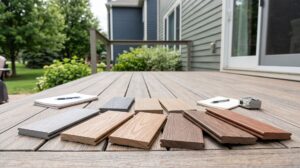
Physical samples let you compare composite and PVC decking in the actual space where your deck will be installed. You can see the colors in natural light, feel the surface texture, and compare finishes without relying on product photos.
You can also evaluate products from brands like Trex, TimberTech, Fiberon, and Deckorators before making a final choice.
This guide explains how to compare deck samples at home, what to check, and where to order them from nine popular decking manufacturers.
Why You Should Order Decking Samples Before Buying
Online photos and showroom displays help you narrow your choices. However, they cannot show exactly how a board will look in your backyard.
Your home’s siding, outdoor lighting, and surrounding materials all affect the finished appearance.
Physical decking samples help you:
- Compare colors under natural sunlight and shade.
- Feel differences in wood-grain texture and surface finishes.
- See how decking colors match siding, trim, and railings.
- Compare composite and PVC board construction.
- Identify the exact collection and color before ordering.
A small sample cannot prove long-term durability. It can, however, help you avoid choosing the wrong color or finish for a large project.
Composite Decking Samples vs. PVC Decking Samples
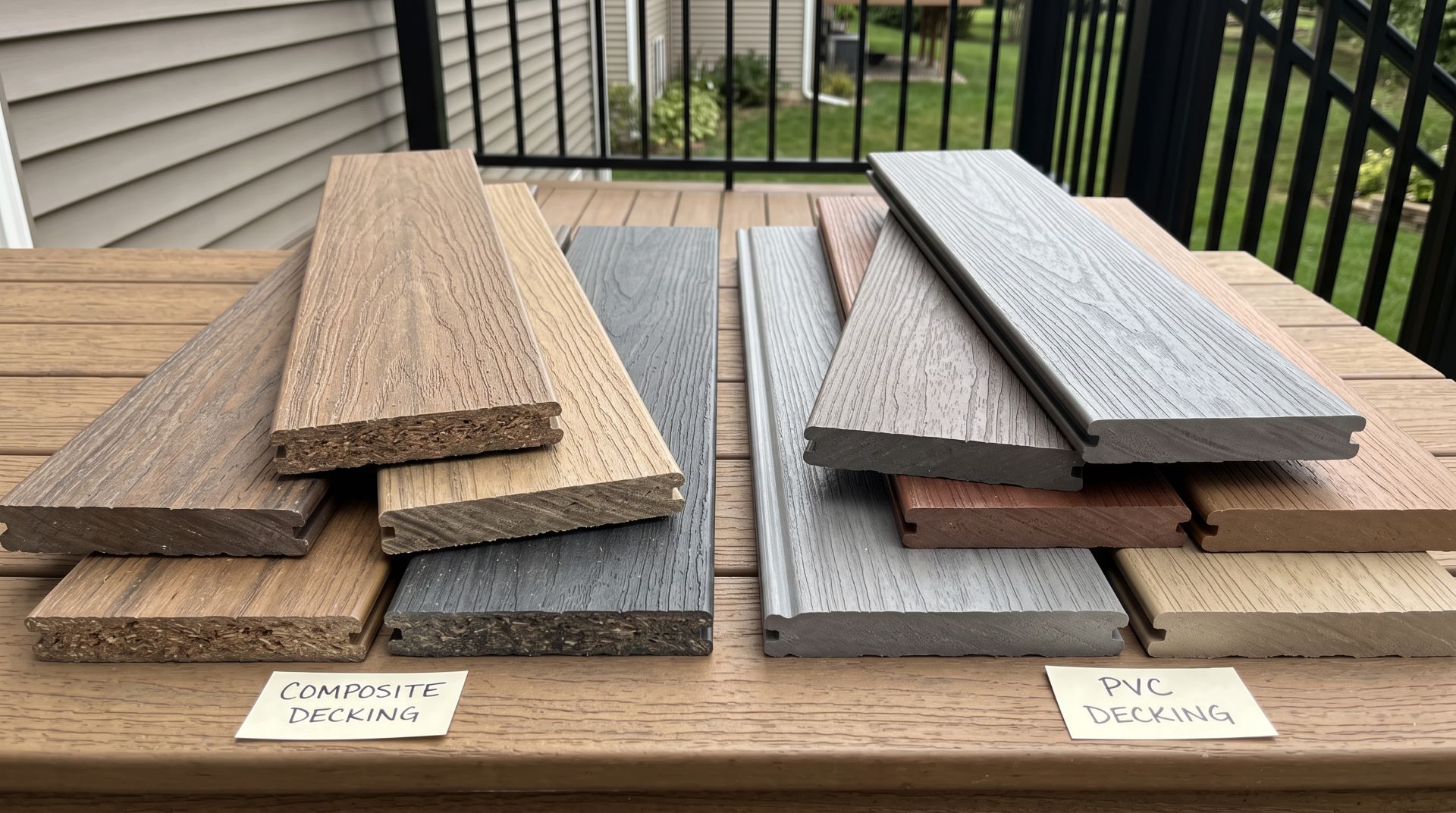
Before comparing colors, understand the materials you’re considering.
Composite Decking Samples
Most modern composite decking combines wood fibers or other natural fillers with plastic. Many products also have a protective outer cap.
Composite deck samples let you inspect the grain pattern, color variation, cap finish, and exposed board edges.
Some boards feature deep wood-grain textures. Others have smoother surfaces or subtle color blending.
Compare the exact collection rather than assuming every composite board from one manufacturer looks or performs the same.
PVC Decking Samples
PVC decking uses plastic-based construction without the wood-fiber core found in traditional wood-plastic composites.
PVC deck samples can help you compare surface textures, finishes, and available colors with composite alternatives.
Some PVC products have a lighter board construction or different expansion requirements. These characteristics depend on the product.
A small sample cannot establish which material is stronger, cooler, or more resistant to slipping. Review manufacturer specifications for those comparisons.
Where to Order Decking Samples by Brand
Several manufacturers let you order decking samples directly from their websites. Some offer free samples, while others charge for individual pieces or larger sample boards.
The following links help you request samples and explore available collections.
| Brand | Where To Get Samples | Explore Collections at PDS |
|---|---|---|
| Trex | Order Trex decking samples. Up to five qualifying 3.5-inch samples are free under the current offer. | Trex Decking |
| TimberTech | Order TimberTech decking samples. Up to four free samples with free shipping. | TimberTech Decking |
| Fiberon | Order Fiberon decking samples. Paid sample options with free ground shipping. | Fiberon Decking |
| Deckorators | Order Deckorators decking samples. Up to six free individual samples or one free kit. | Deckorators Decking |
| Envision | Request Envision decking samples through the manufacturer’s sample page. | Envision Decking |
| MoistureShield | Order MoistureShield decking samples through its 12-inch sample catalog. | MoistureShield Decking |
| Wolf | Find a Wolf decking dealer and ask about sample availability. | Wolf Decking |
| Eva-Last | Contact Eva-Last about decking samples. Professionals can also use its sample request form. | Eva-Last Decking |
| Lumberock | Request Lumberock decking samples. Three color samples ship free within the continental United States. | Lumberock Decking |
Sample limits, pricing, eligibility, and shipping terms can change. Check each manufacturer before placing an order.
For Wolf decking samples, a local dealer is the best starting point because a general online sample checkout could not be verified. Eva-Last offers sample support for professionals, but its public consumer ordering process is less direct.
Start with three to five colors rather than requesting every available option. Include at least two different collections if you are still deciding between materials.
How to Test Decking Samples at Home
You don’t need special equipment to compare materials. A few simple checks can reveal which colors and finishes work best for your project.
1. Compare Colors in Natural Sunlight
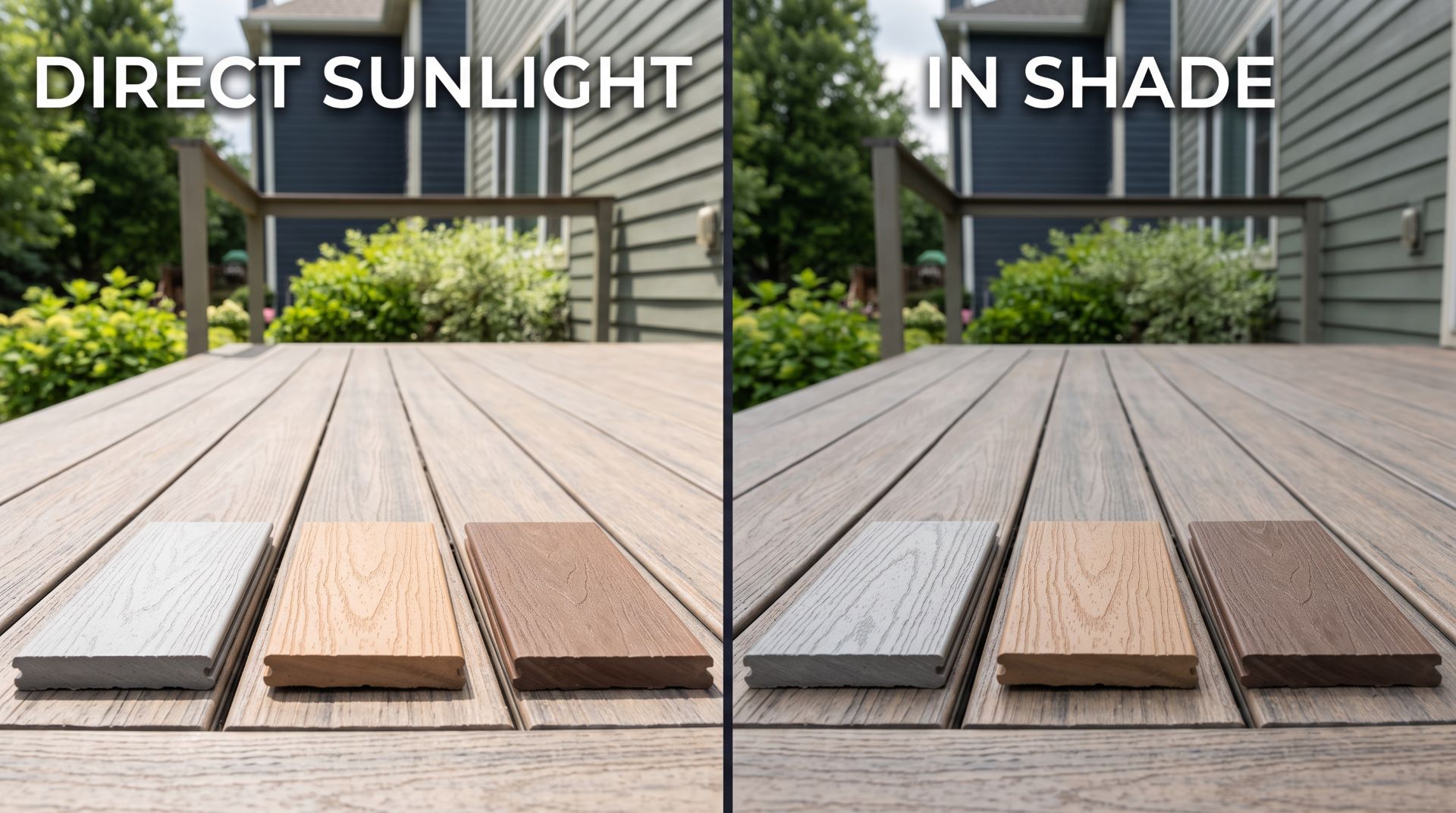
Place your decking samples where the future deck will be installed.
Check each board in direct sunlight, partial shade, and full shade. Repeat the comparison in the morning, midday, and late afternoon.
Look for changes in color, contrast, and surface reflection.
A warm brown board may appear lighter in direct sun. A gray board may show stronger blue or brown tones beside certain siding colors.
Keep the samples in the same location and orientation for a fair comparison.
2. Match Samples With Your Home’s Exterior
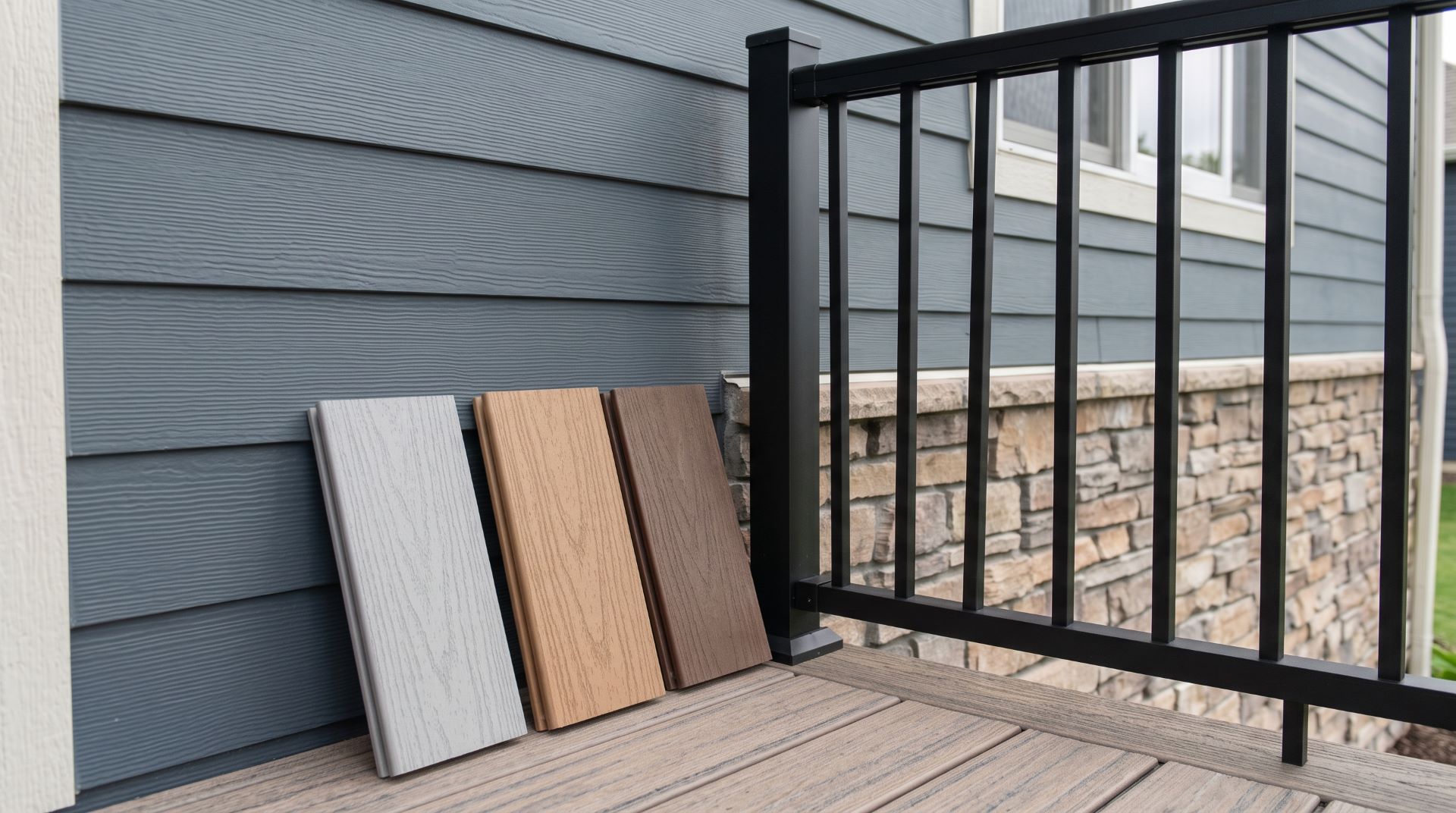
Your decking should work with the permanent materials around it.
Place the samples next to your siding, brick, stone, trim, and planned railing color.
Look at the combination from a few feet away. Then step back to the distance where you would normally view the deck.
Consider the contrast between the decking and your home. A similar color can create a uniform appearance, while a contrasting tone can make the deck stand out.
If you plan to install a picture-frame border, compare that color beside the main decking sample as well.
3. Compare Surface Temperature
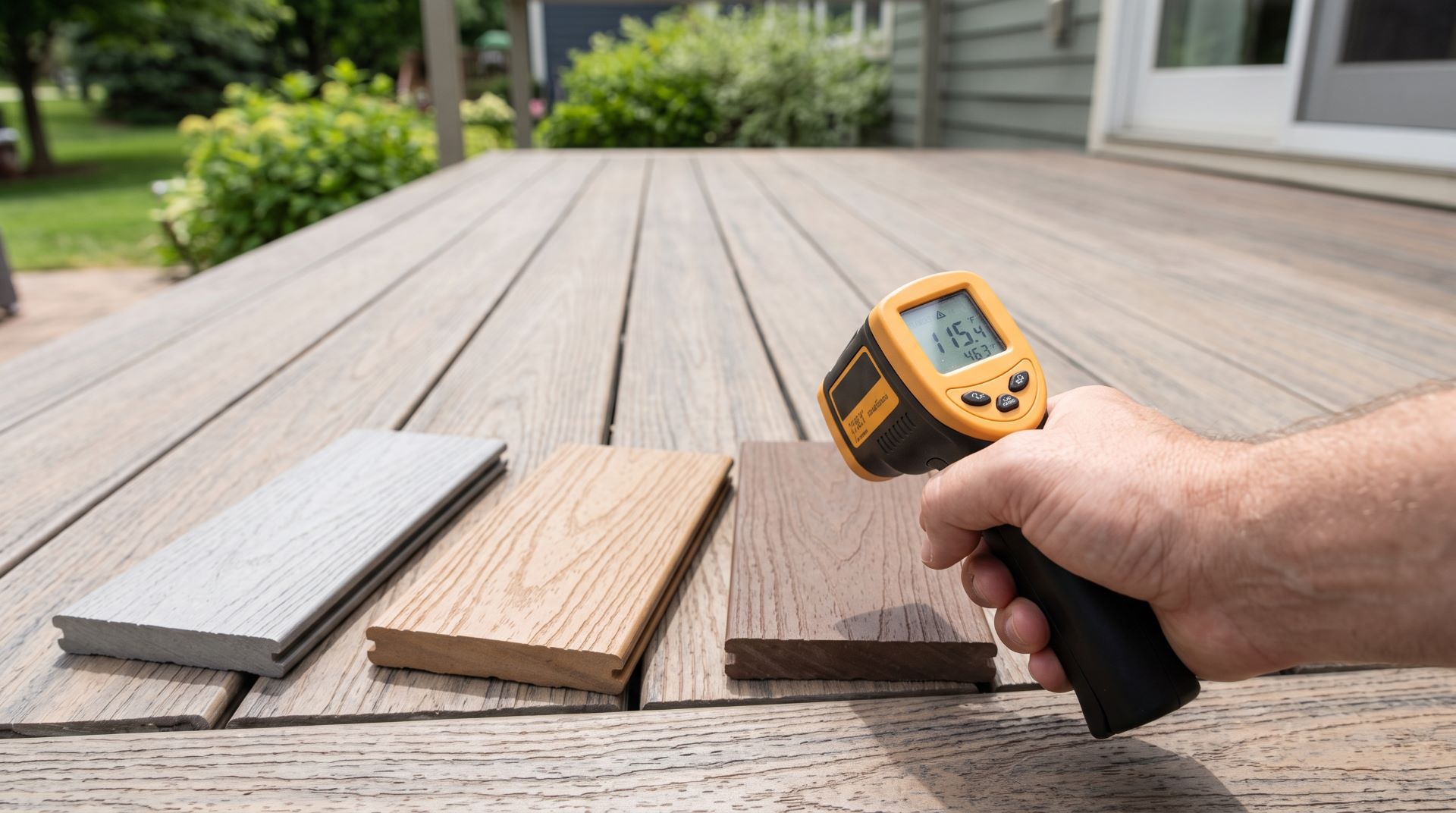
Deck surfaces can become hot under direct sunlight. Surface temperature depends on the material, color, finish, weather, and surrounding conditions.
For a basic comparison, place samples side by side on the same stable, level support in an open area.
Allow them to receive sunlight under the same conditions. Then compare their temperatures using a suitable surface thermometer.
Avoid measuring one sample on cool grass and another on hot concrete. Different surfaces beneath the samples can affect the results.
An infrared thermometer can provide approximate readings, but reflective finishes may affect measurement accuracy.
Don’t touch an extremely hot surface with bare skin.
Remember: This informal comparison cannot establish year-round heat performance or verify manufacturer cooling claims.
4. Examine Wood-Grain Texture and Finish
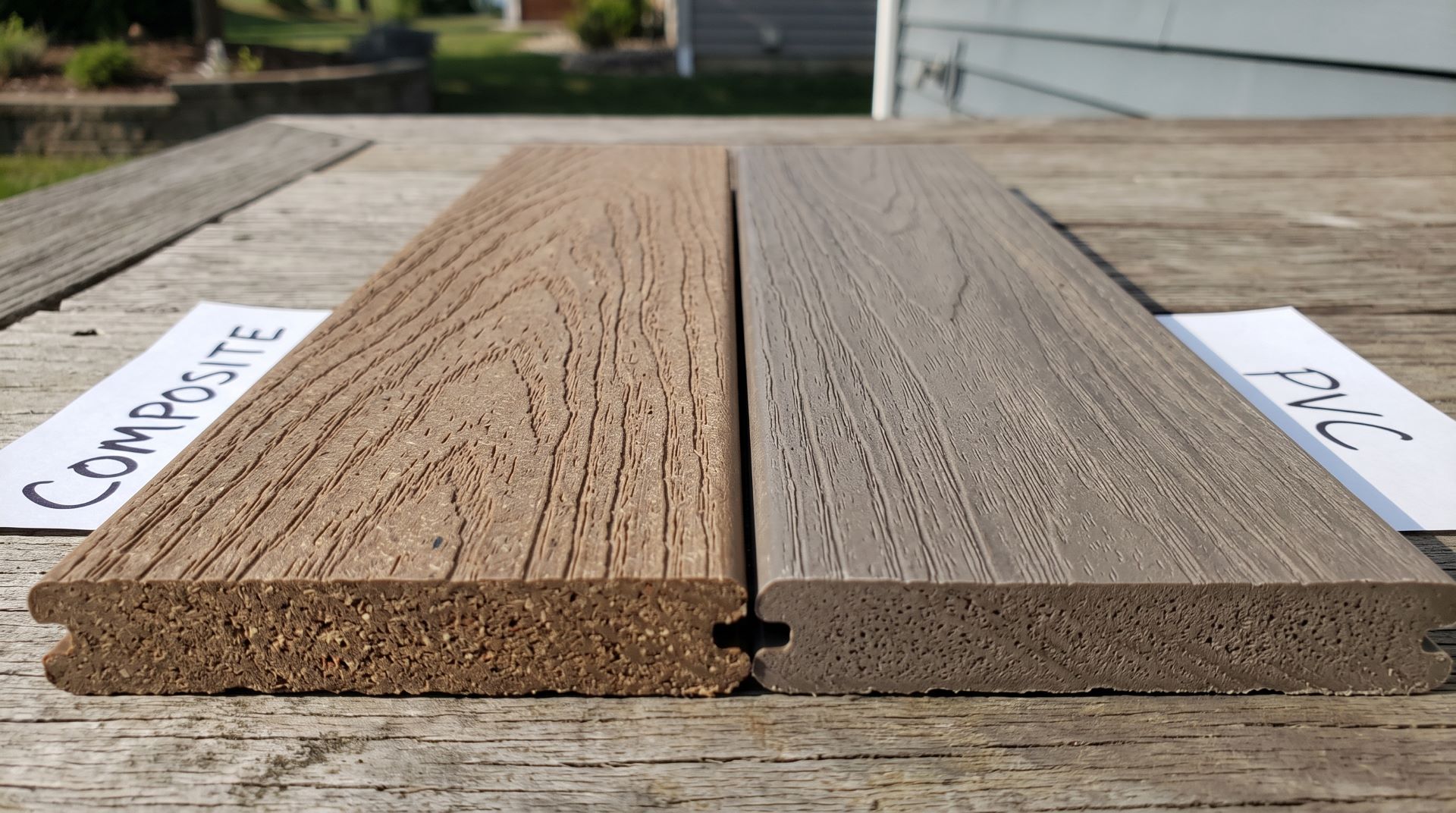
Run your fingers across each clean sample. Look closely at the depth, direction, and pattern of the grain.
Some composite decking samples feature pronounced wood-like grooves. Others use fine textures or smoother finishes.
Pay attention to surface sheen as well.
A board with a more reflective finish may appear different under strong afternoon sunlight than a matte surface.
Surface texture affects appearance and feel, but a deeper grain does not automatically mean better slip resistance.
Choose the finish you prefer, then confirm its documented performance.
5. Observe Water on the Surface
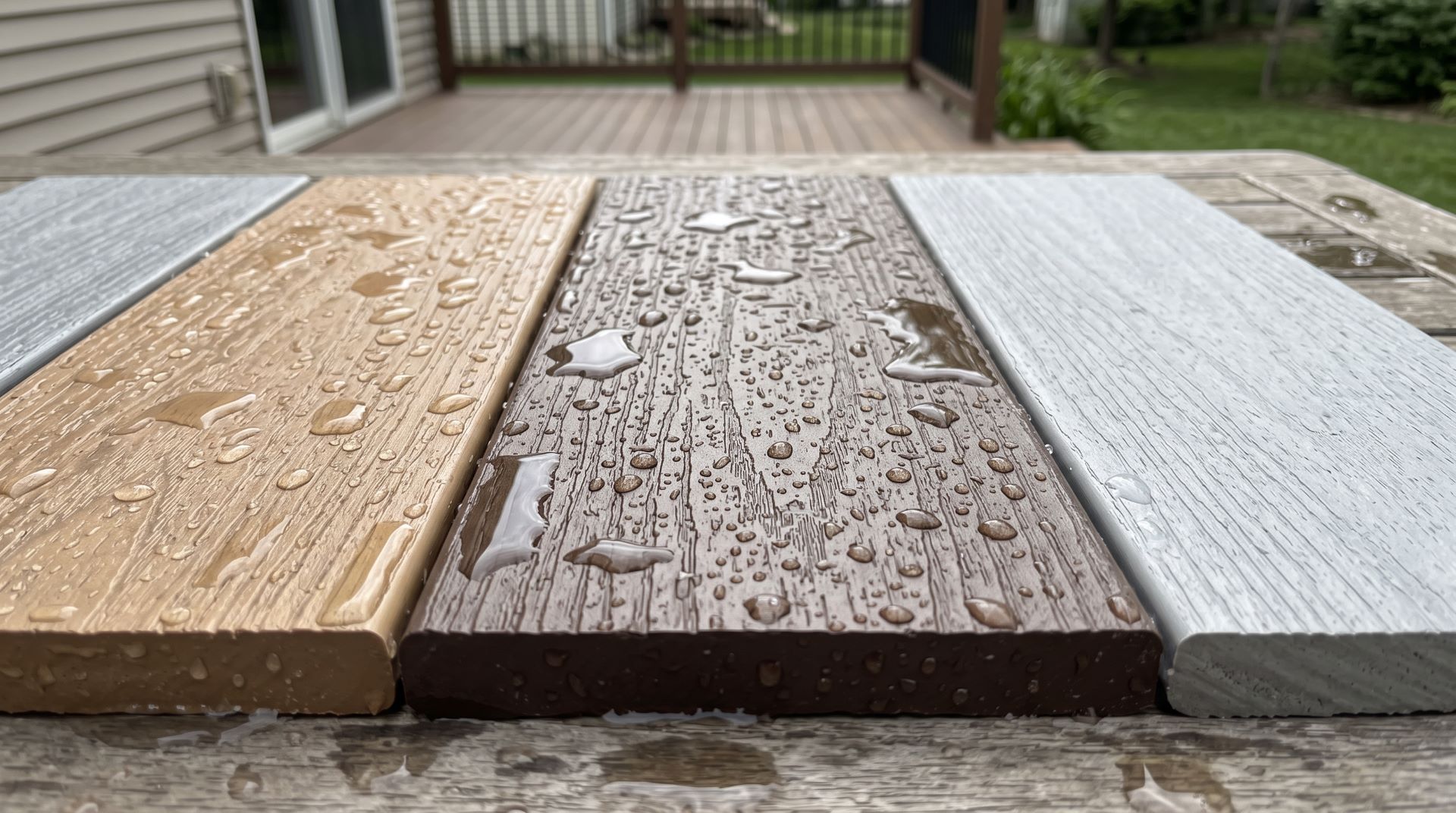
Use a small amount of clean water to observe how each sample looks when wet.
Place equal amounts of water on each board. Look for temporary color changes, surface reflections, and water collecting in the grain.
Allow the samples to dry naturally, then compare them again.
This can show how a finish looks after rain or around a pool.
However, visible water beading does not establish waterproofing, and a home test cannot measure slip resistance.
Do not stand on loose sample pieces, especially when wet. Use the manufacturer’s published test information to assess traction and approved applications.
6. Inspect Board Profiles and Edges
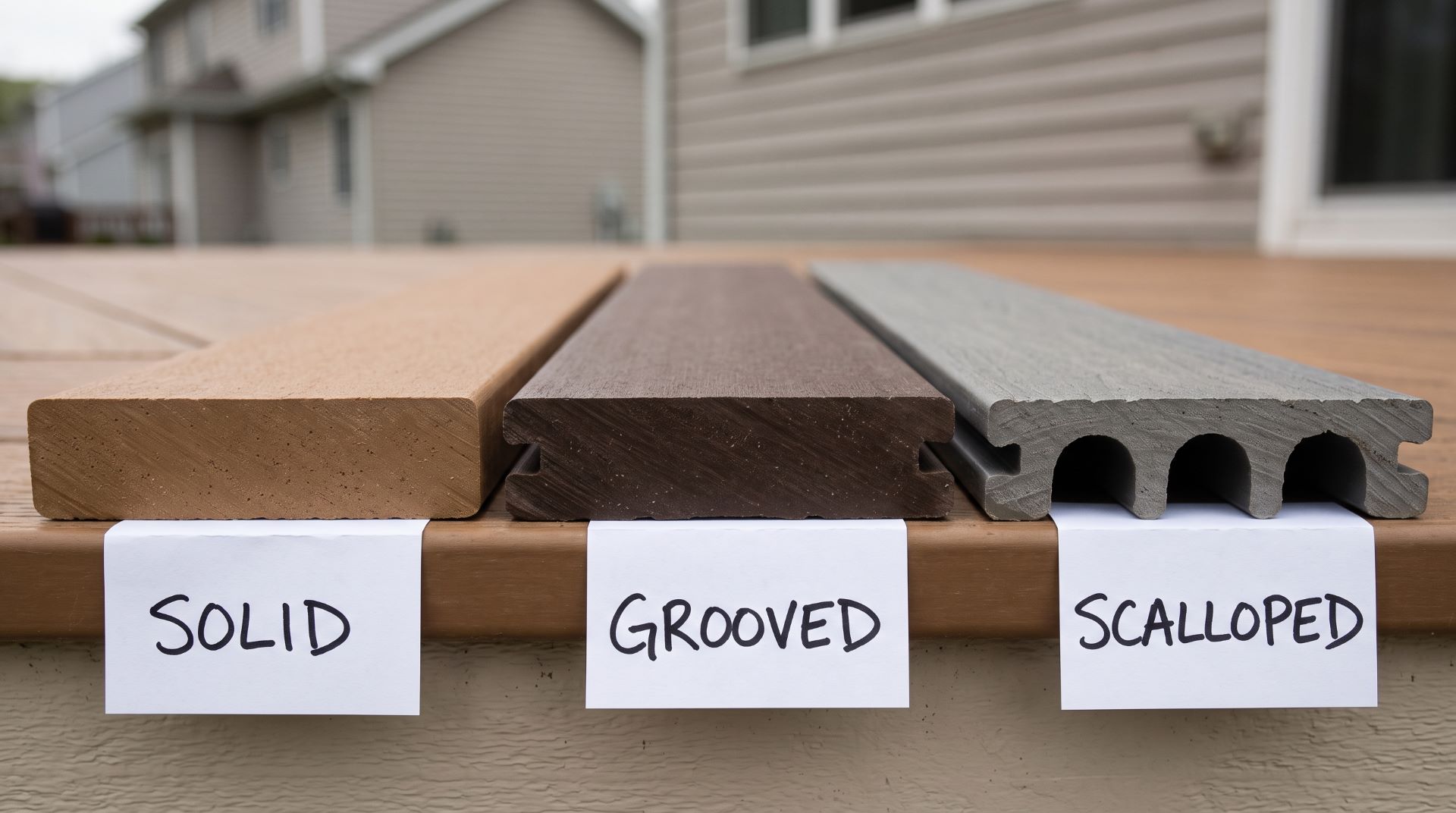
Look at the sample’s cut end and side profile.
Some decking products have solid profiles. Others use scalloped or hollow designs. The available profiles depend on the manufacturer and collection.
Check whether your chosen board comes with grooved edges, square edges, or both.
Grooved boards often work with specific hidden-fastener systems. Square-edge boards are commonly used for borders, stairs, and other finished edges.
Not every collection supports the same installation method.
Confirm the required deck fasteners and accessories with your material supplier before placing the order.
Use a Simple Scorecard to Compare Your Favorites
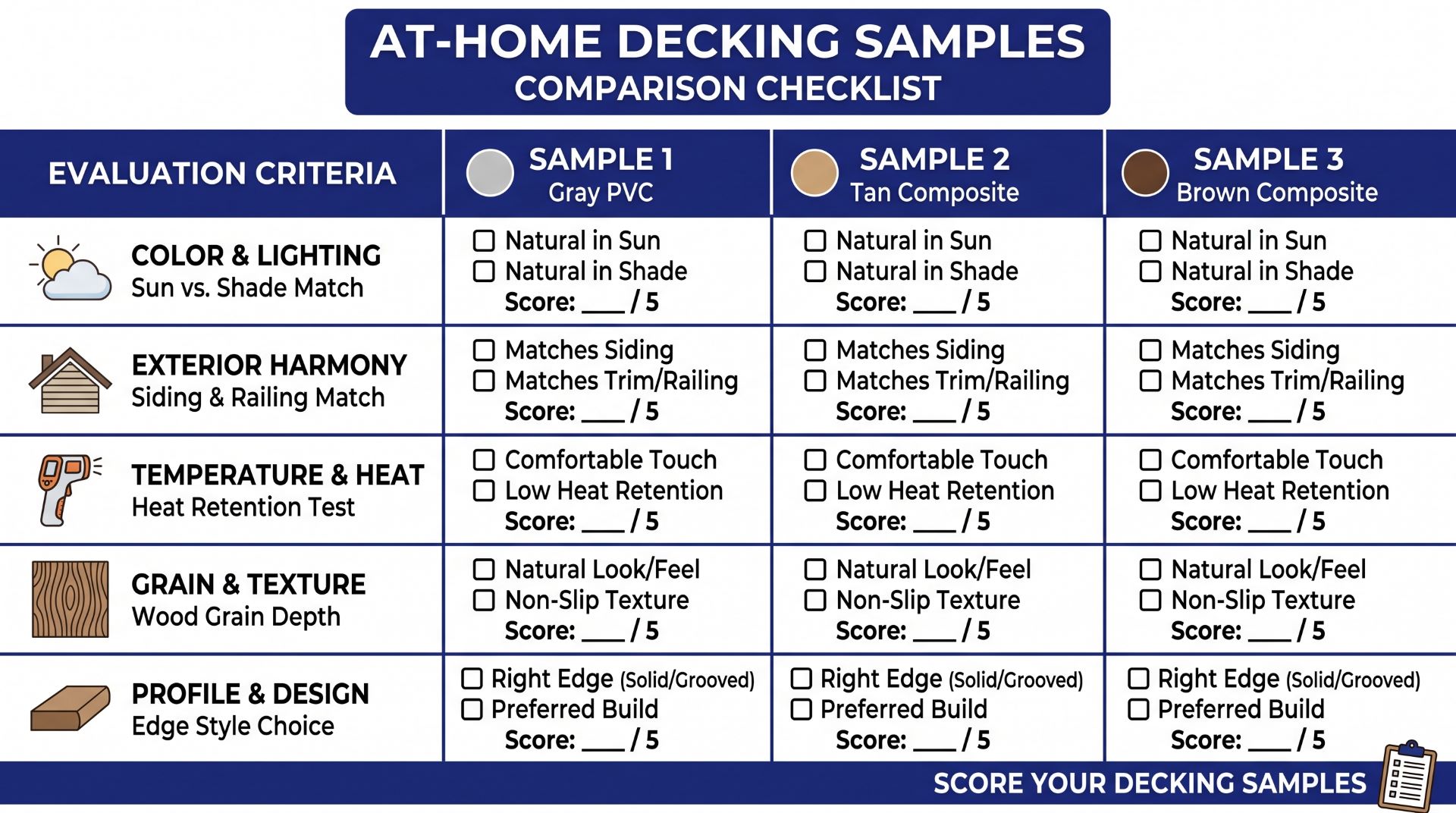
After testing your deck samples, reduce the selection to two or three finalists.
Score each option from 1 to 5, where 5 means it best meets your needs.
| Comparison factor | Sample A | Sample B | Sample C |
|---|---|---|---|
| Color match with your home | 1 – 5 | 1 – 5 | 1 – 5 |
| Appearance in sunlight | 1 – 5 | 1 – 5 | 1 – 5 |
| Texture and finish | 1 – 5 | 1 – 5 | 1 – 5 |
| Surface temperature preference | 1 – 5 | 1 – 5 | 1 – 5 |
| Railing and trim appearance | 1 – 5 | 1 – 5 | 1 – 5 |
| Total | 5 – 25 | 5 – 25 | 5 – 25 |
This scorecard measures personal preferences rather than certified product performance.
Use it to identify your preferred appearance. Then compare each finalist’s actual cost, warranty, installation requirements, and documented performance.
Common Mistakes When Comparing Deck Samples
Even with physical samples, a few mistakes can lead to the wrong decision.
Choosing colors indoors. Artificial lighting can change how decking colors appear. Always inspect your finalists outside.
Comparing samples under different conditions. Place samples together and check them at the same times.
Assuming all products from one brand perform alike. Collections can differ in construction, finish, and installation requirements.
Using damaging scratch or stain tests. Avoid sharp tools, harsh chemicals, and unapproved cleaners. Follow the manufacturer’s testing and care guidance.
Judging an entire deck from a small piece. A short sample cannot show how color variation and grain repetition appear across full-length boards.
Avoid making your final decision until you have compared the exact products you plan to buy.
What to Check Before Ordering Full-Size Deck Boards
Once you choose your favorite decking samples, confirm the practical details before purchasing materials.
Start with the exact manufacturer, collection, color, and profile.
Then review:
- Board dimensions: Available lengths, widths, and thicknesses.
- Fastener compatibility: Approved hidden clips or face-fastening systems.
- Installation requirements: Joist spacing, ventilation, and expansion gaps.
- Accessories: Matching fascia, stair boards, and border options.
- Warranty: Coverage terms, exclusions, and registration requirements.
- Availability: Current stock, delivery options, and order quantities.
Ask to see a full-length board or installed display when possible. This is especially useful for products with strong color variation.
For contractors, confirm the selected material before preparing the final material list.
For homeowners, keep your preferred sample until the delivered boards arrive. It gives you a useful reference for the selected finish.
Find the Right Decking Before You Buy
Choosing decking becomes easier when you can compare actual materials instead of relying on product photos.
Use your decking samples to evaluate color, texture, and appearance in your own backyard. Then review the technical details and total material costs before making your final decision.
At Premium Decking Supply, we help homeowners, DIY builders, and contractors compare decking collections and select the right materials for their projects.
Explore our decking brands and collections, or contact our team for a free material estimate.
We supply decking, railing, fasteners, and accessories, with nationwide shipping available.
Frequently Asked Questions About Decking Samples
Many manufacturers offer free decking samples, but not every brand uses the same policy. Trex, TimberTech, Deckorators, and Lumberock currently have qualifying free-sample offers. Other brands may charge for samples or require a dealer request. Always check shipping and order limits.
Start with three to five samples that match your preferred color and budget. Compare different collections when possible. After checking them outdoors, narrow your selection to two or three finalists.
Yes. Physical composite decking samples and PVC decking samples help you compare color, grain, finish, and visible board construction. They cannot establish long-term durability, structural capacity, or certified traction performance.
You can compare surface temperatures under similar conditions, but results are limited. Sunlight, color, airflow, and the support beneath each sample can affect readings. Review manufacturer temperature data when heat is a major concern.
Samples are meant to represent a product’s appearance and finish. However, color blending, grain variation, production differences, and lighting can affect the final look. Request a longer sample or view an installed display before ordering a large quantity.