The place for all your outdoor living space!

Article Overview
- Do You Need HOA Approval to Build a Deck?
- Understanding HOA Deck Rules and Restrictions
- Documents You Need for HOA Deck Approval
- How to Get HOA Approval for Deck Construction
- Step 1: Request the Current HOA Guidelines
- Step 2: Develop a Preliminary Deck Design
- Step 3: Choose Your Materials and Colors
- Step 4: Prepare and Submit Your Application
- Step 5: Track the Review and Respond to Questions
- Step 6: Receive Written Approval Before Construction
- Example of a Deck Project Description
- HOA Approval vs. Building Permits: What's the Difference?
- How Long Does HOA Deck Approval Take?
- Common Reasons HOA Deck Applications Get Rejected
- What to Do After Your Deck Is Approved
- Plan Your Deck With the Right Materials and Documents
- Frequently Asked Questions About HOA Deck Approval
Planning a new deck is exciting until you discover your homeowners association must approve it first. Even a well-designed deck can face delays because of its size, color, materials, or location.
Getting HOA approval for deck construction is an important step before ordering materials or starting work. Your homeowners association may require drawings, product details, and a formal application before reviewing your project.
The good news is that you can avoid many common problems with proper planning.
This guide explains HOA deck requirements, the approval process, and the documents you may need. You’ll also learn how to handle rejected plans and coordinate HOA approval with local building permits.
Do You Need HOA Approval to Build a Deck?
Most homeowners associations require approval before you build a new deck. They often review exterior projects to maintain consistent neighborhood design standards.
Some associations have strict rules about deck materials, height, and railing styles. Others focus mainly on how the finished structure looks from neighboring properties.
Your community’s governing documents determine which projects need approval.
Common deck projects that may require HOA review include:
- Building a new attached or freestanding deck.
- Expanding an existing deck.
- Replacing wood decking with composite or PVC.
- Changing railing materials, styles, or colors.
- Adding stairs, privacy screens, pergolas, or lighting.
- Resurfacing an existing deck with different materials.
Even a replacement deck may need approval if its appearance changes.
Before starting any deck project, ask your HOA whether an architectural review application is required. Get the answer in writing.
What Is an HOA Architectural Review Committee?
An Architectural Review Committee (ARC), sometimes called an Architectural Control Committee (ACC), reviews proposed exterior improvements.
The committee compares your project with the community’s Covenants, Conditions, and Restrictions (CC&Rs) and design guidelines.
After reviewing your submission, it may approve your project, request changes, or deny the application.
Understanding HOA Deck Rules and Restrictions
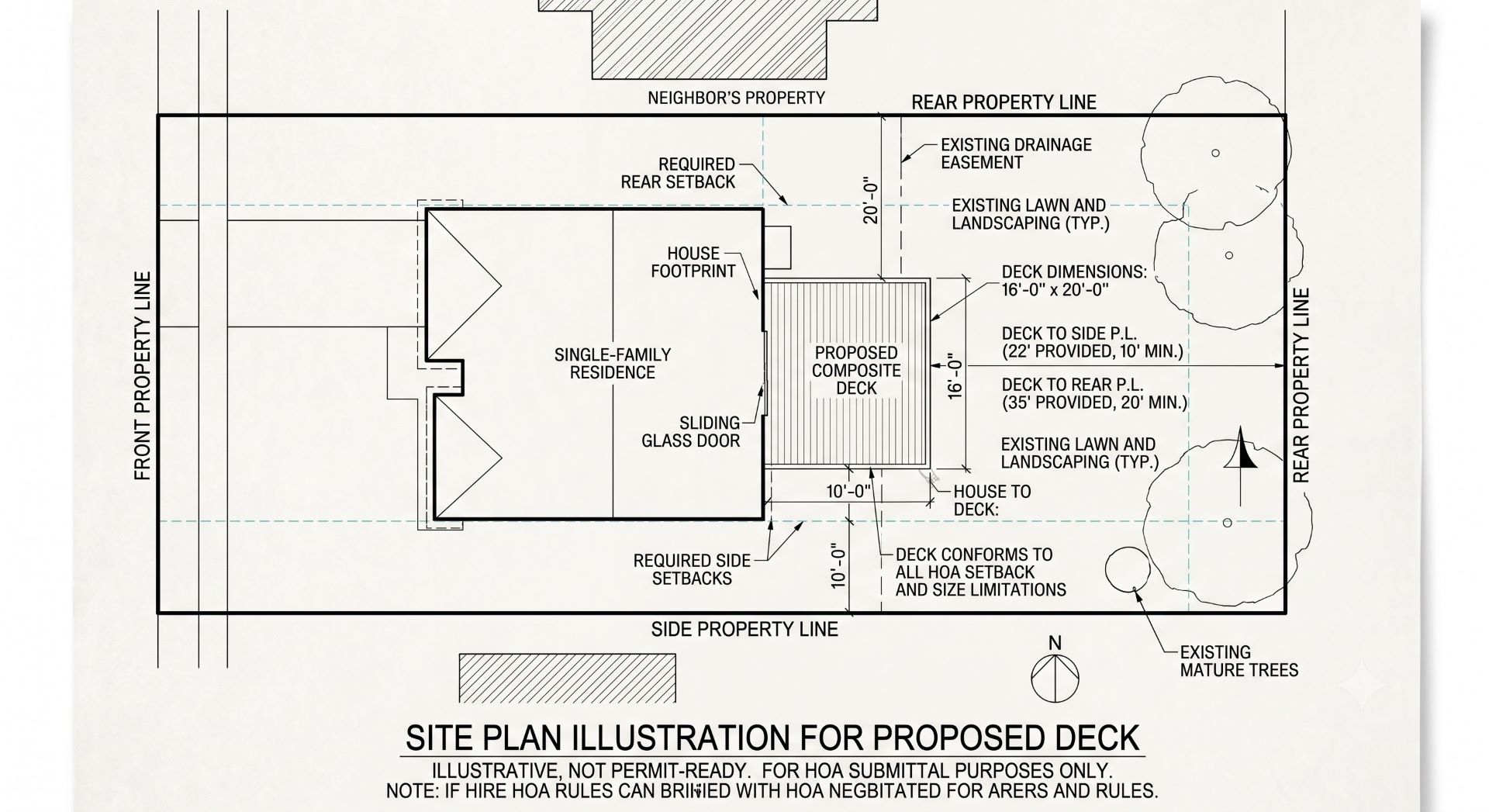
Before designing your deck, review your HOA’s current architectural guidelines.
These documents may be available through your community website, management company, or HOA board.
Pay close attention to the following restrictions.
| Deck feature | What your HOA may review |
|---|---|
| Deck size | Maximum dimensions and allowed coverage |
| Location | Distance from property lines and common areas |
| Height | Deck elevation and visibility from neighboring homes |
| Materials | Approved wood, composite, or PVC products |
| Colors | Decking, fascia, railing, and trim finishes |
| Railings | Style, material, color, and appearance |
| Stairs | Placement, direction, and access to the yard |
| Accessories | Lighting, privacy screens, pergolas, and built-in features |
HOA restrictions can be stricter than local zoning rules.
For example, your city might allow a deck near a property line while your HOA requires a greater distance.
You must also check easements, drainage areas, and other restrictions recorded against your property.
Can You Use Composite or PVC Decking in an HOA Community?
Many associations allow composite or PVC decking, but some limit the colors, finishes, or products you can install.
Before choosing materials, check whether your HOA has an approved product list.
You can compare options from manufacturers such as Trex and TimberTech. Ask your HOA to review the exact collection and color.
HOA approval focuses on community design rules, but your decking materials must also meet applicable building codes. If you’re planning a composite deck, review the composite decking code requirements before finalizing your plans. Product ratings and installation instructions can affect joist spacing and framing details.
Remember that approval of one decking product does not automatically cover every color or collection.
Documents You Need for HOA Deck Approval
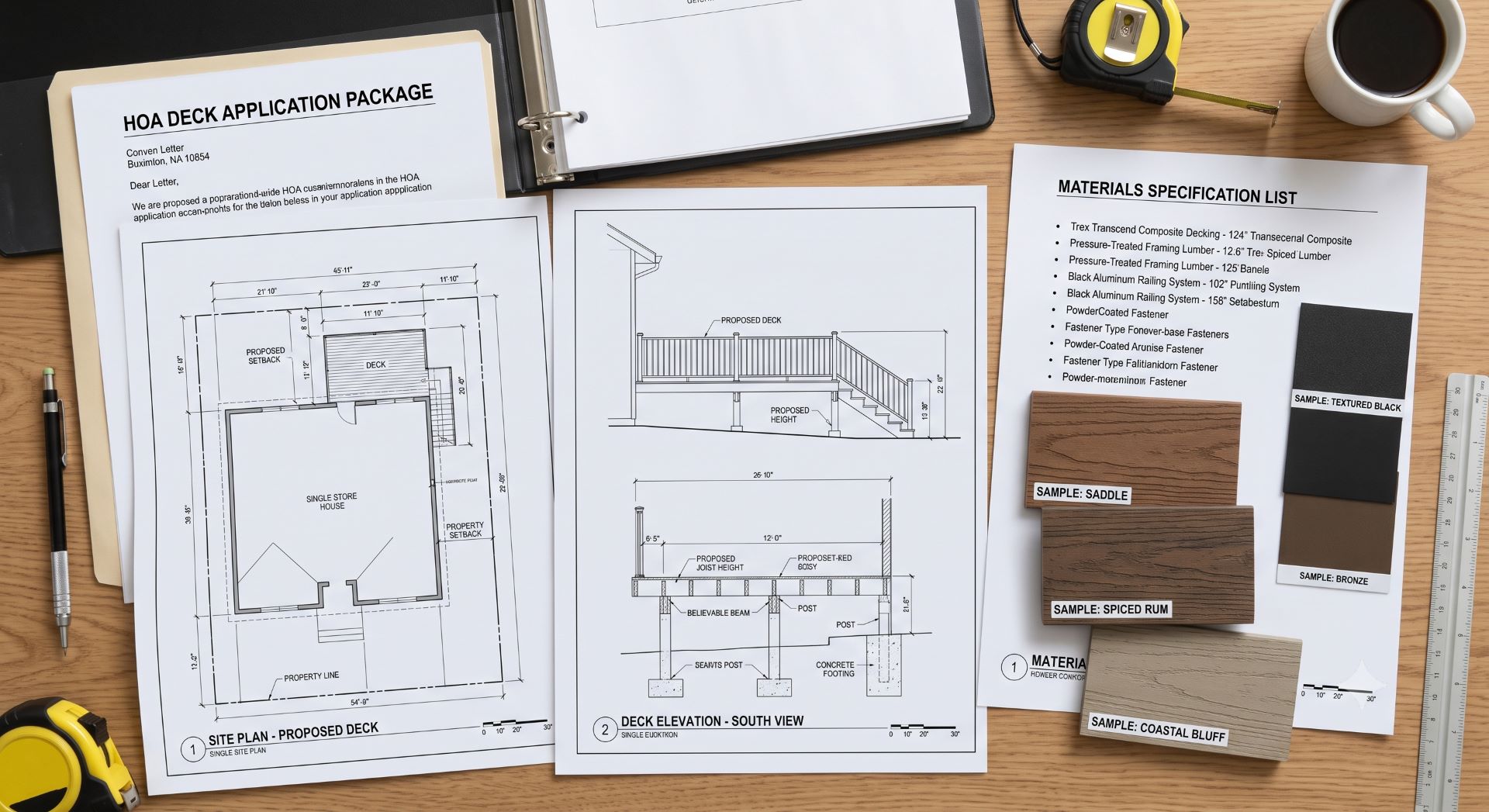
A complete application helps the architectural committee understand your project without repeated requests for information.
The exact requirements vary, but a typical HOA deck submission may include the following documents.
1. Completed HOA Application
Start with the association’s official architectural modification form.
You may need to provide your property address, contact information, project description, and estimated construction dates.
Some associations also require owner signatures, processing fees, or contractor information.
2. Site Plan or Property Survey
A site plan shows where the proposed deck will sit on your property.
Include the house, property boundaries, deck footprint, stairs, and distances from property lines.
Mark easements and setbacks where applicable.
If your HOA requests a survey, use a suitable property survey rather than guessing at boundary locations.
3. Deck Construction Drawings
Detailed drawings show what you plan to build.
Your submission may need:
- Overall deck dimensions and height.
- Deck layout and stair locations.
- Railing design and placement.
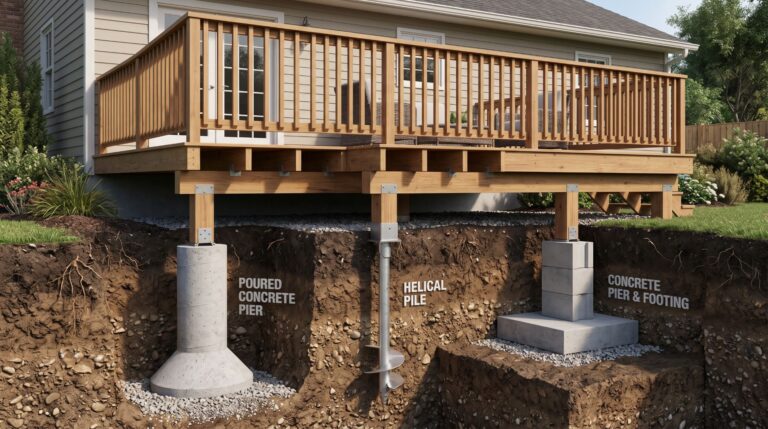
- Foundation and framing details.
- Attachment to the house, when applicable.
- Elevation views showing the finished appearance.
For a raised or complex deck, the HOA or building department may request professional drawings or engineering.
HOA-approved deck plans do not automatically mean the structure meets building code. The building department handles its own review.
4. Decking and Railing Specifications
Provide the proposed material type, manufacturer, collection, and color.
Include product photos, brochures, or samples when requested.
For example, an application might specify a brown composite decking collection with black aluminum railing.
Choose the exact deck railing systems before submitting your plans. Changing the railing after approval may require another review.
5. Contractor and Project Information
Some associations request a contractor’s contact details, proof of insurance, or licensing information where applicable.
If you are building the deck yourself, confirm whether DIY construction is allowed and what documentation you must provide.
You may also need to explain how workers will access the property and remove construction waste.
How to Get HOA Approval for Deck Construction
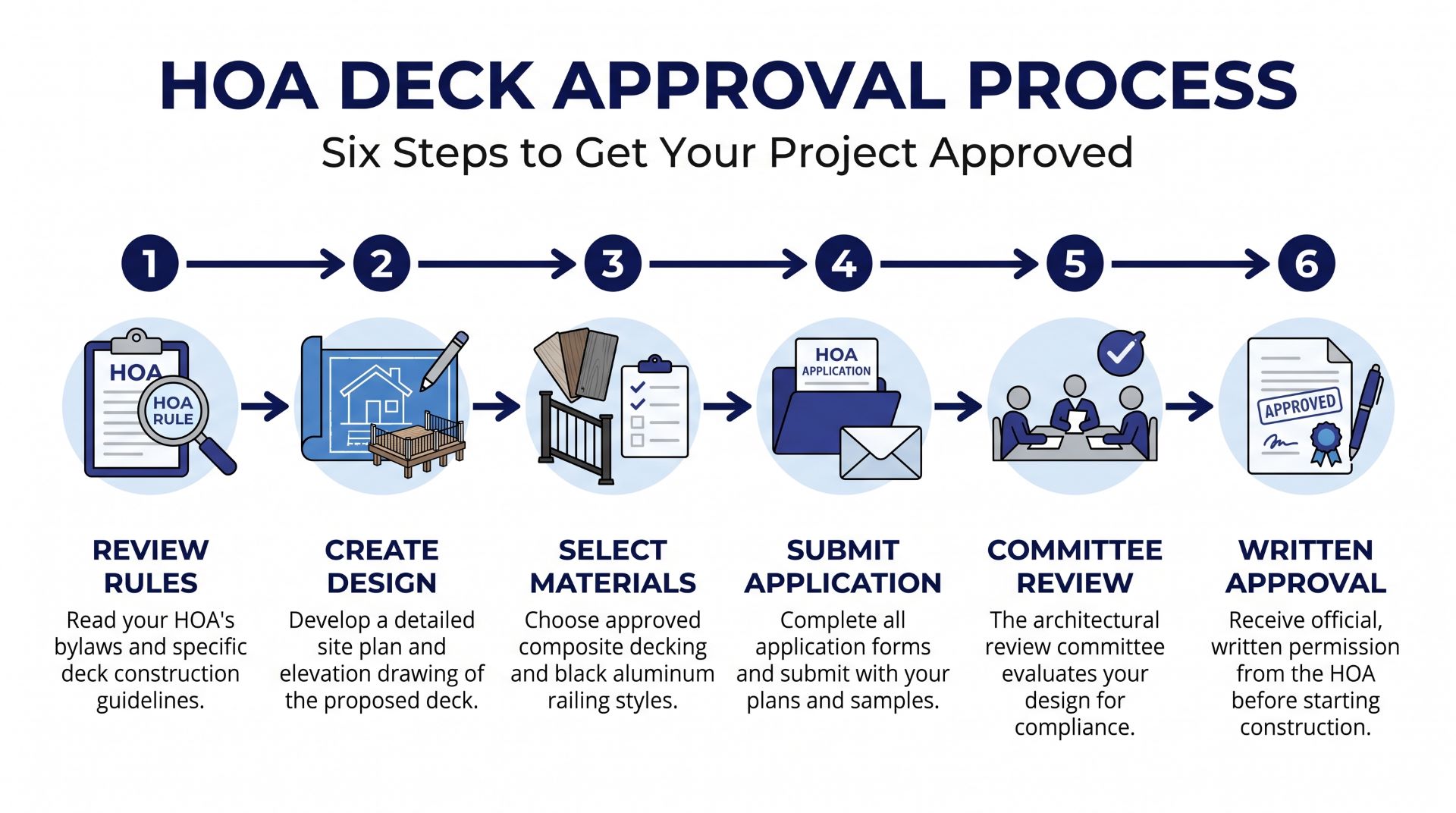
Follow these steps to reduce delays and keep your deck project organized.
Step 1: Request the Current HOA Guidelines
Contact your property manager or architectural committee before finalizing a design.
Ask for the latest CC&Rs, design standards, application forms, and submission deadlines.
Confirm who reviews the plans and how you will receive a decision.
Step 2: Develop a Preliminary Deck Design
Create a deck layout that fits your yard and follows the published restrictions.
Consider the deck’s size, height, stairs, railings, and distance from property lines.
Check for potential conflicts with utility easements or drainage areas.
If you work with a deck contractor, ask them to review the layout before preparing detailed plans.
Step 3: Choose Your Materials and Colors
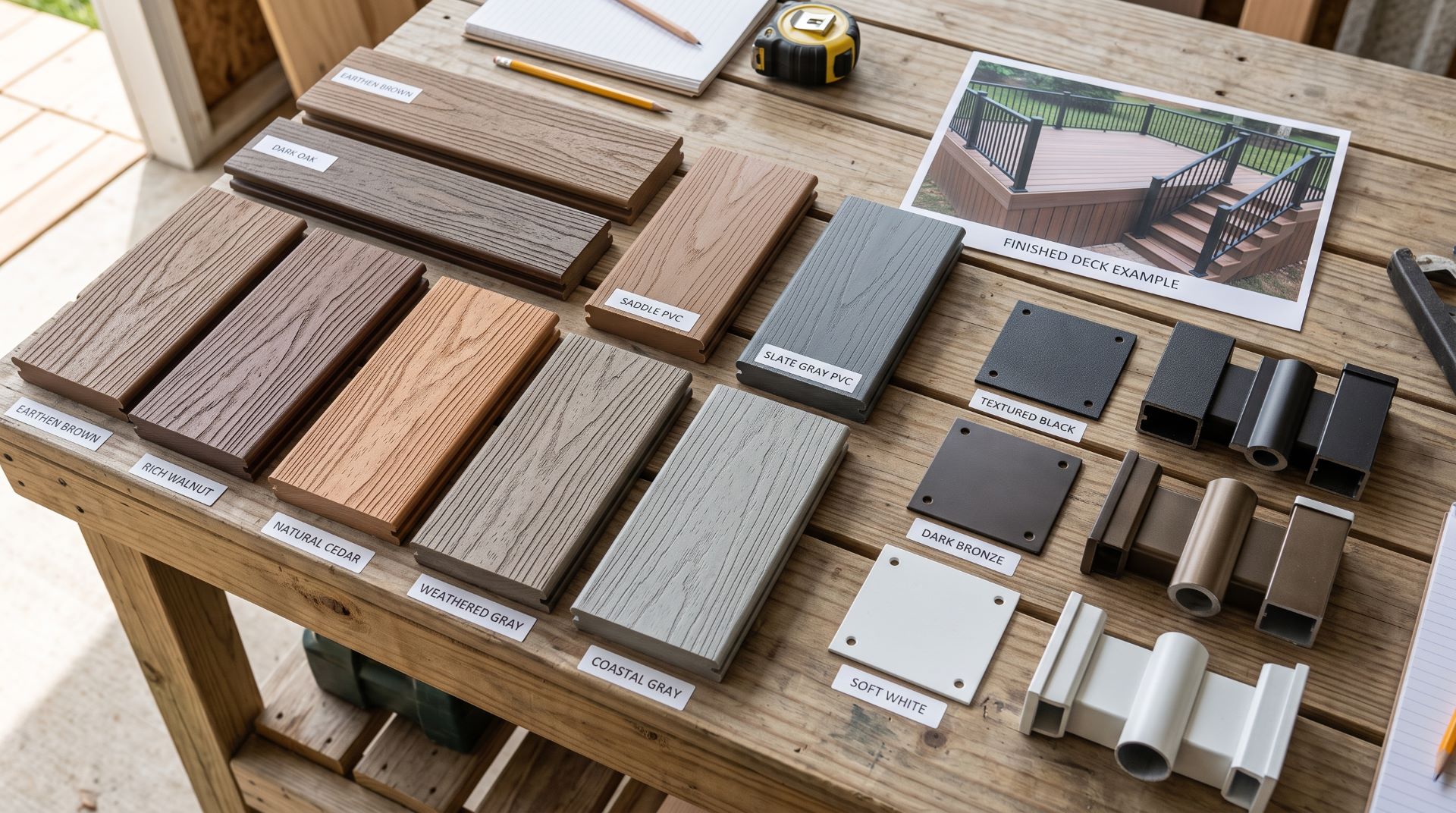
Select the decking, fascia, and railing products you plan to install.
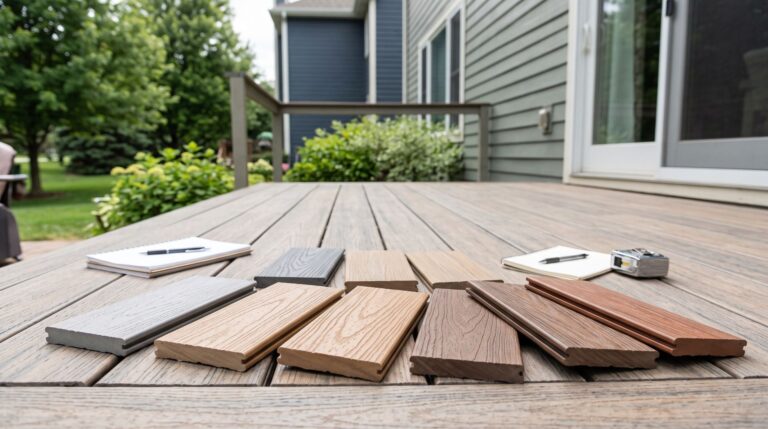
Review the available composite and PVC decking materials and compare samples before making your final choice.
If your HOA maintains approved colors or materials, use that list as your starting point.
Keep product specifications ready for the application.
Step 4: Prepare and Submit Your Application
Gather the drawings, site plan, material details, and required forms.
Check that the dimensions match across every document.
Submit the complete package through the HOA’s required process, whether online, by email, or in person.
Save a copy of everything you submit.
Step 5: Track the Review and Respond to Questions
Ask the HOA to confirm that your application is complete.
The committee may request clearer drawings, additional material information, or revisions.
Respond in writing and update all affected documents.
For example, if you move the stairs, revise both the site plan and deck drawings.
Step 6: Receive Written Approval Before Construction
Wait until you have the required written decision.
Check whether the approval includes conditions, such as specific colors or construction deadlines.
Keep the approval letter and the approved drawings together.
Only move forward once you have also obtained any required building permits.
Example of a Deck Project Description
A clear description helps the committee understand what you want to build.
For a hypothetical project, your application might read:
Proposed construction of a 16-by-20-foot rear deck using composite decking in an HOA-approved color. The design includes black aluminum railing and one stairway leading to the backyard. Attached drawings show the deck dimensions, height, location, and selected materials. Construction will follow the approved plans and applicable local building requirements.
Replace the example with your actual dimensions and product specifications. Add any details required by your HOA.
HOA Approval vs. Building Permits: What’s the Difference?
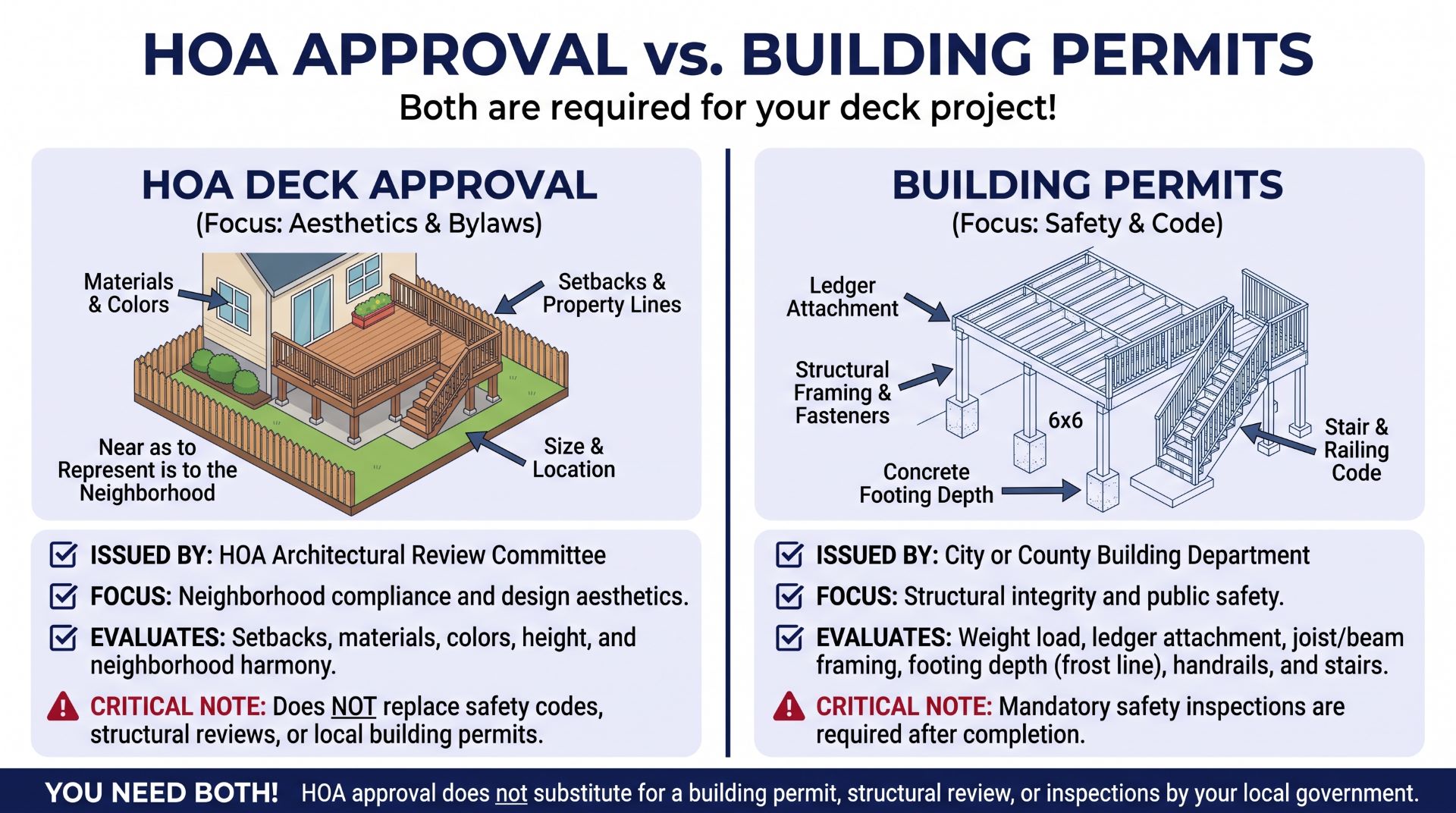
HOA approval and building permits serve different purposes.
An HOA generally reviews whether your deck follows the community’s architectural and property restrictions.
Your local building department reviews applicable construction requirements, zoning rules, and structural safety. Before submitting your plans, review the 2024 IRC code changes that may affect deck framing, materials, and structural design. Always confirm which code edition your local building department enforces.
| HOA Approval | Building Permit |
|---|---|
| Issued by the HOA or architectural committee | Issued by the local government |
| Reviews community design standards | Reviews applicable building and zoning codes |
| May regulate materials and colors | Reviews structural and safety requirements |
| May require drawings and samples | May require technical plans and inspections |
| Does not replace a building permit | Does not replace required HOA approval |
Some building departments request HOA approval before issuing a permit. Others have different procedures.
Check both requirements early.
For example, the City of Naperville requires permits for elevated decks and certain structural deck repairs.
If your project requires both approvals, coordinate the drawings to avoid conflicting requirements.
How Long Does HOA Deck Approval Take?
HOA review times vary by association.
Some committees review applications between regular meetings. Others use fixed submission deadlines or have a formal review period in their governing documents.
A complete application may move through review more easily, but approval is never guaranteed.
Several factors can affect the schedule:
- How often the committee meets.
- Whether your submission is complete.
- Requests for revised plans or samples.
- The complexity of your deck design.
- Any required appeals or separate approvals.
Ask your association for its actual review deadline rather than relying on a general estimate.
Do not assume silence means approval. Some governing documents contain special rules about unanswered applications, but those provisions are not universal.
Obtain clear confirmation before beginning construction.
Common Reasons HOA Deck Applications Get Rejected
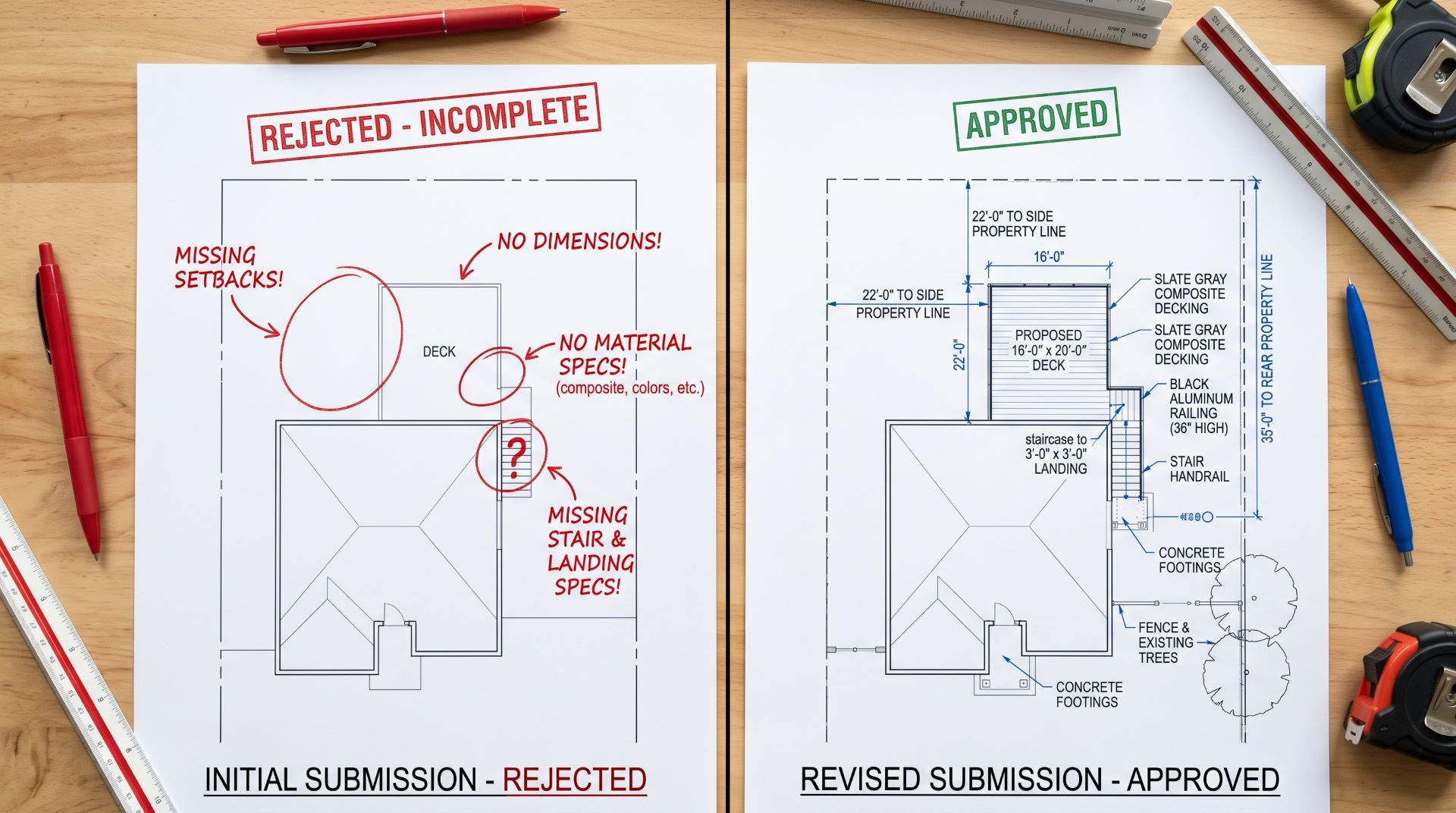
A denied application does not always mean you must abandon the project.
Understanding the reason helps you decide what to change.
Deck Size or Location Violates Community Rules
Your proposed deck may extend beyond an allowed area or conflict with a setback.
Review the property survey and adjust the layout if needed.
Decking Materials or Colors Are Not Approved
An HOA may reject a product because its finish does not match community guidelines.
Consider another approved collection or submit a physical sample for review.
Drawings Are Incomplete
Missing measurements, unclear railing details, or an inaccurate site plan can delay the decision.
Provide the requested information before resubmitting.
The Design Affects Neighboring Properties
A raised deck, privacy screen, or stair location may raise concerns about views or access.
If possible, adjust the design while keeping the deck functional.
What to Do After a Denial
Request the specific reasons for the decision in writing.
Compare those reasons with your HOA’s published requirements. Then revise your plans and submit the corrected documents.
If you disagree, ask whether the association offers a formal appeal or variance process.
Photos of similar approved decks may support your request, but they do not guarantee approval.
What to Do After Your Deck Is Approved
Once you receive HOA approval, review every condition before ordering materials.
Make sure your contractor has the final drawings and product selections.
Check local permit requirements and complete any required inspections during construction.
If you change the deck’s dimensions, color, railing design, or location, ask whether the HOA requires renewed approval.
Keep your approval records, permits, and final plans for future reference.
For material budgeting, Premium Decking Supply’s deck calculators can help estimate decking boards, railings, fascia, stairs, and other materials.
These estimates support project planning but do not replace approved construction drawings.
Plan Your Deck With the Right Materials and Documents
Getting HOA approval for deck projects starts with understanding the rules and preparing accurate plans.
Choose approved materials, submit complete drawings, and wait for written authorization before starting work.
Premium Decking Supply helps homeowners, DIY builders, and contractors plan their projects with decking materials, railing options, material lists, and permit-plan support.
We’re a decking supplier, not an installation contractor. Our team can help you compare products and prepare for your next deck project.
Contact Premium Decking Supply for a free material estimate and help planning your deck.
Frequently Asked Questions About HOA Deck Approval
Yes. An HOA may deny a deck application when the design conflicts with its governing documents or valid architectural guidelines.
Ask for the reason in writing. You may be able to revise the design or use the association’s appeal process.
Possibly. Some communities require approval even when you replace an existing deck with similar materials.
Approval is more likely to be required when you change the size, color, height, or railing style. Check your HOA’s replacement and repair rules.
If your governing documents require approval, you should not build without it.
Unapproved construction can lead to violation notices, fines, disputes, or required changes. The available enforcement actions depend on the governing documents and applicable law.
Costs vary by association. Some HOAs charge an application or review fee, while others do not.
You may also need to budget for surveys, drawings, engineering, or permit fees. Request the current fee schedule before submitting your application.
Possibly. Even a low deck may count as an exterior improvement under your HOA rules.
A deck that does not require a building permit may still require architectural approval. Always check both requirements separately.