The place for all your outdoor living space!

Article Overview
- What Is a Gazebo? Definition and Key Features
- What Is the Point of a Gazebo?
- Types of Gazebos: Which Design Fits Your Yard?
- Gazebo Materials and Roof Choices
- What Is a Gazebo Kit, and What Comes With It?
- Gazebo Sizes and Shapes
- Choosing a Gazebo for Midwest Weather
- Where Can You Install a Gazebo?
- Gazebo vs. Pergola vs. Pavilion
- How Much Does a Gazebo Cost in 2026?
- How to Choose the Right Gazebo Kit
- Gazebo Advantages, Drawbacks, and Care
- Find the Right Gazebo for Your Outdoor Space
- Frequently Asked Questions About Gazebos
You want more shade in your backyard, but choosing the right outdoor shelter can get confusing. Gazebos, pergolas, and pavilions may look alike in product photos. Their roofs, uses, and installation needs are different.
So, what is a gazebo? It is a roofed outdoor structure that creates a sheltered place for seating, dining, or relaxing. You can place one in a garden, over a patio, or on a deck built to support it.
Before buying, you need to know more than its size and color. Roof loads, anchoring, materials, and kit contents all affect the project. This guide explains the gazebo meaning, common styles, costs, and practical steps for choosing one.
What Is a Gazebo? Definition and Key Features
A gazebo is an outdoor structure with a solid or covered roof and open or partly enclosed sides. Most stand apart from the house, supported by posts around a defined seating area.
Traditional gazebos often have six or eight sides, pitched roofs, and decorative railings. Modern designs may be square or rectangular, with simple metal or wood framing. A gazebo can also have screens or curtains.
Unlike a typical pergola, a standard gazebo provides full overhead roof coverage. Wind-driven rain can still enter through open sides.
The term dates back to English garden design in the 1700s. Today, the gazebo meaning includes both classic garden shelters and modern outdoor structures.
What Is the Point of a Gazebo?
The main point of a gazebo is to create a useful outdoor area with shade and overhead shelter. Its roof makes dining or relaxing outside more comfortable during sunny weather or light rain.
Homeowners often use gazebos for outdoor meals, lounge seating, garden retreats, or sheltered hot tub areas. Screened designs can reduce exposure to mosquitoes.
A gazebo may also help define a seating area within a larger backyard. It does not need to sit beside the house to serve a purpose.
Safety Note: Do not place a grill, fire pit, or heater beneath a gazebo unless the appliance and structure are expressly approved for that use. Follow fire clearances and local requirements.
Types of Gazebos: Which Design Fits Your Yard?
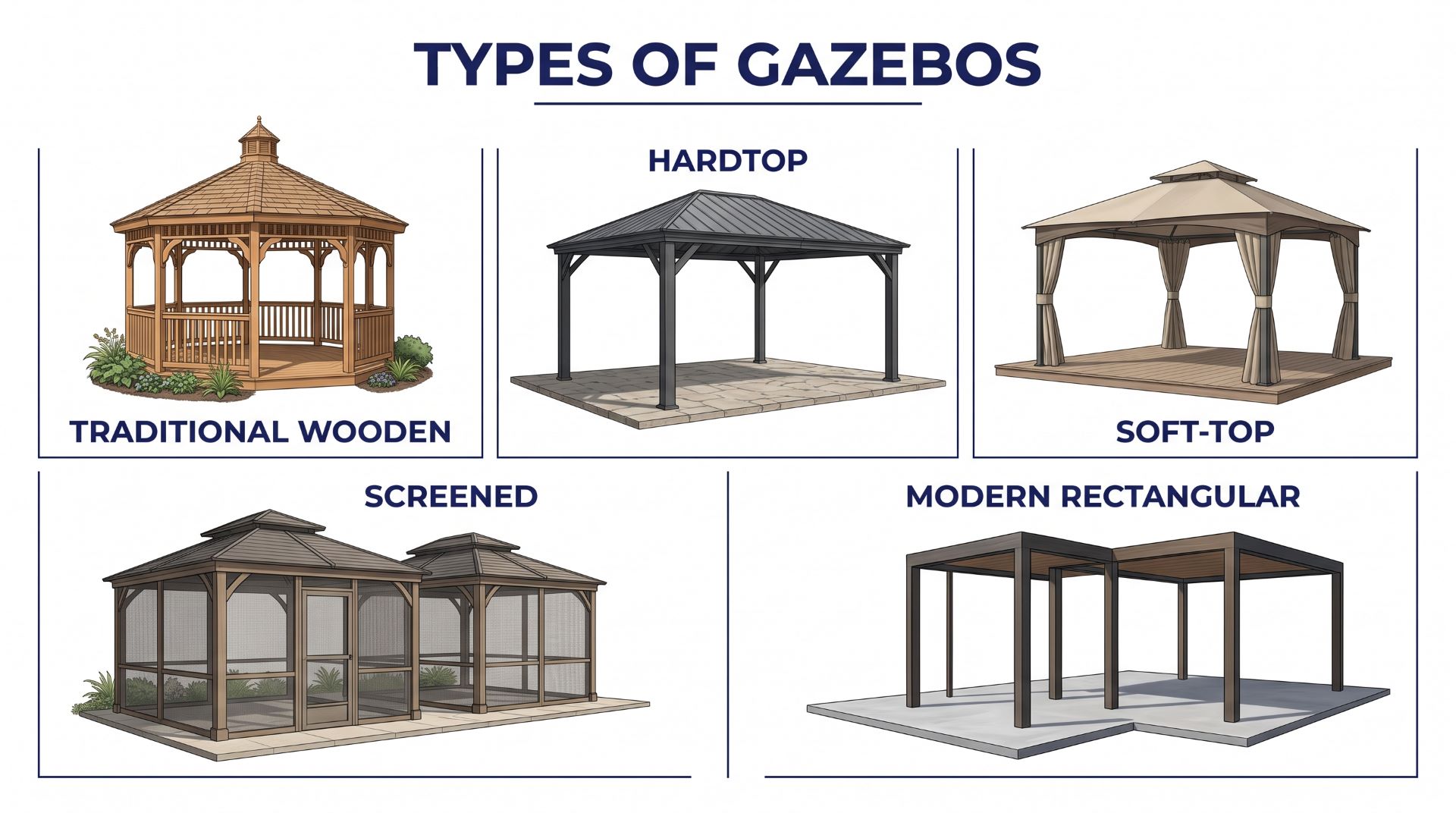
Gazebos vary by frame, roof, and intended use. These are the most common options.
Traditional Wooden Gazebos
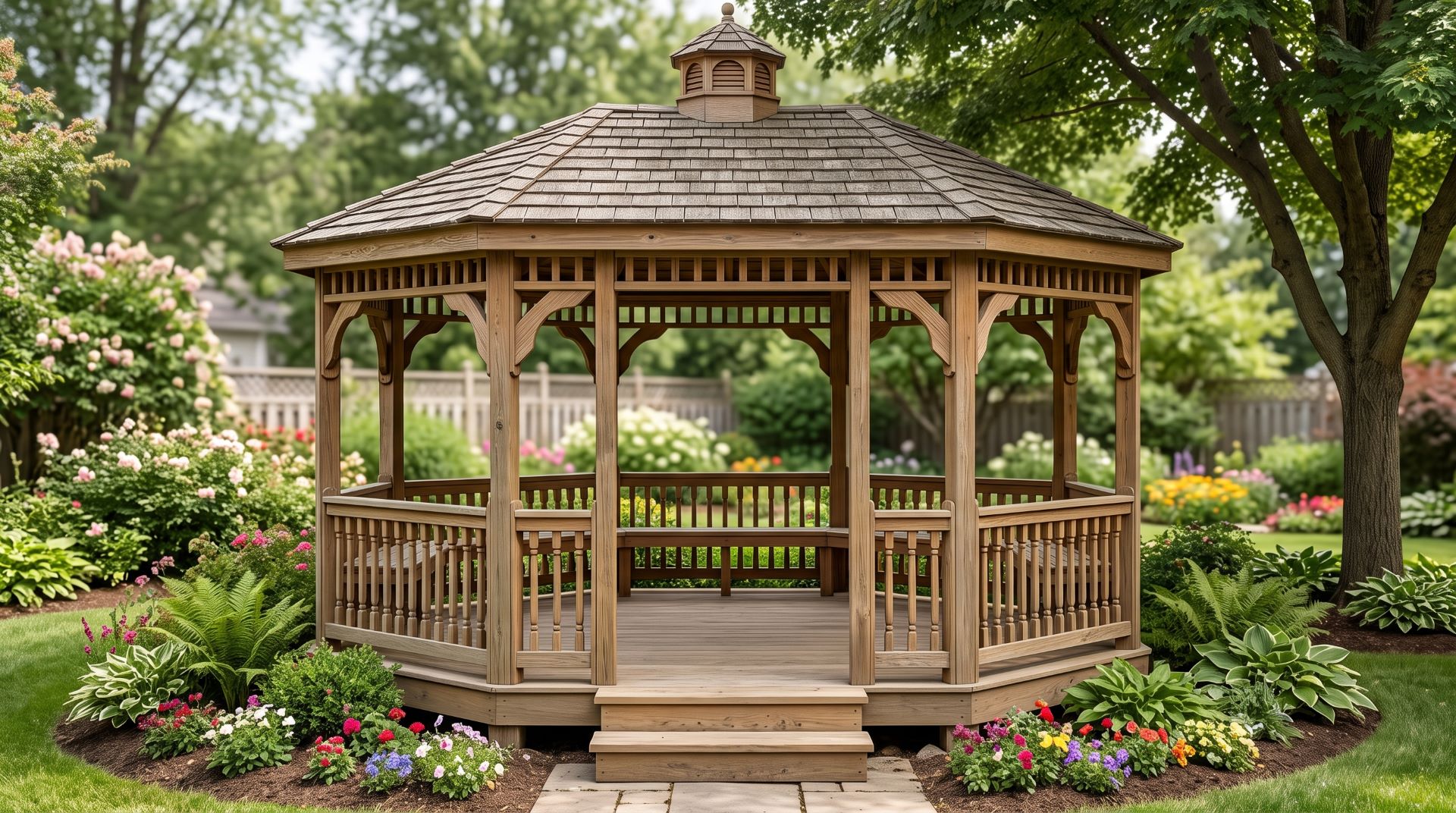
Often hexagonal or octagonal, these designs feature wood posts, pitched roofs, and sometimes railings or benches. Cedar and pressure-treated wood offer a classic garden appearance. Finish and upkeep requirements depend on the wood and coating.
Hardtop Gazebos
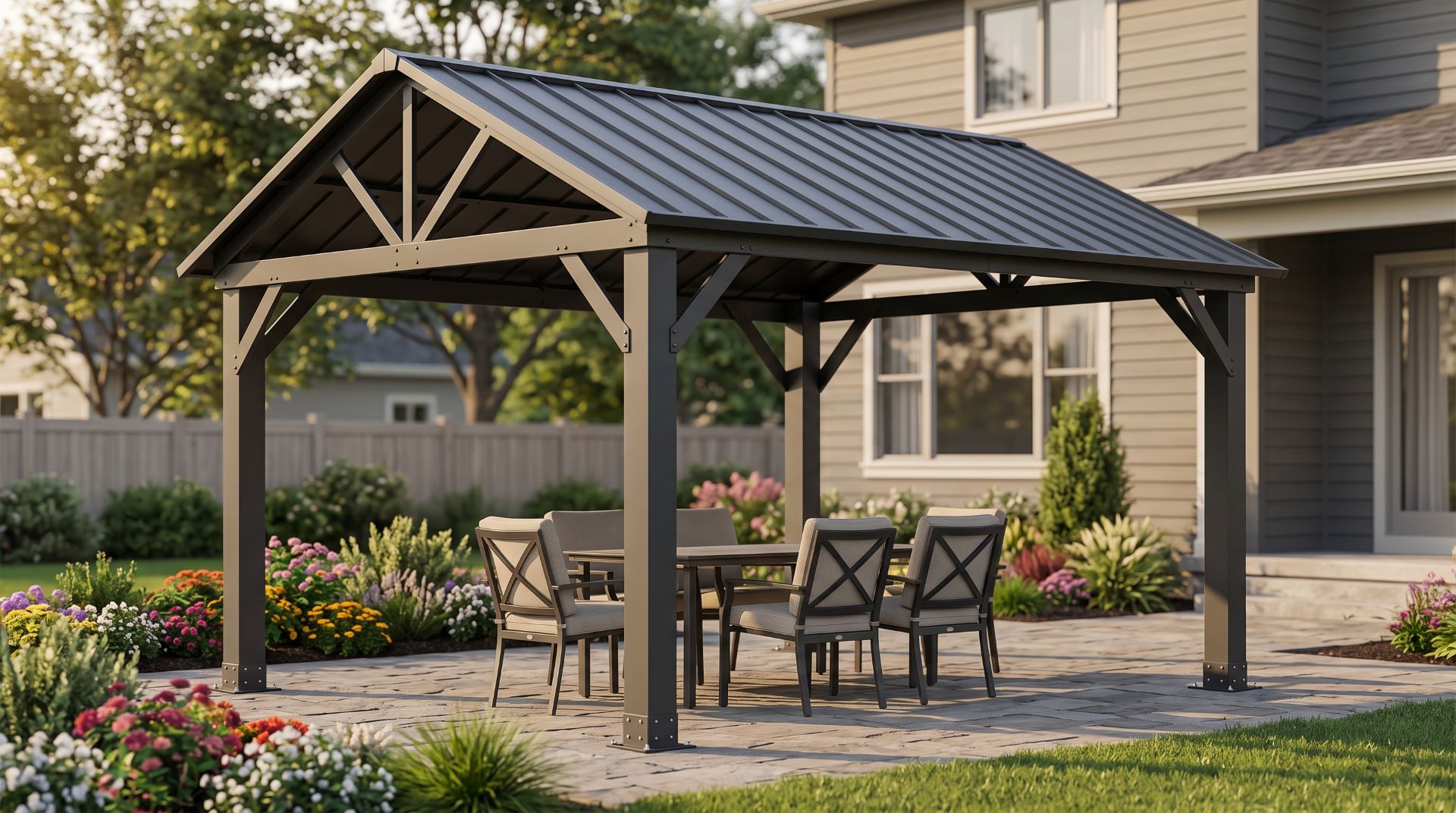
Hardtop gazebos have rigid roofs, often made with steel, aluminum, polycarbonate, or shingles. They suit homeowners seeking a more permanent patio or backyard shelter. Their snow and wind capacity depends on the specific engineered model, not the term hardtop.
Soft-Top and Pop-Up Gazebos
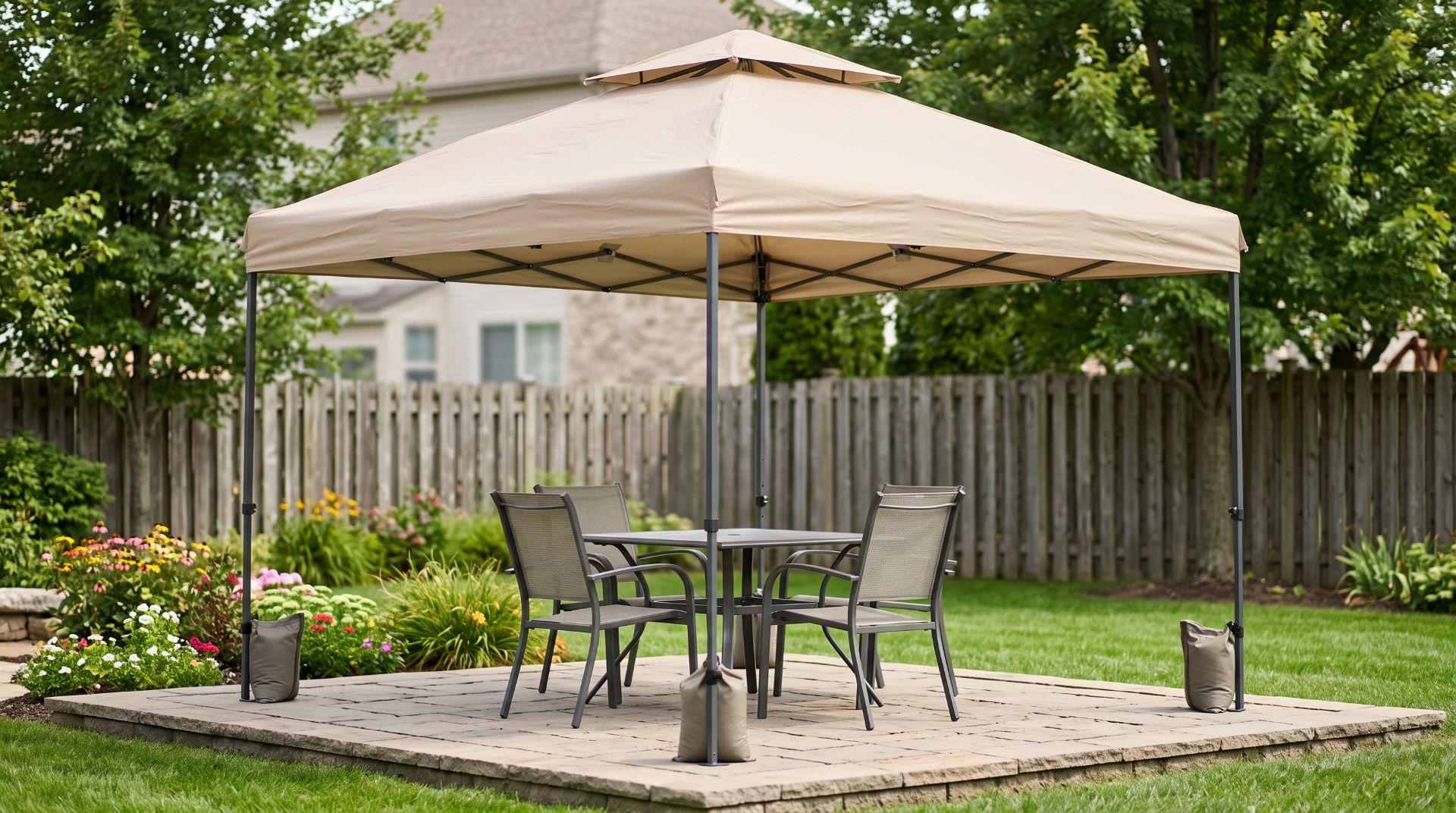
These lightweight structures use fabric canopies, usually over metal frames. Some are intended for seasonal use; others are temporary pop-up shelters. They often cost less but may need removal before storms or winter.
Screened Gazebos
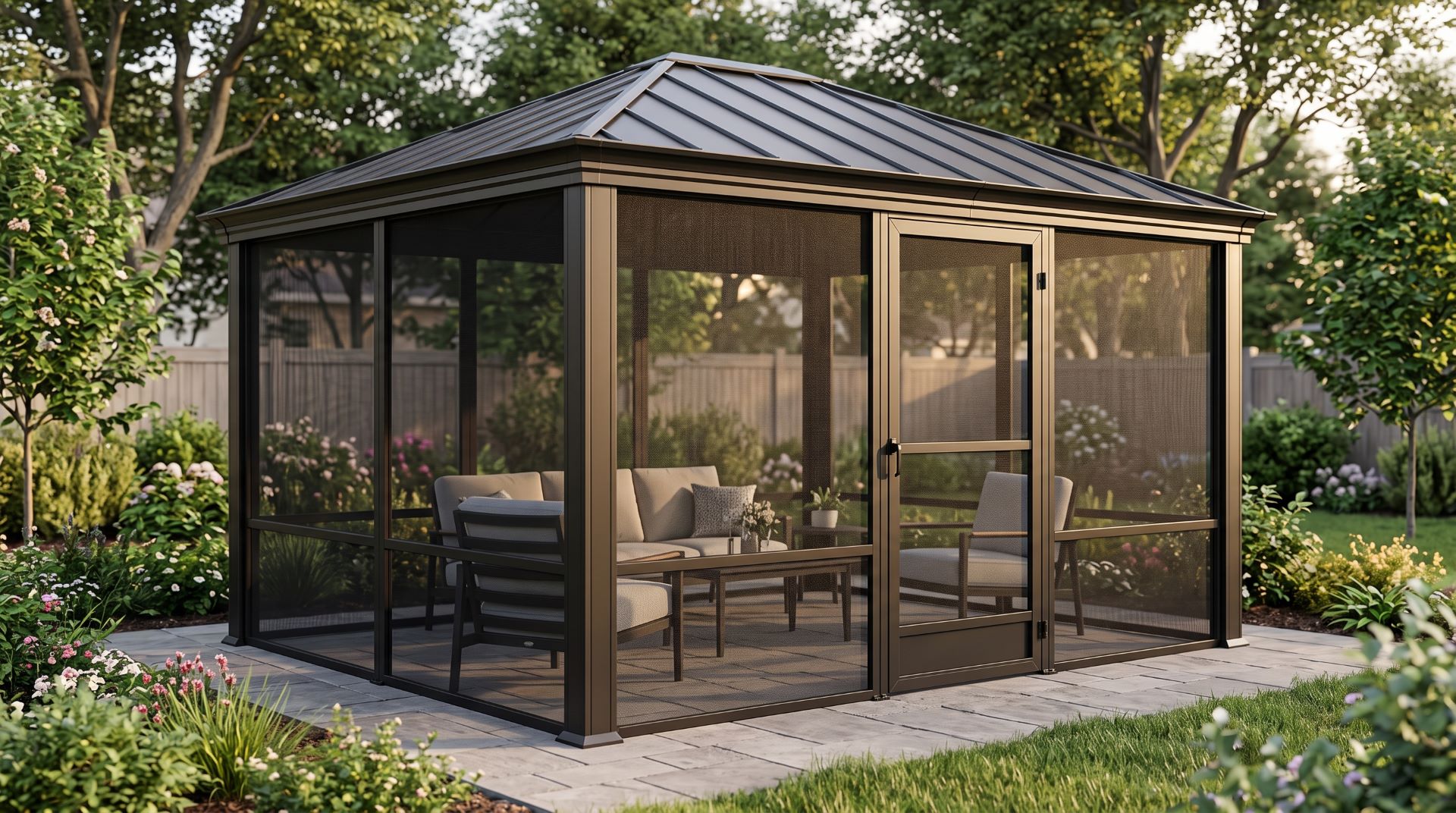
Mesh panels help keep insects out while allowing airflow. Some use removable screens and curtains. Check door placement, panel access, and how screens attach before ordering.
Modern Rectangular Gazebos
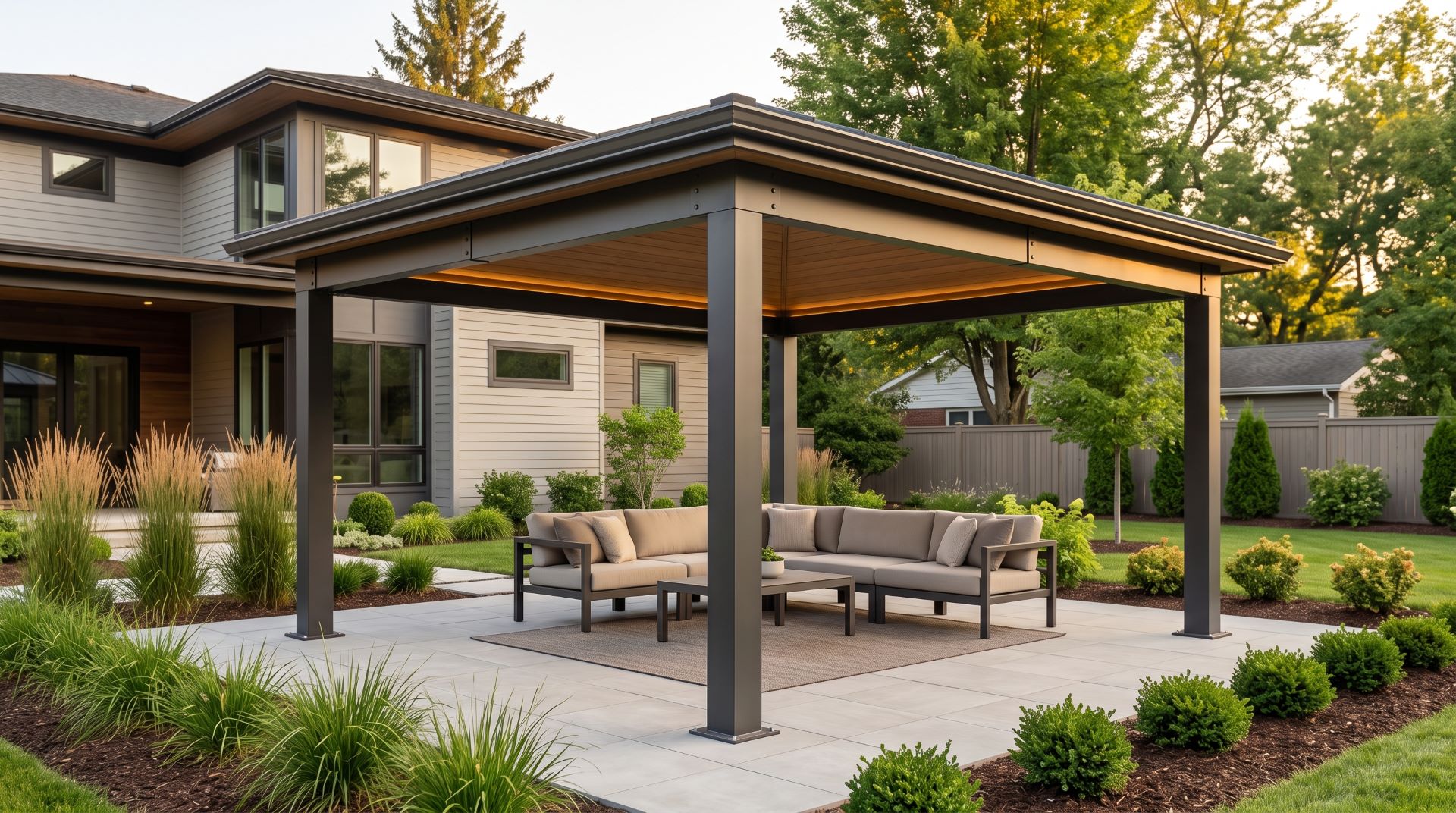
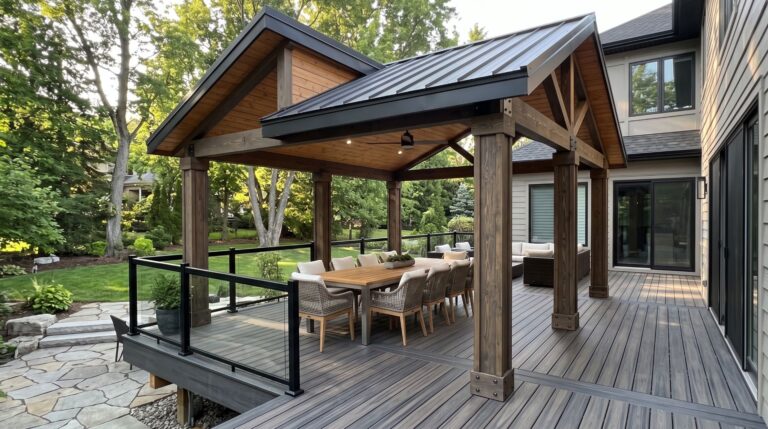
Square and rectangular kits are popular for dining tables, sectionals, and larger patios. Straight edges can make furniture placement easier. Designs range from cedar posts with metal roofs to all-metal frames.
Gazebo Materials and Roof Choices
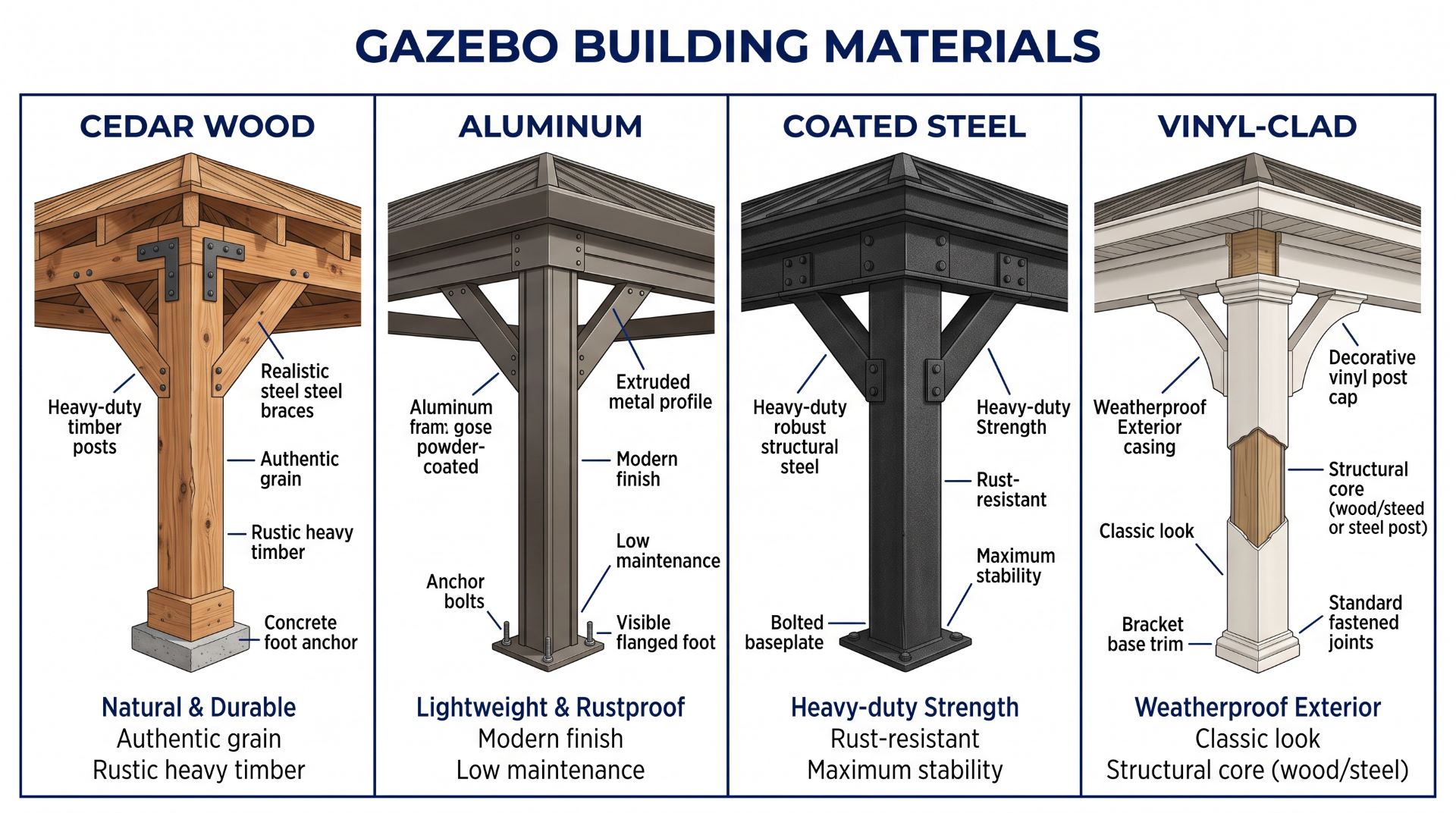
Materials affect appearance, upkeep, and cost. Compare the whole system, including the roof, fasteners, finish, and support posts.
| Material | Main Benefit | What To Check |
|---|---|---|
| Cedar or treated wood | Natural look and design flexibility | Maintenance, decay protection, and finish requirements |
| Aluminum | Lightweight and corrosion resistant | Frame design, connections, and rated loads |
| Coated steel | Strong frame options | Corrosion protection and coating care |
| Vinyl-clad systems | Easy-to-clean exterior | Internal support structure and temperature limits |
Roof options include metal panels, asphalt shingles, polycarbonate, and fabric. Solid roofs provide better coverage than open pergola slats, but waterproofing and drainage differ by product.
For colder climates, verify the manufacturer’s published roof-load information before choosing a kit.
What Is a Gazebo Kit, and What Comes With It?
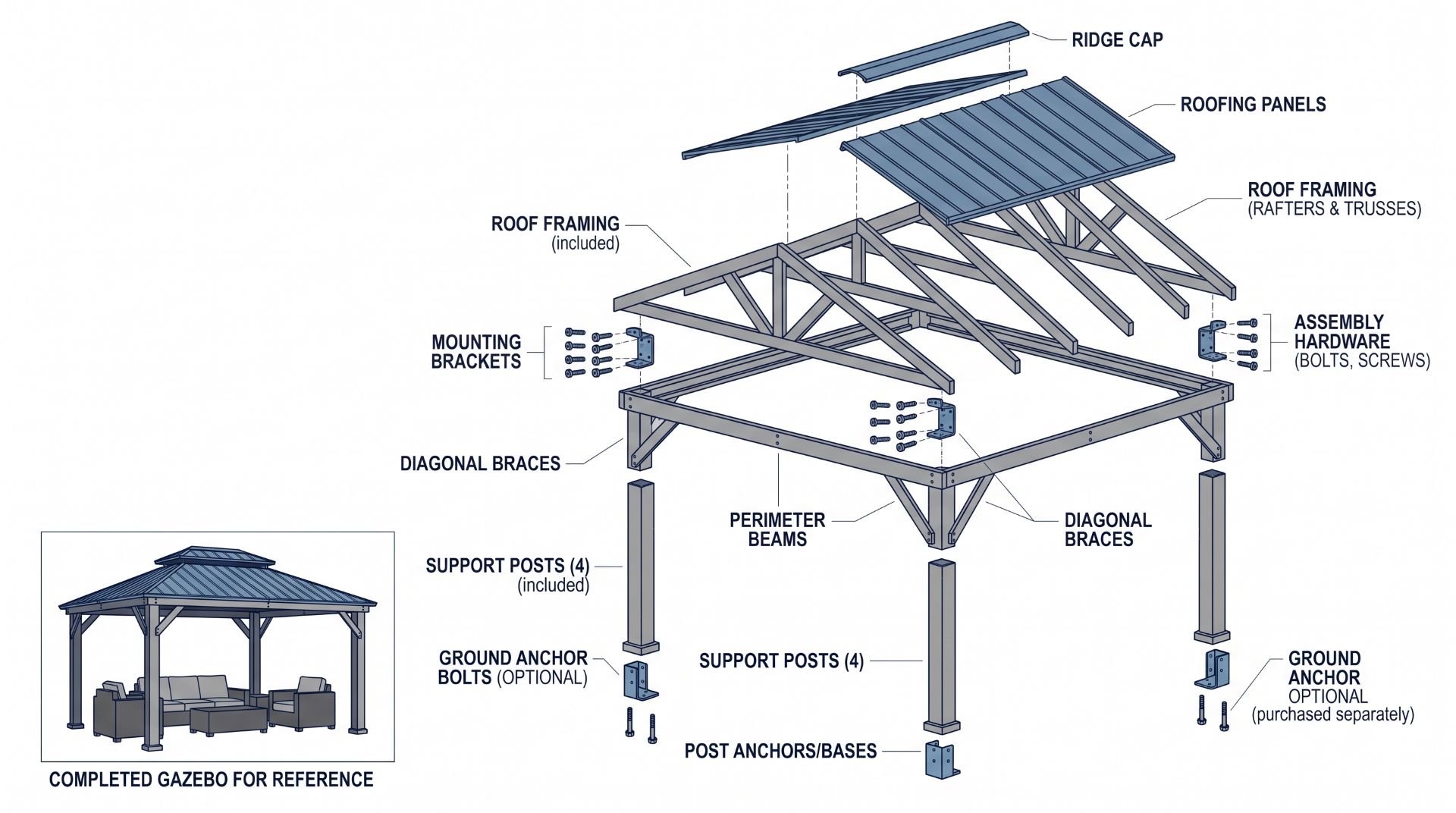
A complete gazebo kit packages the main parts required to assemble a specific design. Depending on the model, that may include pre-cut posts, beams, roof components, connectors, and fasteners.
A kit reduces the need to design every component from scratch. It does not mean assembly requires no construction skills, tools, or site preparation.
Before you buy a gazebo kit, confirm:
- The outside dimensions, post spacing, overall height, and roof overhang.
- Exactly which roof panels, hardware, screens, or accessories are included.
- Whether anchoring hardware and foundation materials are supplied separately.
- The required foundation and approved attachment surfaces.
- Published wind and snow ratings, plus any conditions tied to those ratings.
- Assembly instructions, warranty terms, shipping size, and delivery access.
Contractors should review the manual before pricing labor. Homeowners should compare the delivered kit cost with foundation work, permits, and assembly.
Gazebo Sizes and Shapes
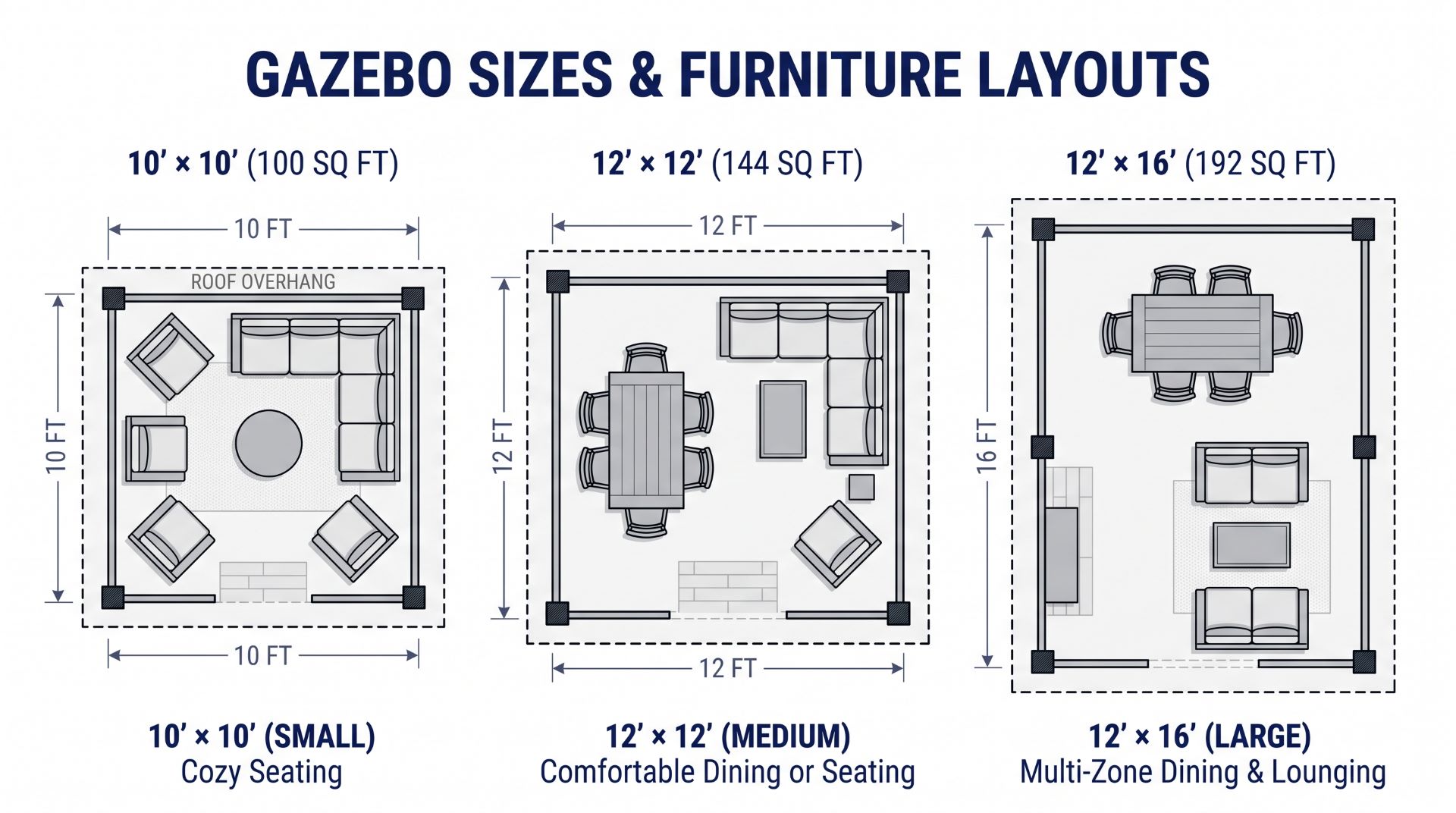
Common kit sizes include 10×10, 12×12, and 12×16 feet. A small model may hold two lounge chairs. A larger footprint can fit a dining set with room to move around it.
| Example Size | Possible Layout |
|---|---|
| 8×8 ft | Compact garden seating |
| 10×10 ft | Small table or lounge grouping |
| 12×12 ft | Dining set with circulation space |
| 12×16 ft | Larger lounge or dining arrangement |
Check whether the advertised size measures the roof, the posts, or the usable floor. An octagonal model can have less interior space than a square model with the same advertised width.
Measure furniture, walking clearance, access points, and roof overhang before choosing.
Choosing a Gazebo for Midwest Weather
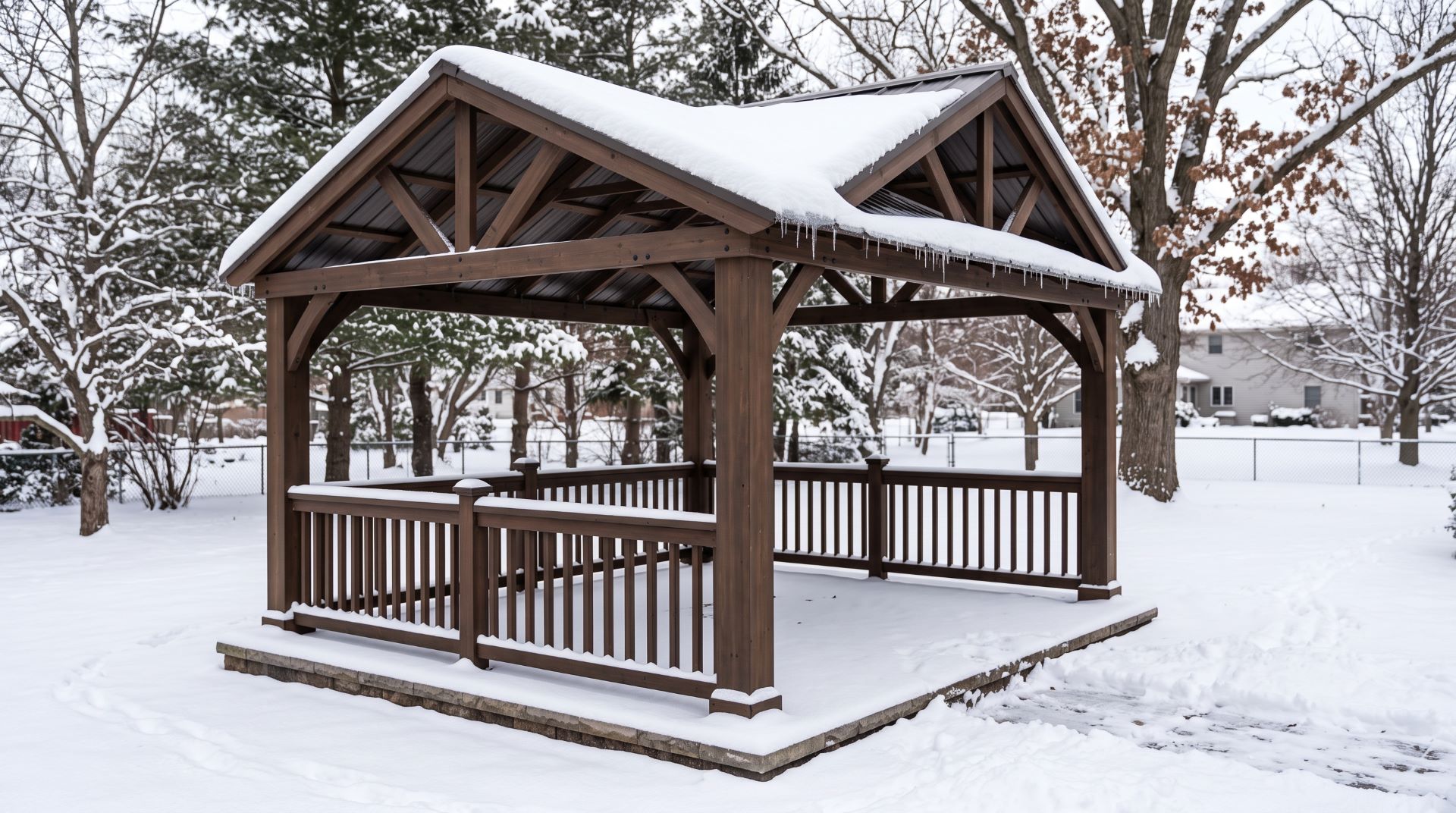
Gazebos sold nationwide face very different weather conditions. A model that suits a mild climate may not meet the demands of northern Illinois, Wisconsin, or Michigan.
Snow and Roof Loads
Wet snow can place heavy weight on a roof. Look for documented snow-load performance and confirm that it meets local design requirements.
Some manufacturers advertise a maximum snow depth or total supported weight. Those numbers are product-specific and should not replace the ground-snow-load and roof-load checks required by local code.
Wind and Anchoring
A gazebo roof can catch strong winds. Wind resistance depends on the frame, connections, anchors, and installation surface.
Follow the exact manufacturer’s anchoring instructions. A published wind rating may only apply when the model is installed as specified.
Freeze-Thaw and Drainage
In Midwest winters, soil movement and standing water can affect foundations. Footing depth, drainage, and frost protection need to follow local requirements.
Allow roof runoff to drain away from posts, paving, and nearby structures. Check how snow will shed from the roof toward paths or doors.
Where Can You Install a Gazebo?
A gazebo can sit on a suitable concrete slab, patio, freestanding foundation, or engineered deck. Not every surface works with every kit.
Choose a site with enough space for post locations, roof overhang, access, and maintenance. Check overhead wires, underground utilities, property lines, and drainage paths before digging.
Can You Install a Gazebo on an Existing Deck?
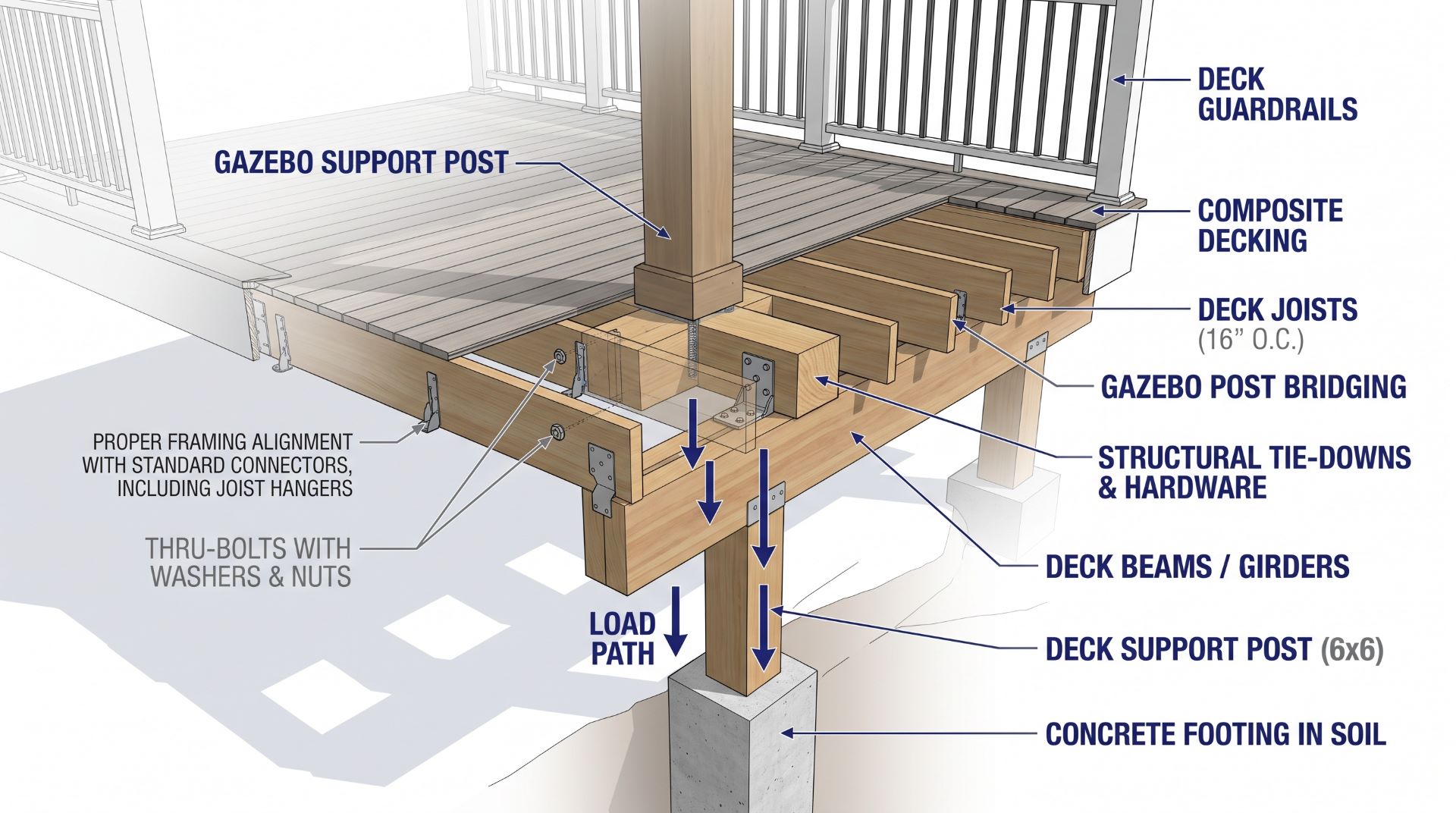
Yes, but only when the deck’s structure and connections can carry the added roof, wind, and snow loads. A deck designed for people and furniture is not automatically designed for a gazebo.
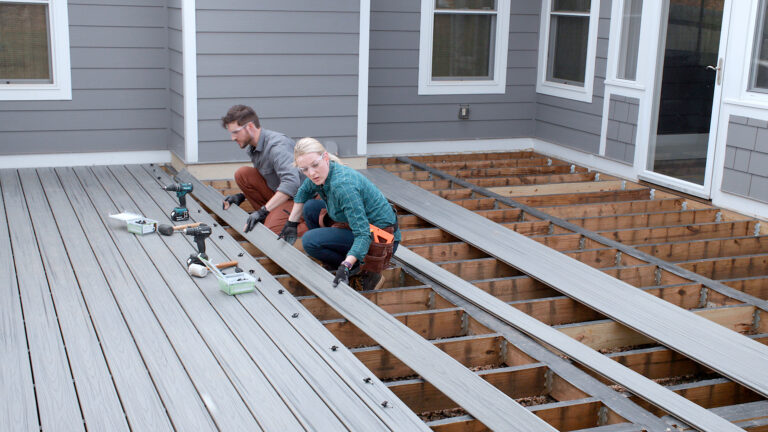
Never secure gazebo posts only to composite or PVC deck boards, or to existing guardrail posts. The loads must travel through approved structural connections to adequate supports and foundations.
A qualified designer or builder may need to assess the deck framing and structural components. Keep required deck railings and safe exits intact.
For a new project, you can coordinate the kit with composite and PVC decking materials, provided the whole structure is designed for the loads.
Do Gazebos Need Permits?
Permit rules vary by city and county. For example, the model 2024 International Residential Code includes a permit exemption for certain one-story detached accessory structures of 200 square feet or less. Local amendments may change that rule.
An exemption does not cancel zoning setbacks, engineering, anchoring, or other safety requirements. Ask your building department and HOA before ordering.
Gazebo vs. Pergola vs. Pavilion
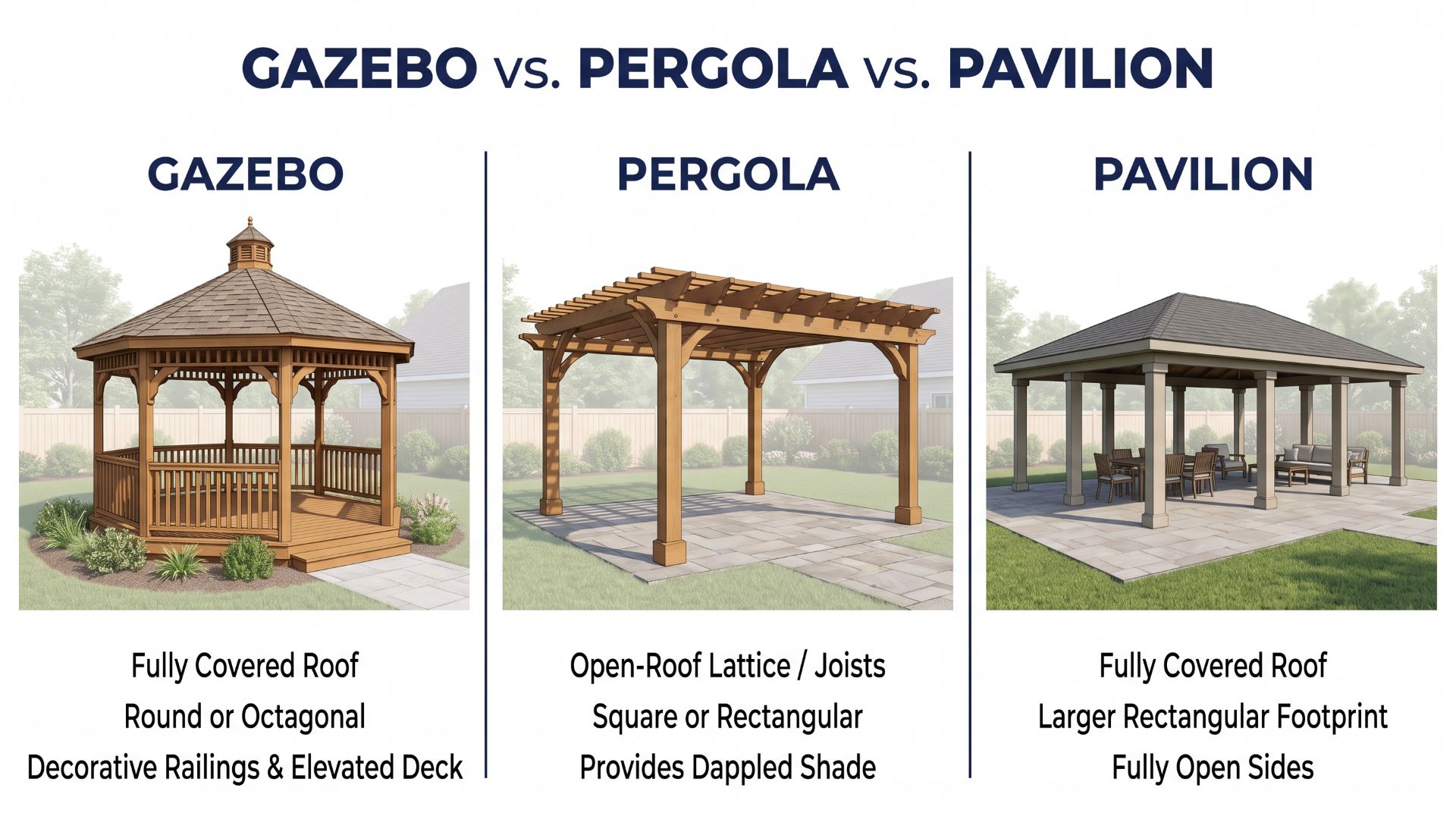
Each structure offers a different style of outdoor cover.
| Feature | Gazebo | Pergola | Pavilion |
|---|---|---|---|
| Typical roof | Solid or fully covered | Open slats or adjustable cover | Solid or fully covered |
| Common footprint | Polygonal, square, or rectangular | Usually square or rectangular | Usually rectangular |
| Common use | Sheltered seating and dining | Filtered shade and outdoor layout | Larger covered gathering space |
Traditional pergolas have open rafters or slats that allow sunlight and rain through, while some modern designs offer adjustable roof coverage. Learn more about their features, materials, and uses in our guide, What Is a Pergola?. For a direct comparison between the two structures, read our Pergola vs Gazebo guide.
A pavilion usually has a simpler open-sided layout suited to larger gatherings. Learn how the designs overlap in Gazebo vs Pavilion.
How Much Does a Gazebo Cost in 2026?
Costs depend on size, materials, delivery, foundation work, and labor. National market estimates help with budgeting, but they are not PDS selling prices.
| Project type | National Cost Estimate |
|---|---|
| Portable fabric gazebo | $150 – $700, materials only |
| 12×12 ft gazebo kit | $3,600 – $8,600, kit only |
| 12×12 ft gazebo kit with assembly | $4,300 – $10,000, installed |
| 12×12 ft custom-built gazebo | $8,600 – $14,400, installed |
Source: HomeGuide, February 2026. Actual costs vary by region and project.
A lower-priced kit may become a costly project when it needs a new foundation, site grading, or special access. Ask suppliers to separate kit materials, freight, options, and installation costs.
How to Choose the Right Gazebo Kit
Start with how you will use the gazebo. Then work through these decisions:
- Measure the site. Include roof overhang, furniture, and safe walking routes.
- Choose the roof and frame. Match upkeep preferences and local weather needs.
- Confirm engineering information. Review wind and snow ratings for your address.
- Plan the foundation. Verify approved anchors, concrete needs, or deck support.
- Price the full project. Include freight, permits, assembly, screens, and accessories.
A complete kit is often easier to price than a one-off design. Still, the right choice depends on the exact product and the site.
Gazebo Advantages, Drawbacks, and Care
A gazebo gives you overhead shade, a distinct seating area, and options for screens or curtains. A permanent model can also require a larger budget, regular care, and space for its roof footprint.
Inspect the roof, post bases, anchors, and fasteners at least once a year and after severe weather. Clean surfaces using the manufacturer’s instructions. Treat or refinish wood when required, and remove seasonal canopies before weather conditions exceed their ratings.
Find the Right Gazebo for Your Outdoor Space
Now that you know what a gazebo is, choose the structure around your intended use, site, and weather conditions. A well-selected kit should come with clear specifications and installation instructions.
Premium Decking Supply can discuss complete gazebo kit options and related outdoor living materials with homeowners and contractors nationwide. Product selection, pricing, and availability are confirmed when you request a quote. We supply outdoor living materials; we do not perform gazebo installations.
Request a Free Gazebo Quote and share your ZIP code, preferred size, material, and installation surface. We can help identify available options and prepare a materials quote.
You can also explore our selection of premium decking, railing, and outdoor living materials in the Premium Decking Supply online store, with shipping available nationwide.
Frequently Asked Questions About Gazebos
A gazebo provides a covered place to sit, eat, or gather outdoors. People also use screened models as insect-protected garden retreats.
Both options exist. Fixed hardtop kits often need permanent anchoring, while pop-up fabric gazebos are usually designed for temporary or seasonal use.
Some permanent models can stay outdoors year-round. Check the manufacturer’s roof and wind ratings against local requirements. Remove seasonal roofs when directed.
Yes, with the right design. Plan for moisture, ventilation, service access, and electrical rules. The hot tub’s weight also requires separate support if it sits on a deck.
Often, but not always. Standard kits can reduce design and cutting work. Compare the final cost after foundations, shipping, labor, and optional features.