The place for all your outdoor living space!

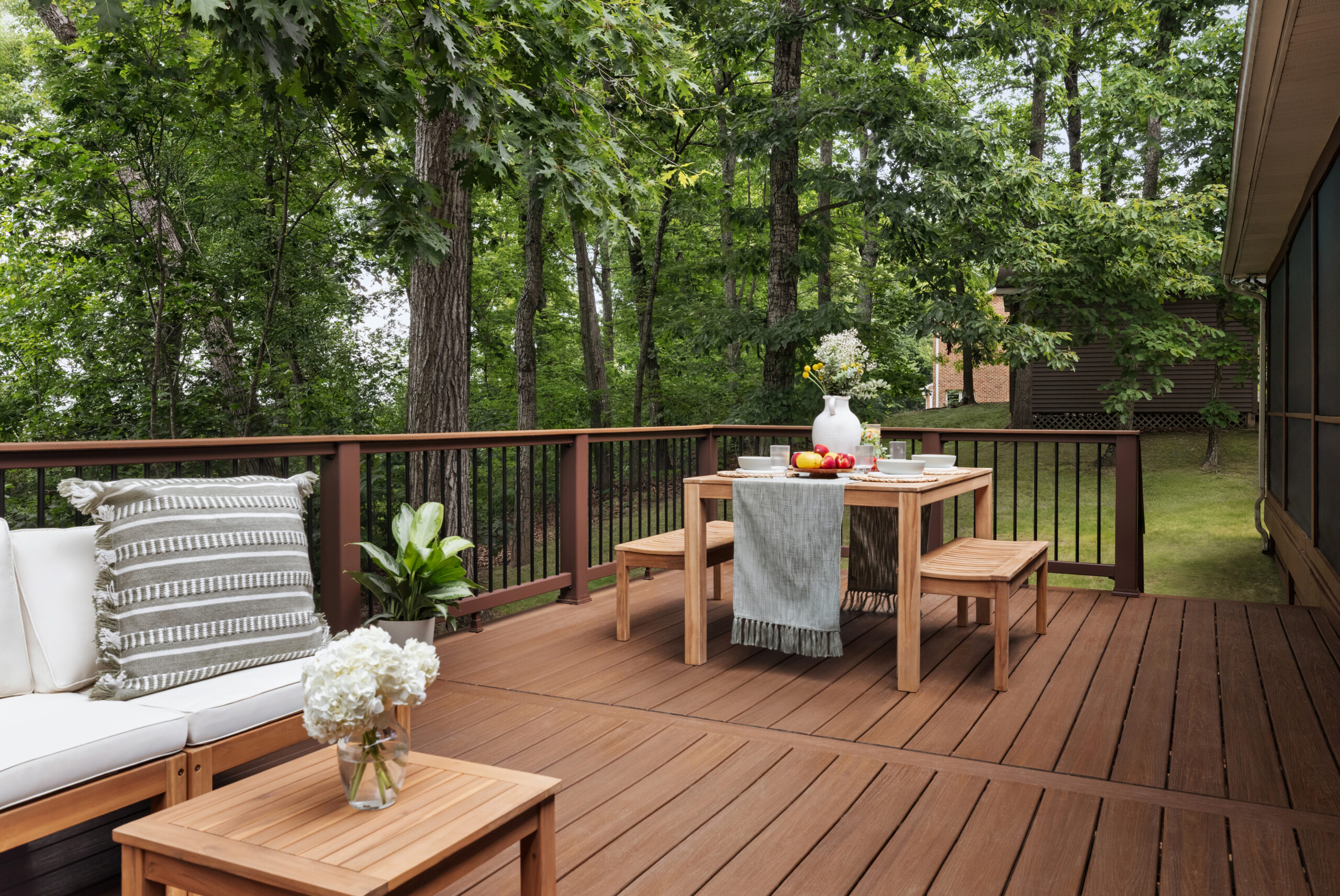
That’s the short version. But “deck” gets used loosely, and the differences between a deck vs porch, a patio, and a landscape trip up a lot of homeowners before they ever call a contractor.
What makes something a deck?
The defining trait of a deck is that it’s elevated and built on a frame, not poured onto the ground. A patio sits flush with the earth. A deck stands above it, even if only by a few inches, supported by a structure underneath.
Most decks attach to the back or side of a house, though plenty stand on their own. They’re open to the sky unless you add a cover. And they’re designed for living, not just looking at, which is why people load them up with grills, dining tables, fire pits, and the occasional hot tub.
Here’s the thing most articles skip: a deck is really an engineering system, not a single object. Every layer leans on the one below it. Footings carry the posts. Posts carry the beams. Beams carry the joists. And the joists carry everything you walk on. Undersize any link in that chain and you’ll feel it, usually as a bounce underfoot or a railing that wobbles when you lean on it.
The parts of a deck, from the ground up
Knowing the deck anatomy helps whether you’re hiring out the work or just trying to sound like you know what you’re talking about. None of the big “what is a deck” articles bother to explain this, which is a shame, because it’s the part that determines whether your deck lasts 10 years or 30.
- Footings. Concrete bases set below the frost line into solid soil. They keep the whole structure from sinking or heaving when the ground freezes.
- Posts. Vertical supports, usually 6×6 lumber, that lift the frame off the ground and let air move underneath to prevent rot.
- Beams (or girders). Horizontal members that carry the load from the joists down to the posts.
- Joists. The framing that supports your deck boards, typically spaced 16 inches apart, center to center. Tighter spacing means a sturdier feel underfoot.
- Ledger board. The board that bolts the deck to your house and supports one whole side of the joists.
- Decking. The surface you actually walk on, the visible boards that get all the attention.
- Railings and stairs. Required for safety on most raised decks, and the part where building codes get strict.
One of those parts matters more than the rest. The ledger board is where most deck collapses start. When it’s poorly flashed or under-fastened, water creeps in, the wood rots from behind, and eventually the deck pulls away from the house, often when it’s crowded with people. Proper flashing and the right hardware aren’t optional details. They’re the difference between a safe deck and a dangerous one.
Types of decks
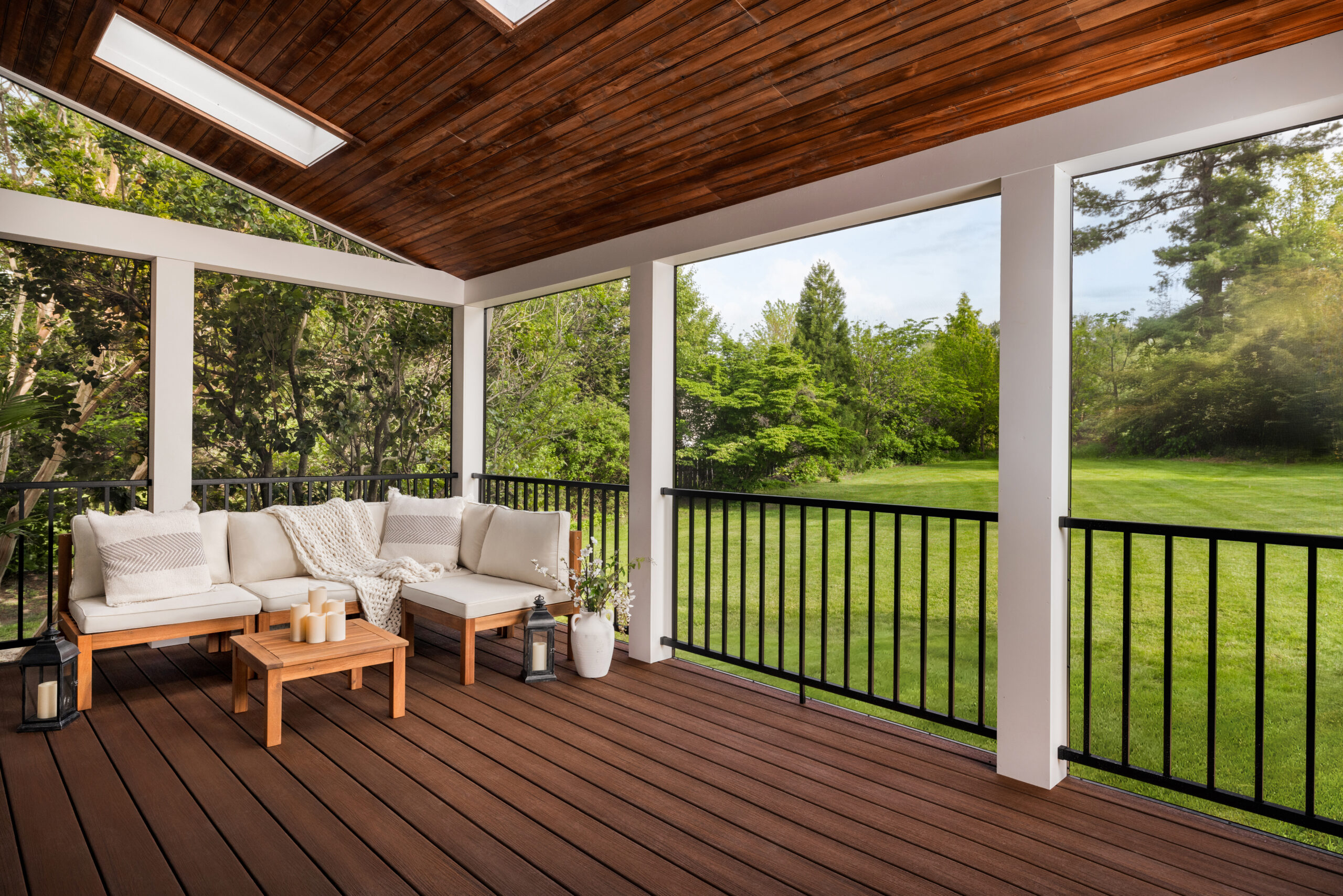
Not all decks are built the same way or for the same yard. Here are the main styles you’ll run into.
Attached decks
The most common type by far. If you’ve ever walked out a back door straight onto a deck, that was an attached deck. It connects to the house framing through a ledger board, which makes it feel like a true extension of your floor plan. It’s the go-to for entertaining, grilling, and morning coffee a few steps from the kitchen. The catch: anything bolted to your house has to meet code where it connects, and that ledger attachment is non-negotiable.
Detached and floating decks
A detached deck stands on its own, structurally independent from the house. People also call these floating decks, freestanding decks, island decks, or platform decks. They’re great for awkward yards, sloped ground, or anyone who wants an outdoor spot tucked away from the house, near a garden or fire pit.
A floating deck is the lowest-key version: a basic platform sitting on deck blocks just a few inches off the ground, with no deep footings. Because it’s not permanently fixed, it sometimes skips the permit requirement (always check locally). The trade-off is design feel. A platform marooned in the middle of the yard can read as a standalone feature rather than an extension of your living space.
Multi-level decks
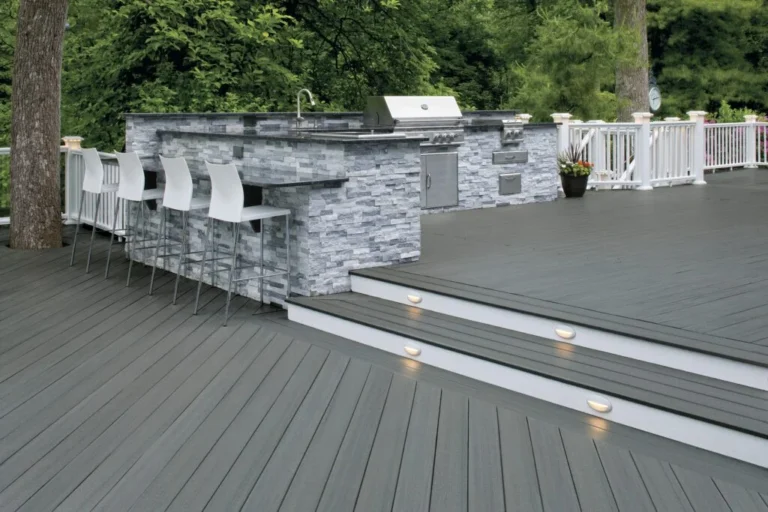
Got a steep or sloping lot? A multi-level deck steps down with the grade, connecting separate platforms with short stair runs. It’s the most ambitious backyard style, and it carves a sprawling yard into distinct zones: one tier for dining, another for lounging, maybe a lower platform for a hot tub.
Wraparound decks
These hug two or more sides of the house, giving you continuous outdoor access and more than one view to enjoy. They work beautifully on larger homes and let you chase sun or shade depending on the time of day. They’re also bigger, so they cost more than a standard attached deck.
Pool and rooftop decks
A pool deck surrounds an above- or in-ground pool and has to prioritize slip resistance and water drainage above all else. Rooftop decks turn unused roof space into an outdoor room, common in cities where yard space is a fantasy. Both are specialized builds with their own structural and code demands.
What decks are made of, and what they cost
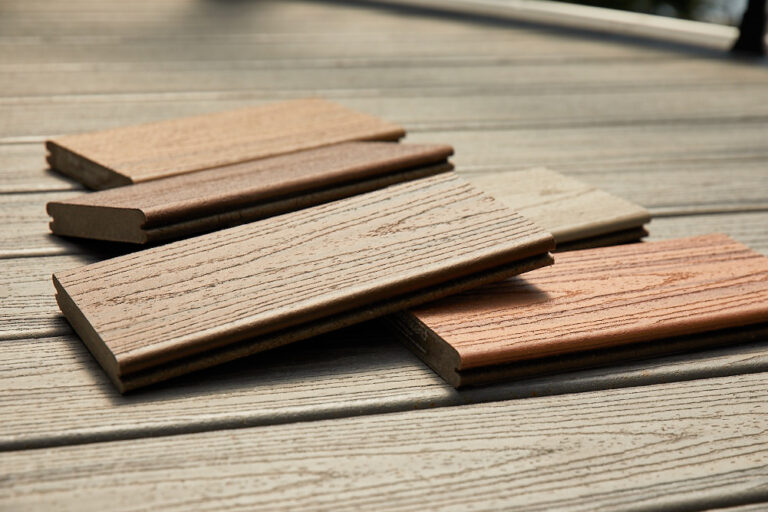
Two material families dominate: natural wood and composite. Your choice drives both the price and how many weekends you’ll spend on upkeep.
Pressure-treated pine is the budget pick, roughly $3 to $6 per square foot for materials. It resists rot and insects but needs regular sealing and staining or it warps and cracks. Step up to cedar or redwood for better looks and natural resistance, or to exotic hardwoods like ipe ($10 to $20 per square foot) for serious durability and a premium price.
Composite decking, made from recycled wood fibers and plastic, runs about $5 to $14 per square foot for material alone. It resists fading, staining, and mold, and it never needs resealing. The upfront cost stings more than wood, but you buy back the difference in skipped maintenance over the years. Cellular PVC sits at the top of the range, fully synthetic and lightweight.
For a full installed project, the 2025 Zonda Cost vs Value Report puts the national average at $18,263 for a wood deck addition and $25,096 for composite. Real-world ranges land between $25 and $80 per square foot installed, depending on material, deck height, and local labor rates.
Now for a number that surprises people. A wood deck recoups about 94.9% of its cost at resale, while composite recoups 88.5%, both per the 2025 Zonda data. That’s the opposite of what a lot of older cost guides claim. Wood wins on percentage recouped because it costs less upfront; composite wins on the years you don’t spend staining it. Either way, a deck addition beats most interior remodels for return on investment.
Deck vs. patio vs. porch
This is where the confusion lives, so here’s a clean comparison.
| Feature | Deck | Patio | Porch |
|---|---|---|---|
| Elevation | Raised on a frame | Flush with the ground | Usually raised, at house level |
| Location | Back or side yard | Back or side yard | Front of the house, at the entrance |
| Roof | Open (unless covered) | Open | Almost always covered |
| Material | Wood or composite | Concrete, brick, stone | Wood, composite, stone, concrete |
| Main use | Entertaining, lounging | Dining, relaxing | Greeting guests, sitting |
A patio is a ground-level paved area, no frame, no weight limit, which is why fire pits and heavy furniture feel right at home on one. A porch sits at the front of the house, almost always under a roof, and tends to be smaller and more about welcoming people than hosting a crowd. A deck splits the difference: raised like a porch, private and spacious like a backyard patio, and open to the sky unless you cover it.
Wait, doesn’t “deck” mean other things too?
It does, and that’s worth a quick detour because the word is genuinely loaded.
On a ship, a deck is the horizontal floor that forms the top of the hull. In a business meeting, a “deck” is a set of presentation slides. In card games, a deck is the full set of cards. There’s even a “deck” on bridges, the roadway surface you drive across.
People also mix up “deck” with “dock,” and they’re not the same structure at all. A dock is a platform built over water for boats; a deck is built over land for living. If you’re weighing one against the other, here’s the difference between a deck and a dock, and if you’re starting from scratch, this covers what a dock is and when you need one.
For the rest of this article, though, we’re talking about the backyard kind.
Frequently Asked Questions
Usually, but not always. Attached decks bolt to the house through a ledger board and are the most common type. Detached or floating decks stand on their own anywhere in the yard, which is handy for sloped lots or when you want a separate outdoor spot.
Most attached and raised decks require a building permit, and the inspection focuses heavily on the ledger attachment and footings. Low ground-level floating decks sometimes don’t need one. Check with your local building department before you start, because the rules vary by municipality and the penalties for skipping aren’t fun.
A deck is raised and built on a frame of posts and joists. A patio sits directly on the ground and is paved with concrete, brick, or stone. Decks suit sloped or uneven yards; patios suit flat, level ground.
A pressure-treated wood deck lasts around 15 to 20 years with regular maintenance. Composite decks often run 25 to 30 years or more and skip the annual staining. The frame underneath can outlast the surface boards if the footings and ledger were done right.
Yes, and more than most projects. A wood deck recoups roughly 94.9% of its cost at resale and composite about 88.5%, per the 2025 Zonda Cost vs Value Report. A deck won’t add to your home’s official square footage, but it boosts curb appeal and usable living space.
A small, low floating deck is a realistic DIY project for someone handy. Anything attached to the house, raised, or fitted with railings and stairs is where mistakes turn dangerous, since that’s exactly where deck failures happen. For those, hire a licensed builder.