The place for all your outdoor living space!


Article Overview
- Quick Answer
- What Actually Makes Something a Dock?
- The Main Types of Docks
- Dock vs. Deck: A Distinction That Matters
- Dock Materials: What Holds Up and What Doesn't
- What Does a Dock Cost to Build?
- Permits: What You Need Before You Build
- Dock Safety: The Part Most Guides Skip
- Dock vs. Boat Slip: The Difference Explained
- Dock vs. Pier vs. Wharf: The Short Version
- Frequently Asked Questions
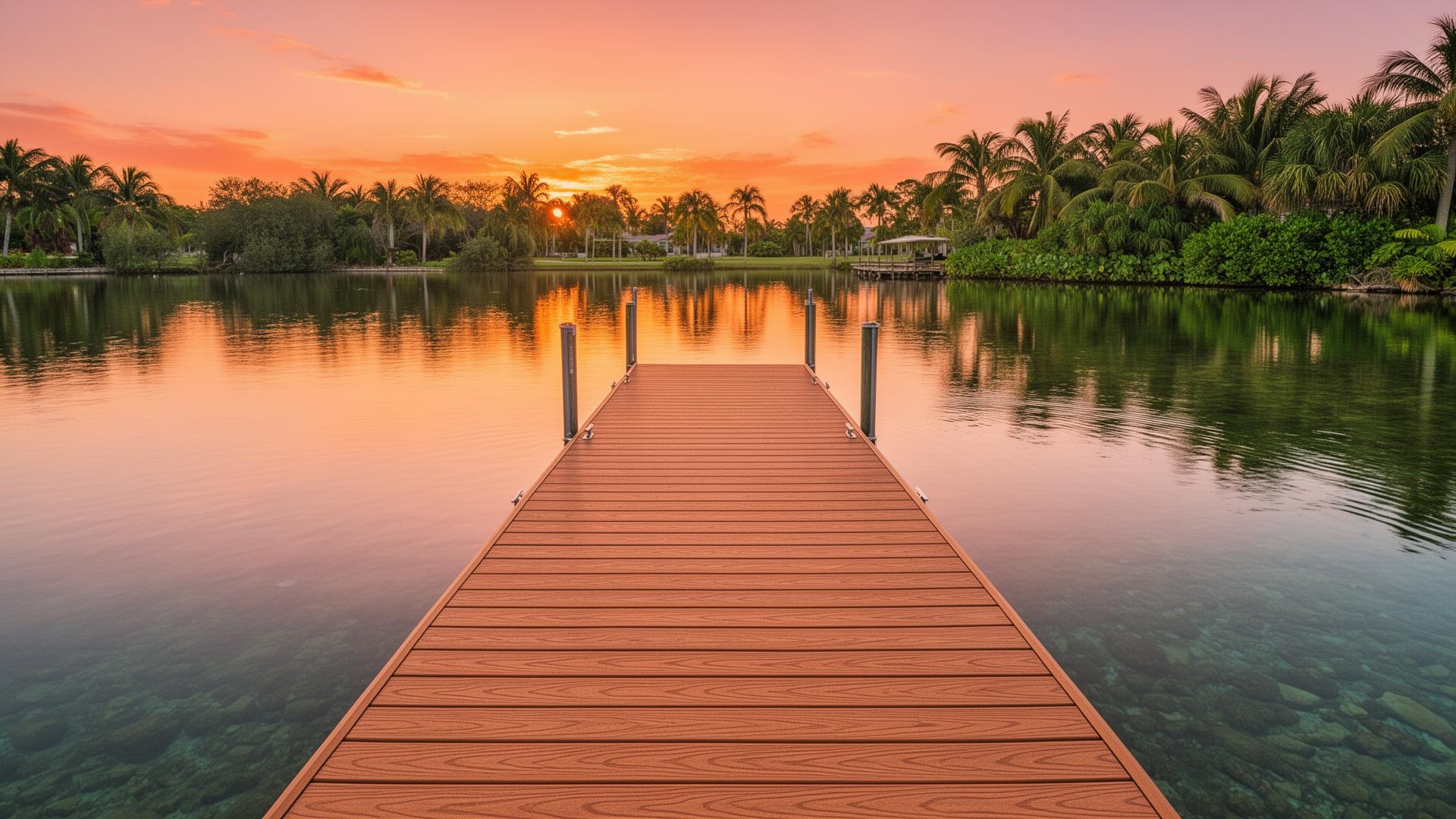
If you’ve ever asked what is a dock, you probably already have a clear mental image: wood planks, a couple of cleats, maybe a boat lift on the side. But ask what makes a dock different from a pier, or which materials actually hold up after five Midwest winters, and the conversation gets complicated fast. This guide covers all of it – so you or your contractor can build the right thing the first time.
What Actually Makes Something a Dock?
A dock is any structure attached to the shore that gives you direct, level access to the water. Level is the key word. Docks sit at or very close to the water’s surface, which is what makes them practical for getting in and out of a boat.
That’s the core difference between a dock and a pier. A pier is elevated above the water on pilings – think of a classic fishing pier or a coastal boardwalk. Water flows underneath it. A dock meets the water’s surface, which is why boats tie up to docks, not piers.
Wharves are a separate category. A wharf is a large, heavy-duty commercial platform found at shipping terminals and industrial ports. Most waterfront homeowners will never need one. They need a dock.
People use these terms interchangeably all the time, and nobody’s going to correct you at the boat launch. But when you’re planning a build and sourcing materials, knowing which structure you’re actually putting together matters.
The Main Types of Docks
There’s no single “dock.” The right type depends on your water depth, how much the level fluctuates through the season, your local climate, and how you plan to use it. Here’s what residential waterfront owners are actually building.
Fixed (Pile) Docks
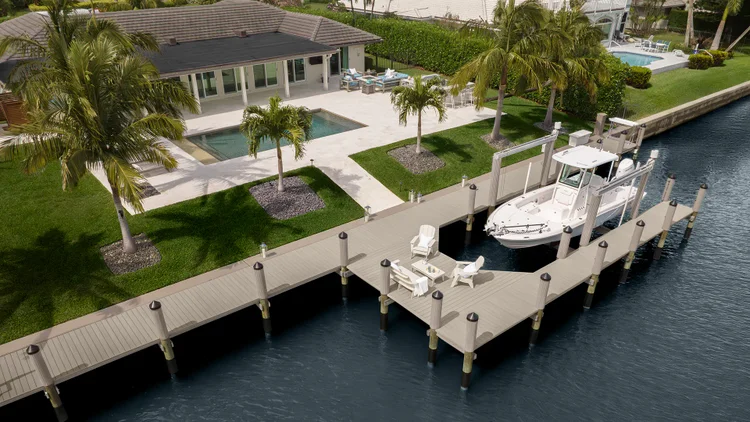
Fixed docks are anchored to the lakebed using driven pilings – wood, steel, or concrete posts driven deep into the bottom. The platform on top doesn’t move.
These are the most stable option available. They handle waves and wind well, they don’t drift, and they’re what most people picture when they think “permanent dock.” Fixed docks work best where water levels stay relatively consistent through the year.
The catch: if the water rises too much, a fixed dock ends up submerged. Drop too low and it rides too high for comfortable boat access. Permanent structures also typically require more extensive permits than removable alternatives – something worth knowing before you start ordering materials.
Floating Docks
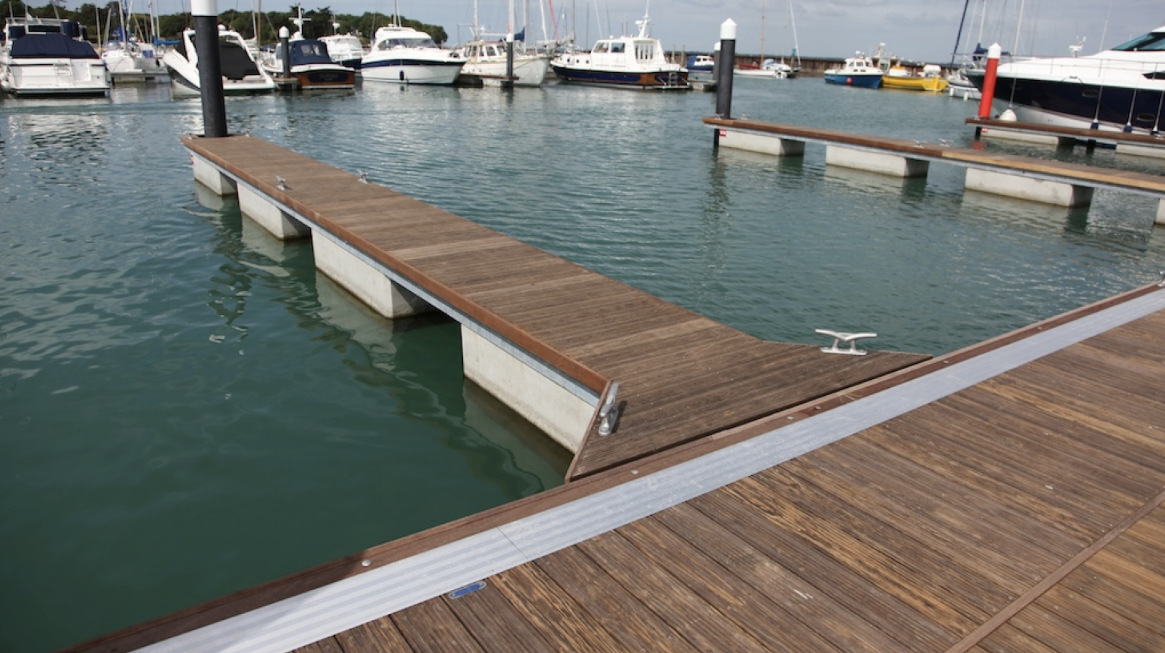
Floating docks rest on the water’s surface using air- or foam-filled flotation units – buoyant pontoons attached under the decking. The whole structure rises and falls with the water level, staying at the same height relative to the surface regardless of what’s happening below it.
This is why floating docks are the preferred choice on lakes and rivers where water levels shift seasonally – which includes most of the waterways across Illinois, Wisconsin, and Indiana. They’re also practical for deeper water where driving pilings isn’t feasible.
Floating docks are anchored by cables, chains, or spud pipes that allow vertical movement while keeping the dock from drifting. In cold-climate regions, they can typically be removed before ice forms and reinstalled in spring – a significant advantage if you’re dealing with real winters.
Pipe (Sectional) Docks
Pipe docks sit between fixed and floating. Aluminum or steel pipe legs press into the lakebed and support a platform above. They’re modular – sections connect together, and the layout can be reconfigured as needed.
Popular on shallow inland lakes with hard, consistent bottoms, pipe docks are relatively affordable, manageable to install, and designed to be pulled before the water freezes. The limitation is depth: pipe legs have a practical maximum reach, and soft or muddy bottoms don’t always hold them reliably.
Roll-In (Wheel-In) Docks
A roll-in dock is mounted on wheels. You roll it into the water at the start of the season from the shore and wheel it back out in the fall. Simple, seasonal, and easy to manage without equipment.
These work well on gently sloping shorelines. Rocky or steep banks make rolling one in a frustrating exercise.
Crib Docks
A crib dock uses a large box-like frame – historically filled with rocks or rubble – that rests on the lake bottom as the foundation. The platform sits on top. Crib docks are extremely stable and common on older northern lake properties. Newer construction regulations around lakebed disturbance have made them less common today, but they’re still in use in many areas.
Dock vs. Deck: A Distinction That Matters
This trips people up more often than you’d expect, and it matters from a materials standpoint.
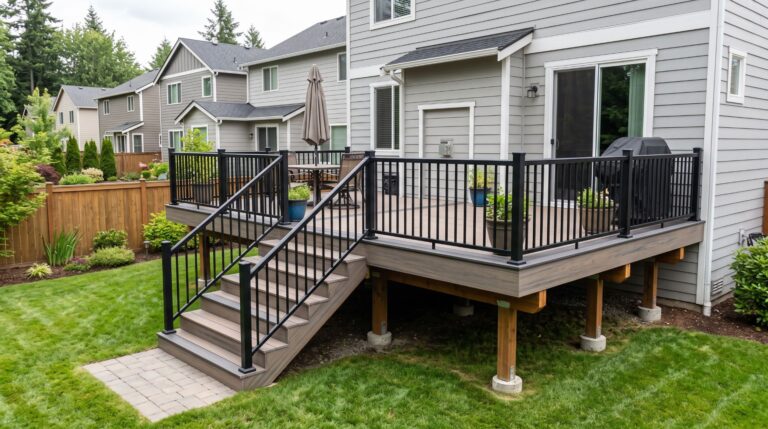
A deck is an outdoor platform attached to a house. A dock is an outdoor platform at the waterline. They share some construction logic – similar framing approaches, often the same decking products – but the environments are completely different.
A deck handles foot traffic and furniture. A dock handles boats, constant water exposure, wave loads, ice pressure, and sometimes the weight of a boat lift. The material choices and structural requirements aren’t the same. Pressure-treated lumber rated for ground contact, composite decking with solid moisture resistance, and hardware that won’t corrode in fresh water are non-negotiables on a dock in a way they aren’t always on a backyard deck.
If a contractor is quoting a dock job using the same material spec as a deck job, that’s worth questioning.
Dock Materials: What Holds Up and What Doesn’t
The materials you build with determine how long the dock lasts, how much maintenance it demands, and what it costs to own over time – not just to build once.
Lumber and Framing
Pressure-treated lumber is the backbone of most residential dock framing. For dock applications, you want lumber rated for ground contact (typically .40 or .60 lb/ft³ treatment level) – especially for any framing close to or in contact with the water. Standard above-ground-rated treated lumber isn’t built for sustained moisture exposure.
For decking surface boards, many builders are moving to composite or tropical hardwoods, but treated lumber remains a practical and cost-effective option when it’s the right grade for the application.
Composite Decking
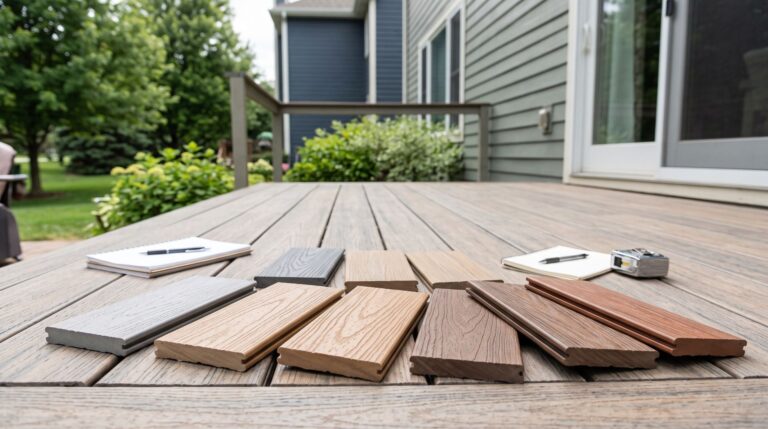
Composite decking has become a standard choice for dock surfaces. It doesn’t splinter, doesn’t need annual sealing or staining, and holds its appearance well even in high-moisture environments. Capped composite products – where the wood-fiber core is wrapped in a protective polymer shell – offer the best moisture resistance.
For a dock that’s going to sit over water in the Midwest through hot summers and freezing winters, the durability of composite versus wood is a real-world difference that shows up within a few seasons.
Helical Piers
Helical piers are a foundation solution used for fixed dock structures and walkways where traditional driven pilings aren’t practical or permitted. They’re steel shafts with helical plates that screw into the ground using hydraulic equipment – no pile driving, no vibration, minimal site disturbance.
For dock applications, helical piers offer a stable, load-bearing foundation that can be installed in a variety of soil and lakebed conditions. They’re increasingly common on dock projects where environmental regulations restrict conventional pile driving, and they’re a product category Premium Decking Supply, Inc. stocks for exactly this kind of application.
Aluminum Framing
Aluminum dock frames are corrosion-resistant, lightweight, and need almost no maintenance. They hold up well through freeze-thaw cycles and won’t rust in freshwater. The tradeoff is a higher material cost up front. Combined with composite decking, aluminum framing is one of the most durable long-term combinations for a residential dock.
Hardware
Dock hardware – cleats, brackets, connectors, anchors, and fasteners – needs to be rated for wet and humid environments. Stainless steel or hot-dipped galvanized hardware is standard. Standard zinc-plated fasteners will fail quickly in a dock environment, usually before the structural materials show any wear.
What Does a Dock Cost to Build?
Real numbers matter when you’re planning.
According to Angi’s 2026 data, most residential dock projects run between $3,981 and $25,690, with an average around $14,835. Cost per square foot ranges from $15 to $40 depending on dock type, materials, and site conditions.
What moves the number significantly:
- Dock type. Floating and pipe docks cost less than permanent pile or fixed docks, which require equipment to drive pilings or set helical piers.
- Materials. Treated lumber is the lowest upfront cost. Aluminum framing with composite decking costs more initially but substantially less to maintain over time.
- Size and configuration. An L-shaped or T-head dock with a boat slip costs more than a straight dock. Every linear foot adds materials and labor.
- Add-ons. A boat lift averages around $8,000. Electrical for dock lighting adds roughly $6–$8 per linear foot plus labor. Railings, storage, fish-cleaning stations — each one adds to the total.
- Permits. Permit fees vary dramatically by county and state. Some areas charge a few hundred dollars. Others involve multiple agency reviews and environmental assessments.
A well-built dock adds real value: waterfront homes with private docks typically sell for 8–15% more than comparable properties without one, according to real estate professionals. In boating communities around Illinois, Wisconsin, and Indiana, a private dock is one of the first things buyers ask about.
Permits: What You Need Before You Build
Almost every dock project in the U.S. requires permits. This isn’t optional and it’s not something to sort out after the fact.
At minimum, you’ll need local zoning approval. Depending on the waterway, you may also need state environmental permits and authorization from the Army Corps of Engineers under Section 404 of the Clean Water Act – particularly on navigable waters.
What regulators look at:
- Environmental impact. Wetlands, aquatic vegetation, fish habitat, and shoreline stability are all on the checklist.
- Navigation clearance. Most jurisdictions limit dock length to roughly one-quarter of the waterway’s width so boat traffic isn’t blocked.
- Design restrictions. Width, railing height, permitted materials, and lighting are all regulated in some areas.
The common mistake is assuming a small or seasonal dock skips permitting. Many states require permits for floating docks even if they’re removed each winter. Contact your local zoning office and state environmental agency before you finalize a design – definitely before you order materials.
Dock Safety: The Part Most Guides Skip
A dock that isn’t built safely isn’t worth the materials it’s made from.
- Non-slip surfaces. Wet wood is slippery. Composite and HDPE decking with textured surfaces significantly reduce slip risk. If kids are using the dock, this isn’t a detail – it’s a requirement.
- Swim ladders. Getting back onto a dock from the water is harder than getting off. A properly mounted swim ladder at water level makes it doable for everyone, not just strong swimmers.
- Railings along the gangway. The walkway from shore to dock is where most falls happen, especially at night. Railings change that.
- Dock bumpers and fenders. Rubber bumpers protect both the dock structure and the hull of any boat tying up. The dock takes a hit every single time a boat comes in.
- Proper fasteners and load ratings. Dock framing held together with undersized or corrosion-prone fasteners fails – sometimes gradually, sometimes suddenly. Use hardware rated for the application and know the load limit of the structure before adding a lift or staging equipment on it.
Dock vs. Boat Slip: The Difference Explained
A dock is the structure. A boat slip is a specific space where one boat parks within a dock system.
At a marina, one main dock structure has many individual slips arranged off it. When you rent a slip, you’re renting a designated parking spot alongside the dock, not the dock itself. On a private residential dock, most homeowners treat the whole thing as “their dock.” But if you’re planning a larger setup with multiple boats – or advising a client on layout – slips are what you’re configuring the dock around.
Dock vs. Pier vs. Wharf: The Short Version
- A pier is elevated above the water on pilings with water flowing beneath it. Built for foot traffic – fishing, walking, sightseeing. Not designed for mooring boats at water level.
- A dock sits at the water’s surface. Boats tie directly to it. It’s the standard waterfront structure for getting in and out of a boat, swimming, and fishing right at the waterline.
- A wharf is a large, heavy-duty commercial platform built for cargo operations and large commercial vessels. You won’t find one behind a residential property.
Frequently Asked Questions
A dock is used to moor boats, board and disembark, swim, fish, and access the water directly from a property. Residential docks serve as private launch and landing platforms for everything from bass boats to kayaks to paddleboards. Some homeowners build them purely as a waterfront sitting area – no boat required.
No. A pier is elevated above the water on pilings, with open water beneath it. A dock meets the water’s surface. Boats tie up to docks. The terms get swapped in conversation all the time, but structurally they’re different.
Most residential dock projects run between $3,981 and $25,690, with an average around $14,835 based on 2026 data. The final cost depends on dock type, materials, size, site conditions, and permits. Fixed pile docks cost more than floating or pipe systems.
Almost certainly yes. Permits are required in virtually every U.S. jurisdiction. Depending on the waterway, you may need approvals from local zoning, your state environmental agency, and the Army Corps of Engineers. Sort this out before you order materials.
For framing, pressure-treated lumber rated for ground contact or aluminum. For the deck surface, composite decking or HDPE for low maintenance and durability. For foundations on fixed docks, helical piers where pile driving isn’t an option. The right combination depends on your site and budget.
Yes. Waterfront properties with private docks typically sell for 8-15% more than comparable homes without one. In active boating communities across the Midwest, a private dock is one of the most consistently requested features among buyers.