The place for all your outdoor living space!
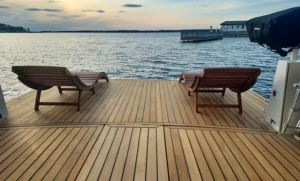

Choose the wrong decking wood and you are looking at rot, warping, and costly repairs within a few years. Choose right and your deck stands for decades with minimal upkeep.
Wood decking remains the most popular choice in North America. The natural beauty, strength, and range of price points make real wood the go-to building material for outdoor living spaces. But not all wood species perform the same outdoors, and the best wood for decks in one situation may be the wrong call in another.
This guide breaks down every major decking wood type by cost, lifespan, maintenance requirements, and natural resistance, so you can make the right call before you buy a single board.
What Makes the Best Decking Wood?
The best decking wood balances four factors: durability, maintenance requirements, natural beauty, and cost per square foot. Get all four right for your situation and your deck performs and looks great for decades.
Durability and Natural Resistance
Outdoor wood faces constant assault from moisture, UV exposure, insects, and temperature swings. The best wood for deck building either contains natural oils that repel these threats or receives chemical treatment to resist them.
Natural resistance means the species contains compounds that protect it from rot and insects without treatment. Cedar, redwood, ipe, and teak all fall into this category. The natural oils in cedar and redwood inhibit fungal growth and repel insects at the cellular level.
Chemical resistance means the wood receives preservative treatment during manufacturing. Pressure treated lumber uses this approach. The treatment forces copper-based wood preservatives deep into the wood fibers, giving softwoods like southern yellow pine the durability they lack on their own.
Maintenance Requirements
Every wood decking option requires some level of upkeep. The difference between species is how much and how often.
Pressure treated lumber and cedar need sealing or staining every two to three years to maintain appearance and prevent surface degradation. Redwood is similar. Tropical hardwoods like ipe require only occasional oiling, once every year or two, to maintain their appearance. Some homeowners skip the oil entirely and let ipe weather to a silver-gray patina naturally.
Key fact: Skipping maintenance shortens the lifespan of any wood deck, but the penalty is far steeper for softwoods than for tropical hardwoods.
Natural Beauty and Aesthetics
Real wood adds warmth and character to an outdoor living space that no other decking material replicates. Each wood species brings its own grain patterns, rich colors, and natural beauty.
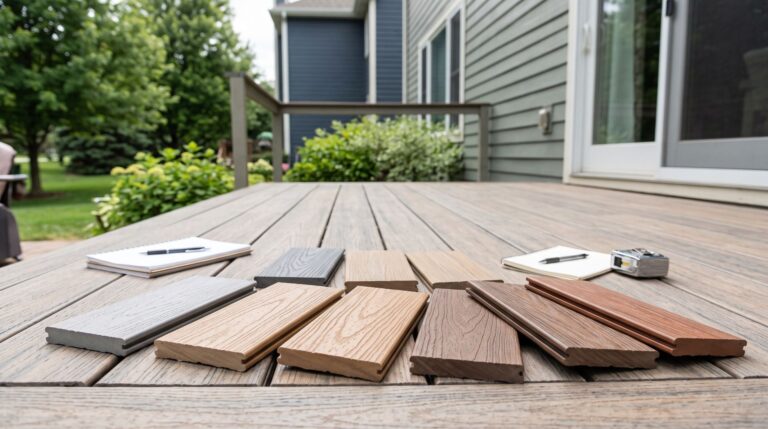
Cedar delivers warm reddish-brown tones that weather to a silver-gray if left unsealed. Redwood carries a deeper, richer color. Ipe and teak display tight, uniform grain patterns and a natural luster that signals quality at a glance. Pressure treated lumber starts with a green tint that fades to a light tan as it dries, and takes stain well once fully cured.
Cost Per Square Foot
Decking wood prices range from under $3 per square foot for pressure treated lumber to over $15 for premium tropical hardwoods. The upfront price is only part of the equation. Factor in maintenance costs over a 20-year period and the gap between budget and premium options narrows significantly.
Types of Wood for Deck Building
Choosing the right types of decking material starts with understanding the three main categories: chemically treated softwoods, naturally durable softwoods, and tropical hardwoods. The best wood decking material for your project depends on which category matches your budget, climate, and maintenance appetite. Each category has distinct advantages, price points, and best-use applications.
Pressure Treated Lumber: Best Budget Option
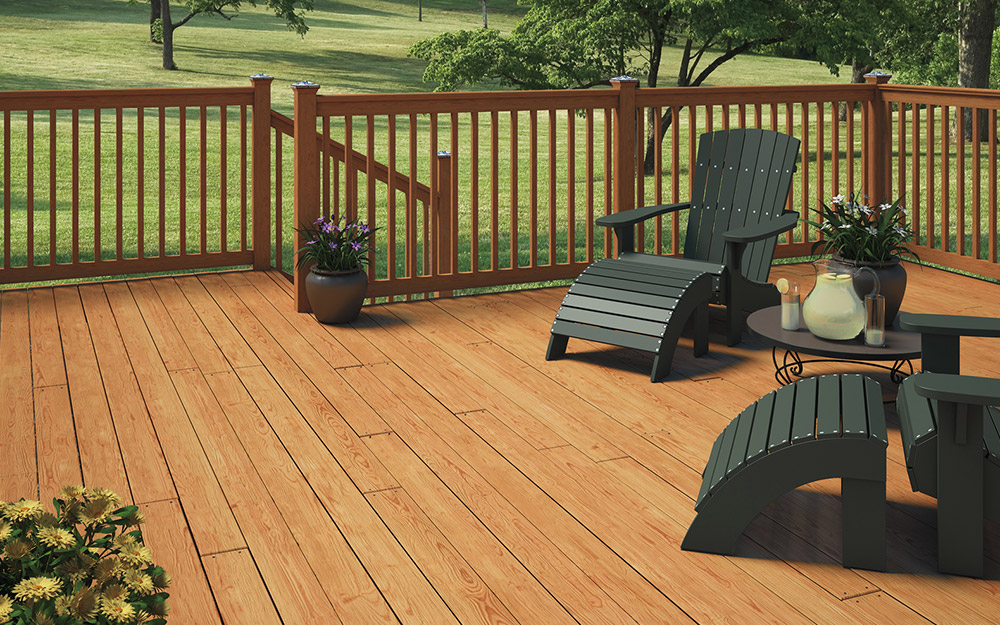
Pressure treated lumber is the most widely used decking wood in North America. The base species is typically southern yellow pine, a dense softwood that accepts chemical preservatives well. Manufacturers force copper-based preservatives into the wood under high pressure, giving it the rot and insect resistance it needs for outdoor use.
Cost: $3 to $6 per square foot for decking boards. Framing lumber runs $2 to $4 per square foot.
Lifespan: 15 to 20 years for deck boards with regular maintenance. Ground contact rated framing lasts 40 years or more.
Maintenance requirements: Seal or stain every two to three years. Apply end-cut preservative to all field cuts on site.
Best for: Budget-conscious builds, deck framing on any project regardless of the surface board choice, and large decks where material cost is a primary factor.
Grade matters: For visible deck boards, specify Select or #1 grade pressure treated lumber. Lower grades contain more knots and defects that affect appearance and can shorten surface lifespan. Save #2 grade for framing and non-visible structural members.
KDAT vs. green: Kiln Dried After Treatment (KDAT) pressure treated boards cost more but arrive ready to stain and warp far less during installation. Standard green pressure treated lumber arrives wet and needs several weeks to dry before coating. For deck boards specifically, KDAT is worth the premium.
For a detailed breakdown of the treatment process, chemical types, and UC grades, read our guide to [pressure treated lumber for decks].
Cedar: Best Mid-Range Natural Wood
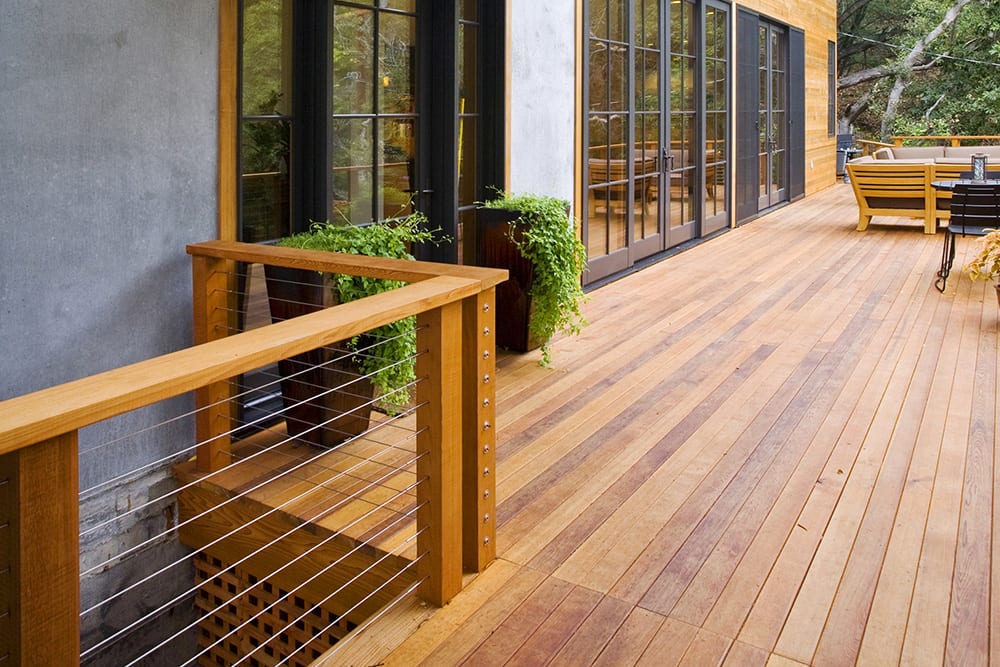
Cedar is the most popular naturally durable softwood for decking. The natural oils in cedar give it resistance to rot, decay, and insects without any chemical treatment. Western red cedar is the most widely available variety and the standard choice for residential decking.
Cost: $5 to $9 per square foot depending on grade and region.
Lifespan: 15 to 25 years with regular sealing and staining. Unsealed cedar weathers to a silver-gray and still resists decay, but surface cracking and splintering accelerate.
Maintenance requirements: Seal or stain every two to three years. Clean annually. Cedar accepts stain well and is easy to work with standard tools.
Natural resistance: Strong resistance to rot and insects due to natural oils. No chemical treatment required, which makes it the preferred choice for homeowners who want chemical-free decking boards.
Natural beauty: Cedar’s warm tones, rich colors, and tight grain patterns make it one of the most visually appealing decking options at a mid-range price tag. It is lighter than most hardwoods and easy to cut and fasten, which reduces installation labor costs.
Best for: Homeowners who want natural wood aesthetics without the cost of tropical hardwoods. Strong performer in most North American climates.
Redwood shares many of cedar’s natural properties, with natural oils that resist rot and insects and a rich, warm color that stands out on any outdoor living space. Availability is the key limitation. Redwood grows primarily in California and the Pacific Northwest, which makes it expensive and harder to source east of the Rockies.
Cost: $8 to $12 per square foot depending on grade and location.
Lifespan: 15 to 25 years with maintenance. Similar to cedar but slightly more resistant to warping and splitting.
Maintenance requirements: Seal or stain every two to three years. The natural oils provide baseline protection, but regular sealing maintains both appearance and longevity.
Natural resistance: Excellent rot resistance. Redwood’s natural oils deter termites and other wood-boring insects without chemical treatment.
Best for: West Coast builds where local sourcing keeps costs reasonable. Homeowners who want natural wood’s premium look and are willing to pay above cedar pricing.
Ipe: Best Hardwood for Decks
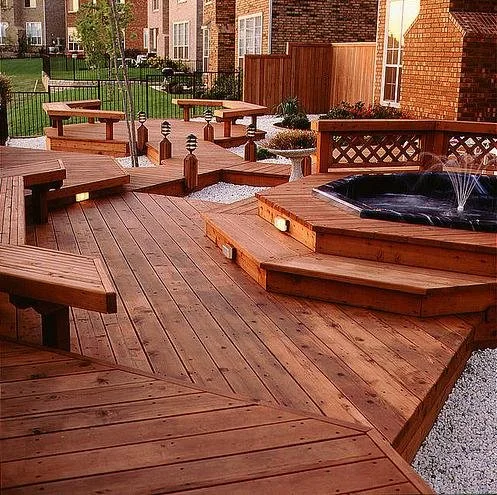
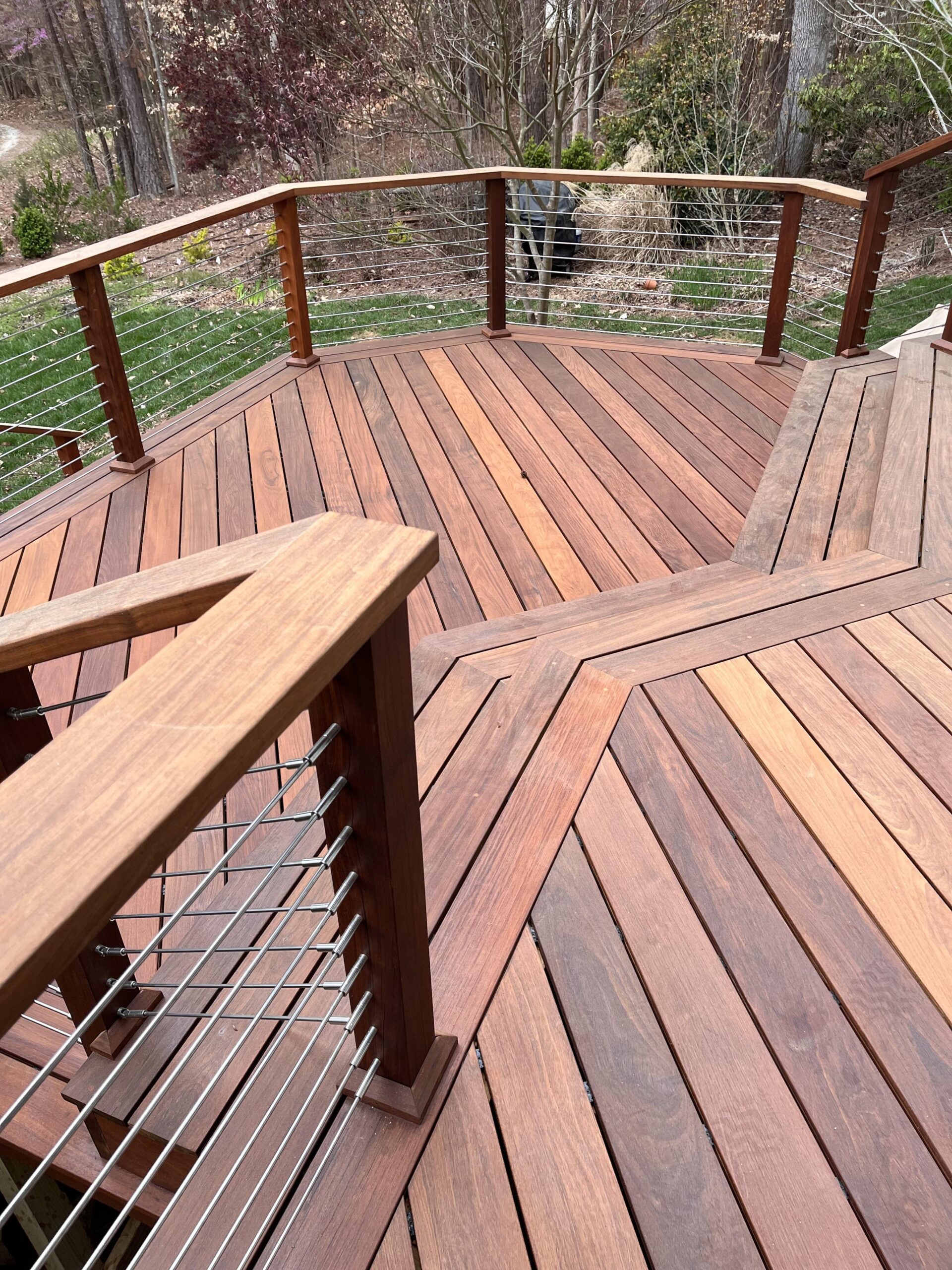
Ipe (pronounced ee-pay) is a Brazilian tropical hardwood and the most durable natural decking wood available. Ipe is denser than most hardwoods and carries a Janka hardness rating of 3,684 lbf. To put that in plain terms: ipe is roughly three times harder than oak and over twice as hard as teak. That density is what gives it a 40-plus year lifespan with minimal maintenance.
Cost: $10 to $18 per square foot. Higher grades reach $20 or more.
Lifespan: 40 to 75 years. Ipe boardwalks and commercial decks installed decades ago remain structurally sound today.
Maintenance requirements: Apply hardwood oil once per year to maintain color. Skip the oil and ipe weathers to a silver-gray patina over 12 to 18 months. The wood remains structurally sound either way. This makes ipe one of the lowest-maintenance real wood decking options available.
Natural resistance: Class A fire rating. Naturally resistant to rot, insects, mold, and mildew without any chemical treatment.
Natural beauty: Ipe’s tight, uniform grain patterns and rich dark brown color give it a high-quality appearance that stands apart from softwood options.
Installation note: Ipe’s density requires pre-drilling for all fasteners. Standard nailing will split the boards. Use stainless steel screws or hidden fastener systems. Factor in additional installation time and labor cost.
Best for: High-traffic decks, long-term builds where upfront cost is offset by minimal maintenance and replacement costs over decades, and commercial applications.
Teak: Luxury Hardwood Option
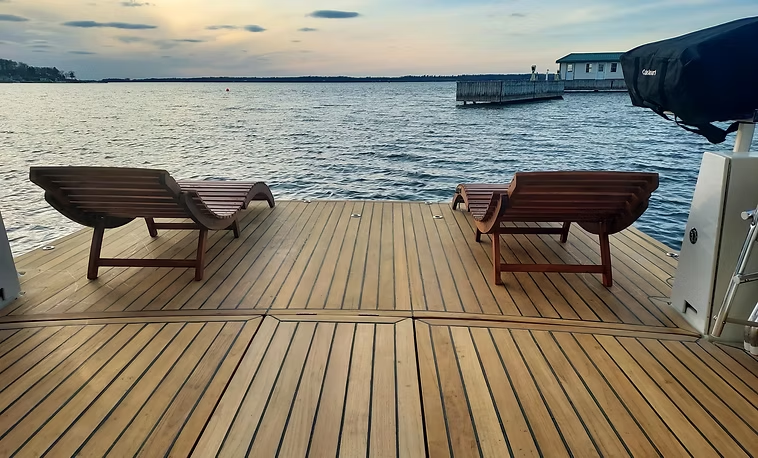
Teak is the gold standard for marine and luxury outdoor applications. The natural oils in teak make it self-protecting against moisture, rot, and insects, even in high-humidity and saltwater environments. Teak’s tight grain patterns and rich golden-brown color make it one of the most visually striking decking options available.
Cost: $15 to $25 per square foot. Premium plantation-grown teak runs higher.
Lifespan: 25 to 50 years with basic maintenance.
Maintenance requirements: Oil once or twice per year to maintain color. Teak’s natural oils mean it performs well even without oiling, but regular treatment preserves its rich colors and prevents surface graying.
Natural resistance: Outstanding. The high natural oil content repels moisture, insects, and decay without chemical treatment.
Sourcing note: Specify plantation-grown teak to avoid sourcing from old-growth forests. Reputable suppliers provide certification. The price tag for certified teak reflects the sustainable sourcing and long growing cycles involved.
Best for: Luxury builds, coastal environments, and homeowners who want the highest-quality real wood decking with minimal long-term maintenance.
Best Wood for Deck Boards vs. Framing
Most homeowners treat decking lumber as one category. It is not. The structural framing of a deck and the visible surface boards serve different functions and have different material requirements.
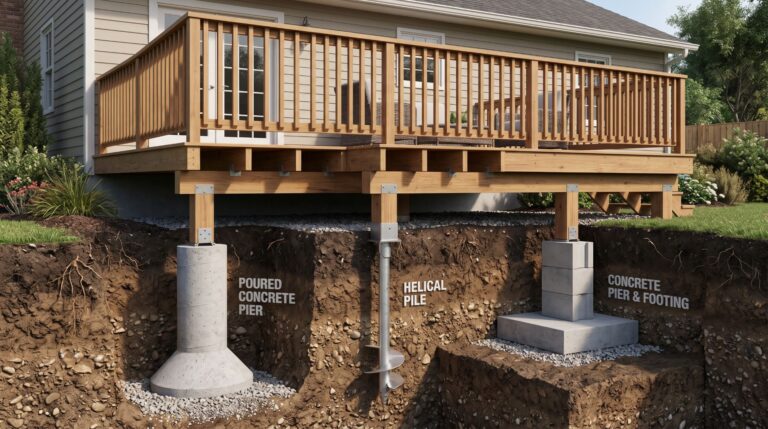
Framing: Always use ground contact rated pressure treated lumber for joists, beams, posts, and any structural member regardless of what surface boards you choose. Building code requires it for all framing within 6 inches of the ground and for all deck posts. Using untreated or above-ground rated lumber for framing creates structural failure risk within a few years.
Surface boards: This is where you choose your preferred wood species. Pressure treated lumber, cedar, redwood, ipe, or teak all work as deck boards. Your budget, aesthetic preference, and maintenance appetite determine the right call here.
Why it matters: A homeowner installing cedar or ipe deck boards still needs pressure treated lumber underneath for the framing. The recommended wood for decks at the surface level does not change the framing requirement. Budget accordingly and price both components separately.
Decking Wood Comparison at a Glance
| Wood Type | Cost Per Sq Ft | Lifespan | Maintenance | Natural Resistance | Best For |
|---|---|---|---|---|---|
| Pressure Treated Lumber | $3–$6 | 15–20 yrs | High | Chemical | Budget builds, all framing |
| Cedar | $5–$9 | 15–25 yrs | Moderate | Natural | Mid-range natural wood |
| Redwood | $8–$12 | 15–25 yrs | Moderate | Natural | West Coast builds |
| Ipe | $10–$18 | 40–75 yrs | Low | Natural | Long-term, high-traffic |
| Teak | $15–$25 | 25–50 yrs | Low | Natural | Luxury, coastal builds |
How to Choose the Best Wood for Your Deck
The right decking wood comes down to four questions: What is your budget per square foot? What climate does your deck face? How much maintenance are you willing to do each year? What aesthetic do you want?
Finding the best wood for outdoor deck projects means balancing all four of those factors, not just price. Use this quick-pick guide to narrow it down:
- Best on a budget: Pressure treated lumber. The most cost effective option for deck boards and the only correct choice for all framing.
- Best natural wood on a budget: Cedar. Natural resistance, good looks, and mid-range pricing make it the most popular natural decking wood.
- Best low maintenance: Ipe. Oil once a year or let it gray naturally. Nothing else required for decades.
- Best hardwood for decks: Ipe for durability. Teak for coastal and luxury applications.
- Best overall for most builds: Cedar for the surface boards over pressure treated framing. Strong balance of cost, natural beauty, and performance.
Best Wood for Decks by Climate
Climate is one of the most important and most overlooked factors in decking wood selection. The same species that performs excellently in one region can struggle in another.
Hot and dry climates: Cedar and pressure treated lumber both perform well. Low humidity reduces rot risk, but UV exposure accelerates surface degradation. Seal annually and choose lighter stain colors to reduce heat absorption in deck boards.
Wet and humid climates: Tropical hardwoods perform best. Ipe and teak’s natural oils make them resistant to the prolonged moisture exposure that breaks down softwoods faster in these regions. Cedar still works but requires more frequent sealing, every one to two years rather than two to three.
Freeze-thaw climates: Pressure treated lumber and cedar handle freeze-thaw cycling well when properly maintained. The key is ensuring water drains away from the boards and does not pool and freeze in the gaps. Ipe’s density makes it particularly resistant to freeze-thaw damage.
Coastal environments: Teak is the top performer in saltwater-adjacent locations due to its exceptional natural oil content. Ipe performs well here too. Avoid untreated softwoods near saltwater.
Best Wood for Deck Boards by Budget
- Under $6 per square foot: Pressure treated lumber only. Solid performance, requires the most maintenance of all the options.
- $6 to $10 per square foot: Cedar. Natural beauty, good durability, manageable maintenance requirements.
- $10 to $15 per square foot: Redwood or entry-level ipe. Step up in appearance and longevity.
- $15 and above per square foot: Premium ipe or teak. Highest quality, lowest long-term maintenance cost, longest lifespan.
Maintenance Requirements by Wood Type
Every decking wood needs maintenance. The schedule varies significantly by species.
Pressure treated lumber:
- Year 1: Let the wood dry fully before applying any coating (3 to 6 months for green PT, less for KDAT).
- Every 2 to 3 years: Clean, sand lightly, and apply a penetrating deck stain or sealer.
- Annually: Inspect for loose fasteners, cracks at end grain, and signs of surface mold. Address immediately.
Cedar and Redwood:
- Year 1: Apply a water-repellent sealer after installation once the wood has acclimated.
- Every 2 to 3 years: Clean, sand lightly, and reapply stain or sealer.
- Annually: Clear debris from between boards. Debris traps moisture and accelerates surface decay even in naturally durable species.
Ipe:
- Every 1 to 2 years: Apply a hardwood deck oil to maintain color and slow the graying process. Skipping this does not damage the wood structurally.
- Annually: Inspect fasteners. Ipe’s density can cause boards to move slightly with seasonal humidity changes, which occasionally loosens fasteners.
Teak:
- Every 1 to 2 years: Apply teak oil to maintain rich colors. Like ipe, teak weathers gracefully without oiling.
- Annually: Clean with a teak cleaner to remove surface oxidation if you want to restore the original golden color.
Common mistake: Applying paint to any decking wood. Paint traps moisture beneath the surface and causes premature rot and peeling. Use penetrating stains and sealers designed for exterior decking only.
Frequently Asked Questions
Pressure treated lumber is the most cost effective decking wood available at $3 to $6 per square foot. It delivers reliable performance for 15 to 20 years with regular sealing and maintenance. For a step up in natural beauty without breaking the budget, cedar is the best mid-range option at $5 to $9 per square foot.
Ipe is the lowest-maintenance real wood decking option. It requires oiling once every one to two years to maintain color, or no treatment at all if you prefer the natural silver-gray weathered look. Ipe lasts 40 to 75 years, which makes it the most cost effective option over a long time horizon despite its higher upfront price tag.
Most residential decks use pressure treated lumber for the structural framing, joists, beams, and posts. Surface deck boards use pressure treated lumber, cedar, redwood, or hardwoods like ipe and teak depending on budget and aesthetic preference. Some homeowners use composite decking for the surface boards while still using pressure treated lumber for all framing.
The right deck boards depend on your budget and priorities. Pressure treated southern yellow pine works for budget builds. Cedar suits homeowners who want natural wood without tropical hardwood pricing. Ipe or teak suit buyers who want the best hardwood for decks and the lowest long-term maintenance requirement.
Yes. Pressure treated lumber is the most widely used decking material in North America for a reason. Chemical preservatives give it the rot and insect resistance it needs for outdoor use. It costs less than any natural wood species and is readily available at every lumber yard. The trade-off is higher maintenance requirements and less natural beauty compared to cedar, redwood, or tropical hardwoods.
Lifespan depends on the species, climate, and maintenance schedule. Pressure treated lumber lasts 15 to 20 years. Cedar and redwood last 15 to 25 years. Ipe lasts 40 to 75 years. Teak lasts 25 to 50 years. All figures assume proper installation and regular maintenance. Neglecting sealing and cleaning shortens the lifespan of any decking wood significantly.