The place for all your outdoor living space!

Article Overview
- Quick Answer
- What's the Actual Difference Between a Deck and a Dock?
- Purpose First: What Problem Are You Actually Solving?
- Cost: What Do These Actually Run?
- Permits and Regulations: The Part Most People Skip
- Materials: What Holds Up Over Water vs. Over Land
- For Decks
- Property Value: Which One Adds More?
- Can You Have Both a Deck and a Dock?
- What Most Articles on This Topic Don't Tell You
- Decks vs Docks at a Glance
- The Bottom Line
- FAQs: Decks vs Docks
You’ve probably searched “decks vs docks” and found answers that treat them like they’re basically the same thing. They’re not. And if you’re planning a waterfront build, specifying the wrong materials – or confusing which structure you actually need – costs real money. Either on a structure that doesn’t hold up, or on materials that weren’t designed for that environment.
So let’s get specific.
What’s the Actual Difference Between a Deck and a Dock?
The simplest way to keep them straight: if it’s dry underneath, it’s a deck. If there’s water under it, it’s a dock.
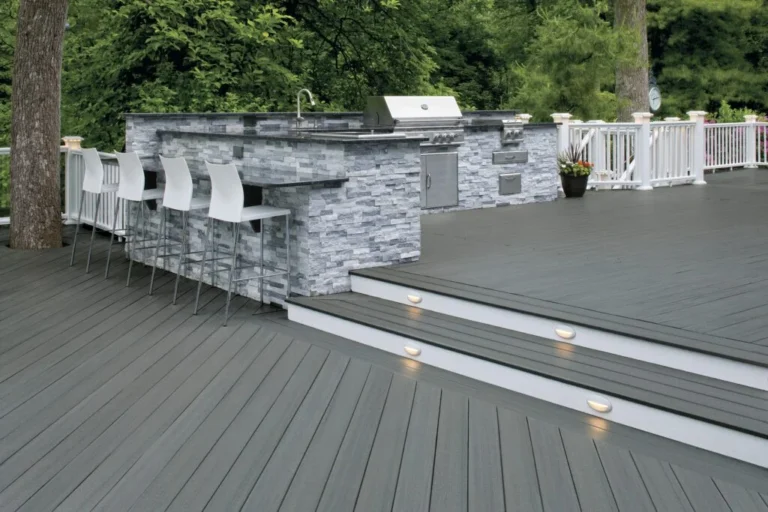
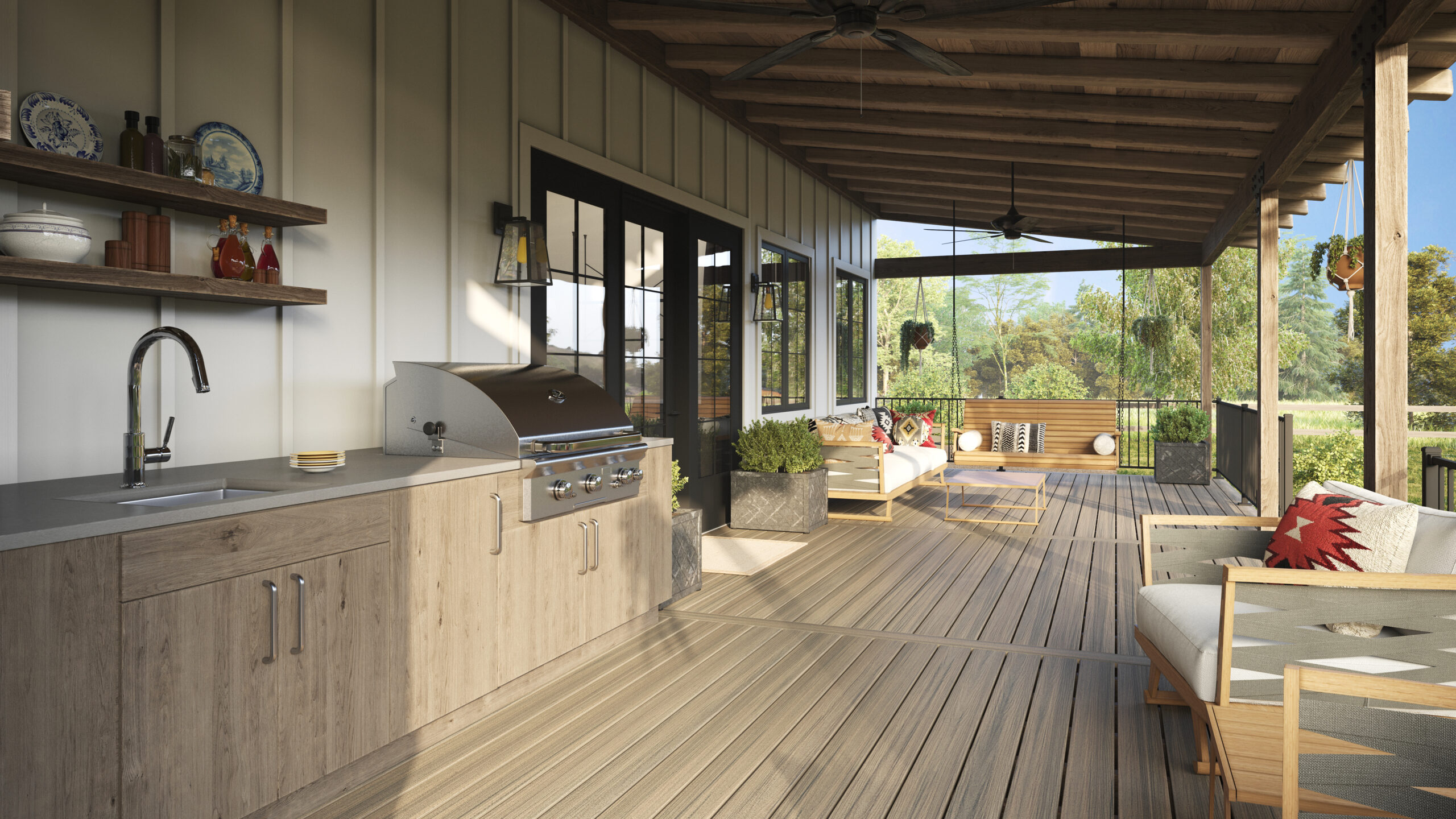
- Definition: A deck is a raised, land-based platform – attached to or near a home – designed for outdoor living. Barbecues, patio furniture, morning coffee with a view of the lake. That kind of thing.
- Definition: A dock is a structure that extends over a body of water – if you want to go deeper on what a dock actually is and how it works, we’ve covered that separately.
In practice, the lines blur a bit. A deck can overhang a shoreline without quite touching the water. A wide dock can double as a lounge space if you design it right. But for permitting purposes — and for material selection – they are distinct structures with different specs, different load requirements, and very different exposure conditions.
That distinction matters more than most people realize when it’s time to buy materials.
Purpose First: What Problem Are You Actually Solving?
Before anyone talks materials or money, answer this question: what do you want to be able to do from your waterfront?
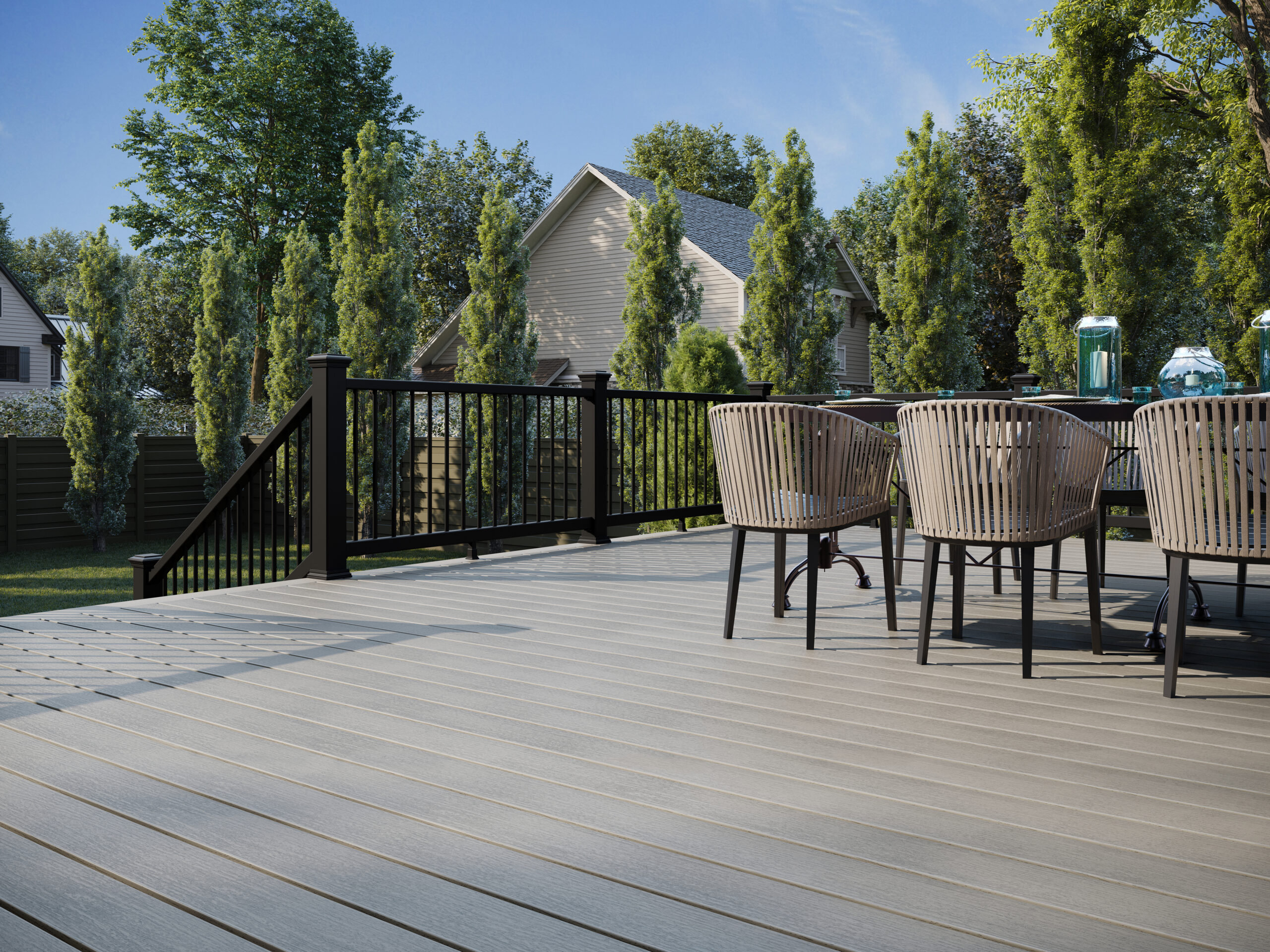
A deck makes sense if:
- You want to extend your home’s usable living space outdoors
- You want somewhere to entertain, have dinner outside, or just sit and look at the water
- You don’t have boats or watercraft that need mooring
- Curb appeal and home resale value are the priority
A dock makes sense if:
- You have a boat, kayak, paddleboard, canoe, or jet ski that needs a home
- You want easy, safe water entry for swimming
- You fish regularly and need a stable platform
- You want to maximize waterfront utility of your property
Both make sense if:
- Your property has yard space and genuine direct water access
- You want a complete outdoor living and water access setup
- Long-term property value matters as much as day-to-day enjoyment
Most waterfront guides skip this: planning for both structures from the start is smarter than adding the second one later. The material selections integrate better, the build costs are lower, and the result looks like it was designed – not assembled in phases.
Cost: What Do These Actually Run?
Decks
A professionally installed deck ranges from a few thousand dollars for a basic pressure-treated platform up to $20,000–$30,000+ for larger composite builds. Where you land depends on size, materials, and local labor rates.
Permit fees add $225 to $500 in most jurisdictions.
Material tiers, roughly:
- Pressure-treated wood: Lowest upfront cost. Needs staining or sealing every 2–3 years – and near water, that cycle shortens.
- Composite (Trex, TimberTech, Wolf, etc.): Higher material cost, much lower long-term maintenance. The right call for any deck near a shoreline.
- Hardwood/tropical wood: Premium look, higher cost, and maintenance-demanding. Beautiful, but demanding.
Docks
Dock builds run from $3,000 on the low end – think a basic modular aluminum floating dock – to $50,000+ for a custom fixed pier with electrical, a boat lift, and premium decking. That wide range reflects how different dock types and materials can be.
Permitting adds $1,000 to $5,000 depending on region, because dock construction touches navigable water and triggers environmental review from agencies that don’t move fast.
The honest summary: Docks cost more to permit and typically more to build than a deck of comparable footprint. But they do something a deck physically cannot do. Comparing them purely on price is like asking whether a truck or a sports car is more expensive – the answer depends entirely on what you need it to do.
Permits and Regulations: The Part Most People Skip
This is where a lot of waterfront projects run into trouble.
Deck Permits
Most attached decks require a building permit. Ground-level decks under a certain height – often 30 inches above grade – may qualify for exemptions in some jurisdictions, but don’t assume. Check with your local building department before you spec anything.
In 2025, updated codes in many areas now require lateral load connections, fire-retardant materials in fire-prone zones, and sustainable construction practices. If the property is in a wildland-urban interface area, material rules can be stricter than expected – worth knowing before materials are ordered.
Dock Permits
Dock permitting is a different process entirely. Because docks sit over navigable water, approvals often come from multiple agencies: local municipalities, state or provincial environmental bodies, and sometimes federal authorities. In the U.S., anything touching navigable waters may require Army Corps of Engineers sign-off.
One concrete example: in New York State Parks, docks cannot extend more than 100 feet from the shoreline, cannot exceed 6 feet in width, and must be designed for seasonal installation – no permanent features. Every region has its own version of these rules, and they directly affect which products and materials are even allowed on a given project.
What this means in practice: A deck permit might take days to a few weeks. A dock permit can take months. If you’re helping a client plan a dock, start the permit conversation early – well before materials are being sourced.
Materials: What Holds Up Over Water vs. Over Land
This is where the deck vs. dock distinction matters most from a materials standpoint.
For Decks
The choice is essentially wood vs. composite:
- Pressure-treated lumber performs well on land but degrades faster in high-moisture environments. Acceptable inland; not the best choice for a deck that sits close to the waterline.
- Composite decking handles moisture, UV, and temperature swings far better. Worth the upfront cost for any deck within range of a shoreline.
- Hardwoods like ipe or mahogany deliver a premium aesthetic – but require maintenance and sometimes specialized sourcing.
For Docks
Marine environments are genuinely harsh. UV exposure, salinity, wave force, and biological growth – algae, barnacles, freshwater mussels – all take a toll over time. Specifying materials that weren’t designed for this environment is one of the most common and costly mistakes in dock builds.
- Pressure-treated wood: Still common on freshwater docks. Affordable and easy to source, but degrades faster in saltwater and needs regular sealing to stay serviceable.
- Aluminum: Corrosion-resistant, lightweight, low-maintenance. The standard for floating dock systems and increasingly specified on fixed structures too.
- Composite on dock frames: Provides the look of wood without the rot risk. Gaining significant traction on fixed piers as of 2025 – particularly where maintenance access is limited.
The rule here is straightforward: materials that perform fine on a land-based deck will often fail faster when exposed to water, UV reflection off the surface, and biological fouling from below. Contractors and builders who don’t work exclusively on waterfront projects sometimes underspec dock materials – and that’s a conversation worth having before anything gets ordered.
Property Value: Which One Adds More?
Both add value. But in different ways.
What a Deck Adds
A well-built deck consistently ranks among the highest-ROI outdoor improvements for home resale. It photographs well, appeals to a wide range of buyers – not just boaters – and makes the home itself feel larger and more livable.
What a Dock Adds
A permitted dock can increase waterfront property value by 8% to 15%, according to real estate experts. The average dollar figure sits at $14,000 to $20,000 – but that number climbs in high-demand waterfront markets, particularly where dock permits are difficult to obtain or deep-water access is limited.
In some premium waterfront markets, the Wall Street Journal has noted, a dock can be worth more than the house itself. That’s an edge case – but it illustrates how seriously buyers in certain markets value private water access.
Important nuance: not all docks are equal, and buyers know it. An unpermitted dock or one with deteriorating materials doesn’t add value – it becomes a liability. Quality materials and proper compliance matter more than square footage.
If you’re on navigable water and deciding where to invest, a dock typically delivers more dollar-for-dollar value at resale. A deck, though, adds value to a broader buyer pool. The right answer depends on how long you’re holding the property and how much boating is actually part of the lifestyle.
Can You Have Both a Deck and a Dock?
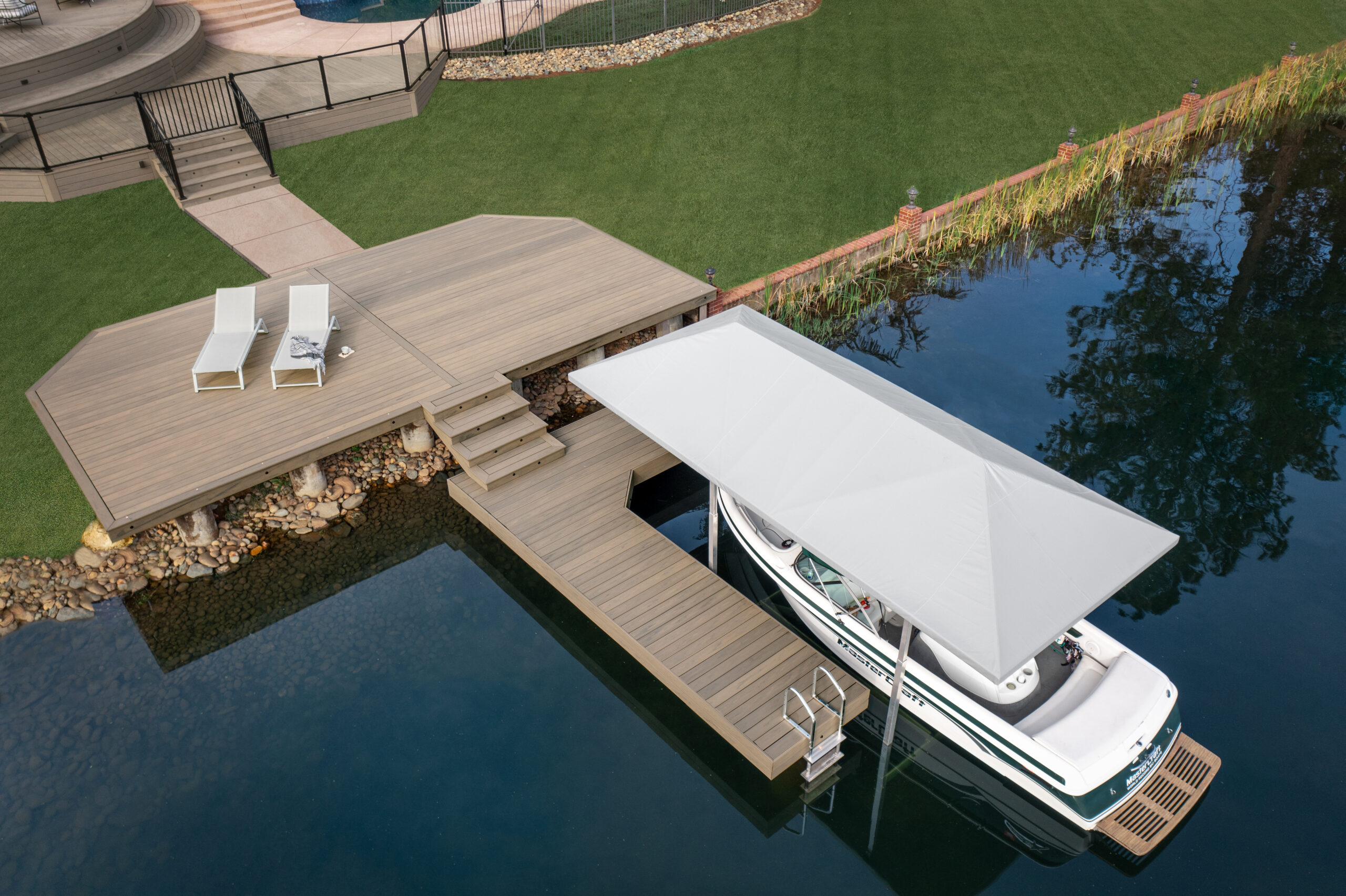
Yes. And on most waterfront properties with real yard space and real water access, the better question isn’t either/or – it’s how to connect them well.
A typical layout: a deck attached to the house, a staircase or ramp leading down the slope toward the shore, and a dock extending over the water. Done well, this creates a connected system from living room to lake. Each structure serves its purpose. Together, they cover everything from Sunday brunch to Friday evening boat trips.
The key from a materials standpoint is thinking about these as a connected system from the start – matching or complementing materials across both structures, ensuring the ramp or transition zone uses appropriate products for ground contact and moisture exposure, and specifying fasteners that work in the right environment for each section.
Getting the material spec right across both structures is exactly what we help customers, contractors, and builders work through.
What Most Articles on This Topic Don’t Tell You
Three things get left out of nearly every “deck vs dock” piece online:
- Zoning can make the decision for you. Some waterfront properties sit inside conservation zones, wetland buffers, or shoreline protection areas where dock construction is restricted or outright prohibited. Check zoning before designing anything – or ordering materials.
- Water depth is a dock prerequisite. A dock over water too shallow to access isn’t worth building and won’t add resale value. Before committing to any dock design, get an actual depth survey of the waterfront at different seasons. This matters especially for rivers, tidal areas, and lakes with fluctuating levels – and it affects which dock type and anchoring system makes sense.
- Easements change everything. If waterfront access runs through a shared easement, building a dock may require neighbor agreements or HOA approval. A deck on private land has no such complication. Know the title situation before any plans are finalized.
Decks vs Docks at a Glance
| Feature | Deck | Dock |
|---|---|---|
| Where it sits | On land | Over water |
| Primary use | Outdoor living | Water access / boat mooring |
| Permit complexity | Low-Medium | Medium-High |
| Permit cost | $225 – $500 | $1,000 – $5,000+ |
| Build cost (typical) | $5,000 – $25,000+ | $3,000 – $50,000+ |
| Property value impact | Strong home ROI | 8 – 15% on waterfront value |
| Maintenance | Low – Medium | Medium – High |
| Water access | No | Yes |
| Can you have both? | Yes | Yes |
The Bottom Line
Decks and docks aren’t competing structures. They solve different problems – and they require different materials to do it properly.
A deck extends your home into the outdoors. A dock connects you to the water. On most waterfront properties, the best long-term setup includes both – and the time to plan for both, and spec the right products for each, is before anything gets built.
Start with what you’ll actually use. Boating and water access first? The dock leads. Outdoor entertaining and more living space? Start with the deck. Have the site, the plan, and the budget for both? Design them as a connected system from day one – you’ll spend less, end up with something that performs better, and avoid the cost of retrofitting one onto the other later.
Not sure which materials are right for your application – or your client’s project? That’s exactly what we’re here for.
FAQs: Decks vs Docks
No – and mixing up the terms in a permit application or property listing causes real problems. A deck is a land-based platform. A dock extends over water. They share some construction techniques, but face completely different regulatory requirements and need very different materials.
On waterfront property with genuine water access, a permitted dock typically adds more at resale – $14,000 to $20,000 on average, and more in high-demand areas. A deck adds value too, but primarily to the home’s livable space, not its waterfront utility. Buyers of waterfront properties tend to prioritize water access first.
Yes. A deck usually needs one local building permit. A dock can require local, state/provincial, and federal approvals because it sits over navigable water. The timeline and cost difference is real – budget for it early.
A basic modular aluminum floating dock can start under $5,000 installed. A small pressure-treated deck can be in the same range. But cheapest doesn’t mean best investment on waterfront property. Using the right materials for the environment matters far more than saving a few hundred dollars upfront.
Any platform extending over water is treated as a dock by regulators – regardless of what you call it. Full dock permitting and marine-grade material specs apply. Plan accordingly.
Not necessarily. But a dock earns its keep without a powerboat too. Kayak and paddleboard access, swimming entry, fishing, or simply sitting over open water are all real uses. If any of that appeals to you, a dock is worth considering.